Categories
Breaking News

Infant Cadavers Commonly Used by 19th Century Anatomists

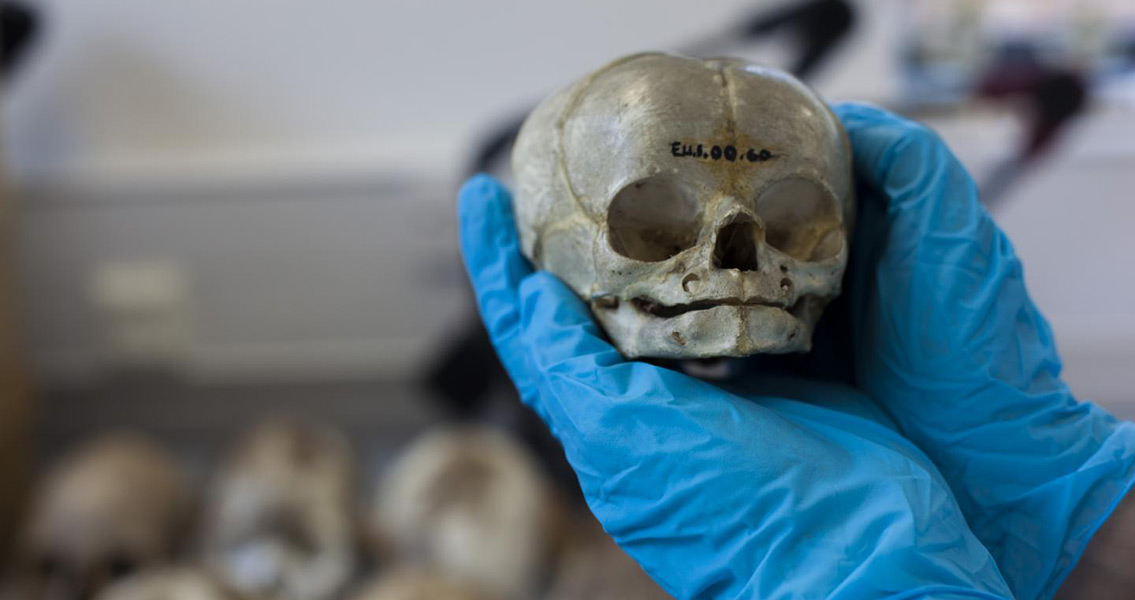
Journal of Anatomy, the study is a pioneering look at how the changing anatomy of childhood in the 1800s was studied and investigated by British scientists. The research was carried out by Jenna Dittmar and Piers Mitchell from Cambridge’s Department of Archaeology and Anthropology. The skeletons under analysis came from the dissecting room of the university’s Department of Anatomy. The dates of the specimens ranged from 1768 to 1913. A number of differences quickly became apparent to the researchers in terms of the type of tests that had been carried out on the varying age groups. The bodies of adults were generally subjected to a craniotomy, a procedure in which the top of the skull is opened with a saw. The skulls of foetuses and children on the other hand, were generally kept intact. Of the 54 infant and foetal specimens in the collection, a craniotomy had only been performed on one. Another surprising discovery of the research is that the bodies of infants and foetuses were often kept by anatomists for use as teaching aids or in further research. Adult bodies however, tended to be discarded swiftly. “Foetal and infant bodies were clearly valued by anatomists, illustrated by the measures taken to preserve the remains intact and undamaged,” said Dittmar, in a press release from the University of Cambridge. “The skulls appear to have been intentionally spared to preserve them for teaching or display. This may explain why so few children with signs of dissection on their bones have been recovered from the burial grounds of hospitals or parish churches, compared with adults.” According to the researchers, a number of historical factors could explain this surprising trend. Literature from the late eighteenth century suggests that smaller bodies were viewed as valuable teaching tools, making it easier for lecturers to highlight the intricacies of the circulatory and nervous systems for example, by injecting the entire cadaver with coloured wax. “The valuable and unique knowledge that could only be obtained from the examination of these developing bodies made them essential to the study of anatomy,” Dittmar explained. Legal factors could also explain the common use of child bodies. Although the Murder Act of 1752 allowed the bodies of executed murderers to be given to medical research, it had little impact on the growing demand for bodies, leading to a black market forming. Resurrectionists or body snatchers, who often obtained bodies by grave robbing, tended to sell cadavers by the inch, making infant bodies less profitable and thus more readily available. The Anatomy Act of 1832 let workhouses and hospitals donate unclaimed bodies to research. Waves of cholera and tuberculosis devastated the urban population during the industrial revolution, particularly infants, while workhouses were often lethal places for the young; factors that could have led to a greater number of infant bodies being donated to dissection. Potentially most significant, according to the authors of the study, was the New Poor Law Amendment Act of 1834, which ended parish relief for unmarried women and the obligations on the fathers of illegitimate children. Designed to cut the illegitimate birth rate, the law only succeeded in heightening the plight of unwed mothers, triggering a shocking outbreak of infanticide by the 1860s. “This left very few options for these women: the workhouse, prostitution, abortion and infanticide – all of which were life-threatening,” said Dr. Mitchell. As Britain progressed through the industrial revolution and its population increasingly moved to densely populated cities, the strains on the traditional family unit increased and the spread of diseases worsened. Meanwhile, for medical science, new ailments inherent in industrialisation and massive population growth led to a dramatic increase in the need for medical research and training. “Our research shows that the major sources of the bodies of very young children were from stillborn babies of destitute mothers, babies who died from infectious diseases, those dying in charitable hospitals, and unmarried mothers who secretly murdered their new-born to avoid the social stigma of single parenthood,” Mitchell said. “Poor and desperate women at the time of the industrial revolution could not only save the cost of a funeral by passing their child’s body to an anatomist, but also be paid as well. This money would help feed poor families, so the misfortune of one life lost could help their siblings to survive tough times.” Image courtesy of Nick Saffell]]>
Categories
Editorial

A History of British Football Hooliganism

Football hooliganism has been around, in one form or another, as long as football itself. Recent events at the European Football Championship, particularly the running street battles and stadium fights between British, French and Russian supporters, have brought football hooliganism back into the media limelight however, providing a reminder of the most provocative element of one of the world’s most popular sports. A hooligan is defined as “a violent young troublemaker, typically one of a gang”. The etymology of the word is far from clear, but it is generally believed to have originated at some point late in the nineteenth century. When used in connection to football, the term is deeply evocative, bringing to mind the violent, sometimes tragic clashes between rival supporters in the later decades of the twentieth century. Significantly, these clashes were not simply random acts of violence, but organised confrontations between massive gangs of fans, referred to as ‘firms’ in the UK.

Origins of Football and Hooliganism

Football originated, in a rudimentary form, in England in the thirteenth century. A game played between villages, often on religious holidays and using a pigs bladder as a ball, it was so violent it was almost incomparable to the modern form of the game. Teams from rival villages would essentially battle with each other, the aim seemingly to kick the ball into the other village’s church. It was banned in 1349 by King Edward III of England, partially because he felt it was distracting his subjects from their military training, but also because of the social unrest which inevitably surrounded the brutal game. Even when football took on a form closer to today’s, social unrest was rarely far away. In the 1800s violent outbreaks were reported at matches, with the riot act having to be read out at a game in Derby in 1846. As the nineteenth century wore on and the rules of the game became increasingly rigid the violence continued, with mobs either attacking the opposition’s fans or on occasion the players themselves. One of the most shocking outbreaks of violence came in Glasgow in 1909 at a game between Glasgow Rangers and Celtic, a fixture which remains infamously inflammatory to this day. After officials refused to allow extra time to settle a draw between the two clubs, a riot broke out. Reports claimed that up to 6,000 spectators were involved in the shocking event, which resulted in serious injury to over fifty policemen, and massive damage to the football grounds. The surrounding area wasn’t even spared, with the police report stating that every street lamp in Hampden had been smashed by the rampaging fans. Hampden Football Ground 1909

Post-WWII and Organised Violence

Although media coverage after the Second World War gave the social unrest which surrounded football matches extensive coverage, eventually leading to the term hooligan being used to describe unruly fans for the first time, violence around football had been present in the UK long before. Crucially though, the 1960s onward witnessed a new kind of organisation, where social unrest was planned rather than just occurring in sporadic outbursts. The hooliganism of the 1960s was very much symptomatic of broader unrest among the youth of the post war generation. Equally, it also played into the media narrative of civil unrest, meaning it garnered widespread coverage. Groups of football hooligans gathered together into firms, travelling the country and battling with fans of rival teams. In an interview with ESPN, a former member of a Manchester United supporting firm, known as ‘Hotshot’, described the rituals involved with being a football hooligan in the 1980s “The buzz about the kick off — you were Man United, you weren’t running anywhere or you weren’t getting into the Red Army. We wasn’t boozing, we’d be out before, ambushing other firms before the match started.” Media notoriety became a form of point scoring for the different bands of hooligan. Before kick-off, different gangs would ambush each other, starting fights on the street. In the grounds themselves, the aim was to attack the opposition fans, victory achieved by forcing them from their viewing area behind the goal. In the 1988 – 89 Premier League season, 6,185 arrests were made on hooliganism charges. A 1985 domestic cup tie between Luton and Millwall saw the visiting Millwall fans battle with police and local supporters. 81 people were injured and 31 arrested in a single evening. That same year the situation reached a tragic conclusion in the European Cup final between Italian team Juventus and Liverpool Football Club. The Liverpool fans charged their Italian counterparts, inadvertently causing a wall in the stadium to collapse, killing 39 people. The late eighties proved something of a turning point, the authorities clamping down on hooliganism. The introduction of stadium seating, and a greater police presence at stadia, gradually calmed down even the most vitriolic local fixtures. Violence still occurred, but it was generally isolated to clashes between small groups of fans on the streets before or after a fixture. Nevertheless, events in France show that even with these tighter controls, the violence that has long surrounded football remains.]]>

Categories
Breaking News

Boundary Stone Accurately Marks Spot for 172 Years