here Illustration by Caitlin McPherson]]>
here Illustration by Caitlin McPherson]]>

Football hooliganism has been around, in one form or another, as long as football itself. Recent events at the European Football Championship, particularly the running street battles and stadium fights between British, French and Russian supporters, have brought football hooliganism back into the media limelight however, providing a reminder of the most provocative element of one of the world’s most popular sports. A hooligan is defined as “a violent young troublemaker, typically one of a gang”. The etymology of the word is far from clear, but it is generally believed to have originated at some point late in the nineteenth century. When used in connection to football, the term is deeply evocative, bringing to mind the violent, sometimes tragic clashes between rival supporters in the later decades of the twentieth century. Significantly, these clashes were not simply random acts of violence, but organised confrontations between massive gangs of fans, referred to as ‘firms’ in the UK.


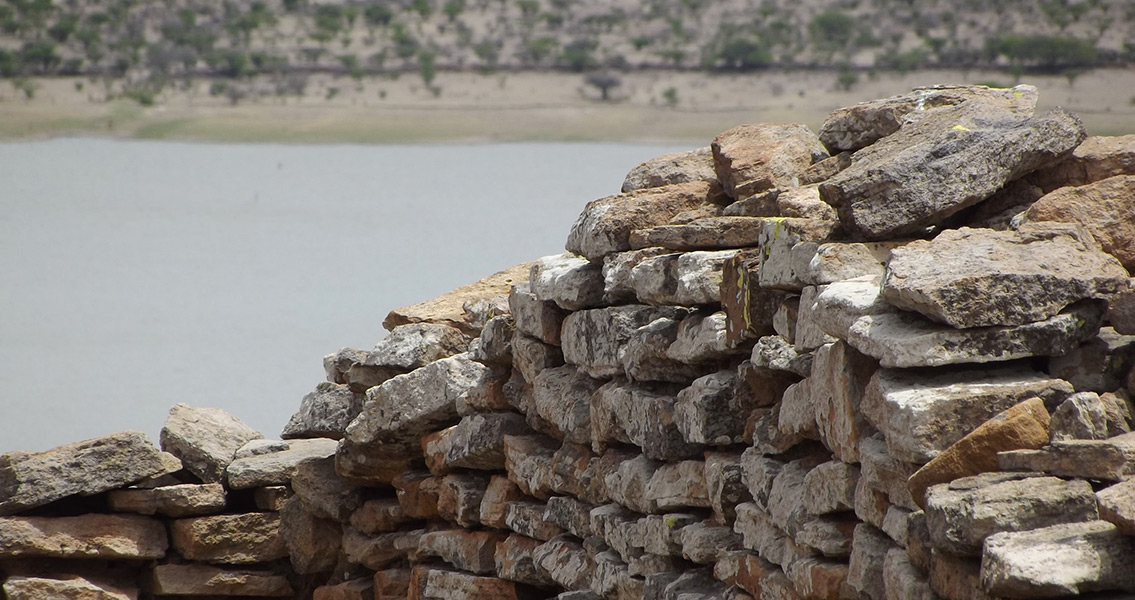
Proceedings of the National Academy of Sciences, looked at human remains in north west Mexico to develop an understanding of interethnic violence and attitudes towards the dead during the Epiclassic Period of Mesoamerican history. Accounts from Spanish settlers in the Northern Frontier of Mesoamerica in the sixteenth century reveal that the region was characterised by a broad range of ethnic identities. Studies by historical linguists since have speculated that the divergence in languages occurred in the region between 4,500 and 6,000 years ago, suggesting that ethnic divisions were deeply routed in the region before the arrival of European settlers. Over thirty languages were spoken in the Northern Frontier, which has led the authors of the new study; Ben A. Nelson and Debra L. Martin, to suggest that “the relation between any pair of regional centers probably was interethnic”. In a period of great social upheaval and change, such ethnic diversity undoubtedly led to conflict. In their article entitled ‘Symbolic bones and interethnic violence in a frontier zone, northwest Mexico, ca. 500–900 C.E.’, Nelson and Martin note that there is substantial evidence that between 500CE and 900CE (the Epiclassic Period), the struggle by people to assert themselves in a volatile, changing social landscape lead to “long-term social violence”. The Epiclassic Period started with the dissolution of the massive city of Teolihuacan, an event which foreshadowed a time of massive cultural change. Filling the power vacuum left by the centralised authority of Teolihuacan were small scale polities. Styles of architecture, clothing and iconography changed as they merged across boundaries. For their study, Nelson and Martin carried out detailed bioarchaeological analysis of the extensive deposits of disarticulated, commingled human bones that can be found in what was the Northern Frontier of Mesoamerica, focusing in particular on those found in what had been the polity of La Quemada. Through doing so they have gained a better understanding of the interethnic violence which dominated the region, and the relationships between communities and their dead. They conclude that the prominent presence of human bones in ceremonial centers and living spaces served a variety of cultural functions. Several clusters of bones from both males and females of all ages kept inside a temple at La Quemada were largely untampered with aside from some signs of simple de-fleshing. This lack of desecration points to the bones having been kept as a form of ancestor veneration. Conversely, other clusters showed signs of processing of long bones, and drilled crania, suggesting they had been displayed. The desecration was most likely part of a ritual which saw vanquished enemies put on public display. The authors claim that this was probably a tool for remembering past battles, but possibly also a means of trying to prevent further interethnic conflict. Nelson and Martin’s study provides insight into the extent of interethnic conflict in the Epiclassic Period. They conclude that the bones found at La Quemada are representative not only of the violence between different ethnic groups, but also the cultural relationship between the living and the dead. The authors’ conclusions have the potential to greatly further the understanding of the transition towards large, multicultural societies. For more information: www.pnas.org Image courtesy of Wikimedia Commons user: Oscarthepatron ]]>


PLOS ONE journal. What makes the find particularly interesting is the fact that it is the earliest known example of murder, taking place much earlier than the appearance of the Homo genus on the world scene. The proof that the Neanderthal’s death was the result of deliberate injury can be seen in the presence of two nearly identical fractures to the frontal skull bone of the individual. Examination of the fractures revealed that they had been inflicted with one weapon and the trajectory that could be inferred from their shape and size told scientists that this weapon had been used in a close, face-to-face, conflict. Moreover, the authors say, the fact that there is more than one fracture, given that the severity of each of them would have been lethal, suggests “an intention to kill.” The major conclusion of the analysis was that intentional killings were part of our ancestors’ lives, something for which there has not been abundant evidence from this period of pre-human history. According to the authors, any insight into early hominin violence is of interest because it sheds light on the relations within communities and between different communities with regard to resources and their distribution, the density of the population, and the distribution of land. The authors also note in their paper that up until now there has been no evidence of “direct traumatic injury” in hominins from the Middle Pleistocene, although there has been previous evidence of non-fatal injuries and cannibalism. There is also abundant evidence from the Middle and Upper Pleistocene of skull trauma, although the sufferers survived in the majority of cases. In fact, only two fossils have been discovered that could be said to have belonged to people who died violent deaths, but not with a high degree of certainty, the PLOS ONE paper authors write. One of these two fossils has a lesion on one of the ribs but the shape of the bone actually suggests he lived for a few weeks after the injury was inflicted, so it cannot be established whether the lesion was the real, or only, cause of death. The other fossil shows signs of severe trauma to the first thoracic vertebra, which has been taken as the cause of this individual’s death, but it is unclear whether this trauma was caused by the deliberate actions of another hominin or was the result of an accident, while hunting, for example. It is the scarcity of fossils bearing the clear marks of an intentional death that makes the Spanish find so precious for the scientific community. It might also provide clues as to why there were so many people in this cave, which, at the time, could only be accessed through a 13-metre high chimney. Two of the hypothesis put forward so far have been ruled out, namely predators or geological activity dragging the bodies there. The two remaining hypotheses have to do with accidental falls and intentional killings. These latest findings could support the latter hypothesis. For more information: www.journals.plos.org Image courtesy of Wikimedia Commons user: Jose-Manuel Benito]]>