Categories
Breaking News

Site with Reburied Skeletons Discovered by Accident

Western Digs: “This is one of the few archaeological contexts registered by archaeologists in this region, if we confirm the hypothesis [that this burial dates from] the Late Archaic, we could have a site with information about the transition to agricultural, sedentary communities in the region.” A number of the remains, both avian and human, had been naturally mummified by the arid climate. In addition to the skeletons and bird remains; textiles, baskets, stone points and other artifacts were also found. The two sets of remains were surrounded with an array of goods, including a large sea shell and a dress or bag made from deer hide. The gender and exact age of the child is unknown, although the size suggests at the time of death they were between one and three years old. The partial adult skeleton had large leg bones that had been tied together, similar to other, later finds in northern Mexico. The practice of reburying partial skeletons was not uncommon. Starting around 1100, the citizens of Paquime are known to have dug up and then re-buried their dead, sometimes collecting the bones in large jars or bundles, possibly to be buried with relatives. If this new cave site predates Paquime, the burial may be earlier evidence of the practice. Not found at the graves were artifacts, such as ceramics, associated with the Puebloans who built and then settled in trade centers like Paquime during the Medio Period. This absence indicates the graves predate the creation of Paquime, which happened around the year 700. The early date also makes the discovery of the bird, a scarlet macaw, especially significant because tropical birds are not indigenous to the high desert region of Chihuahua. The discovery of the macaw in this pre-Medio Period site indicates the presence of long-distance trade in exotic goods which pre-dates Paquime by centuries. “This finding verifies once again that the [mountains of Chihuahua] have been a cultural corridor between the coast and the desert north with the south,” Gallaga is quoted as saying in Western Digs. “At the end of the day, this discovery shows us that there is still a lot to do in the northern Mexico region, archaeologically speaking.” Gallaga’s team was called to the site when the property owner uncovered the strange remains while using heavy equipment to level the cave’s floor. “Many archaeological discoveries are the result of planned research and are conducted during years of intellectual efforts,” Gallaga says in Western Digs. “Others are the result of an accident.” ]]>

Categories
Breaking News

Infant Cadavers Commonly Used by 19th Century Anatomists

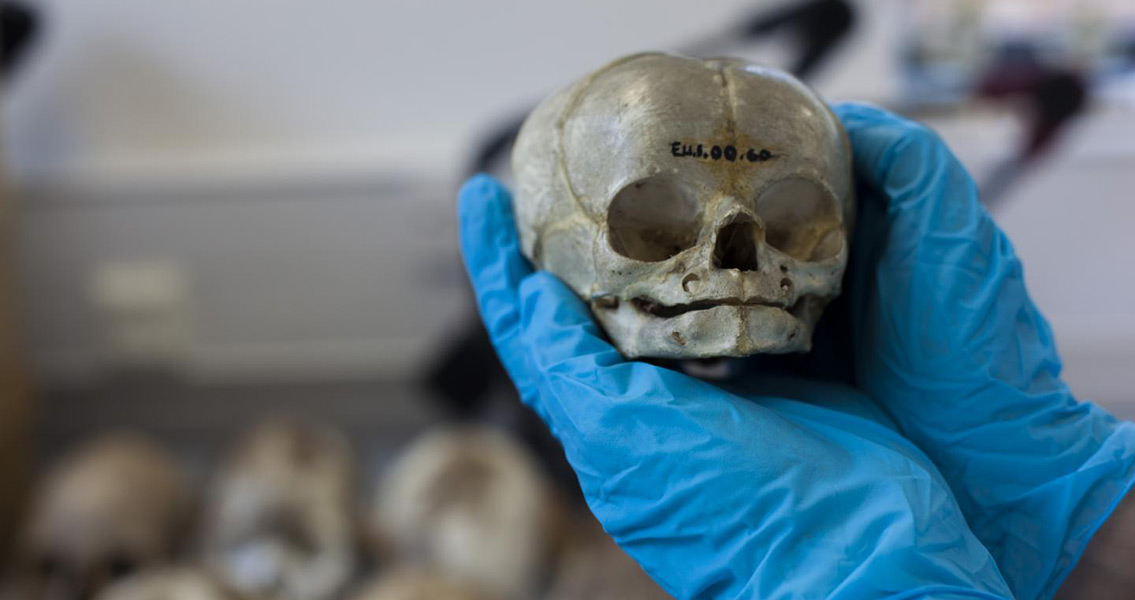
Journal of Anatomy, the study is a pioneering look at how the changing anatomy of childhood in the 1800s was studied and investigated by British scientists. The research was carried out by Jenna Dittmar and Piers Mitchell from Cambridge’s Department of Archaeology and Anthropology. The skeletons under analysis came from the dissecting room of the university’s Department of Anatomy. The dates of the specimens ranged from 1768 to 1913. A number of differences quickly became apparent to the researchers in terms of the type of tests that had been carried out on the varying age groups. The bodies of adults were generally subjected to a craniotomy, a procedure in which the top of the skull is opened with a saw. The skulls of foetuses and children on the other hand, were generally kept intact. Of the 54 infant and foetal specimens in the collection, a craniotomy had only been performed on one. Another surprising discovery of the research is that the bodies of infants and foetuses were often kept by anatomists for use as teaching aids or in further research. Adult bodies however, tended to be discarded swiftly. “Foetal and infant bodies were clearly valued by anatomists, illustrated by the measures taken to preserve the remains intact and undamaged,” said Dittmar, in a press release from the University of Cambridge. “The skulls appear to have been intentionally spared to preserve them for teaching or display. This may explain why so few children with signs of dissection on their bones have been recovered from the burial grounds of hospitals or parish churches, compared with adults.” According to the researchers, a number of historical factors could explain this surprising trend. Literature from the late eighteenth century suggests that smaller bodies were viewed as valuable teaching tools, making it easier for lecturers to highlight the intricacies of the circulatory and nervous systems for example, by injecting the entire cadaver with coloured wax. “The valuable and unique knowledge that could only be obtained from the examination of these developing bodies made them essential to the study of anatomy,” Dittmar explained. Legal factors could also explain the common use of child bodies. Although the Murder Act of 1752 allowed the bodies of executed murderers to be given to medical research, it had little impact on the growing demand for bodies, leading to a black market forming. Resurrectionists or body snatchers, who often obtained bodies by grave robbing, tended to sell cadavers by the inch, making infant bodies less profitable and thus more readily available. The Anatomy Act of 1832 let workhouses and hospitals donate unclaimed bodies to research. Waves of cholera and tuberculosis devastated the urban population during the industrial revolution, particularly infants, while workhouses were often lethal places for the young; factors that could have led to a greater number of infant bodies being donated to dissection. Potentially most significant, according to the authors of the study, was the New Poor Law Amendment Act of 1834, which ended parish relief for unmarried women and the obligations on the fathers of illegitimate children. Designed to cut the illegitimate birth rate, the law only succeeded in heightening the plight of unwed mothers, triggering a shocking outbreak of infanticide by the 1860s. “This left very few options for these women: the workhouse, prostitution, abortion and infanticide – all of which were life-threatening,” said Dr. Mitchell. As Britain progressed through the industrial revolution and its population increasingly moved to densely populated cities, the strains on the traditional family unit increased and the spread of diseases worsened. Meanwhile, for medical science, new ailments inherent in industrialisation and massive population growth led to a dramatic increase in the need for medical research and training. “Our research shows that the major sources of the bodies of very young children were from stillborn babies of destitute mothers, babies who died from infectious diseases, those dying in charitable hospitals, and unmarried mothers who secretly murdered their new-born to avoid the social stigma of single parenthood,” Mitchell said. “Poor and desperate women at the time of the industrial revolution could not only save the cost of a funeral by passing their child’s body to an anatomist, but also be paid as well. This money would help feed poor families, so the misfortune of one life lost could help their siblings to survive tough times.” Image courtesy of Nick Saffell]]>

Categories
Breaking News

Infant Fossils Shed Light on Native American Lineages