Categories
News

FBI Reports It Just Can't Understand 'Louie, Louie'

Louie, Louie by the Kingsmen were ‘unintelligible’. It marked a massive anti-climax in the middle of one of the most famous, yet surreal obscenity investigations of the twentieth century. “…the lyrics of the song on this record was not definitely determined by this Laboratory examination, it was not possible to determine whether this recording is obscene.” read the final report from the FBI laboratory. Louie, Louie, or the Kingsmen version at least, had caused a nationwide controversy, accused of containing pornographic lyrics intent on corrupting young minds. For two years the FBI investigated the song, but the report of the laboratory to investigators on 17th May 1965 gives an insight into just how bizarre the whole process was. The song itself was not a Kingsmen original but in fact written and first recorded in 1957, by Richard Berry, an R & B singer from Los Angeles. A regional hit on the US’ West Coast, the song really grew in popularity when Berry toured the Northwest Pacific region, exposing the track to a wider audience and inspiring a slew of cover versions. Berry’s original was written in an approximation of a Caribbean dialect, possibly in an attempt to take advantage of the trend for Calypso themed music which dominated the US charts in 1957. However, this thickly accented language could also explain the growing confusion toward the content of the song’s lyrics. In 1963, the Kingsmen took to a studio in their native Portland, Oregon, to record their cover of Louie, Louie. Forced to rush their session, leading to a final, shambolic performance on record; the Kingsmen’s version of the song was nevertheless released as a single in May 1963. The often chaotic, discordant performance somehow resonated with people, and the song slowly ascended the charts, peaking at number two in December. The Kingsmen seemed set to follow the trajectory of so many other one hit wonders from the early sixties as their single started to plummet down the charts following its December peak. That was until a single complaint launched the song toward nationwide notoriety. In January 1964, an anonymous letter from somebody connected to Sarasota High School in Frankfort, Indiana was sent to governor Matthew Welsh, complaining the lyrics to Louie, Louie were obscene. “The lyrics are so filthy that I can-not enclose them in this letter,” the complainant wrote. “We all know there is obscene materials available for those who seek it,” the letter, which can be found in the publicly available FBI report, continued, “but when they start sneaking in this material in the guise of the latest teen age rock & roll hit record these morons have gone too far.” Investigating obscenity claims is a responsibility of the FBI, and the law enforcement agency soon set about exploring the accusation from Indiana. Welsh, meanwhile, quickly had the song banned in the state. Scandal spread across the USA, as rumours of the song’s supposedly sordid lyrics reached more and more parents who wrote letters to local politicians claiming the song was corrupting the minds of the USA’s teenagers. For months the FBI laboratory tried to find conclusive evidence of the record’s obscenity. Copies of Louie, Louie were sped up, slowed down and reversed, while expert witness testimony was gathered to try and find out what exactly the band were singing. Ultimately however, the laboratory was unable to gather anything conclusive. On 17th May 1965, they had to admit defeat, reporting that it was simply impossible to decipher the song’s lyrics. In September 1965, the FBI investigators finally interviewed members of the Kingsmen to discuss the song’s lyrics. The band declared that the lyrics were not obscene or pornographic, and weren’t an attempt to corrupt young minds. A few months later, close to two years after the initial accusation had been made, the FBI officially closed the investigation. ]]>

Categories
News

Dillinger Killed in Chicago

Manhattan Melodrama at the Biograph Theatre. A force of twenty FBI agents and police officers positioned themselves outside the building, in preparation for Dillinger’s exit. Sage had agreed to wear a red dress, so the officers would be able to identify her. At 10:40pm, Dillinger and Sage left the cinema. The authorities immediately pounced, ordering Dillinger to surrender, but he bolted. He made it less than a block before being gunned down in a hail of bullets. Official reports claimed the FBI and police had opened fire because Dillinger had pulled a gun. Dillinger died at the scene, close to an alleyway next to the theatre. The response to Dillinger’s death shows the extent of the celebrity status he had garnered, despite the at times brutal nature of his robberies. Souvenir hunters lined up to dab handkerchiefs in his blood at the scene of his shooting, while thousands went to the morgue to see his body. At his funeral, 5,000 people came to witness his burial, despite attempts to keep the date and location a secret. At a time when the United States was gripped by the Great Depression, the fascination with Dillinger can be put down to a roguish, ‘Robin Hood’ type mythology which surrounded him. The banking system was held up as the source of the United State’s economic calamity. Dillinger’s frequent attacks on banks and his rebellious personality turned him into something of an anti-hero for many Americans. Even now, there are some who argue Dillinger was not killed in Chicago on 22nd July. Pointing to inconsistencies in medical records, they claim that someone other than John Dillinger was gunned down outside the theatre. Suspected motives for this supposed cover-up vary, from desperate attempts by the FBI to prove they could catch the man they had declared public enemy number one, to the belief that Dillinger had organised the whole deception himself, so he could retire into obscurity. Image courtesy of Wikimedia Commons user: Wildhartlivie]]>

Categories
News

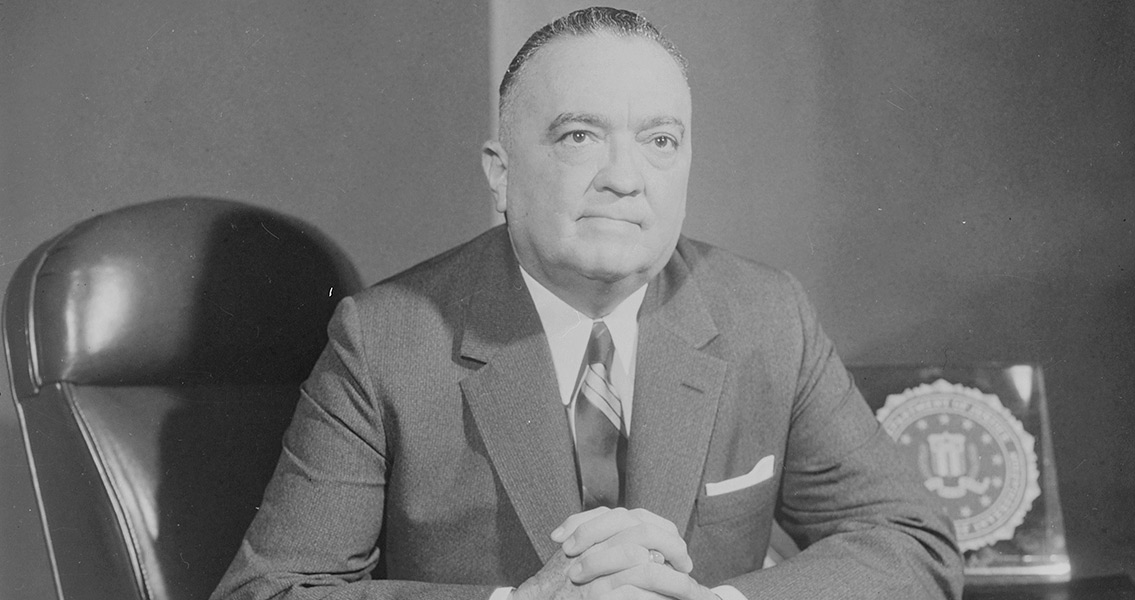
The Death of J. Edgar Hoover

Buchalter and John Dillinger being killed or imprisoned by the FBI. Tellingly, a 1936 poll of American school boys saw Hoover voted the second most popular man in the country, behind only Robert Ripley, the creator of Ripley’s Believe It Or Not. It was during the Cold War period that the FBI and its methods came into question. Fear of radicalism, and particularly communism, returned to the United States. The FBI compiled millions of files on Americans suspected of dissident activities, and Hoover worked with Senator Joseph McCarthy, the man who drove the communist witch hunt in American politics. In 1956, Hoover instigated the creation of a new counter intelligence program called Cointellpro. The top secret initiative was originally intended to target communist organisations but it soon expanded its remit to include any dangerous groups, including the Civil Rights Movement. Civil Rights leaders, including Martin Luther King, became the subject of harassment and surveillance by the FBI, and questions started to be asked about the amount of power the FBI could wield. By 1969 Hoover had started to receive public criticism for his leadership of the FBI. Congress passed laws limiting the tenure of FBI directors to ten years, and requiring Senate approval for the appointment of any new director. Hoover’s death came shortly before the Watergate Affair started to unravel in the media, with the resulting hearings concluding that the FBI had illegally used its authority to protect President Richard Nixon. Since his death, and the Watergate revelations, Hoover’s reputation has diminished as new information has been revealed about FBI breaches of civil liberties. Hoover, once considered the embodiment of honesty and integrity, has been repainted as corrupt, dangerous and discriminatory. Largely this reevaluation is down to hindsight, and the reassessing of key events in the post-war period that Hoover was involved with. Undoubtedly a controversial figure, it is also important to remember that Hoover played a crucial role in the development of modern crime fighting techniques, laying the blueprint for the modern FBI. ]]>

Categories
News

Forty Years Since the Start of The Church Committee