Categories
Breaking News

Discovery Suggest Jordan’s Black Desert was Full of Life

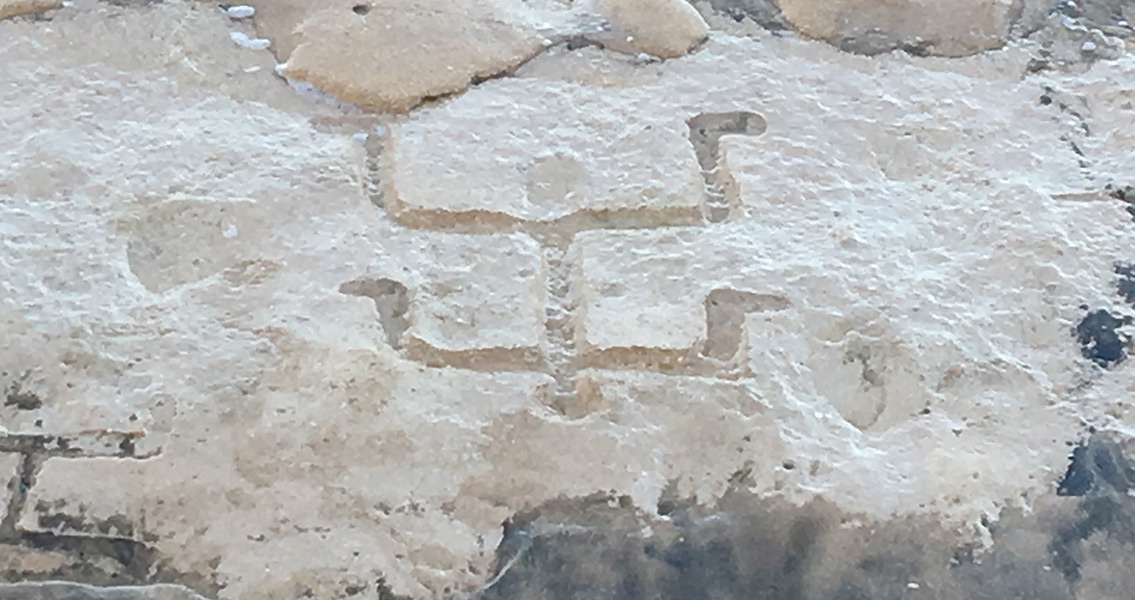
Live Science. That was not always the case, however. “There are literally many thousands of Safaitic inscriptions and petroglyphs in the Jebel Qurma region, which suggests that people intensively used the area.” The petroglyphs (rock art) include renderings of lions, horses, gazelles and large birds – possibly ostriches. The writing found near the petroglyphs is mostly short texts of names. Several texts contain information on the activities of people, while a few hint of a conflict between the people of Jebel Qurma and the Nabataeans, the people responsible for building the ancient city of Petra. One such inscription reads: “I am on the lookout for the Nabataeans.” Other inscriptions describe the challenges and obstacles encountered by the residents of Jebel Qurma. “May there be strength against hunger,” one text reads, while another describes a man who was “distraught over his beloved.” Specialists are analyzing petroglyphs and texts to get a clearer understanding as to their meaning and the reason they were created. “The precise reason for producing rock art — inscriptions and/or representations — is still unclear and open to discussion. What was the message which the producers of the rock art tried to convey?” Akkermans asks in Live Science. In addition to the inscriptions and rock art, archaeologists discovered the remains of shelters, camps and tombs which were used by the people living in the area, who were likely nomadic. The team continues to look for additional evidence indicating what the environment may have been like in ancient times and how the landscape turned into the desolate region of today. “Our excavation at one site revealed masses of charcoal from the third century A.D., which appeared to represent several taxa [groups] of trees, which needed water year-round,” Akkermans says in the Live Science article. “Hence, the conditions in at least the third century A.D. may have been quite different from today. This is certainly something I wish to explore in the next field seasons, by coring for pollen.” The goal of the Jebel Qurma Archaeological Landscape Project is to study the extraordinary archaeological heritage in Jordan’s Black Desert. The project involves field surveys and excavations in the Jebel Qurma range east of the oasis of Azraq, close to the Jordan-Saudi border. The findings have been published in the American Journal of Archaeology. ]]>

Categories
Breaking News

Now You See Them, Now You Don’t. Petroglyphs Revealed on Beach

Atlantic: “We consider these Waianae petroglyphs to be consistent with traditional pre-Cook Hawaiian petroglyphs. The ones we’ve seen appear to be those with a linear torso—commonly and regrettably referred to as ‘stick figure.’” Pre-Cook refers to the British explorer James Cook, who arrived in the Hawaiian Islands for the first time in 1778. Petroglyphs have been found at various historic sites all across the Hawaiian Islands, it’s uncommon however, to find them in such close proximity to the water according to a statement released by the state Department of Land and Natural Resources (DLNR). Archaeologist Alton Exzabe, with the U.S. Army (which is responsible for the management of numerous Hawaiian archeological sites), said in the statement that the petroglyphs stand out for their size – one carving is almost 5 feet tall (1.7 meters) while the typical size of other petroglyphs is around one foot. Fingers and hands are also depicted, something else which is not typical. What the petroglyphs represent is a subject of debate among scholars. Several appear to be spiritual or sacred in nature, while others have been interpreted as simply markers of someone’s presence at the location, an ancient sort of “____ was here.” The Stasacks explained in the Atlantic that the meaning and symbolism can vary from location to location. Because of the relative isolation of Hawaii, it’s possible the petroglyphs are uniquely revealing in regards to Hawaiian culture. Dating the petroglyphs will also be challenging due to their exposure to seawater, and at this point is only speculative. Archaeologists have estimated the recently discovered engravings to be approximately 400 years old. In the statement from DLNR it’s said that the carvings may have been seen in the past by locals, but they’ve never been scientifically recorded. The sands have already covered them again. Glen Kila, who is a descendant of one of the first aboriginal families on the Waianae coast, told Seeker that the petroglyphs “record our genealogy and religion, it’s very important to know about the lineal descendants of the area and their understanding of these petroglyphs.” The Department of Land and Natural Resources is currently collaborating with the State Historic Preservation Division and the U.S. Army on a preservation plan for the petroglyphs, which are so fragile that even brushing the sand away from them can cause damage. Image courtesy of Hawaii Department of Land and Natural Resources. Additional images of the petroglyphs can be found here]]>