
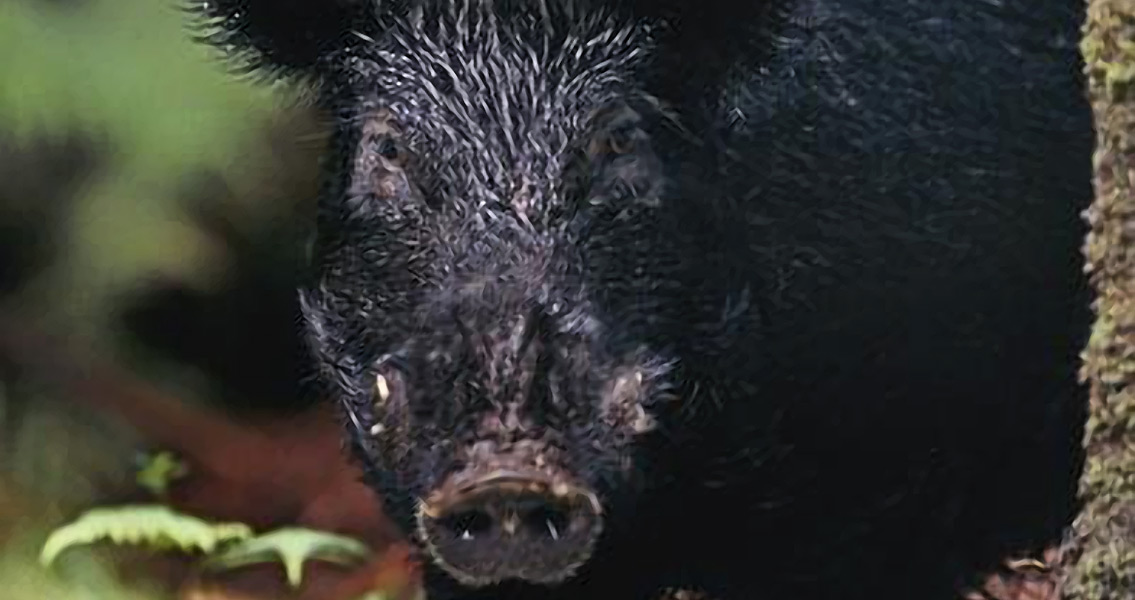
Royal Society Journal, Open Science; the study argues that wild pigs would naturally have camouflaged coats. Human societies however, seem to have a preference for pigs with a black coloured coat, and have selectively domesticated pigs exhibiting that trait on at least three separate occasions in history. It seems that the Polynesians, Europeans and Chinese all had a penchant for black pigs, perhaps due to the novelty of the animals’ colour. The domestication history of pigs is incredibly complicated, in large part because it’s incredibly difficult to distinguish between domesticated and wild pigs in the archaeological record. Archaeologists believe that Sus scrofa (wild boar) were domesticated independently between 9,000 and 10,000 years ago in two locations: eastern Anatolia and central China. After this initial domestication, the pigs accompanied farmers as they migrated across Europe and Asia, eventually arriving in Polynesia. The focus of the latest study, led by Professor Greger Larson from Oxford University, were pigs on Hawaii. The animals have had an important cultural role on the isolated archipelago ever since they were first brought there by the Polynesians some 800 years ago. It has long been a source of debate however, whether the feral pigs there (populations once descended from domesticated pigs but now living in the wild) are descended from the initial Polynesian stock, or from European domestic pigs that arrived with explorer James Cook in 1778. Experienced sailors, Polynesians spread across the Pacific region, bringing dogs, sweet potatoes and chickens, as well as pigs, in their boats; allowing these flora and fauna to spread through the Pacific islands. Larson’s team carried out analyses on the DNA sequences of modern feral pigs on Hawaii, and discovered a ‘novel mutation’ was responsible for their black coat. This discovery was particularly surprising, as the team had expected to find either the European or Asian genetic mutation had led to the black fur. It’s a result which suggests that for thousands of years humans across the globe have been independently selecting and breeding pigs for their black colour. Professor Larson, from Oxford’s Palaeogenomics and Bio-Archaeology Research Network, explained the results in a press release. “The first pigs introduced to Hawaii by the Polynesians were kept as domestic animals. No wild boar have black colours since natural selection only allows camouflaged pigs to survive long enough to reproduce. Humans, on the other hand, love all kinds of coloured coats and have selected for black coats at least three times independently in domestic pigs in Europe, Asia, and the Pacific. In the case of pigs, black has always been the new black.” Image courtesy of Jack Jeffrey Photography ]]>
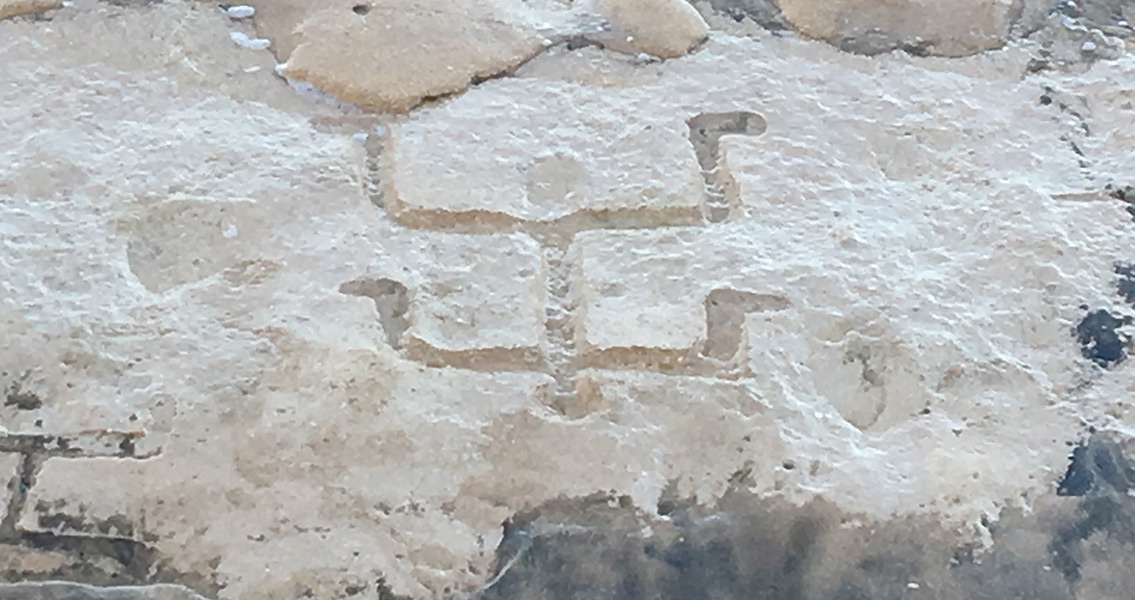
Atlantic: “We consider these Waianae petroglyphs to be consistent with traditional pre-Cook Hawaiian petroglyphs. The ones we’ve seen appear to be those with a linear torso—commonly and regrettably referred to as ‘stick figure.’” Pre-Cook refers to the British explorer James Cook, who arrived in the Hawaiian Islands for the first time in 1778. Petroglyphs have been found at various historic sites all across the Hawaiian Islands, it’s uncommon however, to find them in such close proximity to the water according to a statement released by the state Department of Land and Natural Resources (DLNR). Archaeologist Alton Exzabe, with the U.S. Army (which is responsible for the management of numerous Hawaiian archeological sites), said in the statement that the petroglyphs stand out for their size – one carving is almost 5 feet tall (1.7 meters) while the typical size of other petroglyphs is around one foot. Fingers and hands are also depicted, something else which is not typical. What the petroglyphs represent is a subject of debate among scholars. Several appear to be spiritual or sacred in nature, while others have been interpreted as simply markers of someone’s presence at the location, an ancient sort of “____ was here.” The Stasacks explained in the Atlantic that the meaning and symbolism can vary from location to location. Because of the relative isolation of Hawaii, it’s possible the petroglyphs are uniquely revealing in regards to Hawaiian culture. Dating the petroglyphs will also be challenging due to their exposure to seawater, and at this point is only speculative. Archaeologists have estimated the recently discovered engravings to be approximately 400 years old. In the statement from DLNR it’s said that the carvings may have been seen in the past by locals, but they’ve never been scientifically recorded. The sands have already covered them again. Glen Kila, who is a descendant of one of the first aboriginal families on the Waianae coast, told Seeker that the petroglyphs “record our genealogy and religion, it’s very important to know about the lineal descendants of the area and their understanding of these petroglyphs.” The Department of Land and Natural Resources is currently collaborating with the State Historic Preservation Division and the U.S. Army on a preservation plan for the petroglyphs, which are so fragile that even brushing the sand away from them can cause damage. Image courtesy of Hawaii Department of Land and Natural Resources. Additional images of the petroglyphs can be found here]]>


Pacific Historical Review. Opposition to rum-production, however, was vehement. In 1840, a law had been passed banning the distillation of rum. Even in the tough climate of the 1850s there was little enthusiasm for repealing this law. This resistance to rum-production intrigued Kessler, particularly as it would have been relatively easy to begin the lucrative production of the alcohol. Why was there such an eschewing of economic interests on Hawai’i, with planters producing sugar, but no rum? “The short answer is that many of Hawai‘i’s influential early sugar- cane planters were temperance advocates,” Kessler explains. Honolulu supported a community of teetotalers who desired to limit the havoc which could be caused by drunken sailors. These attitudes had deep roots. Alcohol production was rejected by sugarcane producers on religious grounds. American Congregationalist missionaries had introduced sugarcane to Hawai’i in the 1820s. Initially entirely opposed due to its association with rum, sugarcane was eventually accepted by missionaries. Though they remained resolutely opposed to distilling rum, they embraced sugarcane production for its economic, environmental and social factors. Most Hawaiian sugarcane planters in the 1840s and 1850s were descended from these earlier Protestant revivalists. Opposition to the production and sale of liquor became part of the religious moral identity of the planters. “For these Protestant planters, growing sugarcane was much more than agriculture; it was an action vested with cultural and political meaning”, Kessler notes. By the 1870s, however, the opposition to rum-distillation had waned. “Without rum, underfinanced sugar producers were less likely to succeed, and foreign capital was all the more necessary to establish secure operations,” Kessler explained. Foreign investors, attracted to Hawai’i by the opportunity to invest in the plantation system of sugarcane production, did not have the same attitude towards rum as the missionaries had had. Sugar production gradually lost the cultural and moral significance it was imbued with by missionaries, and the ban against distilling rum was lifted in 1874. Hawaiian history is often subsumed into a wider history of the United States of America. Kessler’s work redresses that balance somewhat, allowing us to see both the spread of Christianity, as well as the growth in sugarcane production which was of vital importance to the Hawaiian economy until tourism began to become a lucrative industry in the mid-twentieth century. For more information: www.jstor.org Image courtesy of Wikimedia Commons user: Sandstein ]]>
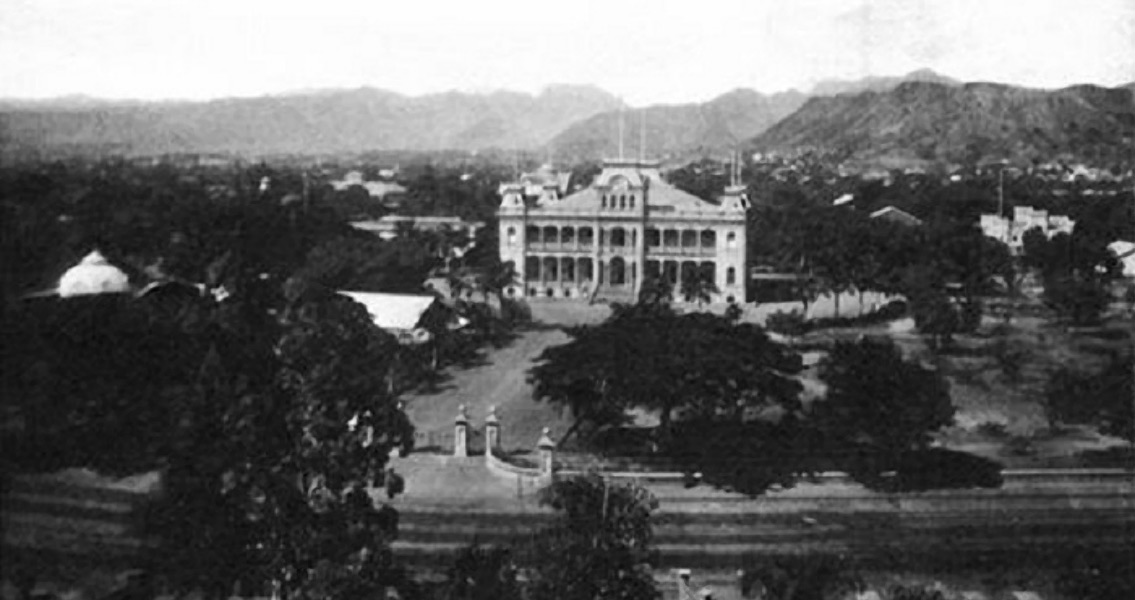
Liliuokalani succeeded to the Hawaiian throne in 1891, and seemed determined to reverse the growing US influence. She refused to accept the Bayonet Constitution of 1887, and instead replaced it with one built around her own personal authority. Her actions triggered a response from the European and American population on the island, who organised themselves and gained support from the US marines stationed at Pearl Harbour. Two years after Liliuokalani came to power, she was deposed in the bloodless coup. When Grover Cleveland took the US presidency in March he offered some hope to the supporters of the monarchy by ordering an investigation into the coup. It was concluded that the monarchy had been deposed illegally. Aware that the majority of Hawaiians did not support Dole’s new regime, Cleveland sent an ambassador to Hawaii to return the queen to power under the old constitution of 1887. Dole refused to stand down, and Cleveland was reluctant to use force. Hawaii was not annexed to the United States, but Dole was left to rule over a newly independent republic. The breakout of the Spanish American War in 1898 finally pressured the US Congress into officially annexing Hawaii, to ensure the United States kept control of the strategically vital Pearl Harbour. Two years later the islands were officially absorbed into US territory, and in 1959 they finally became the fiftieth State. Hawaii is the only US state to have formerly been an independent country with its own monarchy. During Bill Clinton’s term in office an official apology was issued by the US government, admitting the Hawaiian monarchy had been abolished illegally. Hawaii was the last state to join the USA. The process by which it did proved to be incredibly controversial.]]>