Categories
Breaking News

Catholic Monastery Built as Penance Hides Ancient Iraqi Texts

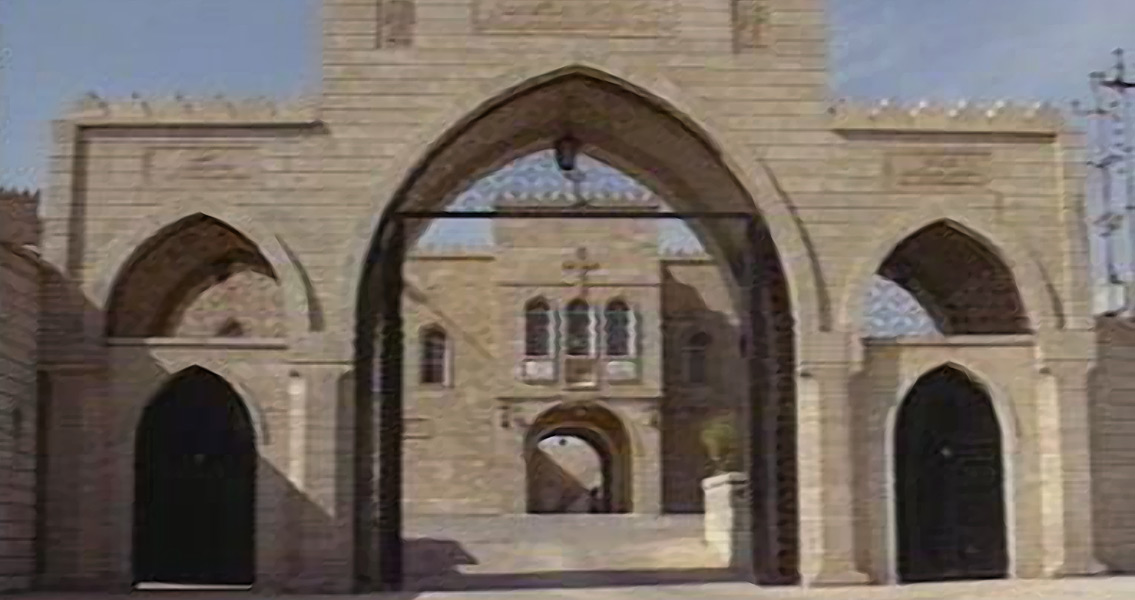
Live Science: “Each one contains lengthy colophons [notes] written by the scribes, telling historical and social, and religious events of their times — a fact that makes them precious sources.” Mar Behnam monastery was the home of numerous ancient texts, pieces of artwork and carved inscriptions that dated back centuries. It was occupied by ISIS beginning in June, 2014, until it was recaptured by the Iraqi government in November, 2016. Photographs and a news report published shortly after the monastery’s recapture show that ISIS militants had destroyed several of the monastery’s buildings, burnt any texts they found, defaced and destroyed artwork and inscriptions, and left graffiti on all of the remaining structures. The Monastery of the Martyrs Mar Behnam and Marth Sarah is a Syriac Catholic monastery in northern Iraq. It was built in the twelfth century by Senchareb, an Assyrian king, as penance for the murder of his son Behnam and daughter Sarah following their conversion to Christianity. Sculptures of the church indicate that renovations were completed in 1164 and again between 1250-1261. The monks abandoned the monastery, for unknown reasons, in 1819. It’s been under the care of the Syriac Catholic Church since 1839, although at some point in its history it was part of the Church of the East for ten centuries or more, as shown by the rare Turkic inscriptions left behind by Mongol pilgrims during the thirteenth century. The monastery was renovated again in 1986, and was visited by thousands of Muslims and Christians every year until ISIS took control of the region. A young priest hid the texts at Mar Behnam just 40 days before ISIS arrived. They were put in large metal cans and placed in a storage room enclosed behind the newly constructed wall. The priest, who was forced out of the monastery, kept the undertaking a secret until he felt the region was secure. The texts remained behind the wall for more than two years. It’s been reported that ISIS used the same building as a base for its morality police. What happens to the texts now is unclear and Harrak wonders if they should be taken out of Iraq, at least in the short term, for safekeeping. “What is the future of these manuscripts? Iraq is a restless country,” Harrak told Live Science. “Should they take them to Europe, for example, or the Vatican Library or somewhere more secure?” ]]>
Categories
Breaking News

Discovery Suggest Jordan’s Black Desert was Full of Life

Live Science. That was not always the case, however. “There are literally many thousands of Safaitic inscriptions and petroglyphs in the Jebel Qurma region, which suggests that people intensively used the area.” The petroglyphs (rock art) include renderings of lions, horses, gazelles and large birds – possibly ostriches. The writing found near the petroglyphs is mostly short texts of names. Several texts contain information on the activities of people, while a few hint of a conflict between the people of Jebel Qurma and the Nabataeans, the people responsible for building the ancient city of Petra. One such inscription reads: “I am on the lookout for the Nabataeans.” Other inscriptions describe the challenges and obstacles encountered by the residents of Jebel Qurma. “May there be strength against hunger,” one text reads, while another describes a man who was “distraught over his beloved.” Specialists are analyzing petroglyphs and texts to get a clearer understanding as to their meaning and the reason they were created. “The precise reason for producing rock art — inscriptions and/or representations — is still unclear and open to discussion. What was the message which the producers of the rock art tried to convey?” Akkermans asks in Live Science. In addition to the inscriptions and rock art, archaeologists discovered the remains of shelters, camps and tombs which were used by the people living in the area, who were likely nomadic. The team continues to look for additional evidence indicating what the environment may have been like in ancient times and how the landscape turned into the desolate region of today. “Our excavation at one site revealed masses of charcoal from the third century A.D., which appeared to represent several taxa [groups] of trees, which needed water year-round,” Akkermans says in the Live Science article. “Hence, the conditions in at least the third century A.D. may have been quite different from today. This is certainly something I wish to explore in the next field seasons, by coring for pollen.” The goal of the Jebel Qurma Archaeological Landscape Project is to study the extraordinary archaeological heritage in Jordan’s Black Desert. The project involves field surveys and excavations in the Jebel Qurma range east of the oasis of Azraq, close to the Jordan-Saudi border. The findings have been published in the American Journal of Archaeology. ]]>