Categories
Breaking News

Man Made Amazon Theory Finds New Support In Trees

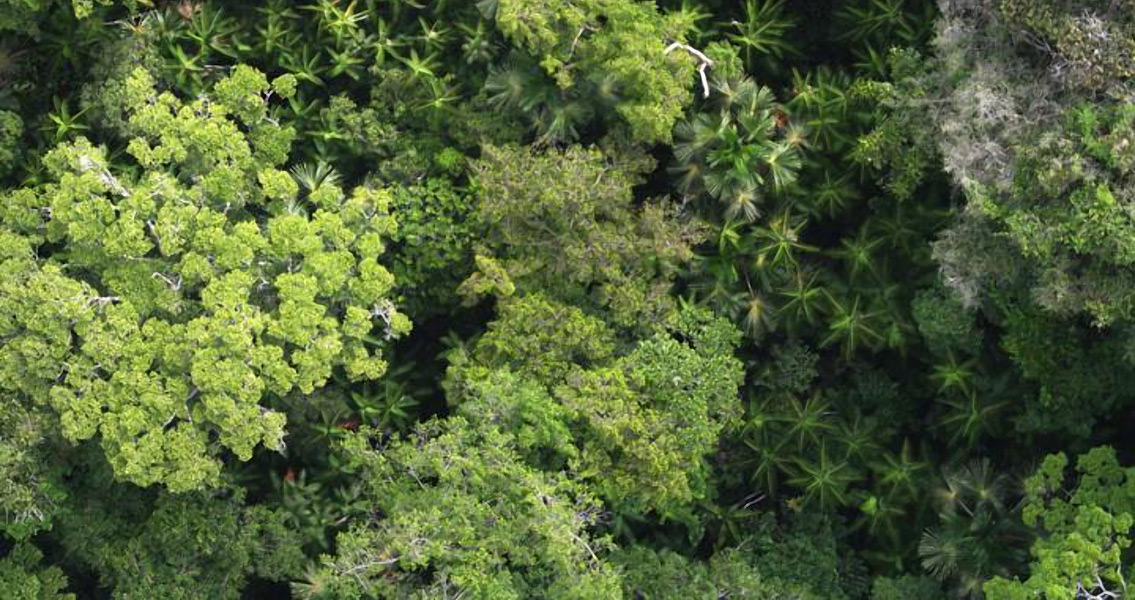
Was The Amazon Rainforest Man Made? Traditionally, historians have argued that the Amazon rainforest was sparsely populated prior to the arrival of Europeans, a cultural blackhole when compared to the richly populated rest of pre-Columbian South America. Extremely fertile land found radiating out from the remains of ancient settlements over the last few years has led some archaeologists to argue that for millennia people were enriching the relatively poor soil of the Amazon to use for farming. A study published by the Proceedings of the Royal Society of London B: Biological Sciences in 2015 went as far as to argue that a massive civilisation had once domesticated much of the land in the Amazon. They claimed that food production projections supported estimates of 8 million people living in the rainforest as late as 1492. Trees Support the Man Made Amazon Theory Levis and colleagues’ study used the Amazon’s trees as a means to look at the rainforest’s history of cultivation. “For many years, ecological studies ignored the influence of pre-Columbian peoples on the forests we see today. We found that a quarter of Amazonia’s domesticated species are widely distributed in the basin and dominate large expanses of forest. These results clearly indicate that the Amazonian flora is in part a surviving heritage of its past inhabitants,” Levis explained. The team overlayed data from over 1000 forest surveys of the Amazon Tree Diversity network on a map of over 3000 archaeological sites in the Amazon. Comparing forest composition at various distances from archaeological sites generated a picture of how pre-Colombian peoples influenced Amazon biodiversity. 85 tree species known to have been domesticated by ancient Amazonians for shelter, food or other uses formed the basis of the study. Remarkably, the team found that these 85 species were far more likely to be common in the tree surveys than non-domesticated species. These domesticated species were also found to be much more common close to archaeological sites. “This lays to rest the long-standing myth of the ’empty Amazon’,” says Charles Clement, senior researcher at INPA, Manaus, and a coauthor of the study. “Early European naturalists reported scattered indigenous populations living in huge and apparently virgin forests, and that idea has continued to fascinate the media, policy makers, development planners and even some scientists. This study confirms that even areas of the Amazon that look empty today are crowded with ancient footprints.” ]]>
Categories
Breaking News

European Destruction of Early Americans Shown in DNA

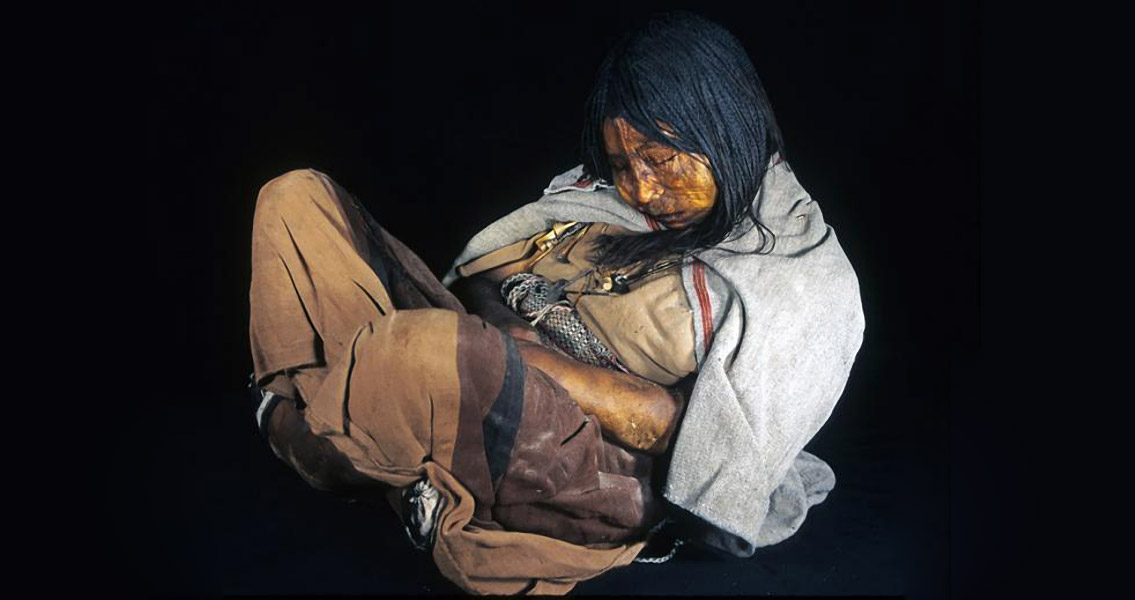
Science Advances, the study marks the first large scale investigation of indigenous DNA and its presence in modern Americans. The researchers analysed directly the DNA of 92 pre-Columbian skeletons, ranging from 500 to 8600 years old. Maternal genetic lineages were charted for the study by extracting and sequencing whole mitochondrial genomes from the teeth and bones of the 92 pre-Columbian skeletons. The team’s findings were shocking. “Surprisingly, none of the genetic lineages we found in almost 100 ancient humans were present, or showed evidence of descendants, in today’s Indigenous populations,” explained Dr Bastien Llamas, a Senior Research Associate with ACAD and joint lead author of the study. “This separation appears to have been established as early as 9000 years ago and was completely unexpected, so we examined many demographic scenarios to try and explain the pattern.” How such an extreme population decline could take place is a mystery, but Llamas suggests it is directly tied in with the pattern of colonisation. “The only scenario that fit our observations was that shortly after the initial colonisation, populations were established that subsequently stayed geographically isolated from one another, and that a major portion of these populations later became extinct following European contact.” he said, in a press release. “This closely matches the historical reports of a major demographic collapse immediately after the Spaniards arrived in the late 1400s.” Just last month, a genetic analysis of Panamanian men found that even though most Panamanians are from female indigenous ancestry, only 22% of the men studied had Y-chromosomes of native origin. Published in the journal PLOS ONE, the study led by Viola Grugni revealed the signature of the strong male genetic impact of European invaders. Beyond highlighting the dramatic consequences of European colonisation, the data collected by the researchers behind the latest study offers insight into the timing of the very first population of the Americas. “Our genetic reconstruction confirms that the first Americans entered around 16,000 years ago via the Pacific coast, skirting around the massive ice sheets that blocked an inland corridor route which only opened much later,” said ACAD’s director, Professor Alan Cooper. “They spread southward remarkably swiftly, reaching southern Chile by 14,600 years ago.” These earliest Americans were distinguished by their limited genetic diversity, a consequence of their population being isolated on the Bering Land Bridge for thousands of years during the last Ice Age. “This long isolation of a small group of people brewed the unique genetic diversity observed in the early Americans.” remarked Dr Lars Fehren-Schmitz, from UCSC, the other lead author. The new study charts both the formation of a unique early American identity, and its disappearance as a result of European colonisation. Image courtesy of Johan Reinhard]]>