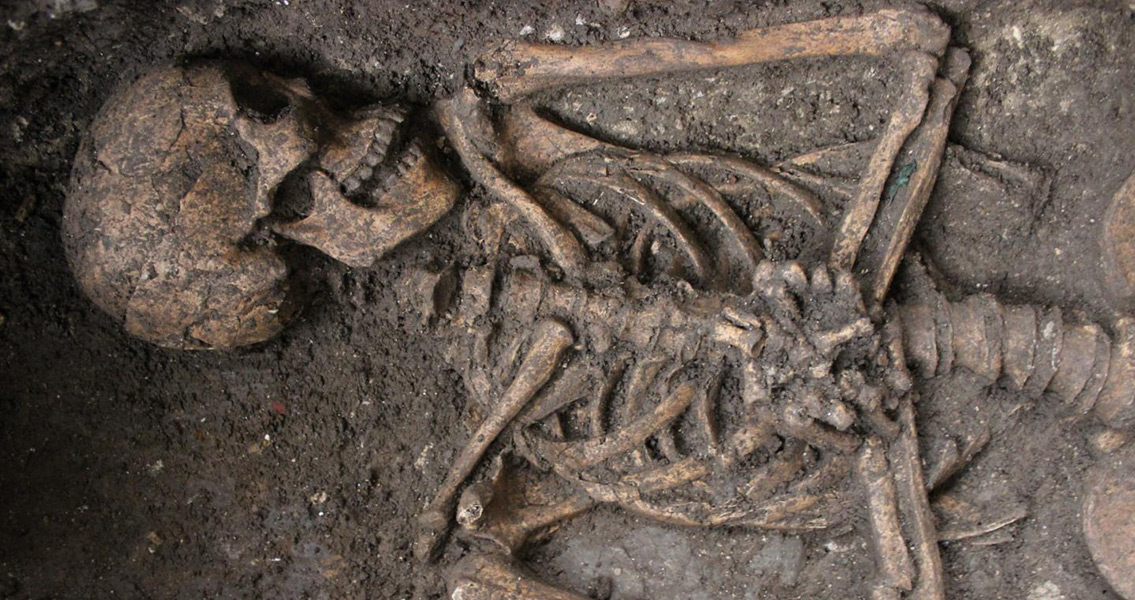
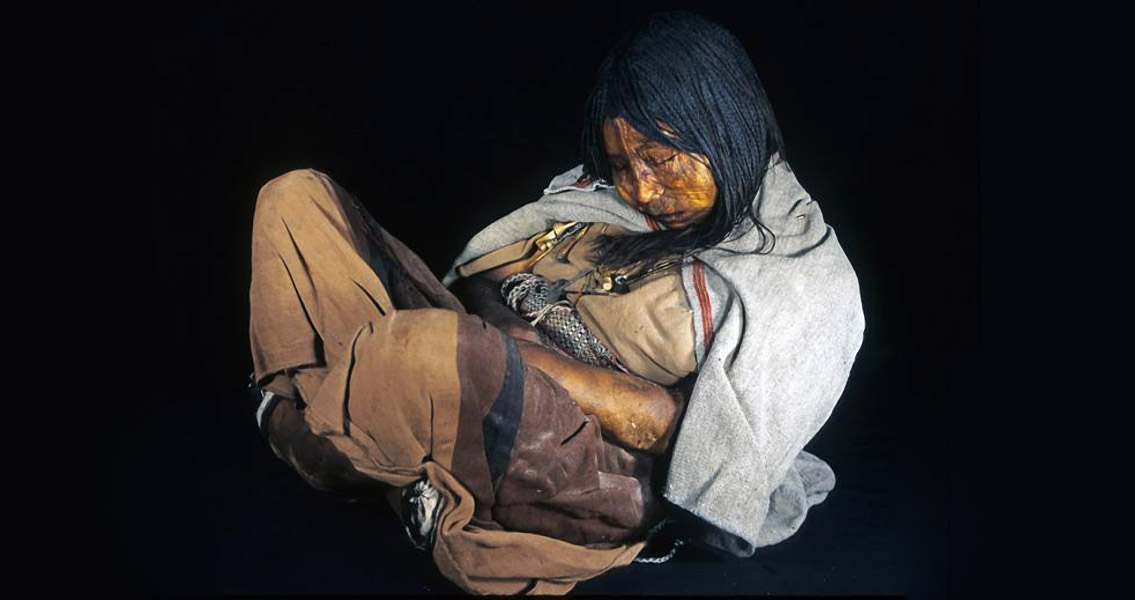
Science Advances, the study marks the first large scale investigation of indigenous DNA and its presence in modern Americans. The researchers analysed directly the DNA of 92 pre-Columbian skeletons, ranging from 500 to 8600 years old. Maternal genetic lineages were charted for the study by extracting and sequencing whole mitochondrial genomes from the teeth and bones of the 92 pre-Columbian skeletons. The team’s findings were shocking. “Surprisingly, none of the genetic lineages we found in almost 100 ancient humans were present, or showed evidence of descendants, in today’s Indigenous populations,” explained Dr Bastien Llamas, a Senior Research Associate with ACAD and joint lead author of the study. “This separation appears to have been established as early as 9000 years ago and was completely unexpected, so we examined many demographic scenarios to try and explain the pattern.” How such an extreme population decline could take place is a mystery, but Llamas suggests it is directly tied in with the pattern of colonisation. “The only scenario that fit our observations was that shortly after the initial colonisation, populations were established that subsequently stayed geographically isolated from one another, and that a major portion of these populations later became extinct following European contact.” he said, in a press release. “This closely matches the historical reports of a major demographic collapse immediately after the Spaniards arrived in the late 1400s.” Just last month, a genetic analysis of Panamanian men found that even though most Panamanians are from female indigenous ancestry, only 22% of the men studied had Y-chromosomes of native origin. Published in the journal PLOS ONE, the study led by Viola Grugni revealed the signature of the strong male genetic impact of European invaders. Beyond highlighting the dramatic consequences of European colonisation, the data collected by the researchers behind the latest study offers insight into the timing of the very first population of the Americas. “Our genetic reconstruction confirms that the first Americans entered around 16,000 years ago via the Pacific coast, skirting around the massive ice sheets that blocked an inland corridor route which only opened much later,” said ACAD’s director, Professor Alan Cooper. “They spread southward remarkably swiftly, reaching southern Chile by 14,600 years ago.” These earliest Americans were distinguished by their limited genetic diversity, a consequence of their population being isolated on the Bering Land Bridge for thousands of years during the last Ice Age. “This long isolation of a small group of people brewed the unique genetic diversity observed in the early Americans.” remarked Dr Lars Fehren-Schmitz, from UCSC, the other lead author. The new study charts both the formation of a unique early American identity, and its disappearance as a result of European colonisation. Image courtesy of Johan Reinhard]]>
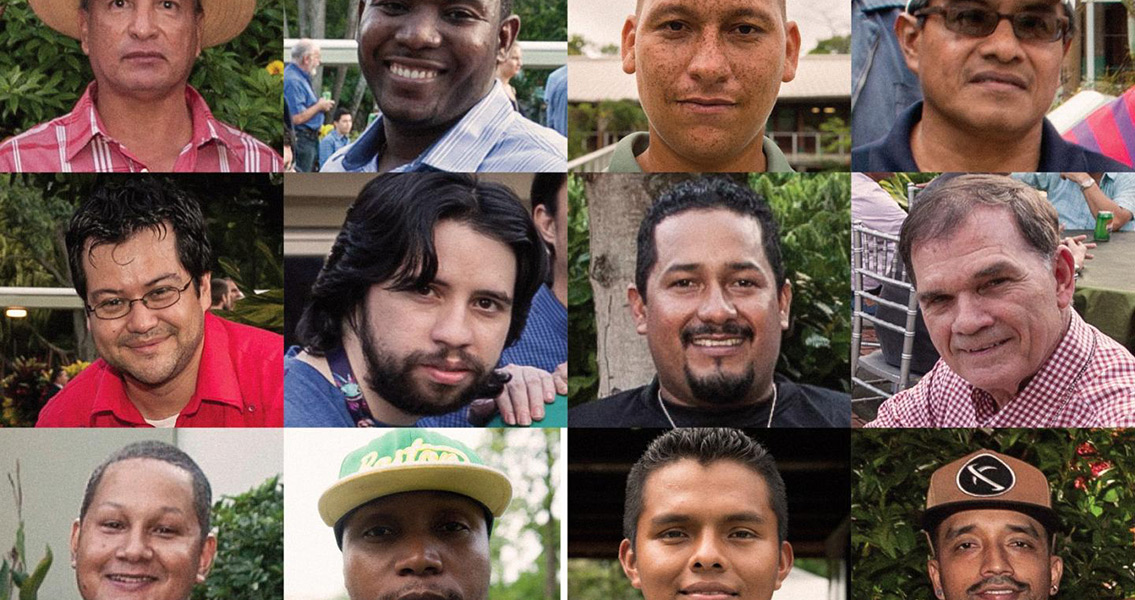
PLOS ONE, was performed by a team of scientists from the University of Pavia, led by Viola Grugni. The team studied the genetics of 408 Panamanian men to investigate Y-chromosome variation in the population through the centuries. In modern Panama, seven indigenous ethnic groups account for 12.3% of the country’s population. 83% of the country’s general population however, harbour mitochondrial DNA of native ancestry. By focusing on the Y-chromosome, the researchers revealed a remarkable contrast between paternal and maternal genetic inheritance. The Native American component (Haplogroup Q) exceeded 50% in only three regions on the Caribbean facing side of Panama. Two of those regions, Comarca of Kuna Yala and Bocas del Toro province, are areas dominated by speakers of the indigenous Chibchan language. The third, the province of Colón, hosts a population dominated by the Kuna, an indigenous people of Colombia and Panama, and people of mixed indigenous-African-European descent. Every human has a pair of sex chromosomes which determine their gender. Whereas women have two X-chromosomes, men have one X and one Y chromosome – the Y-chromosome inherited from their father. Mitochondrial DNA on the other hand, is only inherited from the mother in both males and females. Small mutations which have accumulated in the two types of DNA over time allow scientists to trace genetic histories. By highlighting differences in the make-up of Y-chromosomes and Mitochondrial DNA, the authors have revealed the long term genetic effects of colonisation. The Spanish conquest, beginning in 1499, instigated drastic genetic change in Central America. Much of the native population was killed in conflict with the Spanish population, while the spread of European diseases to people with no immunity to them was also catastrophic. Male Spanish colonists typically came to the region without their wives, often taking native women as their partners. The legacy of this is found in the dominance of European DNA in the Y-chromosome. The presence of Sub-Saharan DNA reveals the long term genetic impact of the Atlantic slave trade. The results also show the geographic distribution of Spanish colonisation, which after 1519 was most densely focused on Panama’s Pacific side where a drier climate was more suitable for agriculture and cattle raising. The prevalence of Eurasian Y-chromosomes ranged from 62 to 72 percent in test subjects from the Pacific regions of Panama, while the proportion of native chromosomes was between 66 to 88 percent in the Caribbean regions, a dramatic difference. Darien Province had the highest proportion of Sub-Saharan DNA, according to the results. The authors believe this notable exception is explained by the region having been a popular point of refuge for escaped slaves during the colonial period. The region of Central America that is now Panama has been inhabited continuously for the the last 10,000 years, the new study reveals the massive genetic changes that have occurred in the last 600 as a result of European colonisation. For more information, the full study is available here Image courtesy of Jorge Aleman, STRI]]>

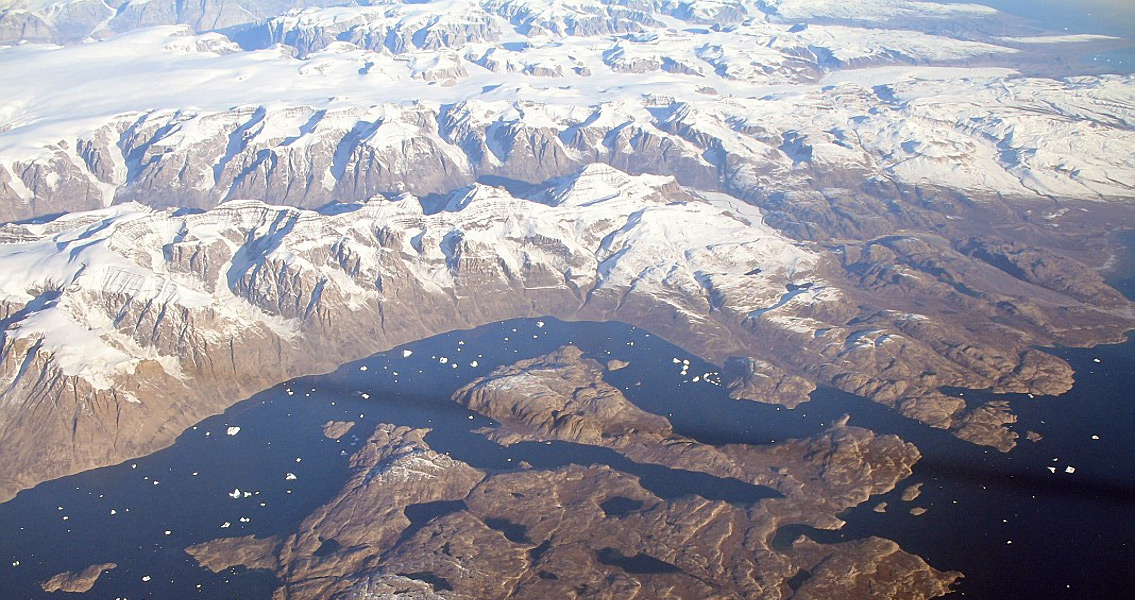
Was it for walrus? Viking Age settlement and medieval walrus ivory trade in Iceland and Greenland. Image courtesy of Wikimedia Commons user: Turelio ]]>