Categories
Breaking News

Secret Ancient Amazon Population Revealed – The History News of the Week

New Amazon Population Revealed Archaeologists have discovered remarkable new evidence that parts of the Amazon long thought uninhabited were in fact home to thriving, diverse populations of up to a million people. The researchers from the University of Exeter have unearthed remains revealing that a 1,800 km stretch of Southern Amazonia was continuously occupied from 1250 until 1600 by people living in fortified villages. Key to the research was the analysis of mysterious earthworks called geoglyphs – man made ditches with strange square, circular or hexagonal shapes. The new study, published in the journal Nature Communications, shows there are an estimated 1,300 geoglyphs across 400,000 square km of Southern Amazonia, with 81 in the area focused on in the latest research. The archaeologists estimate there would have been between 1,000 and 1,500 enclosed villages, with two-thirds of the sites yet to be found. “There is a common misconception that the Amazon is an untouched landscape, home to scattered, nomadic communities,” said Dr Jonas Gregorio de Souza from the University of Exeter’s Department of Archaeology. “This is not the case. We have found that some populations away from the major rivers are much larger than previously thought, and these people had an impact on the environment which we can still find today.” Dr de Souza continued: “The Amazon is crucial to regulating the Earth’s climate, and knowing more about its history will help everyone make informed decision about how it should be cared for in the future.” With large swathes of the Amazon rainforest still unexplored by archaeologists, especially in the areas away from major rivers, the latest discovery is helping fill in gaps in the history of the Amazon. Professor José Iriarte, from the University of Exeter, another member of the research team, said: “We are so excited to have found such a wealth of evidence. Most of the Amazon hasn’t been excavated yet, but studies such as ours mean we are gradually piecing together more and more information about the history of the largest rainforest on the planet “Our research shows we need to re-evaluate the history of the Amazon. It certainly wasn’t an area populated only near the banks of large rivers, and the people who lived there did change the landscape. The area we surveyed had a population of at least tens of thousands.” North America’s Oldest Footprints Discovered 13,000-year-old human footprints have been discovered on Canada’s Pacific coast, the oldest ever found in North America. The finding could have significant repercussions for the history of how North America was populated. It is widely believed that humans migrated to the continent from Eurasia during the last ice age, which ended 11,700 years ago. It is thought they entered on what is now the west coast of British Columbia, however, the search for archaeological evidence has been hindered by the densely forested and difficult to access landscape. Archaeologist Duncan McLaren and colleagues from the University of Victoria, Canada, have spent several years excavating tidal sediments on the shoreline of Calvert Island, British Columbia, searching for traces of human activity. Their findings have now been published in the online open access journal PLOS ONE. They reveal that 29 footprints have been uncovered of at least three different sizes. This suggests that they likely belonged to two adults and a child who were all walking barefoot. Radiocarbon dating has estimated the footprints to be around 13,000 years old. This suggests humans were present on the west coast of British Columbia as it emerged from the last ice age. “The results presented here add to the growing body of information pertaining to the early deglaciation and associated human presence on the west coast of Canada at the end of the Last Glacial Maximum,” the authors write in the introduction to their recently published study. 13,000 years ago, the sea level on the shores of Calvert Island was up to ten feet lower than it is today. Even so, it still would have only been accessible by boat. “[This] implies that the people who left the footprints were seafarers who used boats to get around, gather and hunt for food and live and explore the islands,” Duncan Mclaren, lead study author and anthropologist at the Hakai Institute and the University of Victoria in British Columbia, told the New York Times. Pre-historic Russia-Canada Connection Illuminated With Insect Fossils [caption id="attachment_8580" align="alignnone" width="1440"]A New Species of Scorpionfly Fossil From 53 Million Years Ago at Mcabee, British Columbia A new species of scorpionfly fossil from 53 million years ago at McAbee, British Columbia named Eomerope eonearctica. This insect is very similar to a fossil species that lived at the same time north of Vladivostok on the Asian Pacific coast, highlighting connections between Canada and Russia in ancient times. Credit: SFU[/caption] A newly discovered, 53 million-year old insect fossil is shining new light on the ancient Canada-Russia connection. Known as a scorpionfly, the insect discovered at the McAbee fossil bed site in British Columbia bears a ‘striking resemblance’ to fossils of the same period from Pacific coastal Russia. “We’ve seen this connection before through fossil plants and animals, but these insects show this in a beautiful way,” said Bruce Archibald, a research associate at Simon Fraser University’s Department of Biological Sciences. “They are so much alike that only the wing colour of the new McAbee species tells them apart.” The new Canadian species has been named Eomerope eonearctica, while its Russian counterpart is Eomerope asiatica, which was first described in 1974. “I’m not aware of any case where two such species so much alike and so close in age have been found in both Pacific Russia and Pacific Canada, and that’s pretty great,” said Archibald. According to Archibald, the insect’s only living relative is found in the temperate forest of central Chile, which has a climate similar to British Columbia’s 53 million years ago. Archibald worked with Alexandr Rasnitsyn, of Moscow’s Russian Academy of Sciences to describe the scorpionfly find. Their research has been published in The Canadian Entomologist. Featured Image: Compound structure with a small enclosure in the interior of a larger one. Credit: University of Exeter ]]>

Categories
Editorial

Case For the Anthropocene? Megafauna, Ice Ages and Man-Made Deserts

The death of megafauna Some scholars have suggested that humans started making irreversible changes to the planet as far back as ten thousand years ago. When humanity first started to spread across the globe spectacular megafauna inhabited the continents, from Wooly Mammoths in the Northern Hemisphere to giant kangaroos in Australia. Many of these creatures are now extinct, with scientists debating intensely whether this was the result of human activity – such as hunting or competition for food, the drastic climate change at the end of the Ice Age; or a mixture of both. If these mass extinctions were driven by humans, it would signify a massive, permanent change to the planet’s ecosystems. Ecosystem Makers Humanity’s influence has not necessarily been just destructive. There is an increasing number of scientists and archaeologists who argue that two of the planet’s most awe-inspiring ecosystems: the Amazon rainforest and the Sahara Desert, could have been created by human activity. Fertile land found radiating from the remains of ancient settlements in recent years has led some archaeologists to claim that for millennia a massive civilisation once inhabited the Amazon, enriching the soil to allow the rainforest to grow. Earlier this year, a new study looked at the distribution of various tree species to add further support to the idea the Amazon was shaped by human hand thousands of years ago. Earlier this year, a research study claimed humans may have played a role in turning the Sahara from green, fertile and dotted with lakes 10,000 years ago to the desert it is today. The research suggests that the arrival of pastoralism to the Sahara could have upset the region’s ecosystem, cleared vegetation leading to an increased albedo and drastic reduction in rainfall. The theory is a relatively new one, but the team behind it are continuing their search for more evidence to support it. The Little Ice Age A 1677 painting by Abraham Hondius depicts ice skaters on London’s River Thames. To any modern Londoner, such a sight seems unthinkable. The seventeenth century was characterised by plummeting temperatures on a global scale however, which some historians label the Little Ice Age. A number of explanations have been offered for this prolonged period of unusually low temperatures, from increased volcanic activity blocking the sun’s radiation to changing ocean current flows. Some have even suggested a shift in the earth’s orbital cycle could have caused the freeze. Another argument posits a human explanation. Specifically, some scientists claim that the massive population loss in the Americas following the arrival of Europeans led to a huge decline in agriculture and process of reforestation substantial enough to change the oxygen/carbon ratio in the atmosphere and generate a cooling effect. Killing the Aral Sea As recently as the 1970s the Aral Sea was the fourth largest lake in the world, yet only 10% of it now remains, leaving a desert in its place. Situated between Kazakhstan and Uzbekistan, the Aral Sea’s disappearance took less than forty years. In the 1960s irrigation projects by the Soviet Union saw the two main rivers feeding the lake diverted. The consequences have been terrifying. The climate in the area has changed massively due to a huge reduction in rainfall. Fishing communities have been devastated by lost livelihoods. Toxic gases rise from the exposed seabeds, leading to dangerous levels of pollution in the area. Ecosystems that once flourished in the Aral Sea are now all but extinct. Meanwhile, dust storms caused by the dried up land have caused nearby glaciers to melt much faster, in turn leading to massive reductions in the amount of drinking water. Radiation The 1950 date chosen by the Working Group on the Anthropocene is heavily tied in with the proliferation of nuclear weapons and power. Although atomic bombs were being tested in the USA in the 1940s, with the first two used in anger against Japan in 1945, it was in the 1950s that nuclear weapons went global. The nuclear arms race saw more and more countries testing weapons of mass destruction, while nuclear power stations also sprung up around the globe to meet a growing energy demand. These saw radioactive elements flung across the planet, having an immeasurable impact on the environment. There are of course countless other examples which could be mentioned, all of which point to the impact mankind has had on the planet. Some are debatable, some speculative, others, such as the drying of the Aral Sea, impossible to deny. Whether one believes we live in the Anthropocene or not, mankind has undoubtedly left a dramatic mark on the delicate ecosystems and environment of the planet. ]]>

Categories
Breaking News

Man Made Amazon Theory Finds New Support In Trees

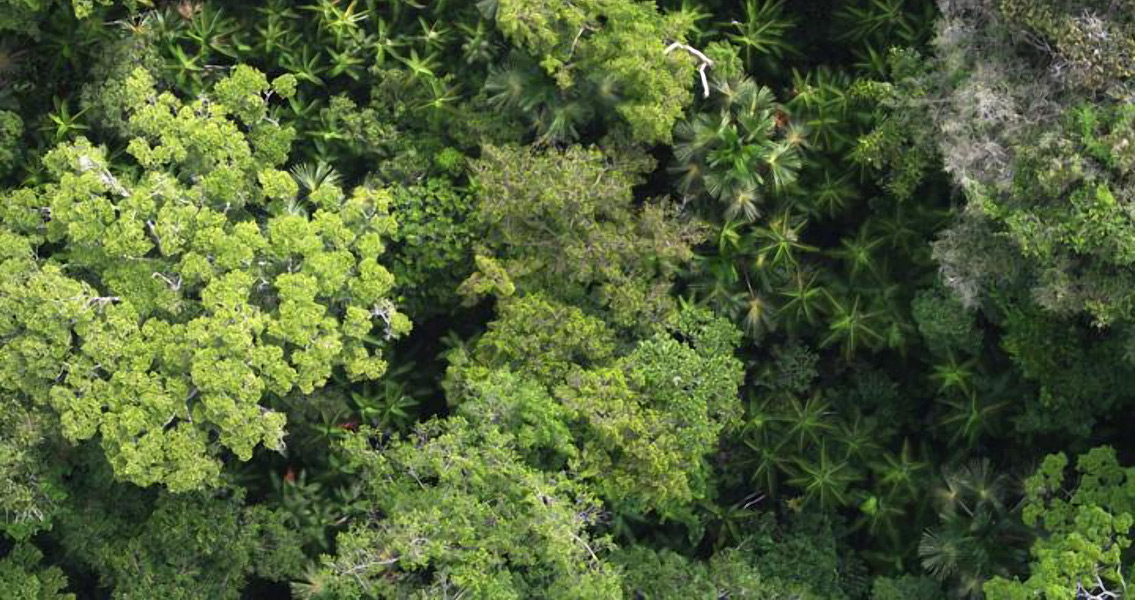
Was The Amazon Rainforest Man Made? Traditionally, historians have argued that the Amazon rainforest was sparsely populated prior to the arrival of Europeans, a cultural blackhole when compared to the richly populated rest of pre-Columbian South America. Extremely fertile land found radiating out from the remains of ancient settlements over the last few years has led some archaeologists to argue that for millennia people were enriching the relatively poor soil of the Amazon to use for farming. A study published by the Proceedings of the Royal Society of London B: Biological Sciences in 2015 went as far as to argue that a massive civilisation had once domesticated much of the land in the Amazon. They claimed that food production projections supported estimates of 8 million people living in the rainforest as late as 1492. Trees Support the Man Made Amazon Theory Levis and colleagues’ study used the Amazon’s trees as a means to look at the rainforest’s history of cultivation. “For many years, ecological studies ignored the influence of pre-Columbian peoples on the forests we see today. We found that a quarter of Amazonia’s domesticated species are widely distributed in the basin and dominate large expanses of forest. These results clearly indicate that the Amazonian flora is in part a surviving heritage of its past inhabitants,” Levis explained. The team overlayed data from over 1000 forest surveys of the Amazon Tree Diversity network on a map of over 3000 archaeological sites in the Amazon. Comparing forest composition at various distances from archaeological sites generated a picture of how pre-Colombian peoples influenced Amazon biodiversity. 85 tree species known to have been domesticated by ancient Amazonians for shelter, food or other uses formed the basis of the study. Remarkably, the team found that these 85 species were far more likely to be common in the tree surveys than non-domesticated species. These domesticated species were also found to be much more common close to archaeological sites. “This lays to rest the long-standing myth of the ’empty Amazon’,” says Charles Clement, senior researcher at INPA, Manaus, and a coauthor of the study. “Early European naturalists reported scattered indigenous populations living in huge and apparently virgin forests, and that idea has continued to fascinate the media, policy makers, development planners and even some scientists. This study confirms that even areas of the Amazon that look empty today are crowded with ancient footprints.” ]]>

Categories
Breaking News

Mysterious Ancient Geoglyphs Found in Amazon Rainforest

Categories
Breaking News

The Origins of Chocolate Found – and Why That’s Good News

Categories
News

Mysterious Rings Older Than the Amazon