Categories
Breaking News

Origin of the Turtle Shell Solved With a Child's Help

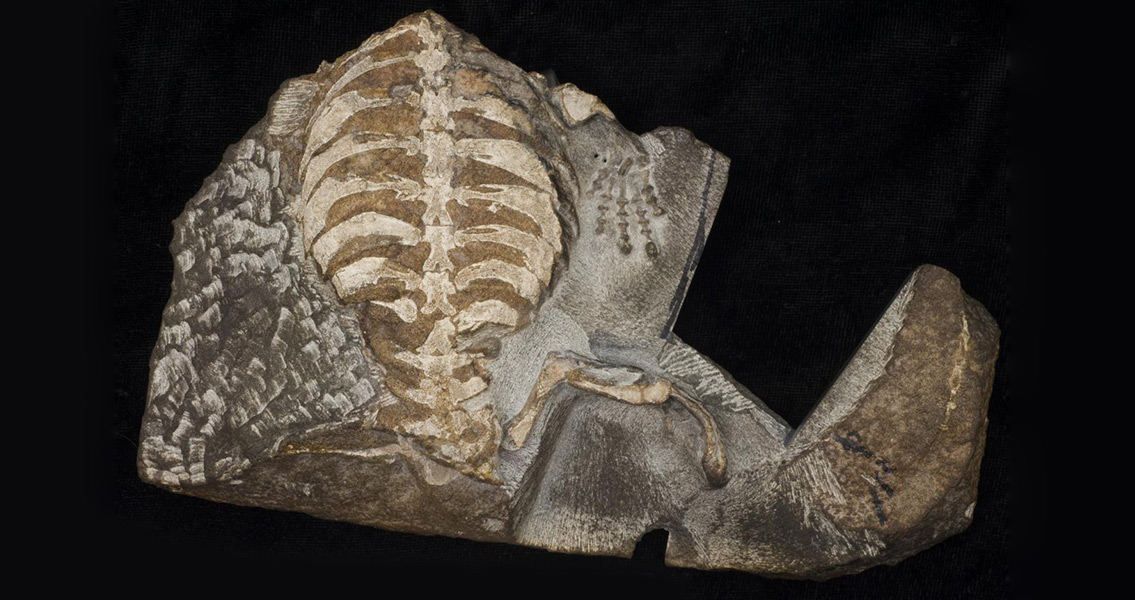
Current Biology claims that this was not always the case. Rather, the authors suggest that broad ribbed proto-shells were actually an adaption to help with burrowing underground. Eight year old Kobus Snyman was walking on his father’s farm in the Western Cape of South Africa when he found the remains of a proto-turtle. The specimen proved to be the missing piece in the puzzle for the group of scientists striving to determine the origin of turtle shells. Measuring about 15 cm in length, the specimen Snyman discovered is in remarkably good condition, comprising a well preserved skeleton with fully articulated feet and hands. It is an example of Eunotosaurus africanus, a partially shelled turtle that lived around 260 million years ago. “Why the turtle shell evolved is a very Dr. Seuss like question and the answer seems pretty obvious – it was for protection.” said lead author of the study, Dr. Tyler Lyson of the Denver Museum of Nature and Science. “But just like the bird feather did not initially evolve for flight – we now have early relatives of birds such as tyrannosaur dinosaurs with feathers that definitely were not flying – the earliest beginnings of the turtle shell was not for protection but rather for digging underground to escape the harsh South African environment where these early proto turtles lived”. Understanding the importance of ribs in turtles was crucial to the team’s results. “We knew from both the fossil record and observing how the turtle shell develops in modern turtles that one of the first major changes towards a shell was the broadening of the ribs.” said Lyson, in a press release. Because ribs are crucial to both respiration and movement, changes in them have a major impact on all four legged animals. When ribs broaden they stiffen the torso, in turn shortening stride length, slowing down the animal and impeding its breathing. “Ribs are generally pretty boring bones. The ribs of whales, snakes, dinosaurs, humans, and pretty much all other animals look the same. Turtles are the one exception, where they are highly modified to form the majority of the shell.” explained Lyson. The breakthrough for the team came with the discovery of several specimens of Eunotosaurus africanus in the Karoo Basin of South Africa. Analysis of the fossils revealed that the broadening of the ribs in this creature had nothing to do with protection, but was rather a means to provide a more stable base when the animal used its front limbs to dig underground. Professor Rubidge from the University of Witwatersrand in South Africa, who was one of the scientists gathering fossils for the study, made it clear how important Snyman’s contribution had been. “I want to thank Kobus Snyman and shake his hand because without Kobus both finding the specimen and taking it to his local museum, the Fransie Pienaar Museum in Prince Albert, this study would not have been possible.” For more information: www.cell.com Image courtesy of Tyler R. Lyson]]>
Categories
Breaking News

Early Humans Had a Taste for Tortoises

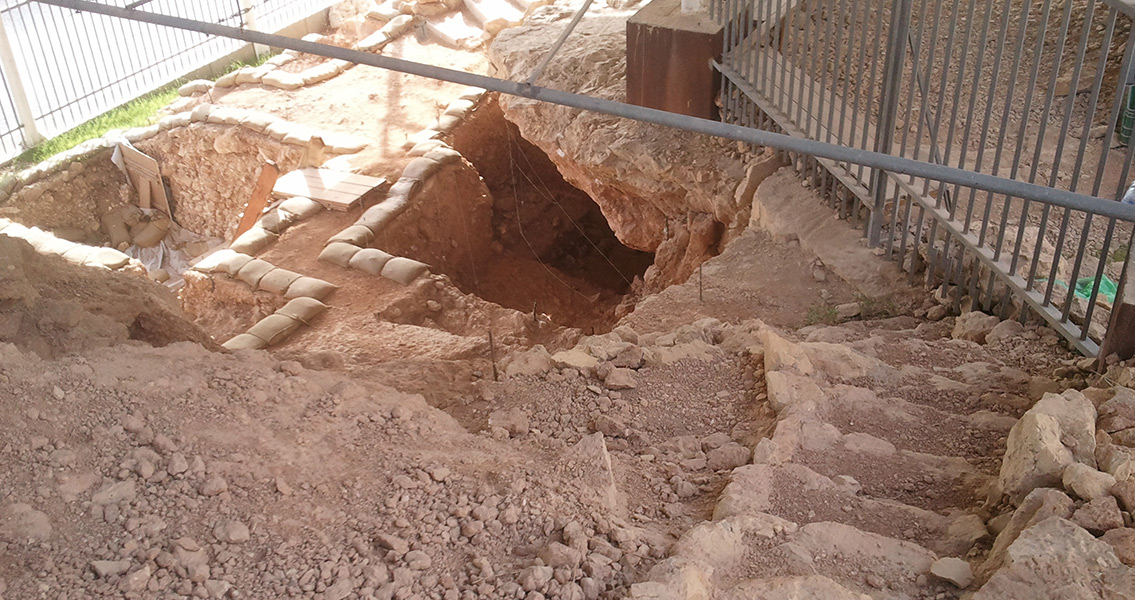
Quaternary Science Reviews. The discovery, made at the Qesem Cave near Tel Aviv, Israel, has the potential to dramatically change our assumptions about the diet of Lower Paleolithic early humans. Turtles and tortoises are rarely consumed today, with many species of the animals endangered as a result of extensive hunting by humans, and their low breeding rates which make it hard for their populations to recover following the loss of males at breeding age. Nevertheless, the meat is still consumed in some parts of the world, particularly in the countries of South East Asia, where turtle soup is regarded as a delicacy. Qesem Cave is located 12km east of Tel Aviv, in a region of hilly limestone terrain roughly 90 m above sea level. A major part of the cave’s stratigraphic sequence was revealed in the year 2000, after road construction works destroyed the cave’s ceiling. It is believed that human occupation of the cave began sometime before 382,000 years ago, and continued until around 200,000 years ago. Researchers from Tel Aviv University, in collaboration with scholars from universities in Germany and Spain, have discovered evidence of tortoise remains at the site, suggesting early humans took to eating tortoises alongside the large game and vegetable material considered to have made up most of their diet. Led by Dr. Ruth Blasco of the Centro Nacional de Investigacion Sobre la Evolucion Humana (CENIEH), Spain, and Tel Aviv University’s Institute of Archaeology, together with Prof. Ran Barkai and Prof. Avi Gopher of TAU’s Department of Archaeology and Ancient Near Eastern Civilizations; the study provides insights into the surprisingly broad diet of early humans, and their mastery of the tools necessary to prepare tortoise. “Until now, it was believed that Paleolithic humans hunted and ate mostly large game and vegetal material”, said Prof. Barkai in a press release. “Our discovery adds a really rich human dimension — a culinary and therefore cultural depth to what we already know about these people.” The tortoise specimens are particularly interesting as they open a window onto the surprisingly modern methods these Paleolithic humans used to prepare their food. “According to the marks (on the specimens), most of the turtles were roasted in the shell,” Prof. Barkai explained. “In other cases, their shells were broken and then butchered using flint tools. The humans clearly used fire to roast the turtles. Of course they were focused on larger game, but they also used supplementary sources of food — tortoises — which were in the vicinity.” Significantly, the tortoises were found at different levels throughout the cave, suggesting that they had been a part of the inhabitants’ diet for the entirety of the 200,000 or so years the cave was inhabited. How early human diets developed is an issue currently under reexamination. Until recently, it was believed that they had a diet made up mostly of large game such as deer, horse and cattle: fatty meats which gave these early hunter-gatherers the calories they needed to survive. The diversification into a diet which included vegetables and smaller animals was believed to have been a development in later Homo sapiens, but the evidence found at Qesem cave suggests that the early human diet was in fact much more diverse than previously thought. “We know by the dental evidence we discovered earlier that the Qesem inhabitants ate vegetal food,” said Prof. Barkai. “Now we can say they also ate tortoises, which were collected, butchered and roasted, even though they don’t provide as many calories as fallow deer, for example.” Why these early humans elected to eat tortoises, an animal which offers significantly fewer calories, remains a mystery, but the team have some theories, as Dr Blasco explained in the press release. “In some cases in history, we know that slow-moving animals like tortoises were used as a ‘preserved’ or ‘canned’ food. Maybe the inhabitants of Qesem were simply maximizing their local resources. In any case, this discovery adds an important new dimension to the knowhow, capabilities and perhaps taste preferences of these people.” For more information: www.sciencedirect.com Image courtesy of Wikimedia Commons user: 66AVI]]>