Categories
Breaking News

World’s oldest beer brewery discovered in Israel

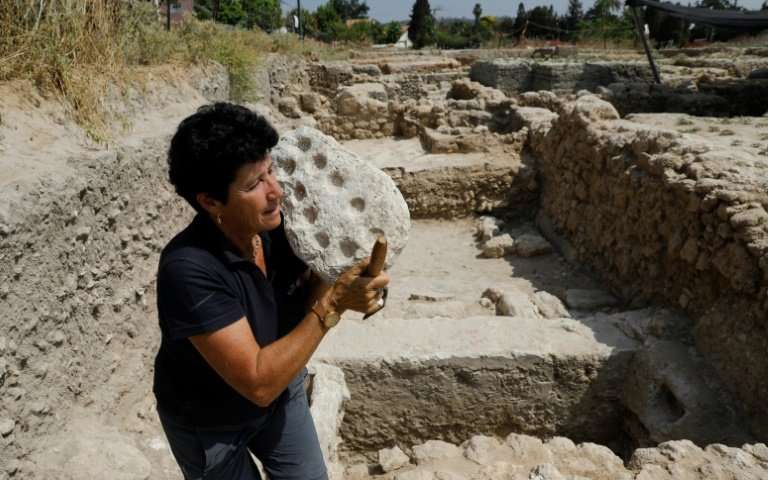
Archaeologists at the beer-making site in a cave near Raqefet, Israel
Photo credit: AFP[/caption]

Who were the Natufians?

The Natufians were semi-sedentary foraging people, living in the Eastern Mediterranean between the Palaeolithic and the Neolithic periods (after the last Ice Age). As part of their rituals, they collected locally available plants, stored malted seeds and made beer.  

A vivid and colourful picture of Natufian ways

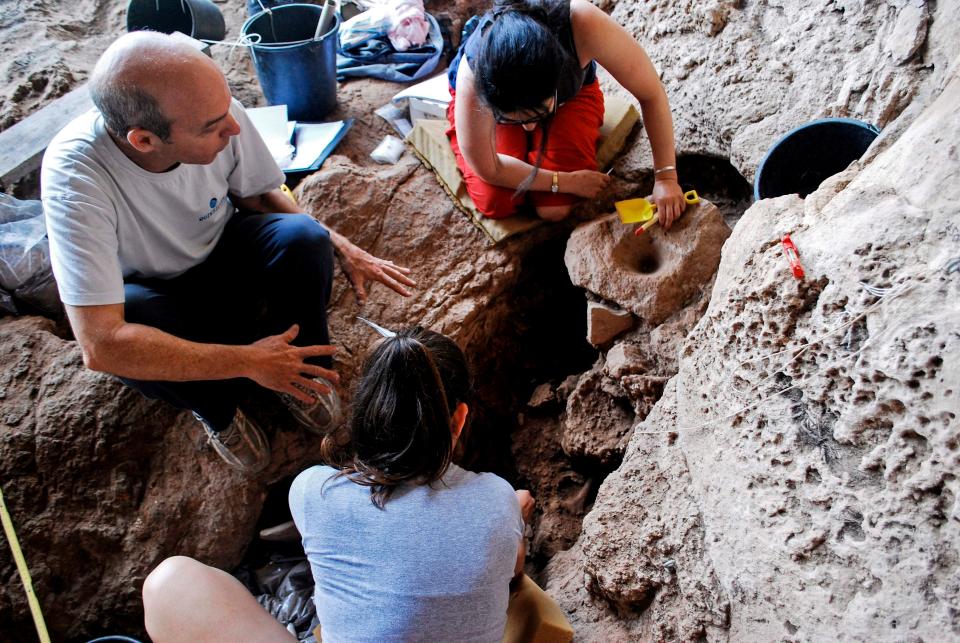
Prof. Dani Nadel, Zinman Institute of Archaeology, University of Haifa, Israel, was on the excavation team: “The Natufian remains in Raqefet Cave never stop surprising us. “We exposed a Natufian burial area with about 30 individuals; a wealth of small finds such as flint tools, animal bones and ground stone implements, and about 100 stone mortars and cup marks. “Some of the skeletons are well-preserved and provided direct dates and even human DNA, and we have evidence for flower burials and wakes by the graves. “And now, with the production of beer, the Raqefet Cave remains provide a very vivid and colourful picture of Natufian lifeways, their technological capabilities and inventions.” The results of the study indicate that the Natufians exploited over seven types of plants associated with the mortars. That includes wheat or barley, oat, legumes, and bast fibres like flax. They would then pack plant foods in fibre-made containers and store them in boulder mortars. Bedrock mortars would be used to brew wheat and barley based beer, which would then have likely been served in ritual feasts. [caption id="attachment_8893" align="aligncenter" width="500"] This is the site location and artefacts analysed. (A) The location of Raqefet Cave and three additional Natufian sites in Mt. Carmel; (B) field photos of the studied boulder mortars (BM1,2) and the location of BM3 on the cave floor (scale bar and arrow: 20 cm); (C) a functional reconstruction of the mortars: a boulder mortar used to store plants in a basket with a stone slab on top, and a bedrock mortar used for pounding and cooking plants and brewing beer. Photo credit: Dror Maayan; Graphic design credit: Anat Regev-Gisis[/caption]

Fleshing out our understanding of Natufian society

In July, experts discovered the remnants of what may have been the oldest bread ever baked in Jordan at a site occupied by the Natufian people 14,400 years ago. The fact that beer was brewed at Raqefet Cave 13,000 years ago fleshes out our understanding of Natufian social and ritual realms. It is thought that the brewing of beer inspired people to cultivate cereals in southern Levant – supporting a hypothesis proposed by archaeologists more than 60 years ago.]]>

Categories
Breaking News

Ancient pottery factory discovered in Israel

Family wine businesses During the periods the factory was in use, wine was a major Israeli export. The main function of the jars was of course for the storage and shipment of wine, which was a flourishing industry employing a great number of local people. The remains of around 100,000 jars found buried at the site are thought to have been rejects discarded from the production line. The Israeli Antiquities Authority said in a statement: “The continuous production of these jars probably indicates that the business was a family one, which passed from generation, to generation, to generation.” [caption id="attachment_8870" align="aligncenter" width="500"] The excavation, funded by the Israel Land Authority, was carried out by the Israel Antiquities Authority with the participation of many youth, prior to the construction of a new neighbourhood in Gedera, next to the ancient Tel Qatra. The industrial site comprised a pottery workshop that manufactured storage jars from the third century CE for six centuries. Credit: MENAHEM KAHANA / AFP[/caption]

Gaza jars

The excavation site is not far from the town of Gedera, south of Tel Aviv. Gaza City lies about 30 miles (48 kilometres) southwest of Gedera, on the Mediterranean coast. During its long history, Gaza has been ruled by the Romans, Byzantines, Crusaders, Mamluks and Ottomans. Director of the excavation Alla Nagorsky told journalists at the site that from the 3rd Century AD, the planet produced vessels of a type known to historians as Gaza jars continuously for 600 years.

A luxury production site

Much more than just wine jars, the archaeologists have discovered a factory, an adjacent leisure complex, 20 bathing pools and a room that was used for board games. Alongside the factory were two Byzantine style bathhouses. At least one of them had a heating boiler. The 20 ‘finely constructed’ pools were connected by channels and pipes. “This kind of a place is not built in an instant,” Alla Nagorsky said. “An engineer worked on it. The site is very designed.” “The archaeologists consider that the water complex served both the local population and the many travellers along the ancient main road connecting the port of Gaza with the centre of the country,” the IAA said in its statement.

Backgammon and mancala games

The games room, in particular, was a shock find, with the IAA calling it a ‘rare and surprising discovery’. In it were boards used for playing backgammon and “mancala”, games which are still popular in the area. The statement said the Gedera pottery works may have built the leisure centre for its employees, just as today’s tech and start up companies provide recreation facilities for their workers. [caption id="attachment_8871" align="aligncenter" width="500"] Israel Antiquities Authority archeologist Alla Nagorsky shows a 1600 year-old Mancala game from the Byzantine time found during a large excavation in the central Israeli town of Gedera near the ancient archeological site of Tel Qatra on July 31 2018. Credit: MENAHEM KAHANA / AFP.[/caption]]]>

Categories
Breaking News

Could this 2,800 year old sculpture show us the face of a biblical king?

Credit: Gabi Laron[/caption]

A tiny representation of a momentous past

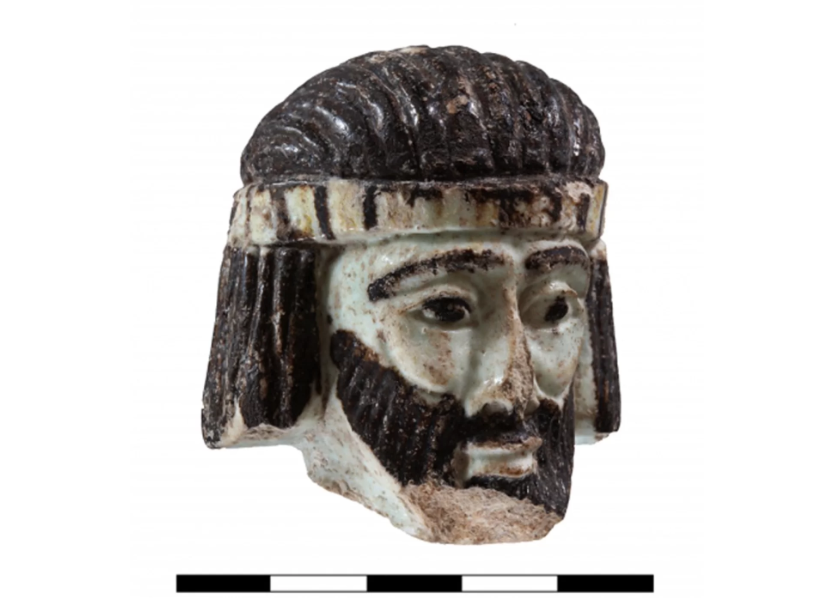
The glazed ceramic sculpture is of a man with long, black hair and a beard. He is wearing a yellow and black headband, which pulls the hair away from his dark, almond-shaped eyes. At only 5.1 cm x 5.6 cm, this tiny head is thought to have been part of a small statuette, according to archaeologists. At full size, the statuette would have been around 20 cm x 25 cm. Professor Robert Mullins from Azusa Pacific University’s Department of Biblical and Religious Studies is also co-director of excavations in the ancient city. He said: “Despite the head’s small and innocuous appearance, it provides us with a unique opportunity to gaze into the eyes of a famous person from the past — a past enshrined in the Book of Ages [the Hebrew Bible].”  

Whom does the sculpture depict?

Given that it was found inside what is thought to be an administrative building at the city’s peak, it is likely that the sculpture is of an elite person. The first assumptions have been that it was a biblical king; though Mullins and his team have yet to undertake the necessary research to prove or disprove this theory. So if it is indeed a king, whom would it have been? [caption id="attachment_8706" align="aligncenter" width="500"] Credit: Gabi Laron[/caption]  

Power struggles in Abel Beth Maacah

In the early stages of research, the team performed radiocarbon dating on the organic materials that were found in the same room as the sculpture. According to the findings, the object would have been constructed some time between 902 BC and 806 BC. The control of Abel Beth Maacah fluctuated greatly during this period. This is down to the fact that it sat at the border of 3 separate kingdoms: Israel, Tyre and Aram-Damascus. Borders were changing continually, leaving Abel Beth Maacah to be under the jurisdiction of different nations. Taking likelihood into account, Mullins thinks the sculpture could depict one of 3 possibilities: King Ahab of Israel, King Hazael of Aram-Damascus, and King Ethbaal of Tyre. However, there are many other candidates, he has said.  

Future research to confirm identity

The sculpture will be displayed at the Israel Museum in Jerusalem, while the scientists are publishing a paper on the discovery for the journal Near Eastern Archaeology. Excavations at Abel Beth Maacah are undertaken by Azusa Pacific University and the Hebrew University of Jerusalem. Joining Professor Mullins are Naama Yahalom-Mack and Nava Panitz-Cohen, both from the Hebrew University of Jerusalem. They will continue to arrange excavations of the large building into summer 2018. Archaeologists are hopeful that new information will arise to determine the identity of this miniature sculpture.]]>

Categories
Breaking News

History News of the Week – An Aztec Tower of Skulls

Aztec Tower of skulls discovered in Mexico A tower of human skulls discovered in Mexico could lead to a rewrite of Aztec history, according to the Independent. Following an eighteen-month investigation, archaeologists unearthed more than 675 skulls of men, women and children. It is believed the structure could be a part of the Huey Tzompantli, a legendary rack of bones described by the Conquistadors as they made their way through what is now Mexico. Traditionally, it was believed the Huey Tzompantli was made from the skulls of soldiers killed in inter-tribal conflicts before the arrival of Europeans to the New World. The discovery of female and child skulls in the tower has therefore perplexed archaeologists. “We were expecting just men, obviously young men, as warriors would be, and the thing about the women and children is that you’d think they wouldn’t be going to war,” Rodrigo Bolanos, a biological anthropologist investigating the find, told the Independent. “Something is happening that we have no record of, and this is really new, a first in the Huey Tzompantli,” he added. The structure lies close to Templo Mayor, a major Aztec temple which was used for human sacrifices. Archaeologists are continuing to investigate the site, and are still finding new remains as they try to work out the significance of the tower of skulls. The changing colour of the Statue of Liberty The Statue of Liberty is one of the most iconic symbols of New York City and the United States, but the 305-foot-tall statue hasn’t always been its distinct blue-green colour. When the copper statue, a gift to the US from the people of France, arrived in New York harbour in 1886, it was a reddish brown. The colour change through the years is largely down to a series of reactions as the Statue of Liberty’s copper skin has come into contact with chemicals in the air of New York Harbour. Now, a video from the American Chemical Society and PBS Digital shows the changes in the epic monument’s skin, from penny red through chocolate brown to its current liberty green. Available to view on Youtube, the video is part of the Reactions series, aiming to show the chemistry present in everyday life. Evidence of chemical dyeing from the time of David and Solomon 3,000-year-old cloth samples found in Israel’s Arave Desert are the earliest evidence of chemical dyeing ever found in the region, researchers say. According to a press release from American Friends of Tel Aviv University, the wool and linen pieces point to a sophisticated textile industry and reveal details about a deeply hierarchical society dependent on long-distance trade to support its infrastructure in the harsh desert. “This was clearly a formative period, with local kingdoms emerging and replacing Egyptian hegemony in Canaan,” Dr. Ben-Yosef, a co-author of a study in the journal PLOS ONE detailing the find, said. “These beautiful masterpieces of weaving and dyeing — the first evidence of industrial dyeing at the time, of wash-resistant color on textile — support the idea of a strong, hierarchical Edomite Kingdom in Timna at the time. “It is apparent that there was a dominant elite in this society that took pains to dress according to their ‘class,’ and had the means to engage in long-distance trade to transport these textiles — and other materials and resources — to the desert.” After radiocarbon dating the textile pieces and using gas chromatography to identify the cloth’s organic materials, the researchers found “red” molecules produced from the madder plant and “blue” molecules from the woad plant. “Both plants were known in antiquity as sources of organic dyes,” said Dr. Ben-Yosef. “We know that these plants were used to create elaborate costumes during the Roman period, more than a thousand years later. Now we have evidence in the region of an Edomite society wearing textiles produced the same way, versus an earlier ‘primitive’ smearing of color on fabric.” “We can make many inferences according to this discovery,” Dr. Ben-Yosef continued. “To force a large group of people to work in dangerous mines in the desert, you need a strong ruling party — an elite that probably wore exquisite clothes to further distinguish themselves. The smelters, working in furnaces, were considered ‘magicians’ or even priests, and they probably wore fine clothing too. They represented the highest level of society, managing a sensitive and complex process to produce copper from rock.” Fascinatingly, the artefacts provide evidence of long distance trade in the region. The plants used to create the dyes most likely originated in the Mediterranean area. The dyeing process itself meanwhile, required specialist crafts people, an industry that could not have subsisted in the desert. “If Jerusalem was indeed opulent in the time of King Solomon, and the Temple covered in copper, we can assume a link to that kingdom”, explained Ben-Yosef. Image by Clara Amit, courtesy of the Israeli Antiquities Authority.]]>
Categories
Breaking News

Will the Story King Solomon be Validated by Animal Droppings?

National Geographic interview. “There’s clear evidence of an Egyptian presence during those centuries… But high-precision radiocarbon dating of the dung, as well as textiles and other organic material, showed that the mining camp’s heyday was the tenth century BCE—the era of the biblical kings David and Solomon.” In the Bible, King Solomon ruled a wealthy kingdom with a temple decorated extravagantly with objects made of bronze and gold in Jerusalem. To build something this grand would have necessitated the import of metal from large-scale mining operations, most likely from the Middle East. The validity of Solomon’s wealthy kingdom has never been agreed on. Some archaeologists make the argument that Solomon was actually just a small-time chieftain and incapable of organizing such a large-scale undertaking. However, in the late 1990s, another team of archaeologists discovered a copper-rich area in Jordan which indicated that metal had been produced there on an enormous scale. This site, along with the other smelting camps across the region, support the theory that the legend of the biblical king’s vast wealth may have been true. The mining operation discovered in Timna Valley has not been connected to Solomon directly, it does suggest however, that a more complex society than originally believed, possibly the Edomites, had inhabited that area and may have paid taxes to Jerusalem. The manure samples included pollen spores and seeds, enabling Ben-Yosef’s team to determine what the animals ate. Surprisingly, they found that the feed had been imported from a region over 100 miles north, near the Mediterranean cost. Long distance trade was essential to survival in the desert and during this period metal was an essential commodity, making the investment in such an operation worthwhile. During the interview, Ben-Yosef explains that more than 1,000 tons of smelting debris have been discovered on Slaves’ Hill, making it an industrial-scale operation worthy of such a kingdom. Whether or not this site is directly linked to the kingdom of King Solomon in the tenth century is yet to be determined. Ben-Yosef remains encouraged by the findings, saying in the interview: “Until recently we had almost nothing from this period in this area. But now we not only know that this was a source of copper, but also that it’s from the days of King David and his son Solomon.” ]]>

Categories
Breaking News

Construction Workers in Israel Find Coins from the Time of Jesus

National Post, adding, “It is difficult, perhaps even impossible, to find proof of one ordinary person from thousands of years ago.” However, based on finds from hundreds of archaeological digs, Avni believes archaeologists can accurately reconstruct Jesus’ life from the Church of the Nativity, the site revered as his birthplace, to the Church of the Holy Sepulchre, where he is believed to have been buried after the Crucifixion. Professor of Christian archaeology, Eugenio Alliata, explained to the National Post that the artifacts corroborate the biblical accounts of Jesus and his life, putting his existence into context. “We have not found any evidence of the person of Jesus, but we have found lots of things about what happened at the time he lived, such as the population and the material culture that grew because of him,” Eugenio Alliata, a professor of Christian archaeology at the Franciscan biblical school in Jerusalem, is quoted as saying. Image courtesy of MENAHEM KAHANA/AFP/Getty Images ]]>

Categories
Breaking News

Roman House Complete With Phallic Artifacts found in Israel

Categories
Breaking News

The First Gate Ever Found at a Jewish Town Named for Gates

Times of Israel. The town’s affluence could have served as a reason for the heightened security. Beit She’arim was the home to many prominent and wealthy Jews, so the community might have been named from the fortifications built to keep them safe. Another possibility is that it was the site of an important Roman fortress. Erlich and her team have plans to return and continue excavations at both Beit Zaid and Beit She’arim next season. ]]>

Categories
Breaking News

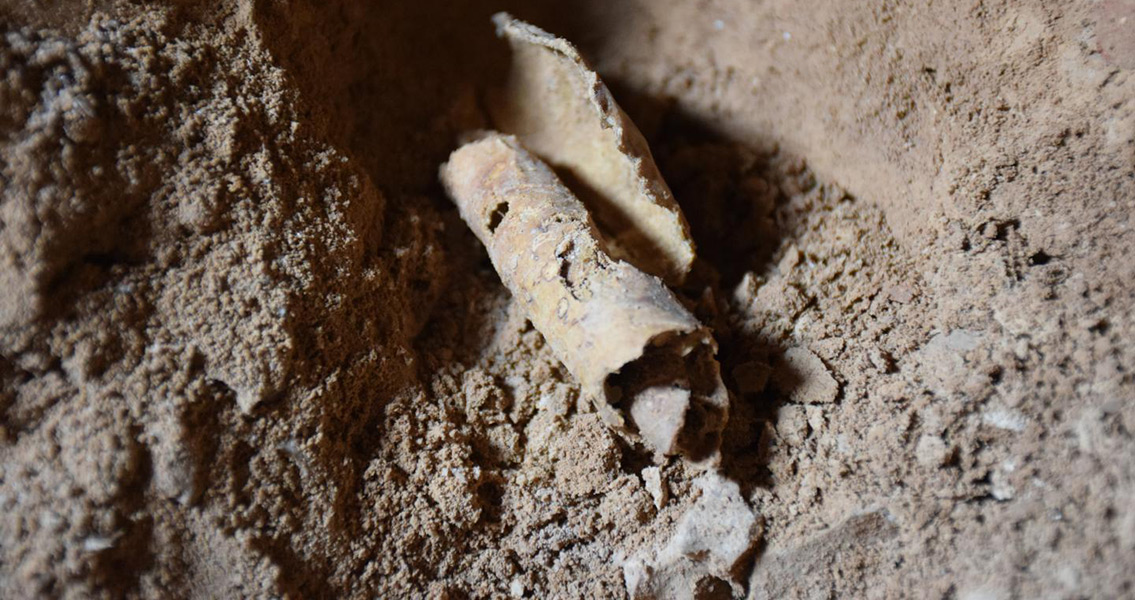
New Dead Sea Scrolls Cave Unearthed, But Where are the Scrolls?

Categories
Breaking News

Roman Bathhouse and Theater Discovered at Hippos-Sussita