Categories
Breaking News

Amelia Earhart’s Bones Verified – The History News of the Week

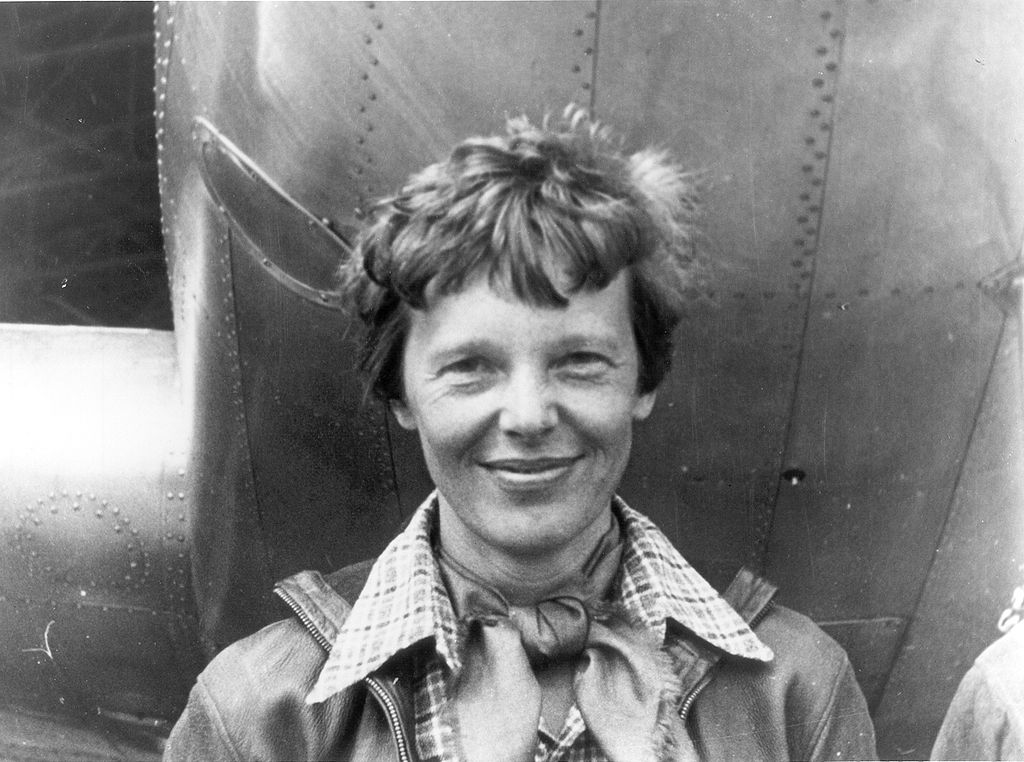
Research Confirms Remains are Amelia Earhart’s Forensic research has confirmed that bones found on a South Pacific Island are likely those of Amelia Earhart. In the 1940s, physician D.W. Hoodless performed bone measurements on the remains found on the island, and concluded they belonged to a man. Now, professor Richard Jantz from University of Tennessee has re-examined seven of the bone measurements performed by Hoodless. Using modern quantitative techniques, he concludes that Hoodless was incorrect in determining the remains to be a man’s. Significantly, Jantz’s results show that the remains are more similar to Earhart’s than to 99% of individuals in a large reference sample. The bones were also compared to the bone lengths of Earhart’s. To achieve this, her humerus and radius lengths were determined through studying a photo that included a scalable object. “Until definitive evidence is presented that the remains are not those of Amelia Earhart, the most convincing argument is that they are hers,” Jantz writes in a study, published in the journal Forensic Anthropology. Famous for being the first female aviator to fly solo across the Atlantic, Earhart and her navigator Fred Noonan mysteriously disappeared in 1937 while flying across the Pacific. Many assume her aircraft crashed into the ocean, yet some experts, such as Jantz, argue she died as a castaway on the island of Nikumaroro. Nicotine Extracted From Ancient Teeth Researchers have shown for the first time that nicotine residue can be extracted from the plaque of ancient tobacco users. The pioneering research could allow archaeologists to trace the history of tobacco consumption far back into prehistory. “The ability to identify nicotine and other plant-based drugs in ancient dental plaque could help us answer longstanding questions about the consumption of intoxicants by ancient humans,” said Shannon Tushingham, a WSU assistant professor of anthropology and co-author of the new study. “For example, it could help us determine whether all members of society used tobacco, or only adults, or only males or females.” Until now, the history of tobacco use in the Americas has been traced through the presence of pipes, charred tobacco seeds and the analysis of hair and fecal matter. However, these items are sparse in the archaeological record and can’t be tied to specific individuals. These problems don’t exist with dental matter, which preserves a wide range of substances and can be easily connected to an individual. Tushingham, along with colleagues from WSU and the University of California Davis, collaborated with members of the Ohlone tribe in the San Francisco Bay to extract plaque from the teeth of eight individuals buried between 6,000 and 300 years ago. After the plaque had been extracted with regular, everyday dental picks, it was sent to WSU labs. There, it was analysed using liquid chromatography-mass spectrometry to test for samples of nicotine and other plant-based drugs such as caffeine. Two of the samples tested positive for nicotine, showing for the first time that the drug can survive in detectable amounts in ancient plaque. One of the most interesting findings was the presence of nicotine in the plaque of an older woman. “While we can’t make any broad conclusions with this single case, her age, sex, and use of tobacco is intriguing,” Jelmer Eerkens, an anthropologist from UC Davis who worked on the study, said. “She was probably past child-bearing age, and likely a grandmother. This supports recent research suggesting that younger adult women in traditional societies avoid plant toxins like nicotine to protect infants from harmful biochemicals, but that older women can consume these intoxicants as needed or desired.” The study has been published in the Journal of Archaeological Science: Reports. Yokuts Woman Smoking Pipe Caption: This is a 1945 picture of a Yokuts Native American woman smoking a pipe. Credit: Clifford Relander New Insights into Early Pacific Settlers Researchers from the Australian National University claim to have produced ‘the most comprehensive study ever’ into the origins of people on the Pacific island of Vanuatu. Vanuatu is considered crucial to the history of migration and population of the Pacific, acting as a gateway from Asia to the ocean’s remotest islands. The results, published across two papers, confirm that the first people on Vanuatu were of the Lapita culture and arrived 3,000 years ago from South East Asia. This was followed by Papuan arrivals from the island of New Britain, part of what is now Papua New Guinea. Archaeological evidence was combined with analysis of ancient and modern DNA to make the conclusions. Dr Stuart Bedford, of the ANU School of Culture History and Language, highlighted the unique insights the study has made. “We’ve been able to track a complete genetic timeline at regular intervals starting with the first inhabitants right through to modern times,” Dr Bedford said. “The very first generation of people into Vanuatu are primarily Asian, then very quickly you see a series of migrations of Papuan people from the Bismarck Archipelago who had been living in the region for around 50,000 years. “That trend continues over the next 3,000 years right up until today as the genetic ancestry was mostly replaced by that of Papuan migrants. The people of Vanuatu today, like many peoples of the Pacific, can claim a dual heritage.” According to Professor Matthew Spriggs, a co-researcher on the study, the findings show where the Papuan migration came from. “They came from New Britain, a Papuan island just east of New Guinea,” Professor Spriggs said. “This makes sense. New Britain has some of the earliest known Lapita sites. “So what we think happened is that Lapita people after arriving in New Britain moved fairly directly on to Vanuatu and encouraged some of the local populations already in place on New Britain to move there as well.” The influence of the Lapita culture can still be felt in the languages of the region. “The Lapita people who originally came to Vanuatu from South East Asia spoke a form of Austronesian,” Dr Bedford said. “That language persisted and over 120 descendant languages continue to be spoken today, making Vanuatu the most linguistically diverse place on Earth per capita. “This is a unique case, where a population’s genetic ancestry was replaced but its languages continued.” ]]>
Categories
Breaking News

Smoke Tolerance Key to Humans Outlasting Neanderthals

Molecular Biology and Evolution. A difference in the aryl hydrocarbon receptor, which regulates the body’s response to polycyclic aromatic hydrocarbons, may have desensitised humans to the toxic spew of chemicals generated by smoke and fire, according to the authors. This desensitisation would have given humans an advantage compared to other hominids when it came to processing the toxins. “If you’re breathing in smoke, you want to metabolize these hydrophobic compounds and get rid of them, however, you don’t want to metabolize them so rapidly that it overloads your system and causes overt cellular toxicity,” explained Perdew. “For Neandertals, inhaling smoke and eating charcoal-broiled meat, they would be exposed to multiple sources of polycyclic aromatic hydrocarbons, which are known to be carcinogens and lead to cell death at high concentrations. The evolutionary hypothesis is, if Neandertals were exposed to large amounts of these smoke-derived toxins, it could lead to respiratory problems, decreased reproductive capacity for women and make especially preadolescents susceptible to respiratory viruses, while humans would exhibit decreased toxicity because they are more slowly metabolizing these compounds.” Genomic data from humans, Neanderthals and Denisovans was compared to explore the differences in the genetics of polycyclic aromatic hydrocarbon tolerance. The disparity was even greater than the researchers anticipated. “We thought the differences in aryl hydrocarbon receptor ligand sensitivity would be about ten-fold, but when we looked at it closely, the differences turned out to be huge,” said Perdew. “Having this mutation made a dramatic difference, it was a hundred-fold to as much of a thousand-fold difference.” Why the Neanderthals went extinct is a question that has plagued scientists for decades, with many suggesting it may have been a consequence of the spread of humans, or climate change. There is evidence that both humans and Neanderthals used fire, according to George Perry, assistant professor of anthropology and biology, Penn State, who worked on the study. The consequences of this fire use, which likely started with our hominin ancestors around a million years ago, might have been deadly for Neanderthals. Resistance to smoke toxins would have been an evolutionary advantage that afforded modern humans a host of benefits. “Cooking with fire could have allowed our ancestors to incorporate a broader range of foods in our diets, for example, by softening roots and tubers that might otherwise have been hard to chew,” said Perry. “Cooking could also help increase the digestibility of other foods, both in chewing time and reduced energetic investment in digestion.” Fire had a multitude of other vital uses for early humans, providing warmth at high latitudes and helping form settlements. “Besides heating and cooking, humans used — and still use — fire for landscape burning and as part of hunting and gathering, and now as part of agriculture,” Perry continued. The findings add further weight to other studies that have suggested developing the ability to cook was one of the key advantages that helped humans thrive, drastically improving the quality of their diet. However, the scientists suggest that the mutation had one negative outcome. The receptor might explain modern humans’ greater tolerance to cigarette smoke, allowing people to develop the smoking addiction that contributes to millions of deaths each year across the globe. “Our tolerance has allowed us to pick up bad habits,” Perdew said. ]]>

Categories
Breaking News

Neanderthal DNA Linked to Depression, Strokes and Smoking

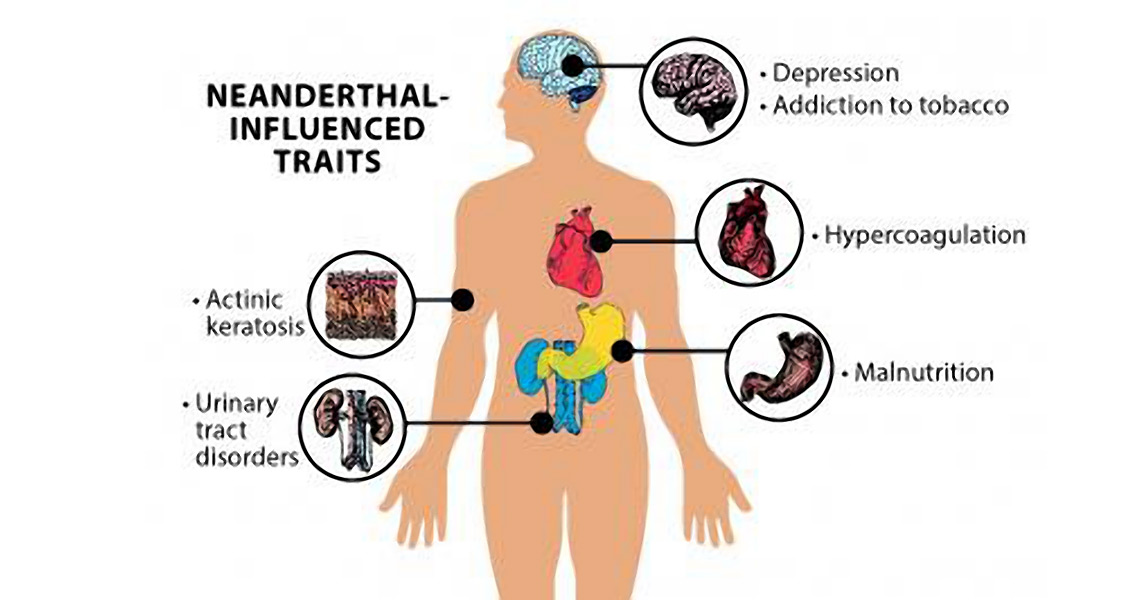
Science, the new study from scientists at Vanderbilt University is the first to actually compare Neanderthal DNA in a significant population of adults from European ancestry with their medical records. Just a few weeks ago, a study claimed that Neanderthal DNA could be responsible for allergies in humans, while previous research has suggested anything from skin colour to our fat metabolism could have been affected by Neanderthal DNA. Led by Professor John Capra from Vanderbilt University, the new study confirms that Neanderthal DNA influences a surprisingly diverse range of clinical traits in modern humans. “Our main finding is that Neanderthal DNA does influence clinical traits in modern humans: We discovered associations between Neanderthal DNA and a wide range of traits, including immunological, dermatological, neurological, psychiatric and reproductive diseases”, Capra explained. A surprising number of Neanderthal snippets are associated with neurological and psychiatric effects, according to the new study. “The brain is incredibly complex, so it’s reasonable to expect that introducing changes from a different evolutionary path might have negative consequences.” explained Corinne Simonti, a doctoral student from Vanderbilt University and the the paper’s first author. Aspects of Neanderthal DNA which modern humans retained to their advantage 40,000 years ago could be proving deadly now. One Neanderthal DNA variant is responsible for rapid blood coagulation in modern humans, something which seals wounds quickly and prevents infection – a crucial trait in hostile, perilous prehistoric environments. In modern societies however, this trait has become detrimental, with hypercoagulation increasing the risk of stroke, pulmonary embolism and complications during pregnancy. The team obtained their results by taking advantage of the Electronic Medical Records and Genomics Network funded by the National Human Genome Research Institute, a database which links the biological samples of 28,000 patients with their health records. After identifying individuals who suffered from specific medical conditions, such as heart disease or depression, the team determined the unique set of Neanderthal DNA those individuals carried. By comparing the two sets of data the team could identify whether each piece of Neanderthal DNA influenced the risks found in the medical records. The techniques developed by the team have the potential to open up new avenues to study the effects of different key events on human evolution. “Vanderbilt’s BioVU and the network of similar databanks from hospitals across the country were built to enable discoveries about the genetic basis of disease”, explained Prof. Capra “We realized that we could use them to answer important questions about human evolution.” Capra and his team are now looking into studying other data held in the medical records, beyond just physical traits, to gain an even wider understanding of the effects of Neanderthal DNA. For more information: www.science.sciencemag.org Image courtesy of Deborah Brewington, Vanderbilt University]]>

Categories
Breaking News

Medical Marijuana Smoking Linked to Parasite Prevention