Categories
Book Reviews

Conan Doyle Beyond Sherlock, From Fairies to Atrocities

Harry Houdini over the validity of spiritualism; became embroiled in solving a real life murder mystery, and was until recently believed to have been involved in one of the great archaeological hoaxes of the twentieth century. Conan Doyle was born in Edinburgh, Scotland on 22nd May, 1859. Doyle’s family were affluent, strict Irish Catholics. His father was a respected artist whose achievements had ultimately been thwarted time and again by alcoholism. His mother was a well educated woman with a passion for reading. She would prove hugely influential in Conan Doyle’s life, as he wrote in his biography: “In my early childhood, as far as I can remember anything at all, the vivid stories she would tell me stand out so clearly that they obscure the real facts of my life.” In 1876 Doyle embarked on a medical degree at the University of Edinburgh. It was here that the youngster wrote and had published his first short stories, in many ways reflecting a balance between practical scientific study and fantasy that would come to define his work. The Sherlock Holmes character first appeared in 1887’s A Study in Scarlet, published in Beeton’s Christmas Annual. Holmes was partly based on Dr. Joseph Bell, one of Doyle’s lecturers who impressed him with his intense attention to detail, a trait clearly reflected in the character. Beyond Holmes however, Doyle’s medical background is also reflected in Round the Red Lamp and the Stark-Munro Letters; the latter a novel depicting the live of a young medical graduate in nineteenth century England, the former a collection of short stories on the trials and traumas of the medical profession. Alongside fiction, Doyle engaged with highly controversial issues of the day. Inspired by “a burning indignation”, he wrote the The Crime of the Congo in just eight days in 1909. Dealing with the atrocities taking place in the Congo on behalf of Belgian King Leopold II, the powerful book included graphic portrayals of violence and is littered with horrific photos of mutilated victims. Not satisfied with the publication of his written description of the horrors in the Congo, Doyle used his fame to lobby world leaders such as Kaiser Wilhelm and Theodore Roosevelt. Doyle’s work straddles the line between the factual and the fantastical. His groundbreaking science fiction novel The Lost World tells the story of a group of explorers discovering a South American plateau where prehistoric animals survive. Although an adventure story, it is littered with references to real prehistoric creatures such as dinosaurs and hominids. It’s a book which engages with the idea of evolution at a time it was still considered cutting edge, and shows Doyle’s own interest in the sciences. Towards the end of his life Doyle became fascinated with the mystical and the occult, unveiling another, perhaps totally unexpected facet to this complicated individual. He fell out with Houdini following the illusionist’s campaign to debunk Spiritualism, Doyle having spent much of the 1920s writing books championing Spiritualist beliefs. In 1922, Doyle wrote The Coming of the Fairies, a book which promoted the Cottingley Fairies photographs. Opinion was divided at the time as to whether the images of two girls playing with fairies were a hoax (the girls finally admitted in the 1980s that the images had indeed been faked), and for many, Doyle’s passionate championing of the fairies did long term damage to his literary reputation. Sir Arthur Conan Doyle will likely always be best remembered for his most recognised character, the deerstalker and pipe bearing Sherlock Holmes. By looking at his other works however, an image of a deeply complicated, fascinating individual emerges. ]]>

Categories
Editorial

The Woman Who Exposed British Concentration Camps

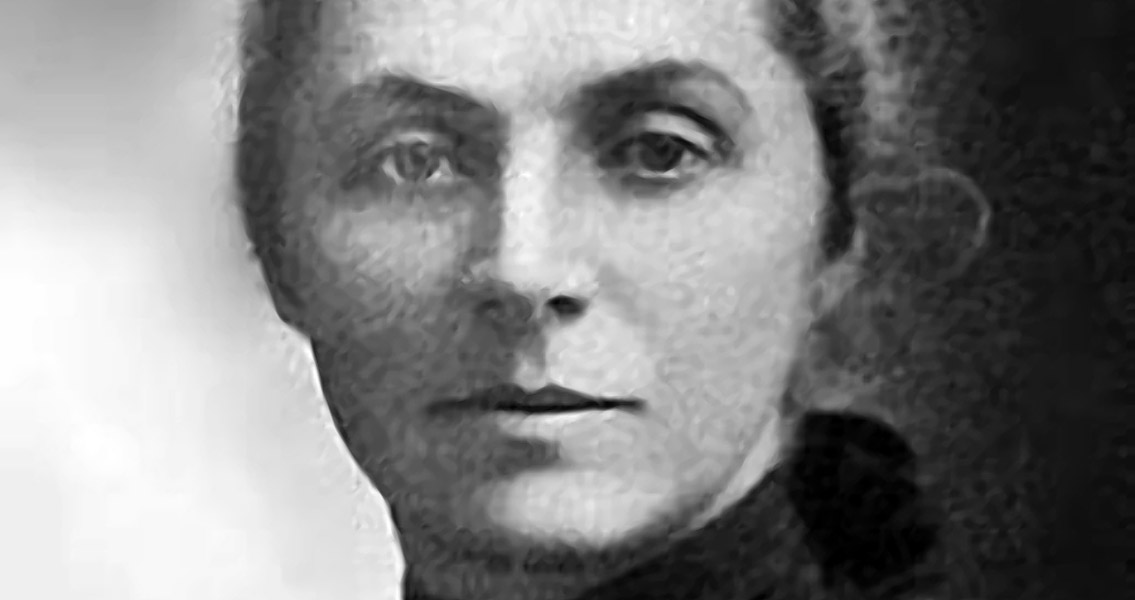
Second Boer War. A fierce campaigner, she launched a sensational attack on the British parliament in 1901, in the middle of one of the most controversial wars in the country’s history. “The picture of apathy and impatience displayed here, which refused to lend an ear to undeserved misery, contrasted sadly with the scenes of misery in South Africa, still fresh in my mind. No barbarity in South Africa was as severe as the bleak cruelty of an apathetic parliament.” During the Second Boer War, British forces rounded up Boer men, women and children from the South African countryside and placed them in concentration camps. The measure, which particularly targeted farmers, was a means to combat the guerrilla warfare being waged by Boer forces against the British in the republics of Transvaal and the Orange Free State. These camps, which had sprung up around the two republics and housed thousands of people, 115,000 in the period between June 1901 and May 1902, represent one of the biggest atrocities in British history. Between the aforementioned dates, 28,000 Boers died in the camps, 22,000 of them children. At other camps, some 20,000 indigenous Africans died. In total, the death toll through the course of the war accounted for 10% of the Boer population. The main killers were the conditions in the camps; dangerously overpopulated, disease and starvation ran riot. The Boer War was a divisive one in the UK; the Guardian newspaper published exposes revealing the shocking actions carried out by British forces in the name of Lord Kitchener’s ‘scorched earth’ tactics, revelations which were unpopular and led to threats being made against Guardian journalists. More than perhaps anyone else however, Emily Hobhouse, a British social worker who went to South Africa herself to see the conditions in the camps, was crucial in exposing the actions of the British military. Born in Cornwall in 1860, Hobhouse lived a sheltered life under her parent’s roof until she was 35. Following her father’s death, she engaged in temperance work in the USA, before returning to the UK at the dawn of the Boer War. In 1900 she received details of the treatment of Boer women by the British army, and set up the Relief Fund for South African Women and Children, an organisation, in her words, “To feed, clothe, harbour and save women and children – Boer, English and other – who were left destitute and ragged as a result of the destruction of property, the eviction of families or other incidents resulting from the military operations.” On 27th December 1900, Hobhouse arrived in South Africa. Eventually, Lord Kitchener, the British military commander in the region, granted her permission to visit the concentration camp at Bloemfontein, but no others. Her account was published in the Guardian in June 1901. “The exile camp here is a good two miles from the town, dumped down on the southern slope of a kopje (a small, rocky hill), right out in the bare brown veld, not a vestige of a tree in any direction, nor shade of any description.” she wrote in her account. “It was about 4 ‘o’clock on a scorching afternoon when I set foot in the camp, and I can’t tell you what I felt like, so I won’t try.” Hobhouse drew the military authorities’ attention to the unsanitary conditions in the camp, winning improvements and extra provisions. She was eventually allowed to visit some of the other camps, making recommendations to the authorities at each one. Returning to Bloemfontein in March however, the size of the problem became clear. The camp’s population had more than doubled in the two months Hobhouse was away. All the improvements had been rendered useless. Kitchener’s scorched earth policy had seen British troops burn farms, slaughter livestock and poison wells, a tactic which made it impossible for Boer soldiers to resupply from villages and towns. Realising the nature of the British campaign, Hobhouse returned to the UK in the hope of making the government bring what David Lloyd George referred to as a ‘policy of extermination’ to an end. Lloyd George, and several other politicians, attempted to bring the issue to the House of Commons, but they gained little support from other MPs, especially after the Secretary of War declared the prisoners were ‘contented and comfortable’. Hobhouse reacted angrily, launching her poignant attack on the House of Commons. Eventually, in August 1901, the British government set up the Fawcett Commission to investigate the concentration camps. It confirmed the vast majority of what Hobhouse had described, concluding that some 28,000 Boers at least had died in the camps. In October 1901, Hobhouse attempted a second visit to South Africa, but was quickly deported. Following the end of the war, she returned to the Orange River colony, and became involved in work connected to women’s education. A life long opponent of war, she also did relief work in central Europe during World War One. She passed away in London, on 8th June 1926.]]>

Categories
News

Britain Protests Congo Atrocities