Categories
Breaking News

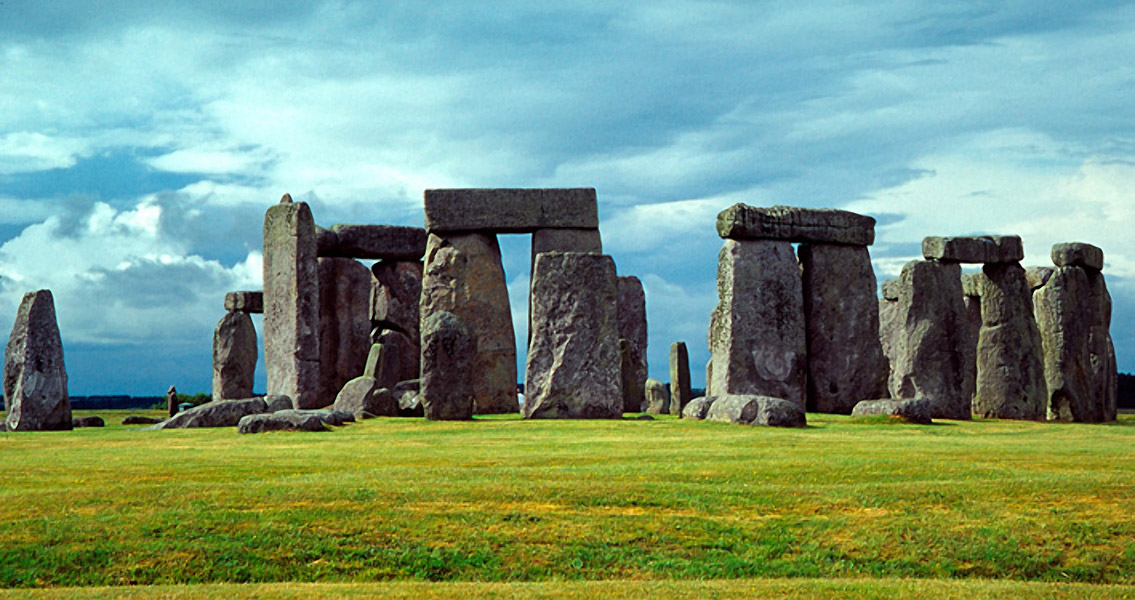
What do we know about the people who built Stonehenge?

Stonehenge (3)

Who built Stonehenge?

The questions of how and why Stonehenge was built garner significantly more research than specifically who built it. That is partly down to the fact that many of the human remains were cremated, making it difficult to extract much useful information from them.

New technique unlocks ancient secrets

Lead author Christophe Snoeck, who is undertaking doctoral research at Oxford’s School of Archaeology, demonstrates that even cremated bone retains its strontium isotope composition, making it possible to investigate where these people had lived during the last ten years of their lives. He says: ‘The recent discovery that some biological information survives the high temperatures reached during cremation (up to 1000 degrees Celsius) offered us the exciting possibility to finally study the origin of those buried at Stonehenge.’ Professor Julia Lee-Thorp, Head of Oxford’s School of Archaeology and an author on the paper, says: ‘This new development has come about as the serendipitous result of Dr Snoeck’s interest in the effects of intense heat on bones, and our realization that that heating effectively “sealed in” some isotopic signatures.’

Stonehenge bodies travelled from Wales

The team analysed the skulls of 25 people who were cremated at the site around 3000 BC to better understand their lives. At least ten of them did not live near Stonehenge at the time of their death. They were far more likely to have been living in western Britain; a region that includes west Wales, the known source of Stonehenge’s bluestones. The research was conducted in partnership with colleagues from University College London, Université Libre de Bruxelles & Vrije Universiteit Brussel), and the Muséum National d’Histoire Naturelle de Paris, France. Rick Schulting, a lead author on the research and Associate Professor in Scientific and Prehistoric Archaeology at Oxford, explains: ‘Some of the people’s remains showed strontium isotope signals consistent with west Wales, the source of the bluestones that are now being seen as marking the earliest monumental phase of the site.’

Inter-regional connections in 3000 BC

The results emphasise the prevalence of inter-regional connections involving the movement of both materials and people in the construction and use of Stonehenge, providing rare insight into the large scale of contacts and exchanges in the Neolithic, as early as 5000 years ago.

A revolutionary analysis technique

Dr Schulting adds: ‘To me the really remarkable thing about our study is the ability of new developments in archaeological science to extract so much new information from such small and unpromising fragments of burnt bone.’ The technique is now regarded as a vehicle to improve our understanding of the past using previously excavated ancient collections. Schulting continues: ‘Our results highlight the importance of revisiting old collections. The cremated remains from Stonehenge were first excavated by Colonel William Hawley in the 1920s, and while they were not put into a museum, Col Hawley did have the foresight to rebury them in a known location on the site, so that it was possible for Mike Parker Pearson (UCL Institute of Archaeology) and his team to re-excavate them, allowing various analytical methods to be applied.’]]>
Categories
Breaking News

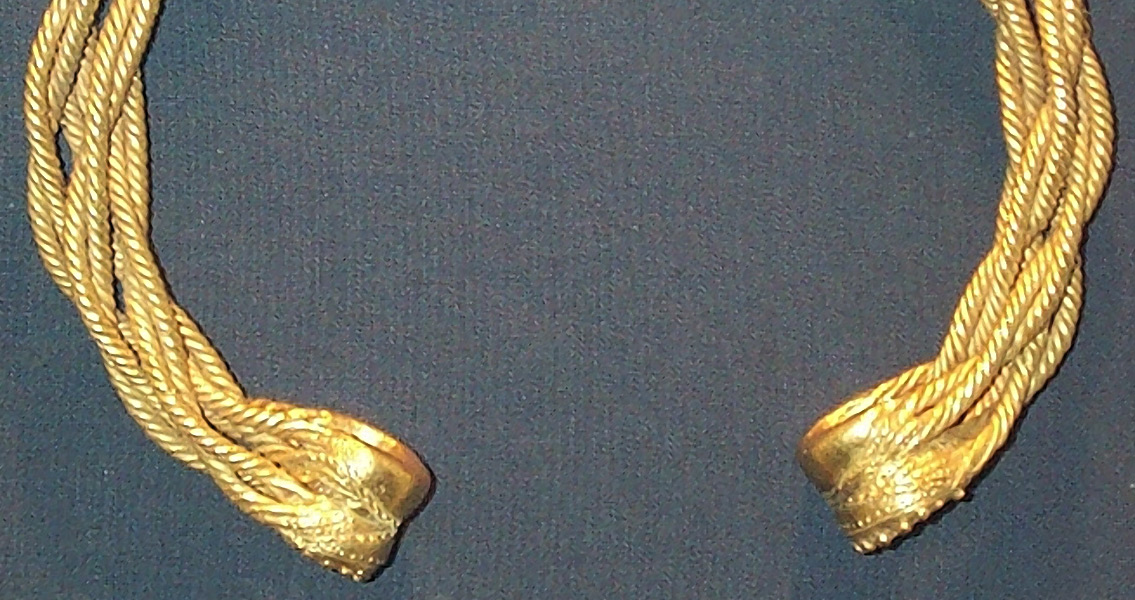
Treasure Hunters Unearth Ancient Iron Age Jewelry in Britain

Categories
Breaking News

17th Century Royal Murder Meets 21st Century DNA Analysis

Hannoversche Allgemeine Zeitung. “If it really is the bones of Königsmarck, [it] would be a sensation.” Philip and Sophia’s love story has inspired a number of films and books, largely due to the surviving cache of love letters. Sophia is typically seen as a sympathetic figure despite her infidelities because her husband was such an awful person, not just to his wife but to everyone. George was also unfaithful, physically abusive, and he enjoyed openly snubbing her in favor of his mistress: Melusine von der Schulenburg. According to Eleanor Herman’s book “Sex with the Queen”, George’s own mother referred to him as “the most pigheaded, stubborn boy who ever lived, who has round his brains such a thick crust that I defy any man or woman ever to discover what is in them.” Sophia spent the remainder of her life, 32 years, locked up at Castle Ahlden in Saxony. She was buried there, but later transferred and interred next to her parents in Celle, where she remains today. ]]>

Categories
Editorial

Why Are So Many Flags Red, White and Blue? (Part One)

Prior to the French Revolution, France’s state flag was based on the royal coat of arms – a blue shield with three golden fleur-de-lis, while different families and regions also boasted their own elaborate designs. After the Bourbon dynasty came to power, the blue shield started to be displayed against a background of the Bourbon dynastic colour: white. In the aftermath of the French Revolution the focus shifted towards much simpler flag designs. Blue and red, the traditional colours of Paris and popular among the revolutionaries, started to be added to flags alongside the traditional Bourbon white. Taking influence from the equally spaced horizontal stripes of the Dutch flag, the vertical tricolor of stripes ordered blue, white and red became the official French national flag in 1794. Although the flag has been temporarily changed at various points, for example during the Napoleonic period, the tricolor has been the official symbol of France since 1848. Seen to embody the French Revolution, the blue, red and white of the French flag have come to represent the ideals of liberty, equality, fraternity, democracy, secularism and modernization. Similarly, the colours used in the Dutch flag can be traced back to the history of the country’s sixteenth century struggle for independence. However, although the design of the French tricolor was influenced by the Dutch flag, and both have been taken to embody a crucial part of their respective nation’s identity; the presence of red, white and blue in the two flags in large part seems to be a coincidence – the consequence of unconnected regional events. Taking another notable red, white and blue flag from Western Europe, the Union Jack of the United Kingdom is a combination of the flags of England, Wales and Ireland. Each of the flags at the heart of the design is comprised of two colours (blue saltire on a white background for Scotland, red saltire on a white background for Ireland, and a red cross on a white background for England). The flags that make up the Union Jack each have their own stories explaining their colours. In Western Europe then, the repetition of red, white and blue designs in national flags would seem to owe a lot to specific local circumstances. Part two of this article will look at flags from further afield: to Eastern Europe, North and South America, and Asia. Click here for part two.]]>

Categories
Breaking News

Neolithic Britons Used Spectacular Stone Monuments for Astronomy

Archaeological Science: Reports, give fresh insight into the relationships ancient Britons held with the sky; connecting the earth to astronomical phenomena through spectacular monuments. “Nobody before this has ever statistically determined that a single stone circle was constructed with astronomical phenomena in mind – it was all supposition,” said project leader and University of Adelaide Visiting Research Fellow Dr Gail Higginbottom, who is also a Visiting Research Fellow at the Australian National University. Callanish, on the Isle of Lewis, and Stenness, Isle of Orkney; are the oldest stone circles in Scotland, built during the late Neolithic over 5000 years ago. It has long been thought that the megaliths were laid out to reflect the cosmos, but the quantitative tests carried out by the team on the patterns of alignment of the standing stones have finally provided convincing evidence that this was indeed the case. The team found a great concentration of alignments towards the Sun and Moon at different times in their cycles. What’s more, it seems that 2,000 years later simpler monuments were still being built which had at least one of the astronomical alignments found at the great circles. Remarkably, the monuments are not just connected with the Sun and Moon. According to the researchers, there is a complicated relationship between the stones, the surrounding landscape, the horizon and the movement of the Sun and Moon across that landscape. “This research is finally proof that the ancient Britons connected the Earth to the sky with their earliest standing stones, and that this practice continued in the same way for 2000 years,” said Higginbottom in a University of Adelaide press release. About half of the sites under analysis were surrounded by one landscape pattern, the other half by the complete reverse. “These chosen surroundings would have influenced the way the Sun and Moon were seen, particularly in the timing of their rising and setting at special times, like when the Moon appears at its most northerly position on the horizon, which only happens every 18.6 years,” explained Higginbottom. “For example, at 50% of the sites, the northern horizon is relatively higher and closer than the southern and the summer solstice Sun rises out of the highest peak in the north. At the other 50% of sites, the southern horizon is higher and closer than the northern, with the winter solstice Sun rising out of these highest horizons.” The findings paint a picture of just how sophisticated late-Neolithic societies in Scotland were, and the deep connection they had with their environment. It also offers some clues about their cultures, which have in general left precious little evidence. “These people chose to erect these great stones very precisely within the landscape and in relation to the astronomy they knew. They invested a tremendous amount of effort and work to do so. It tells us about their strong connection with their environment, and how important it must have been to them, for their culture and for their culture’s survival.” Featured Image: Copyright Douglas Scott. ]]>

Categories
Breaking News

Remains of Massive Structure Found Next to Stonehenge

The Independent, it seems as if those who had been responsible for shifting the local populace’s religious beliefs were attempting in some quite literal way to bury the past. Researchers are now gearing up to see if these religious revolutionaries were seeking to conceal their own history or if it was an attempt to erase the influence of another cultural group instead. The significance of this discovery is also high as this sudden change in religious worship is thought to have occurred nearly simultaneously with the transformation of the nearby Stonehenge site into its current configuration: a relatively small-diameter circle of giant stones, from its older, larger diameter configuration created by a multitude of medium-sized stones. The repurposing of Durrington Walls, the reconfiguration of Stonehenge and other, similar events occurring around Britain during this period of prehistory are thought to be part of the process of the Neolithic giving way to the Bronze Age. While it may not be possible to ever discern the political and religious conflicts and rivalries of this time, these new discoveries at Durrington provide some limited context for what may have been happening. ]]>

Categories
News

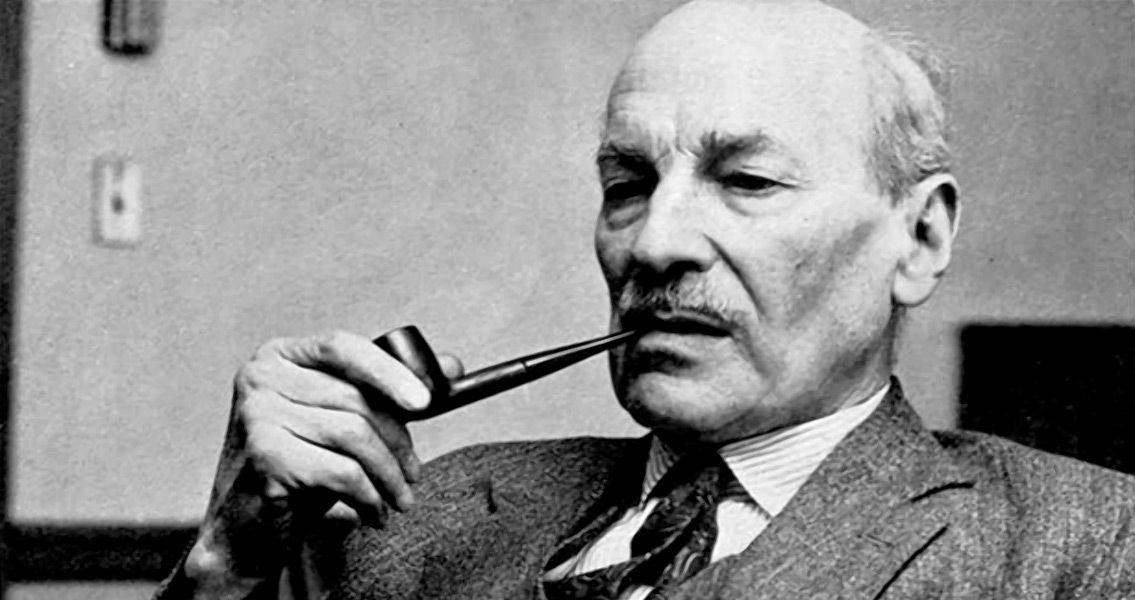
Winston Churchill Steps Down, Clement Attlee Steps Up

Categories
Breaking News

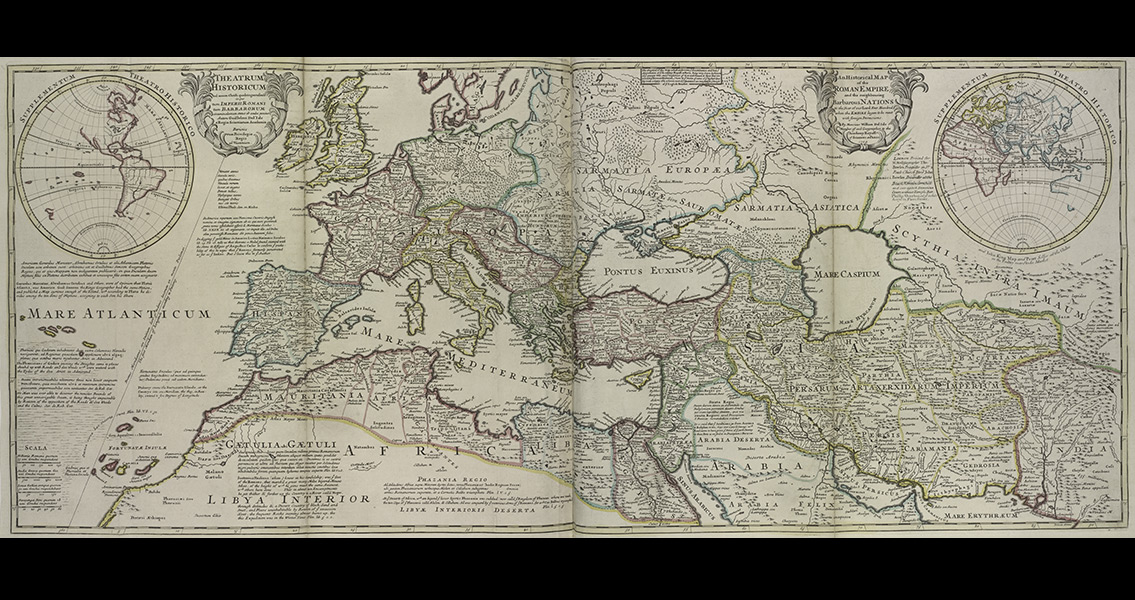
Discovery in Devon Expands the Boundary of Roman Rule in Britain

This article was changed on 1st July 2016. The original wrongly claimed that the Roman Empire had ruled over the entirety of Great Britain]]>

Categories
Breaking News

Electrical Construction Sheds Light on Roman Britain

Categories
News

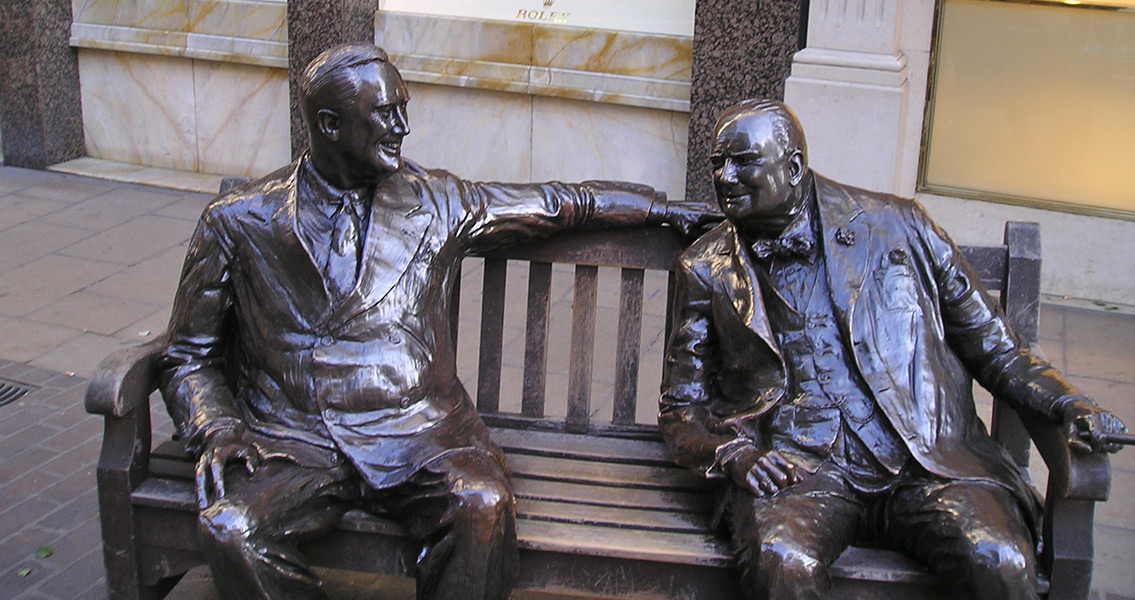
Roosevelt Announces Destroyers for Bases Agreement