Categories
Editorial

Detention Camps and Surveillance, Britain Responds to Mau Mau Uprising

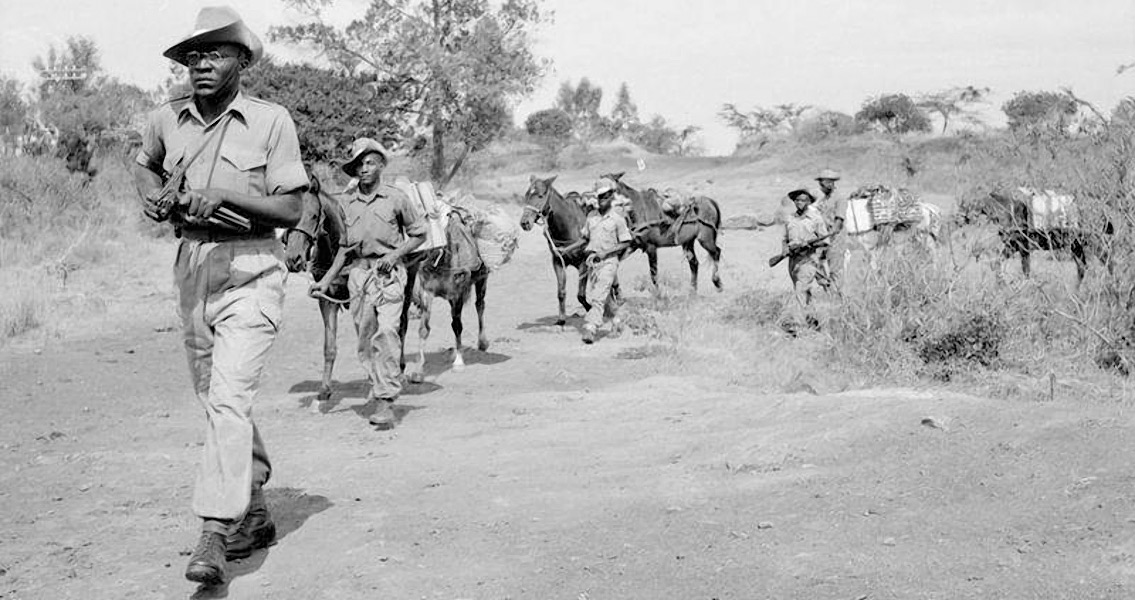
concentration camps created in the Boer War. 1.5 million Kikuyu, Embu and Meru civilians were feared to hold allegiances to the Mau Mau. As Dr Huw Bennet wrote in a 2015 Guardian article: “Africans living in the so-called Kenya Emergency areas were deemed guilty until proven innocent.” The majority of those people living in the Emergency Area were either sent to detention camps or forcefully relocated to new villages where they could be kept under heavy surveillance. Official records described these detention camps as rehabilitation centres, places where occupants received classes in home-crafts and civics. Any acts of violence or brutality reported were deemed isolated incidents, exceptional cases far from the norm. It is a description which matches the broader narratives given by defenders of the British Empire, a description that suggests a benevolent, civilising imperialist force. As the years went on however, sickening cracks started to appear in this account of British involvement in the Mau Mau uprising. Accusations of torture, beatings and sexual assault in the detention camps started to arise. Recent work by historians such as Bennet, David Anderson and Caroline Elkins has started to unravel the scale of the detention camp system. The figure for the number of detainees has been brought into question. Official accounts state 80,000 were held in the camps, while Elkins’ work suggests that number was in fact somewhere between 160,000 and 320,000. Meanwhile, the work of journalists and investigators at the time who exposed human rights abuses has also been revisited, helping paint a more detailed image of what truly happened. A pivotal question is to what extent the abuses at the camps in Kenya were the result of British government policy, as opposed to the excesses of individuals. It’s a controversy which garnered particular attention in 2014, when a group of elderly Kenyans launched a £200 million damages claim against the UK Government. In 2013, then UK foreign minister William Hague had admitted “The British government recognises that Kenyans were subject to torture and other forms of ill-treatment at the hands of the colonial administration”. Still, the true extent of the atrocities in the Mau Mau uprising and the level of complicity of the British government remain shrouded in ambiguity, in large part due to severe gaps in the records available. The eight years of the Mau Mau uprising saw 1,800 African civilians killed, an unknown number of Mau Mau rebels killed, 32 white settlers killed and 200 British soldiers killed. Beyond that, it stands as an atrocious moment at the close of Britain’s imperial history, the true extent, nature and meaning of which is still being unraveled. ]]>
Categories
Book Reviews

Conan Doyle Beyond Sherlock, From Fairies to Atrocities

Harry Houdini over the validity of spiritualism; became embroiled in solving a real life murder mystery, and was until recently believed to have been involved in one of the great archaeological hoaxes of the twentieth century. Conan Doyle was born in Edinburgh, Scotland on 22nd May, 1859. Doyle’s family were affluent, strict Irish Catholics. His father was a respected artist whose achievements had ultimately been thwarted time and again by alcoholism. His mother was a well educated woman with a passion for reading. She would prove hugely influential in Conan Doyle’s life, as he wrote in his biography: “In my early childhood, as far as I can remember anything at all, the vivid stories she would tell me stand out so clearly that they obscure the real facts of my life.” In 1876 Doyle embarked on a medical degree at the University of Edinburgh. It was here that the youngster wrote and had published his first short stories, in many ways reflecting a balance between practical scientific study and fantasy that would come to define his work. The Sherlock Holmes character first appeared in 1887’s A Study in Scarlet, published in Beeton’s Christmas Annual. Holmes was partly based on Dr. Joseph Bell, one of Doyle’s lecturers who impressed him with his intense attention to detail, a trait clearly reflected in the character. Beyond Holmes however, Doyle’s medical background is also reflected in Round the Red Lamp and the Stark-Munro Letters; the latter a novel depicting the live of a young medical graduate in nineteenth century England, the former a collection of short stories on the trials and traumas of the medical profession. Alongside fiction, Doyle engaged with highly controversial issues of the day. Inspired by “a burning indignation”, he wrote the The Crime of the Congo in just eight days in 1909. Dealing with the atrocities taking place in the Congo on behalf of Belgian King Leopold II, the powerful book included graphic portrayals of violence and is littered with horrific photos of mutilated victims. Not satisfied with the publication of his written description of the horrors in the Congo, Doyle used his fame to lobby world leaders such as Kaiser Wilhelm and Theodore Roosevelt. Doyle’s work straddles the line between the factual and the fantastical. His groundbreaking science fiction novel The Lost World tells the story of a group of explorers discovering a South American plateau where prehistoric animals survive. Although an adventure story, it is littered with references to real prehistoric creatures such as dinosaurs and hominids. It’s a book which engages with the idea of evolution at a time it was still considered cutting edge, and shows Doyle’s own interest in the sciences. Towards the end of his life Doyle became fascinated with the mystical and the occult, unveiling another, perhaps totally unexpected facet to this complicated individual. He fell out with Houdini following the illusionist’s campaign to debunk Spiritualism, Doyle having spent much of the 1920s writing books championing Spiritualist beliefs. In 1922, Doyle wrote The Coming of the Fairies, a book which promoted the Cottingley Fairies photographs. Opinion was divided at the time as to whether the images of two girls playing with fairies were a hoax (the girls finally admitted in the 1980s that the images had indeed been faked), and for many, Doyle’s passionate championing of the fairies did long term damage to his literary reputation. Sir Arthur Conan Doyle will likely always be best remembered for his most recognised character, the deerstalker and pipe bearing Sherlock Holmes. By looking at his other works however, an image of a deeply complicated, fascinating individual emerges. ]]>

Categories
News

Anniversary of the Bombing of Guernica

Categories
Breaking News

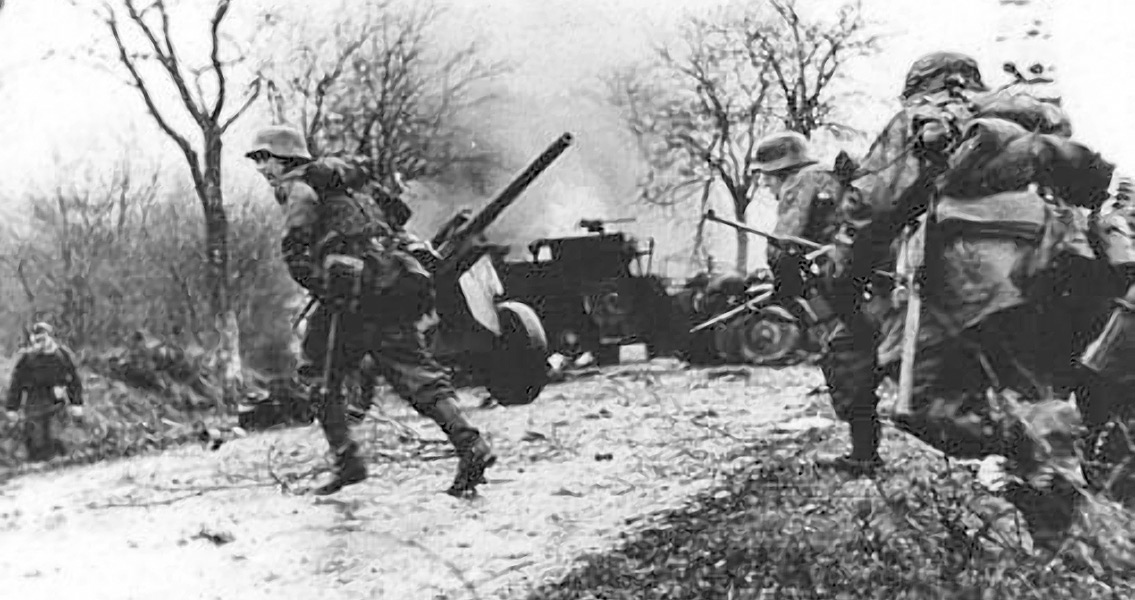
The Ardennes and the Battle of the Bulge, by Anthony Beevor

www.anthonybeevor.com]]>