Categories
Book Reviews

Dracula

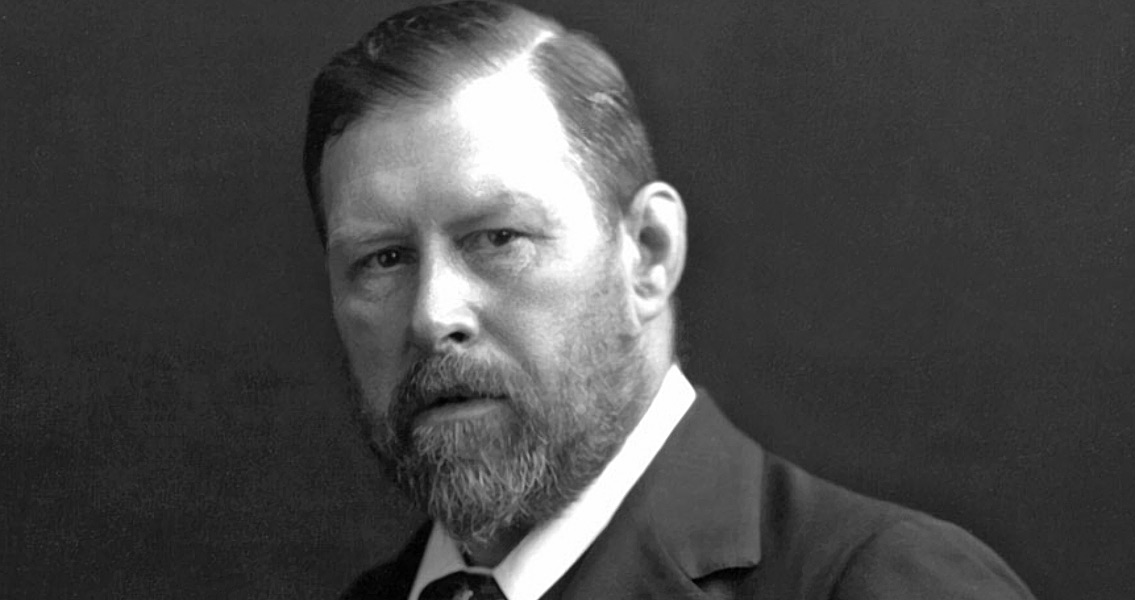
Dracula. First released in English bookshops in 1897, the book remains for many the classic vampire novel. The book’s author, Bram Stoker, was born in Dublin, Ireland, in 1847. A sickly child, Stoker was forced to spend much of his youth confined at home. His mother, a charity worker and writer, entertained him with fantastic stories. Stoker became healthier as he grew older, and went on to study Mathematics at Trinity College, graduating in 1867. Stoker worked as a civil servant in Dublin while also writing theatre reviews for the Dublin Mail newspaper. He met the famous actor Sir Henry Irving, who hired Stoker as his manager, forging a working relationship which would last for the best part of the next three decades. The new job saw Stoker move to London, where he began his writing career and started to move in the city’s literary circles alongside the likes of Oscar Wilde, Arthur Conan Doyle and Alfred Lord Tennyson. Easily Stoker’s most well known novel, Dracula is composed of a collection of diary entries, letters and telegrams between several key characters. This narrative technique was intended to give the story a more unnerving sense of reality, as though the narrators are relaying simple fact rather than consciously telling a story. It also lends the book a distinct style: lacking a fixed narrator, the story is told from several first person perspectives. A central theme in the book is the relationship between science and tradition, a key concern of the late Victorian era. Industrialisation and scientific advances had led to an increasing detachment from rural traditions, while works such as Darwin’s On the Origin of Species had called into question religious belief systems as a means to understand the universe. Count Dracula however, is something beyond science, a supernatural being whose weaknesses can only be found through traditional means. It is only Van Helsing, a doctor trained in both scientific and non-scientific knowledge, who can identify the threat Count Dracula poses and stop it. Female sexuality is another central issue in Dracula, and in many ways the depiction of women in the book is a reminder of the patriarchal society in which it was written. Many critics argue that the novel was intended to stimulate the imaginations of Victorian men, with Dracula’s female victims metaphors for lust. Many of the female characters are portrayed in a very flat, one dimensional way, often serving as mere objects in the development of the story rather than active subjects. Count Dracula’s attacks lead to his victims breaking from ideals of Victorian womanhood, as seen in his first victim Lucy, or the seductive female vampires in his castle. Throughout, women are either victims or temptresses, their characters are never developed beyond these very basic allegorical roles. It is important to remember that Dracula was not the first vampire story written. Stoker’s work in fact drew on ancient folk stories of the blood sucking undead who attacked their victims at night. Nevertheless, it is the basis for most modern vampire stories, providing an image of vampires that is influential to this day and serving as a reflection of the late Victorian world in which it was written.

Related Books


Dracula book

Dracula
by Bram Stoker

[gap height=”20″] ]]>

Categories
News

Journey on the Orient Express – a Date With History, Heritage and Luxury

The history of Orient Express is filled with mystery, intrigue, culinary excellence and luxury. Elegant and historic train, the Orient Express made its maiden journey from Paris to Vienna on June 5, 1883. The train left for Vienna from Strasbourg on its final journey on December 12, 2009, completing an illustrious 126 years connecting people with heritage. Orient Express has a long and interesting history of bringing people and heritage together. The train is steeped with copious amounts of intrigue and mystery and is peppered with luxury, adventure and timeless heritage. The two popular words in the history of international travel – ‘Orient Express’ – are commonly linked to Paris and Istanbul, the original destinations of this historical train. This passenger train service was launched by the Compagnie Internationale des Wagon-Lits. Its maiden journey from Paris to Vienna was on June 5, 1883. It was called Express d’Orient during the initial years and in 1891, it was officially renamed as Orient Express. Initially, in the year 1882, a train called the ‘Train Éclair de luxe’ was used by Georges Nagelmackers, son of a Belgian banker, as a test train. It left Paris on the 10th of October, 1882 and arrived in Vienna on the 11th of October, 1882. The Orient Express is not only known for its enchanting beauty and culinary excellence, but also famous for its constantly changing train route. One of the reasons why the name ‘Orient Express’ is steeped in romance is connected to the routes it travelled – three of Europe’s most popular and romantic destinations – Paris, Vienna and Istanbul. The Orient Express had 10 wood paneled compartments with either a single bed or double beds (one over the other). There were no baths or showers on board, only a washbasin was available. The compartments were used as sleeper compartments in the night and during the day; they were converted into sitting rooms. They were quickly converted into luxurious carpeted sitting rooms, complete with a sofa and table. The beauty and elegance of the Orient Express, perhaps, was in its peak during 1920s, just a few years before the World War I. The services of the train were suspended during the period of the War and resumed after the hostilities ended in 1918. However, soon after resuming the services, Orient Express regained its popularity and patronage by the rich and wealthy. The 1930’s can, perhaps, be considered the golden period in the history of this train. Three parallel services, namely, the Orient Express, the Arlberg Orient Express and the Simplon Orient Express were being operated. This was the period when Orient Express came to be known as one of the most luxurious and elegant vehicle on wheels. It started carrying a number of sleeping cars that offered permanent service, and restaurant cars where exotic food was prepared. A number of celebrities, diplomats, royalty, and business people – the rich and the famous – started frequenting the Orient Express. However, the services were disrupted during the Second World War as well and they did not resume until after 1945. The Orient Express stopped running in the year 1962 and it was replaced with a slow service train called the Direct Orient Express that ran from Paris to Belgrade every day and from Paris to Istanbul and Athens twice weekly. In fact, the Direct Orient Express services were completely withdrawn in the year 1977. Many considered this to be the end of the Orient Express, but a similar service of the same name ran from Paris to Bucharest until the year 2001. During the final years of the Orient-Express, the train ran as a EuroNight service from December 14, 2008 to December 2009. The popularity of the Orient Express reached its zenith when its glamour and history ensured that it made its way into popular culture. It became a part of literature featuring in books, films and documentaries. One of the most famous plots and murder mystery stories of all time, Murder on the Orient Express by Agatha Christie was based on the events happening onboard the train. Although the name suggests Orient Express, it actually takes place on the Simplon Orient Express. In the famous book Dracula by Bram Stoker, the Orient Express is mentioned. In fact, movies Orient Express (1934) and Orient Express (1954) are film adaptations of a book by Graham Greene called Stamboul Train and a plot involving passengers of the train respectively. Orient Express has left an indelible mark on the cultural and historical landscape of the world of travel. The rich history and intrigue surrounding this train is amazing; everyone remembers this train to be the one where Hercule Poirot solved the mystery of the murder, the same train which James Bond rode from Istanbul to London to save the world – yet another time, and the same train from where Alfred Hitchcock’s young lady disappeared from.  Everything about the train: from its constantly changing route map to its popularity with spies, to its exotic cuisine to its enchanting décor, continues to enthrall people world over.]]>

Categories
Book Reviews

Transylvania in Fiction

Reference: Dracula by Bram Stoker Dracula by Bram Stoker PIBN: 1000280764 [gap height=”20″]]]>