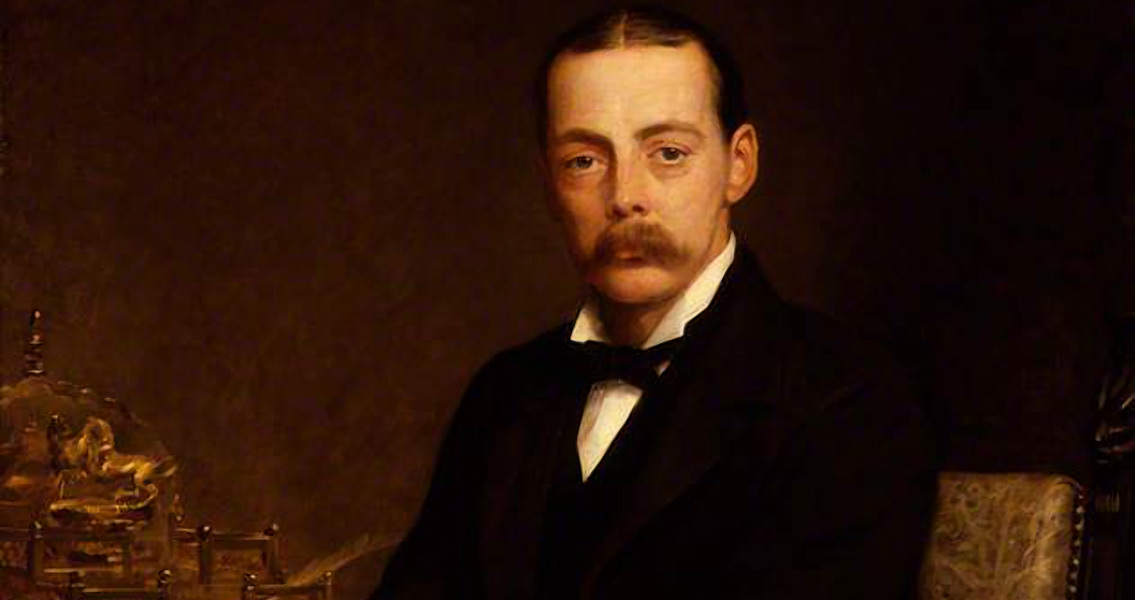
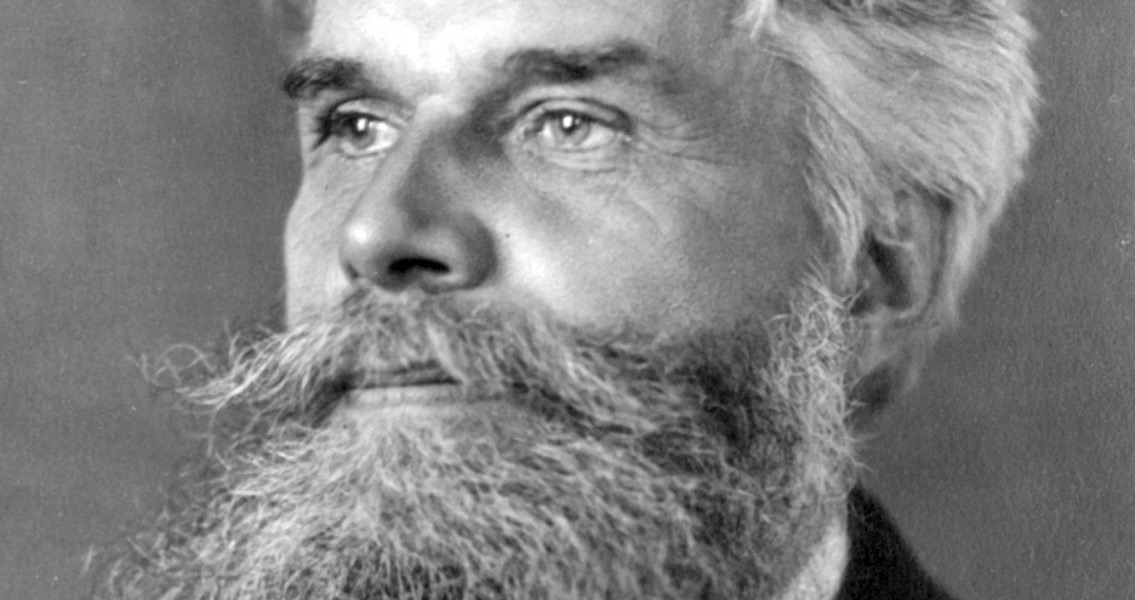
The Nationalisation of Health suggested that the state held responsibility for the health of its citizens. Coming over fifty years before the foundation of the NHS, it was a revolutionary suggestion for its time. The book describes the hospitals of the future, the role of private practitioners, and the need for a Health Minister. Two years later, Man and Woman: A Study of Human Secondary Sexual Characters was published. It was Havelock Ellis’ first study of sexology, coming as the result of over 12 years of research. Attempting to ground the study of gender in biology, the work was in some ways symptomatic of its time. The book traces the history of women’s position in society, from the prehistoric period through medieval times and into the Victorian era, and attempts to analyse the social and economic problems connected to womanhood in the still deeply patriarchal societies of the late nineteenth century. Although some of the conclusions the book reaches about the physical and mental differences between men and women may seem at best overly simplistic and at worse downright sexist now, it was groundbreaking in stressing that men and women had complementary abilities crucial to society, rather than one being more valuable than the other. “Woman is not undeveloped man, but diverse.” ‘Man and Woman’ laid the basis for what is perhaps Havelock Ellis’ best known work, and certainly the most important – ‘Studies in the Psychology of Sex’. The first of the seven volume work, ‘Sexual Inversion’, is perhaps the most significant. Published in 1897, just two years after Oscar Wilde’s conviction for sodomy, the book is the earliest serious study of homosexuality (what Havelock Ellis referred to as ‘Inversion’) and truly innovative considering its context. Highlighting that homosexuality was present in both the animal kingdom and throughout history, ‘Sexual Inversion’ argued that it was a natural occurrence rather than a symptom of social decay, mental illness, or moral degeneracy. Unsurprisingly, the book caused an uproar and was quickly banned. In 1898 George Bedborough was charged with selling copies, the prosecution claiming he “sold and uttered a certain lewd wicked bawdy scandalous and obscene libel in the form of a book entitled Studies in the Psychology of Sex: Sexual Inversion.” Authorities associated the book with anarchism, showing just how dramatically it had shocked a still incredibly reactionary society. For years, the groundbreaking work was only available to the medical profession. Subsequent volumes of ‘Studies in the Psychology of Sex’ would go on to discuss issues such as masturbation and the physiology of sexual behaviour. Throughout, the unifying theme was an attempt to dispel fear and ignorance with open discussion, portraying sexuality as a natural expression of love. In that sense, Havelock Ellis’ works were crucial in defying the rigid repression of Victorian Society.

Studies in the Psychology of Sex
The Evolution of Modesty the Phenomena of Sexual Periodicity Auto-Erotism
Vol. 1Vol. 1
by Havelock Ellis
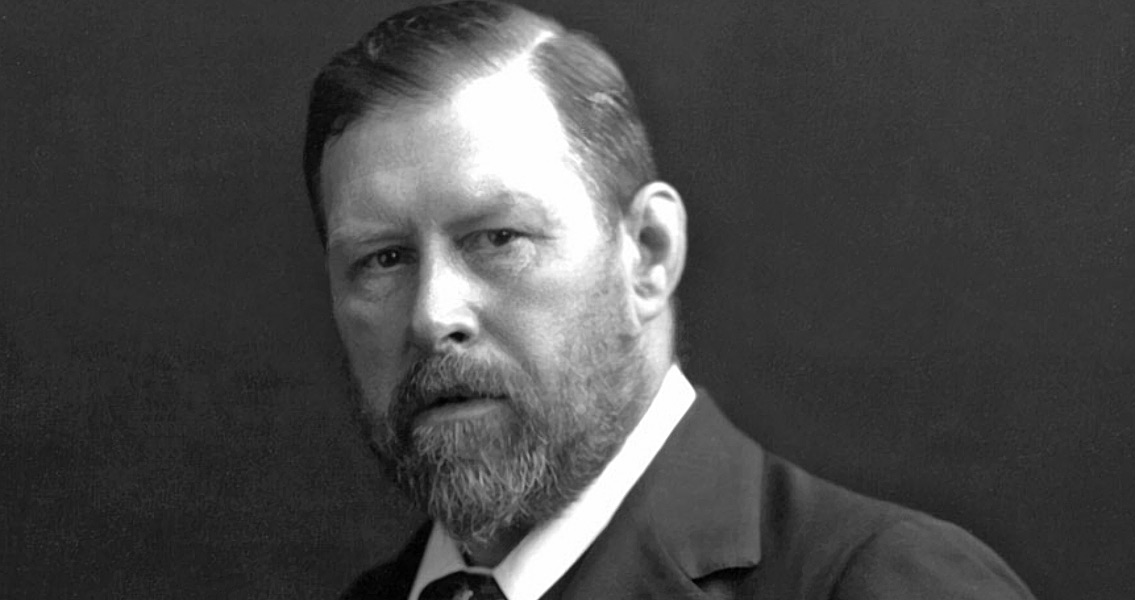
Dracula. First released in English bookshops in 1897, the book remains for many the classic vampire novel. The book’s author, Bram Stoker, was born in Dublin, Ireland, in 1847. A sickly child, Stoker was forced to spend much of his youth confined at home. His mother, a charity worker and writer, entertained him with fantastic stories. Stoker became healthier as he grew older, and went on to study Mathematics at Trinity College, graduating in 1867. Stoker worked as a civil servant in Dublin while also writing theatre reviews for the Dublin Mail newspaper. He met the famous actor Sir Henry Irving, who hired Stoker as his manager, forging a working relationship which would last for the best part of the next three decades. The new job saw Stoker move to London, where he began his writing career and started to move in the city’s literary circles alongside the likes of Oscar Wilde, Arthur Conan Doyle and Alfred Lord Tennyson. Easily Stoker’s most well known novel, Dracula is composed of a collection of diary entries, letters and telegrams between several key characters. This narrative technique was intended to give the story a more unnerving sense of reality, as though the narrators are relaying simple fact rather than consciously telling a story. It also lends the book a distinct style: lacking a fixed narrator, the story is told from several first person perspectives. A central theme in the book is the relationship between science and tradition, a key concern of the late Victorian era. Industrialisation and scientific advances had led to an increasing detachment from rural traditions, while works such as Darwin’s On the Origin of Species had called into question religious belief systems as a means to understand the universe. Count Dracula however, is something beyond science, a supernatural being whose weaknesses can only be found through traditional means. It is only Van Helsing, a doctor trained in both scientific and non-scientific knowledge, who can identify the threat Count Dracula poses and stop it. Female sexuality is another central issue in Dracula, and in many ways the depiction of women in the book is a reminder of the patriarchal society in which it was written. Many critics argue that the novel was intended to stimulate the imaginations of Victorian men, with Dracula’s female victims metaphors for lust. Many of the female characters are portrayed in a very flat, one dimensional way, often serving as mere objects in the development of the story rather than active subjects. Count Dracula’s attacks lead to his victims breaking from ideals of Victorian womanhood, as seen in his first victim Lucy, or the seductive female vampires in his castle. Throughout, women are either victims or temptresses, their characters are never developed beyond these very basic allegorical roles. It is important to remember that Dracula was not the first vampire story written. Stoker’s work in fact drew on ancient folk stories of the blood sucking undead who attacked their victims at night. Nevertheless, it is the basis for most modern vampire stories, providing an image of vampires that is influential to this day and serving as a reflection of the late Victorian world in which it was written.

Dracula
by Bram Stoker
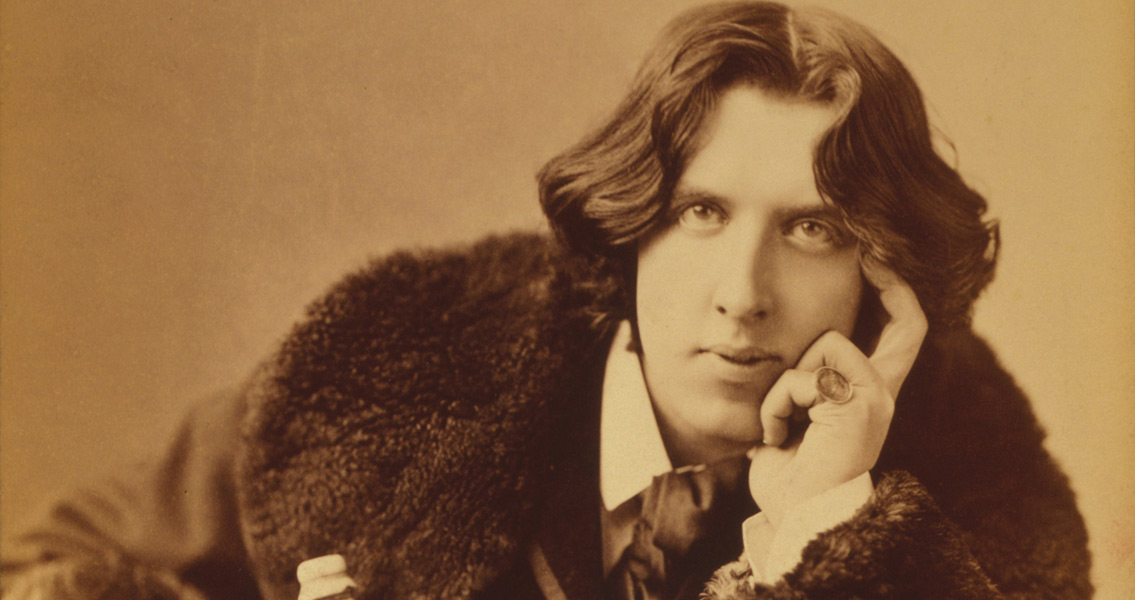
Picture of Dorian Grey, was published in 1891, the same year that he wrote his first play: The Duchess of Padua. In 1895, John Sholto Douglas, 9th Marquess of Queensberry, denounced Wilde as a homosexual. The Marquess suspected that Wilde was in a relationship with his son, Lord Alfred Douglas, and started to publicly label Wilde a sodomite. Famous for the ‘Marquess of Queensbury Rules’ which are the basis of modern boxing, the Marquess was a well known atheist who had been ousted from the House of Lords as a madman for his controversial views. His personal life was also beset with chaos and tragedy. His father and brother had died while he was still in his youth, his first wife had left him because of his adultery, and his second wife had their marriage annulled on the basis that the Marquess’ impotence prevented consummation. Most pertinently, his heir, Lord Drumlanrig, was killed in a shooting accident in 1894. It was speculated at the time that Drumlanrig had been involved in a homosexual relationship with Lord Roseberry, the Liberal Prime Minister, with some even suggesting Drumlanrig had been killed to cover up what would have been an illegal relationship. Wilde responded to the accusations, ignoring the advice of his friends, by suing the Marquess of Queensbury for libel. Obviously, Wilde knew that the Marquess’ accusations were not libelous, but he seems to have assumed that it would be impossible for the claims to be proven. The plan backfired. The Marquess was able to supply evidence that Wilde had solicited twelve boys to commit sodomy between 1892 and 1894, and Wilde withdrew his case. The crown, obliged by the fact that homosexuality was still illegal in England, issued a warrant for Wilde’s arrest on charges of indecency. Some historians have suggested that a major reason Wilde’s case was so aggressively pursued was the lack of aristocratic privilege mentioned above, as well as anti-Irish sentiment in England making him an easy figure to use as an example to others. Preliminary hearings saw Wilde’s chambermaids and a hotel housekeeper state that they had seen young men in Wilde’s bed. A first trial saw Wilde escape conviction after a single juror refused to convict, but the crown opted to prosecute again (some have speculated this was under pressure from the Marquess, who threatened to reveal details of Lord Roseberry’s alleged homosexuality). Wilde was found guilty of gross indecency, and sentenced to two years of hard labour. Revealing the attitude towards homosexuality of the time, the judge remarked at the trial that he felt this punishment, the maximum he could give, was “totally inadequate.” Upon his release, Wilde fled to Paris, a country which had no laws against homosexuality, and tried to resume his writing career. He died of meningitis in 1900. For decades, his writing and plays were largely ignored, revealing the powerful stigma associated with homosexuality in the late nineteenth and early twentieth century. Image courtesy of Wikimedia Commons user: Library of Congress]]>

Related Books

Strange Case of Dr. Jekyll and Mr. Hyde
by Robert Louis Stevenson

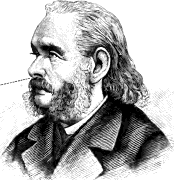
Samuel Smiles “Self-Help with Illustrations of Conduct and Perseverance” – A Victorian ethical work
While Samuel Smiles cannot be considered amongst the most famous of Victorian writers, he certainly was one of the most influential. His ideas both reflected and shaped the era in which he lived. By the time of his death at the start of the twentieth century his classic work “Self-Help with Illustrations of Conduct and Perseverance” had sold over a quarter of a million copies. Even in distant Japan the translated version had become very popular.
While the works of Dickens, Thackeray, Conan Doyle and other great literary figures of this period are still read today for pleasure, Smiles has the distinction that his writings continue to provide a doctrine of life that still manages to inspire. In the 1980’s Smiles Self help philosophy combined with economic ideas of Milton Freedman to shape the social policies of Britain’s ruling Conservative party. It is very significant that a 1986 reprint of Self Help carried an introduction written by Education Secretary Keith Joseph.
Yet for all the appeal the modern reader finds in his ideas, they are without doubt solidly rooted in the world of 150 years ago, and in the background and upbringing of the author. To understand Self Help and its impact it is essential to appreciate popular attitudes around the time this book was first published, and how Samuel Smiles both reflected and articulated the ideas of his time.
The Deserving Poor
The introduction and expansion of government welfare programmes in the twentieth century has encouraged people to consider that the state has obligations to provide its citizens with a certain standard of living, health care, education and other benefits. This attitude is a radical departure from how our ancestors viewed the role of the state. The Victorian era was characterised by a belief that the less the state intervened in the lives of ordinary people the better it would be for everyone. Economists argued that free trade was the best economic policy to follow, and industrialists and farmers needed to have the freedom to set prices and hire labour according to supply and demand. Political thinkers and philosophers such as John Stuart Mills argued for minimum government intervention and regulation of the lives of ordinary people.
Social policy was strongly influenced by opinions that everyone should be encouraged to stand on their own two feet. While these attitudes had their roots in the Protestant “Work Ethic” they were also in accord with the opinion of Jeremy Bentham and other popular opinion-formers of this time. A classic example of this attitude was the Poor Law legislation introduced in the UK in 1834. This law gave legislative expression to the idea that people turn to the state for assistance because it is more comfortable for them to receive funds in this manner than to go out to work. The authors of this law believed that by offering the poor assistance only in a workhouse environment (most famously portrayed by Charles Dickens in “Oliver Twist”) only the really needy would seek help. All the able-bodied poor would be deterred by the harsh workhouse conditions and go and find work. Poverty was ascribed to reckless spending, alcoholism and other human failings, consequently it was considered eminently reasonable to argue that the state should not have to pay the bill for a person’s irresponsibility. Only the deserving poor – those who poverty could not be ascribed to a corrupt lifestyle – should be assisted.
The Man behind the Book
Samuel Smiles was born in Haddington, Scotland in 1812. His family belonged to a particularly strict Protestant sect called the Cameronians. From an early age he was brought up to believe in concepts of sin and virtue, rewards and punishment and of course the famous Protestant Work ethic. These childhood influences certainly shaped his manner of thinking and contributed to the quasi-religious tone of his writings.
After training as a doctor, Smiles turned his hand to journalism. In the 1840s he edited a northern English newspaper, the Leeds Times. Moved by the injustices he saw generated by England’s rapid industrialisation and urbanisation Smiles turned to radical politics. He supported a political movement known as Chartism. They advocated political reform including one man one vote (Smiles personally also supported female suffrage) and annual elections as the best way of improving the lot of the average Englishman. When more militant figures took control of the Chartist movement, Smiles withdrew his support. In the 1850s he began to seriously explore other paths to improve life for the ordinary person and so he began to develop his philosophy of Self-Help.
One of the pivotal moments in Smile’s life was his meeting with the famous railway engineer George Stephenson in the mid-1840s. Smiles drew inspiration from the humble beginnings of Stephenson and other inventors, engineers and entrepreneurs who were spearheading Britain’s Industrial Revolution. In earlier years aristocratic families had been in the forefront of the country’s economic development. In the late eighteenth and early nineteenth ordinary people seemingly suddenly became empowered to become astoundingly successful businessmen on the basis of their hard work and determination. Smiles saw Stephenson, Wedgwood and other key figures of Britain’s economic takeoff as valuable sources of inspiration, especially for young people. The examples they provided showed how you did not need to be born with the proverbial silver spoon in the mouth to achieve. The study of the lives of the engineers found expression in the approach to life advocated in Self-Help, and also in a number of biographies. A few years before Self Help appeared Smiles published a biography of George Stephenson. In 1861 he authored another very successful book of biographies of famous engineers. Although the historical accuracy of all the information he presented might have been questioned by later historians, the book admirably served is purpose of inspiring a generation of Victorian schoolboys to take an interest in technical professions.
Smile’s Self Help Formula
The origins of Self Help can be traced to an 1845 lecture delivered to a March 1845 speech that Smiles was asked to deliver to a self-improvement society. These organisations were formed to assist ordinary working people to advance their education and better the quality of their lives. In the opening pages of Self Help Samuel Smiles sets the tone of his outlook on life, and it is certainly attuned with the philosophy that prompted the establishment of self-improvement societies, and mechanics institutes across Great Britain.
On the book’s first page he quotes the popular saying that “Heaven Helps Those who Help Themselves.” He clearly sets out the key role of self-help in promoting the welfare of the society and he gives us a clear idea of the theme around which he builds his work. To quote Mr. Smiles, “The spirit of self-help is the root of all genuine growth in the individual; and, exhibited in the lives of many, it constitutes the true source of national vigour and strength. Help from without is often enfeebling in its effects, but help from within invariably invigorates.”
Yet if this introduction leads the reader to anticipate they a long and boring sermon lies ahead they are invariably presently surprised. This is no philosophical treatise aimed at Ivory Tower academics but an exercise in encouraging the ordinary person to get ahead in life drawing upon their own resources. The writing is simple and makes plenty of use of examples of people who helped themselves to achieve success in various fields. In a sense the approach adopted might even be classed as anti-intellectual. Thus in the first chapter Smiles compares unfavourably formal college education to the practical education a man can gain from the honest pursuit of a trade or profession. Smiles writes, “Far more influential is the life-education daily given in our homes, in the streets, behind counters, in workshops, at the loom and the plough, in counting-houses and manufactories, and in the busy haunts of men…..—all that tends to discipline a man truly, and fit him for the proper performance of the duties and business of life,—a kind of education not to be learnt from books, or acquired by any amount of mere literary training.”
Part of the enduring appeal of Self Help is the simple English and the abundance of anecdotes and biographical snippets of people whose success in life held lessons of value for his reasons. Although many of the individuals mentioned are now forgotten, there are many others that are instantly familiar to the modern reader. For example, Smiles brings William Shakespeare the playwright and Livingstone the explorer as typical examples of people from poor backgrounds who overcome many challenges to achieve great personal success.
While these inspiring stories occupy a significant portion of the book there are interwoven with sound practical advice on how the reader can achieve in their own right. Discipline and training are praised as traits that allow even those of mediocre talents to become top achievers.
Hard work is another quality that Smiles sees as essential for personal progress, as he comments in regard to artistic success, “Excellence in art, as in everything else, can only be achieved by dint of painstaking labour.”
Another area where Smiles chooses to focus is prudence in handling monitory affairs. He remarks “How a man uses money—makes it, saves it, and spends it—is perhaps one of the best tests of practical wisdom.” He then proceeds through quotations and examples to illustrate all that is to be gained by avoiding spendthrift habits and practicing the virtues of self-denial.
In his final chapter he attempts to define the English gentleman and provide his readers with guides how they refine their character through the practice of honest and other virtues and so win this coveted title. He comments on the worthlessness of intellect without character as follows: “That character is power, is true in a much higher sense than that knowledge is power. Mind without heart, intelligence without conduct, cleverness without goodness, are powers in their way, but they may be powers only for mischief. We may be instructed or amused by them; but it is sometimes as difficult to admire them as it would be to admire the dexterity of a pickpocket or the horsemanship of a highwayman.”
Maybe some modern readers might find the author’s tone in places too sermonic, but the values he was seeking to promote are still as worth attaining now as they were one hundred years ago. The number of recent editions attests to this work’s continued appeal. Although the language sounds a little antiquated and the style dated, the sincerity with which he delivers his message continues to shine through.
 Source
Self-Help with Illustrations of Conduct and Perseverance
PIBN: 1000149101
Stevenson biog: 1000632707
Lives of engineers: 1000137590
Other sources
http://en.wikipedia.org/wiki/Samuel_Smiles
http://www.economist.com/node/2610260
http://infed.org/mobi/samuel-smiles-and-self-help/e]]>