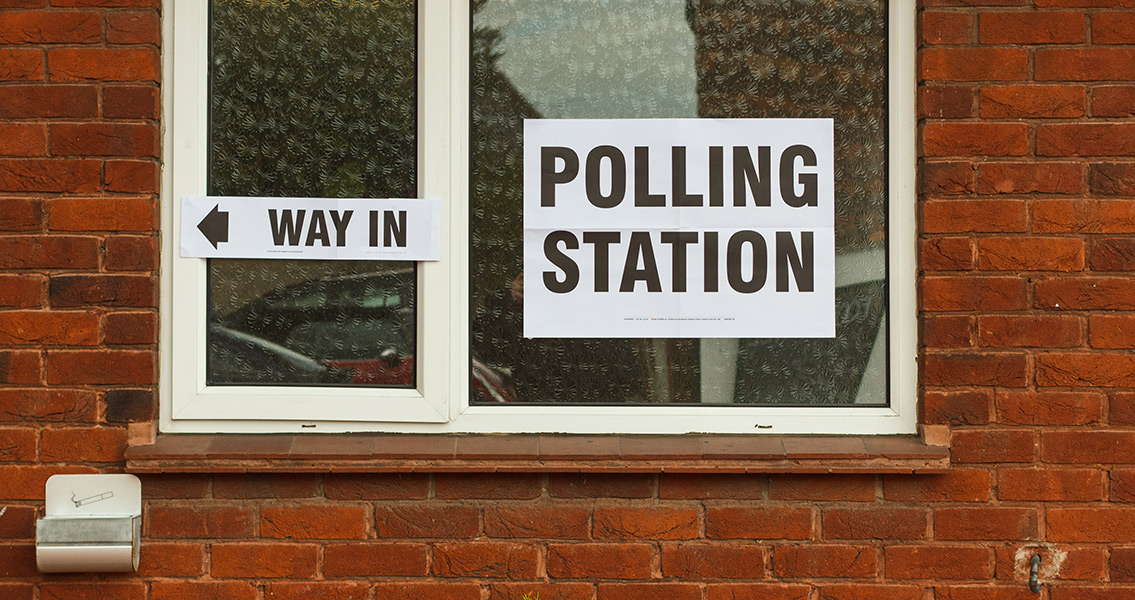

Historical Research. Media coverage of elections the world over is replete with images of electors queuing up to vote and papers spilling from ballot boxes, ready to be counted. No one ever speaks of an open voting system any more, the secret ballot paper is seen as an essential hallmark of a free election system. Remarkably, given the iconic status of the ballot paper, Crook and Crook note, questions surrounding the history of the ballot paper have not been adequately explored. In the eighteenth century, Crook and Crook wrote, “the dominant method of electing borough personnel involved those assembled indicating their preference either orally – by casting their ‘voice’ – or by raising a hand, normally in order of social rank.” Importantly, this earlier electoral system was in a very different voting culture. Early modern elections proceeded relatively consensually and the nomination process in early modern Britain was often uncontested, meaning that polling was often unnecessary. As the number of enfranchised individuals grew however, oral voting or a show of hands became a troublesome system. As elections became more hotly contested, with several candidates vying for votes, another system was required; this is where the invention of the paper ballot had its inception. “Put simply, [the paper ballot] was a means of managing elections that had proved, or might prove, unduly fractious and where the hostility of competing factions was such as to render open voting neither practical nor decisive”, Crook and Crook explain. In the early nineteenth century, elections became more competitive. The growth of party-political groups in competition was slowly institutionalised. This process placed a premium on numerical precision, something which hands or voices did not have. In this context, ballot papers – particularly printed ones – had an advantage. As elections became more complicated, so the propensity for corruption increased. “Corruption crept in at each and every point,” the pair explain. Registration fraud, repeated voting, rejection of papers, or simple maladministration (such as ‘misplacing’ boxes of ballots) took place. Secret ballots, properly administered, was one solution to these issues. Secrecy promised quicker, quieter elections which were less corrupt. This principle of the secret ballot survives to this very day. As people in the United Kingdom head to the polls on 7th May, they will indicate their preference on a secret paper ballot. It is important to remember that this simple piece of paper, which many of us take for granted, has a long and complicated history. For more information: www.onlinelibrary.wiley.com Image courtesy of Wikimedia Commons user: Russavia]]>
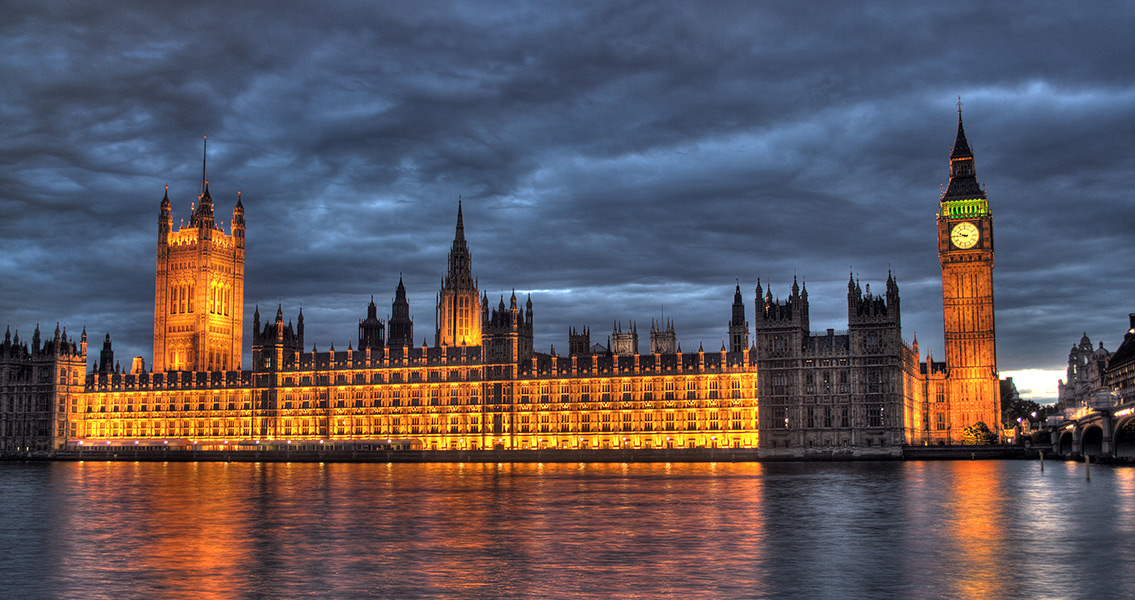
history focused on the relationship between monarchy and parliament, and the key events in restricting the powers of the monarch as Parliament became increasingly significant. The second part looks at the expanding of the franchise, and the various campaigns to make democracy more inclusive. The Glorious Revolution The Glorious Revolution of 1688 came at a time when the dislocation and chaos of the English Civil War was still fresh in the memory. The revolution, which ended King James II’s reign, was a response to the King’s obvious desire to have Catholicism returned as England’s religion. James’ reign was characterised by unrest and conflict with Parliament, a situation the revolution hoped to bring to an end. Both Tory and Whig politicians in the United Kingdom took it upon themselves to send an invitation to William of Orange, the protestant Prince of Holland, to take the throne of the United Kingdom and rule alongside his wife Mary, the daughter of James II. In November 1688, William’s forces landed in the United Kingdom, and James fled to France the following month. In January 1689, legislation was passed to enshrine the revolution, and William became King of England. Although a controversial event: one which led to bloody conflicts in Scotland and Ireland (both predominantly Catholic), can be interpreted as a legalised invasion of the UK, and restricted Catholic freedoms, the Glorious Revolution was crucially important in British constitutional history. Before being offered the crown, William and Mary were made to agree to a document which was eventually passed into law as the Bill Of Rights. It laid out a number of key constituional principles, such as the need for regular parliaments, the illegality of creating new taxes without parliamentary approval, and the prohibition of dispensing powers through royal prerogative. As was often the case, it took time for these new laws to be adopted in practice, but the Glorious Revolution laid the frame work for the modern, constituional monarchy. The Great Reform Act The nineteenth century was a period of drastic change in the United Kingdom, influenced by events both at home and abroad. The French Revolution of 1789 had proved an inspiration for the drive to achieve social change across Europe, leading to the nineteenth century being dominated by political and social upheaval. The French Revolution was also a warning to governments of the need to respond to the voice of the people to prevent revolution. At the same time, the Industrial Revolution had swiftly altered British society, leading to mass urbanisation and a swift redistribution of wealth. Both of these factors put pressure on the establishment to create a political system that reflected reality. Allowing men who rented property to vote as well as property owners, the 1832 Reform Act increased the franchise to over a million people, or about one in six of the population. The act also redrew the barriers of constituencies, meaning fairer political representation was given to the densely populated cities that had sprung up after the industrial revolution. A second Reform Act, passed in 1867, expanded the enfranchise to include all male householders, regardless of the property’s value. The act doubled the franchise yet again, incorporating a large swathe of the urban working class. The Twentieth Century Into the twentieth century, reforms still needed to take place to reach the democratic representation present in the United Kingdom today. Throughout the late nineteenth and the early twentieth century the movement for female suffrage had grown increasingly vocal and difficult to ignore. Different female suffrage groups deployed methods of various extremes in an attempt to expand the franchise, most notably in 1913, when Emily Davison was killed at the Epsom Derby after she ran out in front of a horse, holding the banner of the Women’s Social and Political Union. Finally, at the end of the First World War, the ‘Representation of the People Act’ was passed, significantly expanding the franchise once again. All property restrictions were removed for male voters, allowing many soldiers who had fought in the war the chance to vote for the first time. Women over the age of thirty were also allowed to vote for the first time and stand for election, although some property conditions were included. These restrictions were lifted ten years later, allowing any woman over the age of twenty one the right to vote. Image courtesy of Wikimedia Commons user: Maurice]]>
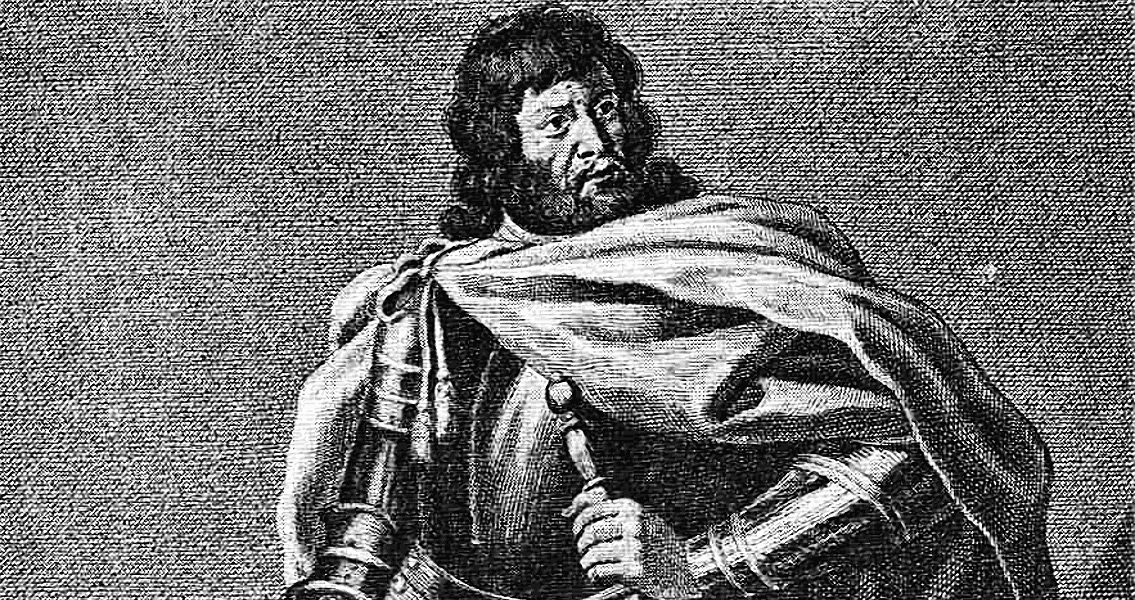
The Magna Carta Although ultimately proving something of false start for the establishment of democracy in England, the Magna Carta, signed in 1215, laid down some initial principles which would later be crucial. The Charter, signed by King John and the barons, is most widely remembered for consolidating judicial rights, including habeas corpus: the right not to be unlawfully imprisoned. Other clauses however, were vital in decentralising power, taking it away from the body of the king and spreading it across a wider group of people. Magna Carta’s 61st Clause, referred to as the Security Clause, stated that a council of twenty five barons should be created with the power to overule the will of the King. Shortly after the signing of Magna Carta, John repealed this clause and it was largely ignored by subsequent medieval kings. Nevertheless, it had raised crucial ideas which would reappear in the construction of the English Constitution. Simon de Montfort The brother-in-law of King Henry III, Simon de Montfort led a rebellion in 1254 which laid the foundations for the modern parliament. Henry had grown increasingly unpopular with his barons, as a result of repeatedly committing English resources to wars fought on the behalf of the Papacy. More importantly, the parliament of barons felt increasingly ignored by the King. A famine proved the final straw, and the barons demanded reforms to the way the King ruled the country. Significantly, the powerful and influential de Montfort sided with the barons. The Pope ruled that the barons’ demands for reform were unconstituional, but the tensions did not go away. In 1263, de Montfort led another campaign for reform, ultimately leading to war with Henry. At the Battle of Lewes in 1264, Henry was captured. In the King’s name, de Montfort called a parliament to discuss the next step. This parliament was unlike any that had been called before. Alongside barons, English towns were also asked to send representatives to advise on the next step for English politics. For the first time, democracy had been opened up to a much wider demographic. Historians often question whether de Montfort was motivated by a genuine desire to further democracy, or total self interest. Either way, his actions were hugely important in the development of Parliamentary Democracy. The 40-Shilling Franchise As alluded to above, a parliament had existed in Britain since the late thirteenth century. Exactly who could partake in it however, was far from set. Since 1341, Parliament had been divided into two houses, the knights and burgesses sitting in what became the House of Commons, and the clergy and nobility sitting in the House of Lords. A drastic change occurred in 1429, with a new statute specifying who was entitled to vote in elections. A concern had grown that the House of Commons had become overcrowded by people of “low estate”, that is, the poor and uneducated. Essentially a reactionary step by the aristocracy to strengthen their own political influence, the 40 Shilling Franchise greatly reduced the number of people who were eligible to vote. Following the passing of the statute, only freemen owning freehold land (land that was not rented from a landlord) with a value of more than 40 shillings were allowed to vote. The 40 Shilling Franchise put restrictions on who could vote that lasted for over four centuries… ]]>