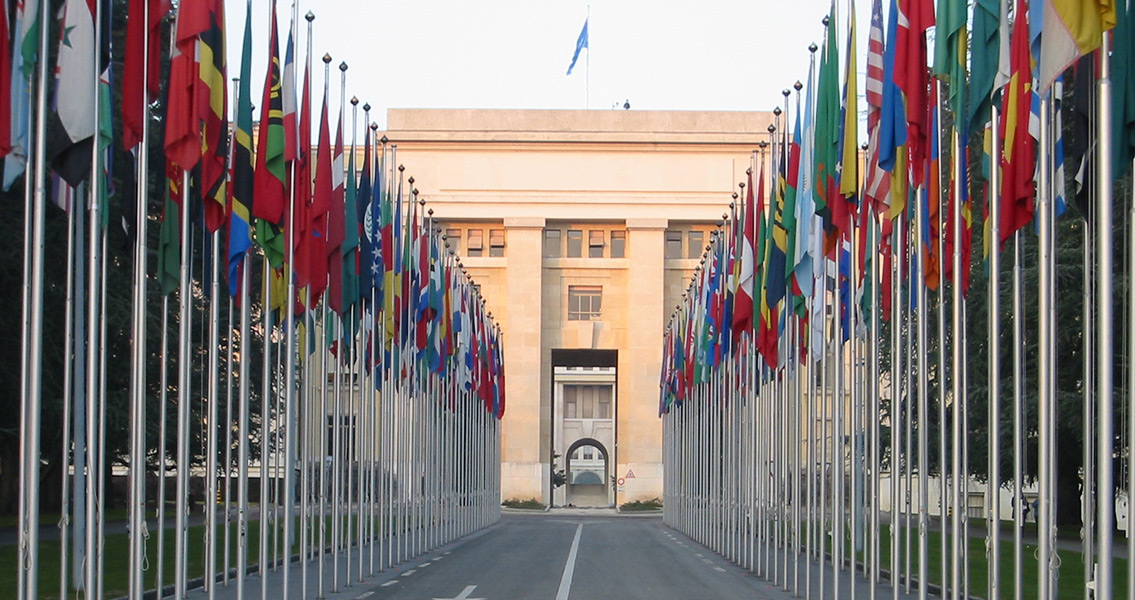
Prior to the French Revolution, France’s state flag was based on the royal coat of arms – a blue shield with three golden fleur-de-lis, while different families and regions also boasted their own elaborate designs. After the Bourbon dynasty came to power, the blue shield started to be displayed against a background of the Bourbon dynastic colour: white. In the aftermath of the French Revolution the focus shifted towards much simpler flag designs. Blue and red, the traditional colours of Paris and popular among the revolutionaries, started to be added to flags alongside the traditional Bourbon white. Taking influence from the equally spaced horizontal stripes of the Dutch flag, the vertical tricolor of stripes ordered blue, white and red became the official French national flag in 1794. Although the flag has been temporarily changed at various points, for example during the Napoleonic period, the tricolor has been the official symbol of France since 1848. Seen to embody the French Revolution, the blue, red and white of the French flag have come to represent the ideals of liberty, equality, fraternity, democracy, secularism and modernization. Similarly, the colours used in the Dutch flag can be traced back to the history of the country’s sixteenth century struggle for independence. However, although the design of the French tricolor was influenced by the Dutch flag, and both have been taken to embody a crucial part of their respective nation’s identity; the presence of red, white and blue in the two flags in large part seems to be a coincidence – the consequence of unconnected regional events. Taking another notable red, white and blue flag from Western Europe, the Union Jack of the United Kingdom is a combination of the flags of England, Wales and Ireland. Each of the flags at the heart of the design is comprised of two colours (blue saltire on a white background for Scotland, red saltire on a white background for Ireland, and a red cross on a white background for England). The flags that make up the Union Jack each have their own stories explaining their colours. In Western Europe then, the repetition of red, white and blue designs in national flags would seem to owe a lot to specific local circumstances. Part two of this article will look at flags from further afield: to Eastern Europe, North and South America, and Asia. Click here for part two.]]>
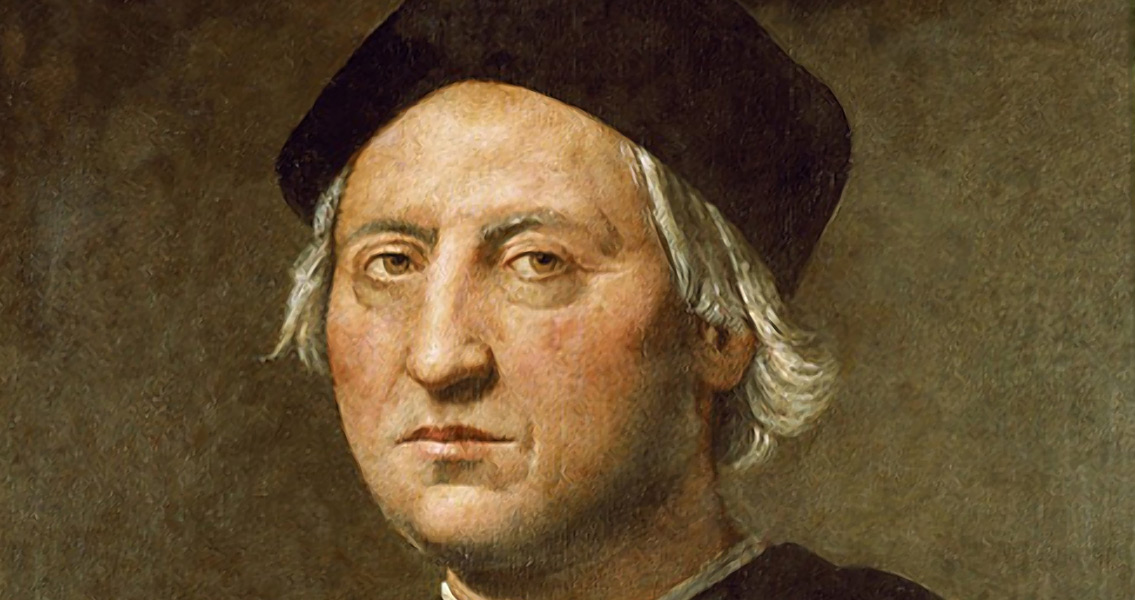
 Columbus, however, had no idea of the magnitude of his discovery. He was convinced he had landed in the far East; when his crew sighted Cuba he believed it to be China, and when they discovered the island of Hispaniola he believed he had landed on the coast of Japan.
He set sail back for Europe with his two remaining ships (the Santa Maria had been wrecked on a reef off of Hispaniola), loaded with gold, spices, and captured natives.
After hearing tales of the riches of the islands Columbus had discovered, Isabella and Ferdinand granted the funds and support for a second voyage west, hopeful that the fabled passage to Asia would be discovered.
Arriving at Hispaniola, Columbus found the settlers he had left behind at Navidad had all been killed. Columbus’ response was extreme, the indigenous population were enslaved into forced labour (despite Isabella being a firm critic of slavery) to build a colony for the Europeans and search for gold.
After further exploration of the Caribbean islands, Columbus set sail for Europe once again, his two brothers left in charge of the settlement on Hispaniola.
Columbus’ second voyage hadn’t been nearly as lucrative as anticipated, yet the Spanish monarchy eventually awarded the funds for a third, this time made up of six ships – three to search for the sea route to Asia, three to bring supplies and settlers to Hispaniola.
Plagued by poor weather, which slowed the ships’ progress, the beleaguered explorers eventually discovered the island of Trinidad, where they resupplied. There the expedition split, and Columbus personally led the ships searching for a passage to Asia.
Perhaps history’s greatest explorer, Columbus failed in his goal of finding a trans-Atlantic link between Europe and Asia. Nevertheless, his explorations shaped world history, and for the indigenous populations of the Americas, brought truly catastrophic repercussions.]]>