Categories
Breaking News

3,000 year old funeral rituals show earliest evidence of human hair dye

Early funeral rituals: mysteries revealed A collaborative excavation from the University of Granada in Spain, the University of Tübingen in Germany and the University of Cambridge in the United Kingdom has uncovered around one hundred bodies; many of which have been affected by hitherto undiscovered funeral rituals, including hair that has been dyed red. The bodies were uncovered in a Biniadris Cave, which would have been frequented by different societies over a period of between 3,300 and 2,600 years ago.   [caption id="attachment_8737" align="aligncenter" width="500"] View of the entrance to Biniadris Cave in Menorca. Credit: University of Granada[/caption]

Hair dye and its symbolic value

Two archaeological researchers from the University of Granada, Dr. Eva Alarcón García and Dr. Auxilio Moreno Onorato, have written: “Evidently, the red tufts of hair must have had symbolic value for these social groups. They were perfectly cut and deposited in containers of varying sizes that were made of different materials (metal, leather and even wood), which were then hidden in specific parts of the cave.” [caption id="attachment_8738" align="aligncenter" width="500"] Remains discovered in Biniadris Cave, Menorca. Credit: University of Granada[/caption]

A unique combination of funeral rituals

As well as colouring the deceased’s hair red, members of this society practiced a collection of funeral rituals that reflect their local religion and its symbolism. For example, the researchers found that the bodies were usually placed in the centre of the cave, where they were surrounded by ceramic fragments. Trepanation, a symbolic act in which a hole is drilled into the skull of the deceased, was also practiced on many of the bodies. Dr. Eva Alarcón García notes: “There are no precedents for these kinds of social practices in the Iberian Peninsula and they are unique to the Balearic Islands. The buried were placed in the middle of the cave and a variety of elements were used during the rituals, such as plant materials (branches and trunks), ceramic vessels that must have played an important role given the degree of fragmentation they exhibit, iron oxide ores (‘ochre’), etc.”  

Ritualistic attire for Menorca’s deceased

The team of archaeologists also found that many of the bodies were dressed up in ritualistic attire. Needles, fabric and ancient V-perforated buttons made from bones and wild boar tusks were discovered in the cave, close to the bodies. The remains of the hairs and fabric are currently being studied through carbon-14 dating at the University of Cambridge. “Undoubtedly, the findings at the Biniadris Cave will raise many questions and pave the way for new lines of research, not only from archaeological perspectives but also from anthropological ones. For now, the main objective of the research is to solve the enigmas presented by these mysterious funeral rituals performed long ago in the Biniadris Cave,” they conclude.]]>

Categories
Breaking News

New Discovery from Egypt’s Old Kingdom

Egypt Independent that the stone wall was dated using the pottery fragments that were embedded in the mortar used to build the wall. Among the fragments were pieces of carinated bowls, fashioned in a style that was typical of the Sixth Dynasty (2278-2184 BCE) reign of King Pepi II. The Old Kingdom is generally regarded as the time period between the Third Dynasty and Sixth Dynasty (2686–2181 BCE) in the third millennium BCE, when Egypt achieved its first ongoing peak of civilization. The three ostensible “Kingdom” periods: the Old, the Middle, and the New Kingdoms, indicate the peaks of civilization within the lower Nile Valley. The Old Kingdom is notable for being a dynamic time for Egyptian art. During this period, sculptors created the earliest known individual portraits as well as the first life-size statues in copper, wood, and stone. Masons and architects mastered the building techniques that were necessary in the construction of monumental stone structures. Additionally, the art of carving precisely detailed reliefs was perfected. Egypt’s Middle Kingdom (also referred to as The Period of Reunification) is the time period between 2050 BCE and 1800 BCE, covering the twelfth and thirteenth dynasties. The New Kingdom, also known as the Egyptian Empire, between the sixteenth century BCE and the eleventh century BCE, covers the eighteenth, nineteenth, and twentieth dynasties. Qubbet el-Hawa is the site of a cemetery containing Rock-cut tombs, located on the west bank of the Nile river, across from the Egyptian city of Aswan. The elite tombs discovered there date primarily to the Old Kingdom and include the well-known tomb of Harkhuf. A member of the research team, Carl Graves is quoted by the Egypt Independent as saying: “The findings are dramatically altering our understanding of the funerary landscape in this area during the Old Kingdom and First Intermediate Period in 2278-2184BC. I don’t think anyone yet knows who the tombs might have belonged to.” The discovery was made as part of the project’s first field season. ]]>

Categories
Breaking News

Infamous Healing Well Discovered Close to Liverpool

Discovery News. The well, measuring 6.5 feet square, was built with locally sourced sandstone blocks. It consists of the square basin with two steps. After going down the steps, pilgrims would submerge themselves in the pool, which was around 4 feet deep. Water seeped in from below the floor. “The fabric of the well is consistent with a Medieval date,” Quartermaine says in Seeker. “This well was probably a late Medieval foundation as the cult of St. Anne did not become widespread in England until after the end of the 14th century.” The dating is crucial according to Alexandra Walsham, with Cambridge’s Trinity College, who told Seeker that “a Medieval past for many healing wells was assumed or even invented by later antiquaries, especially in the 19th century.” According to local legend, recorded in documents held by Historic England Heritage, St. Anne’s Well was part of an estate held by a priory of around twelve monks which was lost when Henry VIII disbanded the monasteries. The story says that St. Anne had taken a bath in the well, which was said to heal skin and eye afflictions. Attracting a number of pilgrims, a small three-room structure was built around the well, and two monks were stationed there. Local folklore tells of a sixteenth century dispute between Father Delwaney, the prior, and Hugh Darcy, the manager of the neighboring estate, over property lines and access to the well. On one occasion, as the two stood near the well, Darcy predicted that Father Delwaney wouldn’t have his position for much longer. Two days later when the King’s officials arrived at the priory and proceeded to take possession of it and the well, the prior knew Darcy was to blame. A report on local legends published in 1877 in the St. Helens Leader, describes what happened next. The prior hissed out a curse, “With teeth tightly clenched, and his face white with suppressed passion.” Delwaney announced that Darcy would be dead within one year and a day, and then he collapsed and died. Inexplicably, a series of tragedies did befall Darcy. Three months after the prior’s curse, Darcy’s only son died after a mysterious illness, he suffered financially and “plunged recklessly into dissipation”, according to the St. Helens Leader. After a night of heavy drinking at a local tavern, he disappeared. “The search began. Nothing was seen until they came to the well, in which Darcy was found lying dead, his head crushed in”. Despite the legend, the well was revered and sought out, even after the dissolution of the priory, and people submerged themselves in the well waters up until the nineteenth century. Work is now underway to preserve and protect the site. Image courtesy of Jamie Quartermaine]]>

Categories
Breaking News

"Solomon's Palace" Discovered in Gezer, Israel

Haaretz that the edifice of the structure was significantly larger than the size of normal houses of the time, suggesting it was home to someone of great importance. The building also featured ashlar masonry: large monolithic hewn stones, in the corners of its rooms. An assortment of Philistine bichrome pottery had been unearthed at the site in the years leading up to the discovery of the palace. Part of a long-necked, bird-faced female goddess known as an Ashdod figurine, the ivory lid to a game box, amulets, a Canaanite female fertility goddess and a baby’s rattle were among the objects discovered, said Prof. Ortiz. Archaeologists still believe that the city was predominantly Canaanite, however, the Philistine artefacts suggest that they either lived in the city alongside the Canaanites, or at the very least had significant trading relations with them. Gezer is situated on an important crossroads in a pass leading from the coast to Jerusalem. The city dates from well beyond the time of Kings Solomon and David, with evidence suggesting it was occupied as far back as the Chalcolithic period, in the fourth millennium BCE. 3,400 years ago its Canaanite population was closely linked with Ancient Egypt, despite the geographic distance between them. In a previous digging season, a large cartouche (a carved tablet or drawing) of Pharaoh Amenhotep III was found at the site. Fascinatingly, Ortiz and colleagues’ discovery adds credence to other elements of the Biblical story of Gezer. The Old Testament claims the city was given by the Pharaoh as a dowry to Solomon’s wife, and that Solomon then rebuilt the city during the late tenth century BCE. The archaeologists suggest that the palace complex they’ve unearthed could only have been built by a king with substantial resources, one like Solomon… Additionally, the team suggest that the evidence of destruction found within the rooms in the complex could be associated with the Shishak invasion in 925 BCE, when the Pharaoh launched an invasion of Israel and Judah. This is another event depicted in the Old Testament. Ultimately, the objects have yet to be Carbon Dated, meaning the possible Biblical links are highly speculative. As Dr Sam Wolff, an archaeologist with the Israeli Antiquities Authority, told Haaretz: “Our 10th century date is tentative, pending further study of the ceramic assemblage and the results of carbon 14 analyses. Others may claim that the pottery we are calling 10th century is in fact 9th century.” “In this regard, I would point out that we have found a significant stratum between what we are calling the 10th century and the 8th century strata, and we date this stratum to the 9th century”, Wolff continued. “For the earliest stratum to be 9th century as well is certainly possible, but it would then squeeze two significant strata into one century. For the time being we prefer to date this earlier stratum, along with the six-chamber gate and the fortification wall connecting the two, to the 10th century; that is, to the time of Solomon.” Images of the palatial remains and other artefacts can be seen here]]>

Categories
Breaking News

New Species of Flying Dinosaur Discovered in Patagonia

Allkauren koi by the researchers behind the discovery. Preserved in remarkably good condition, the skull remains have revealed new information about the evolution of the braincase of pterodactyloids, a major suborder of Pterosaurs. The name Pterosaur comes from the Greek for ‘wing lizards’. These spectacular creatures dominated the skies during the Jurassic and Cretaceous periods, and included the largest vertebrate ever known to fly: Quetzalcoatlus from the late Cretaceous period. Members of the long extinct group were incredibly diverse, ranging from the size of a sparrow to the size of an airplane. Intriguingly however, Pterosaurs evolved flight separately from bats and birds; they are not closely related to either creature. The group had extraordinary adaptations enabling them to take to the skies: pneumatic bones drastically reducing their weight and an elongated digit supporting a wing membrane. The neuroanatomy of Pterosaurs has remained shrouded in mystery however, the consequence of a paucity of three dimensionally preserved remains. It is this that has afforded the latest discovery such importance, giving new insight into the intermediate forms of Pterosaurs. The study describing Allkauren koi, published in the journal PeerJ, provides new information about the origin, tempo and mode of evolution in the Pterosaur group. Allkauren koi has been named from the language of the Tehuelche, the group of indigenous peoples of Patagonia. ‘All’ comes from the Tehuelche word for ‘brain’, while ‘kauren’ is their word for ‘ancient’. It joins the over 150 other species of Pterosaur discovered so far. The remains, including the amazingly preserved, uncrushed braincase, were discovered in northern central Chubut Province, Patagonia Argentina. Through computer tomography, the researchers have been able to study the creature’s cranial anatomy, observing in three dimensions the cranial endocast and the inner ear. From this starting point a comprehensive phylogenetic analysis of the Pterosaur group was performed, one which “fills an important gap”, according to the study. “Allkaruen, from the middle lower Jurassic limit, shows an intermediate state in the brain evolution of pterosaurs and their adaptations to the aerial environment”, said Dr. Diego Poll, a member of the research team, in a PeerJ press release. “As a result, this research makes an important contribution to the understanding of the evolution of all of pterosaurs.” ]]>

Categories
Breaking News

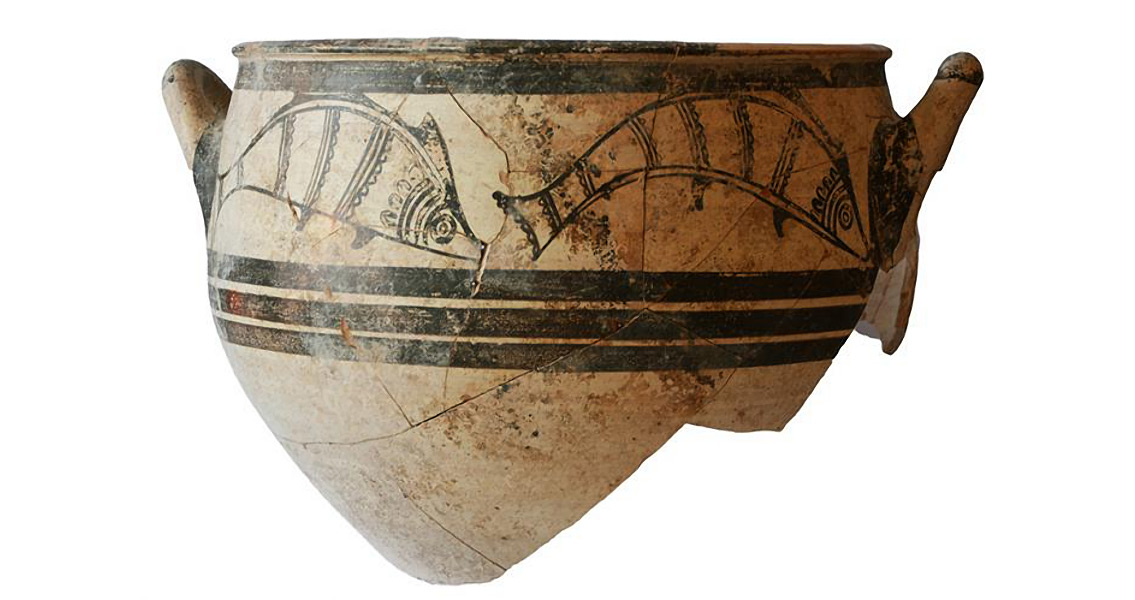
Mycenaean and Egyptian Artefacts Discovered in Cyprus Grave

Categories
Breaking News

Christopher Columbus Plants Spanish Flag in South American Soil

Santa Maria, Pinta and Nina, proved one of the most significant in history. After 36 days, the trio of ships sighted an island, what is the present day Bahamas in the Caribbean. Columbus and his crew became the first Europeans to set foot in the New World since the Vikings had founded colonies in Newfoundland and Greenland in the tenth century. Columbus, however, had no idea of the magnitude of his discovery. He was convinced he had landed in the far East; when his crew sighted Cuba he believed it to be China, and when they discovered the island of Hispaniola he believed he had landed on the coast of Japan. He set sail back for Europe with his two remaining ships (the Santa Maria had been wrecked on a reef off of Hispaniola), loaded with gold, spices, and captured natives. After hearing tales of the riches of the islands Columbus had discovered, Isabella and Ferdinand granted the funds and support for a second voyage west, hopeful that the fabled passage to Asia would be discovered. Arriving at Hispaniola, Columbus found the settlers he had left behind at Navidad had all been killed. Columbus’ response was extreme, the indigenous population were enslaved into forced labour (despite Isabella being a firm critic of slavery) to build a colony for the Europeans and search for gold. After further exploration of the Caribbean islands, Columbus set sail for Europe once again, his two brothers left in charge of the settlement on Hispaniola. Columbus’ second voyage hadn’t been nearly as lucrative as anticipated, yet the Spanish monarchy eventually awarded the funds for a third, this time made up of six ships – three to search for the sea route to Asia, three to bring supplies and settlers to Hispaniola. Plagued by poor weather, which slowed the ships’ progress, the beleaguered explorers eventually discovered the island of Trinidad, where they resupplied. There the expedition split, and Columbus personally led the ships searching for a passage to Asia. Perhaps history’s greatest explorer, Columbus failed in his goal of finding a trans-Atlantic link between Europe and Asia. Nevertheless, his explorations shaped world history, and for the indigenous populations of the Americas, brought truly catastrophic repercussions.]]>
Categories
Breaking News

Archaeologists Discover Early Neolithic Village on Cyprus

Categories
Breaking News

Discovery in Devon Expands the Boundary of Roman Rule in Britain

This article was changed on 1st July 2016. The original wrongly claimed that the Roman Empire had ruled over the entirety of Great Britain]]>

Categories
Breaking News

Rare Representation of Neolithic Human Rediscovered