Categories
Breaking News

Proof Found Of Caesar's Presence in the Netherlands

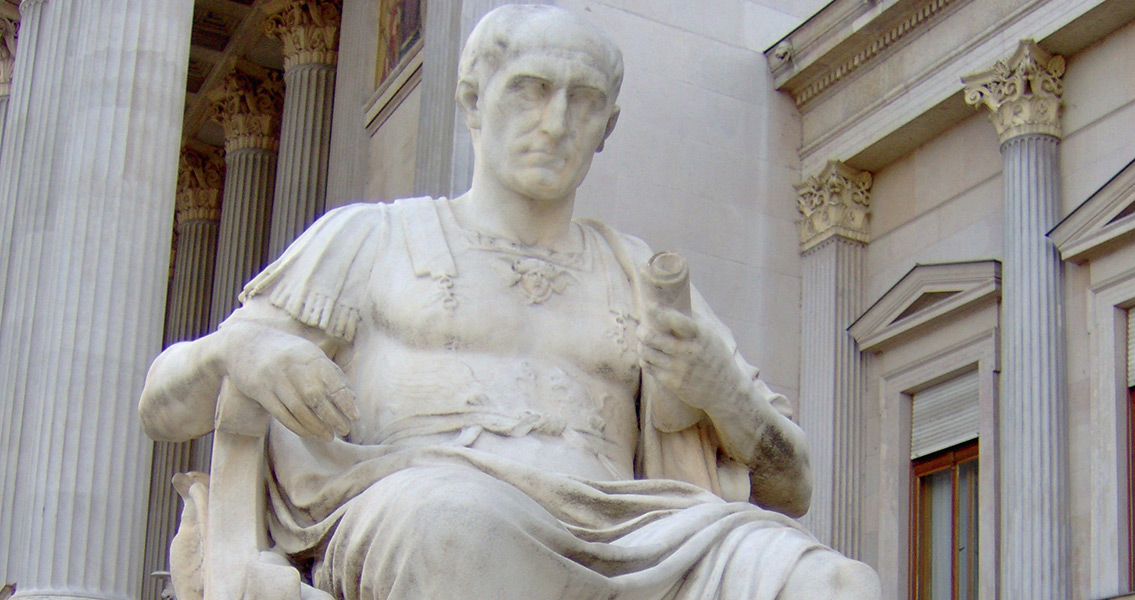
Commentarii de Bello Gallico is Caesar’s own firsthand account of the battles which took place in the Netherlands and is still considered the most important and comprehensive account of the conflict. The six volumes include battle descriptions and war-time intrigues which took place during the nine years he fought the local armies that opposed Roman domination in Gaul – Gaul is generally considered to have included modern day Belgium, France and parts of Switzerland. In the Commentarii de Bello Gallico the Roman invasion of Gaul is portrayed by Caesar as a defensive and preemptive action. Regardless of the personal motivations ascribed by historians, defeating Gaul was important to Rome in a military sense. Conquering Gaul provided Rome the means of securing a defensible natural border (the Rhone river) against its enemies to the north along the Rhine River, preventing ongoing attacks. Meanwhile, in Rome Caesar’s contemporaries had begun labeling him a war criminal, guilty of perpetrating what today would be considered genocide, and many were promoting the idea of charging and trying him for these war crimes. Much of the talk was generated by stories coming back from the battlefield regarding Caesar’s unwillingness to offer refuge to Gaul natives (specifically the Helvetii). Some claims stated that after Caesar turned them away, he followed them back into Gaul, executing soldiers and slaughtering entire villages. The campaigns Caesar led against the Helvetii are described and defended in great detail in the Commentarii de Bello Gallicoaccusations. The Helvetii were actually a coilition of approximately five related Gallic tribes living on the Swiss plateau, hemmed in by the Rhone and Rhine rivers and mountains. Because of the inhospitable landscape and increasing pressure from German forces from the north and east, by the start of the Gallic Wars the Helvetii were completing the planning and provisioning for a mass migration west. After a series of failed negotiations in which Caesar would have allowed the Helvetii to cross the Rhone and Roman territory on their way to the west coast, the tribe made several attempts to cross the Rhone river by force – each time being turned back by the Romans. The Helvetii then changed track and began moving west by negotiating with neighboring tribes and pillaging lands under Roman protection on their way to the river Arar (now named the Saône River). The river Arar is where Caesar eventually caught up to them. In the end and with massive loses on both sides, the Romans were victorious and accepted the Helvetii’s surrender (executing more than 6,000 soldiers who attempted to flee rather than surrender). In the Commentarii de Bello Gallico Caesar refers to a Greek census from that time which reported the Helvetii population as 368,000; only 110,000 survived to return to their homeland. ]]>
Categories
Breaking News

Religion’s Impact in Modern Society, Explored

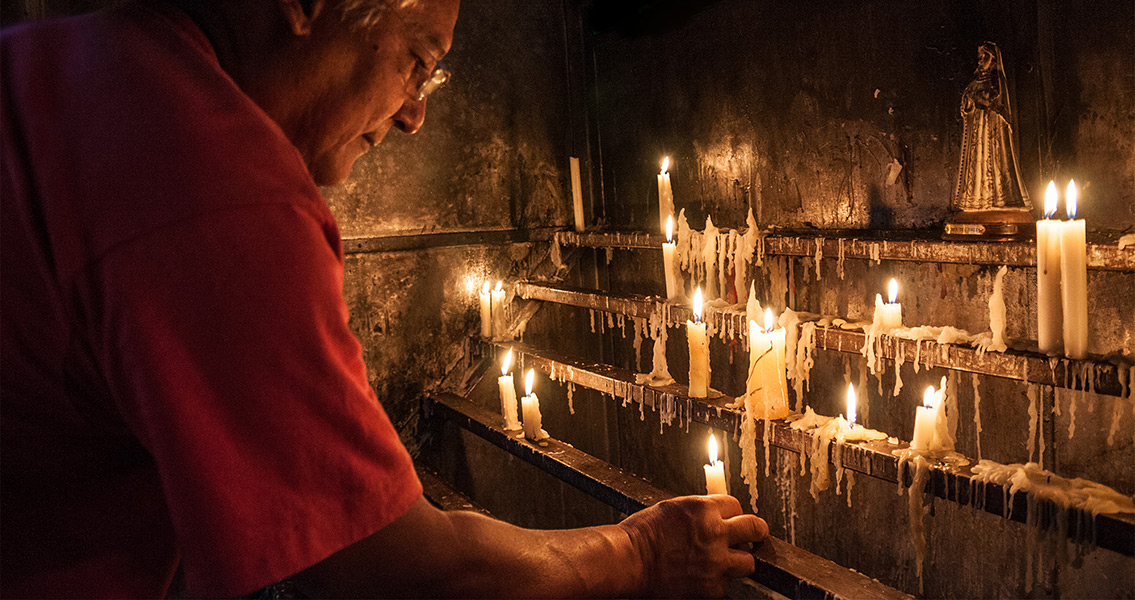
Contemporary European History. “[This] inadequately accounts for the dynamic role of religion before and after the 1960s, [religion’s] complex relationship to modes of social organisation and the ways in which transformation of these modes come about.” Van Dam and van Trigt have analysed views underpinning what they call ‘religious regimes.’ A religious regime, van Dam and van Trigt explain, is “an institutionalised arrangement regulating the social position of religion in a society… Crucially, in our view, religious regimes rarely result from a single vision of the role of religion but represent a compromise between several competing views.” By using this conceptualisation of religious regimes, the pair has revealed new ways in which religion still has a societal role. In the late nineteenth century, competing religious groups rose to prominence in the Netherlands. The three major groups – Orthodox Protestants, Catholics, and Christian social-democratic movements – claimed to represent the moral heart of the nation, challenging the dominance of Protestantism. Interestingly, all of the major religious groups were equally represented in politics and the media. Van Dam and van Trigt argue that this equal representation reveals a ‘segmented pluralism’ in Dutch society. To compromise, each group was granted its own space in the framework of the nation. Each group, however, contested the overall moral outlook of the religious regime, meaning that none could be comprehensively implemented. Inclusivity gradually came to dominate discussion within the religious regime, van Dam and van Trigt argue. This shows that religious regimes are able to evolve and change with the times. During discussions about workers’ union rights in the mid-twentieth century, all major groups put aside their doctrinal differences to advocate a joint union which would ‘act in accordance with the demands of the Word of God in all its activities.’ For van Dam and van Trigt, this shows that unity became the most important issue for the Dutch religious regime. Van Dam and van Trigt argue that in modern times the role of religion is constantly redefined and transformed. Their conceptualisation of ‘religious regimes’ allows us to move away from traditional arguments which focus on religious decline and decay; this can reveal that religion still plays an important part in national moral identity. Van Dam and van Trigt conclude that “the gradual rise of a new religious regime of national unity, which replaced the regime of segmented pluralism, shows how religious traditions could maintain their societal presence under different arrangements.” For more information: www.journals.cambridge.org Image courtesy of Wikimedia Commons user: The Photographer]]>