Categories
Breaking News

Manhattan Carpet Store May be Selling Reconstructed Tudor-Era Carpet

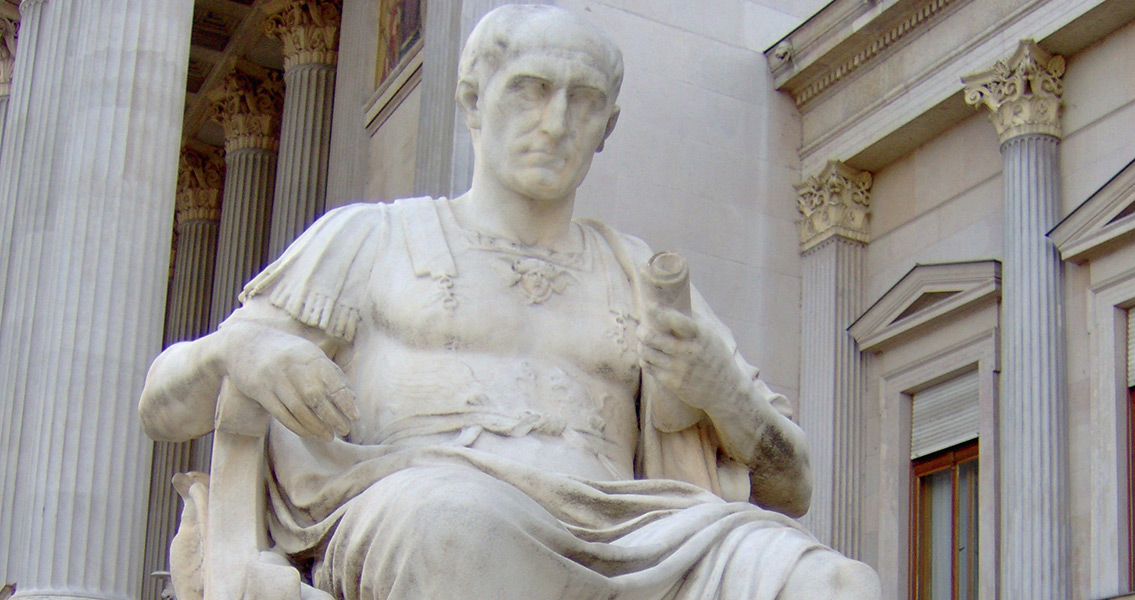
New York Post, University of Cambridge professor Mary Beard discovered the tapestry at the Persian Gallery in the midst of her research into images of Julius Caesar. The composition of the tapestry, which features images of the Roman Emperor, matches those that would have been commissioned by the Tudor king during the later years of his reign in the 1500s. Henry VIII commissioned a set of ten of these tapestries, each nine feet tall and depicting the life of the ancient Roman ruler, ostensibly to connect his reign to that of Caesar’s – though seemingly without spending much time thinking of how the emperor came to such a grisly and violent end. Beard says that at the time they were made the tapestries were of immense value to the royal household and would have been its most prized possessions. In fact, in the wake of the execution of Charles I, the tapestries were listed as the second most valuable objects in the entire royal collection during an inventory of the beheaded royal’s property. The original tapestries have long vanished – and the one found in the Manhattan gallery is not one of these originals, the professor remarked. However, the designs used to create the originals were used to reconstruct these tapestries in the late sixteenth century. Many of these tapestries, like the one found in the Persian Gallery, are valued at $50,000 or more based on their age, their condition, and the royal design from which they are copied. If one of the original ten royal tapestries were ever recovered, its value would likely be even more immense, if not incalculable. Beard commented that the designs of these tapestries are intriguing. Pulled from Suetonius’ “Life of Caesar”, the images showcase both the rise and fall of the ruler, up to and including his death at the hands of his assassins in the Senate. The university professor remarked that the idea that the walls of the Tudor king’s palace were adorned with one of the most obvious critiques of autocratic power during the classical period might be high irony indeed, considering the rule of Henry VIII was rife with behavior such as splitting with the Roman Catholic Church in order to create his own, all to facilitate his constant marriages and annulments in search of a bride who would provide him a male heir. The particular tapestry spotted by Beard is 14-foot by 15-foot, created from wool and inlaid with silk, depicting Caesar crossing the Rubicon River, the famous act that marked the point of no return in his successful attempt to seize control from his rivals Pompey and Crassus, the other members of the First Triumvirate. The term “crossing the Rubicon” has since passed into modern parlance, indicating when someone has taken an irrevocable step forward in a serious matter. More information about the discovery, as well as images of the tapestry, can be found on Prof. Beard’s blog: A Don’s Life]]>

Categories
Breaking News

Proof Found Of Caesar's Presence in the Netherlands

Commentarii de Bello Gallico is Caesar’s own firsthand account of the battles which took place in the Netherlands and is still considered the most important and comprehensive account of the conflict. The six volumes include battle descriptions and war-time intrigues which took place during the nine years he fought the local armies that opposed Roman domination in Gaul – Gaul is generally considered to have included modern day Belgium, France and parts of Switzerland. In the Commentarii de Bello Gallico the Roman invasion of Gaul is portrayed by Caesar as a defensive and preemptive action. Regardless of the personal motivations ascribed by historians, defeating Gaul was important to Rome in a military sense. Conquering Gaul provided Rome the means of securing a defensible natural border (the Rhone river) against its enemies to the north along the Rhine River, preventing ongoing attacks. Meanwhile, in Rome Caesar’s contemporaries had begun labeling him a war criminal, guilty of perpetrating what today would be considered genocide, and many were promoting the idea of charging and trying him for these war crimes. Much of the talk was generated by stories coming back from the battlefield regarding Caesar’s unwillingness to offer refuge to Gaul natives (specifically the Helvetii). Some claims stated that after Caesar turned them away, he followed them back into Gaul, executing soldiers and slaughtering entire villages. The campaigns Caesar led against the Helvetii are described and defended in great detail in the Commentarii de Bello Gallicoaccusations. The Helvetii were actually a coilition of approximately five related Gallic tribes living on the Swiss plateau, hemmed in by the Rhone and Rhine rivers and mountains. Because of the inhospitable landscape and increasing pressure from German forces from the north and east, by the start of the Gallic Wars the Helvetii were completing the planning and provisioning for a mass migration west. After a series of failed negotiations in which Caesar would have allowed the Helvetii to cross the Rhone and Roman territory on their way to the west coast, the tribe made several attempts to cross the Rhone river by force – each time being turned back by the Romans. The Helvetii then changed track and began moving west by negotiating with neighboring tribes and pillaging lands under Roman protection on their way to the river Arar (now named the Saône River). The river Arar is where Caesar eventually caught up to them. In the end and with massive loses on both sides, the Romans were victorious and accepted the Helvetii’s surrender (executing more than 6,000 soldiers who attempted to flee rather than surrender). In the Commentarii de Bello Gallico Caesar refers to a Greek census from that time which reported the Helvetii population as 368,000; only 110,000 survived to return to their homeland. ]]>

Categories
News

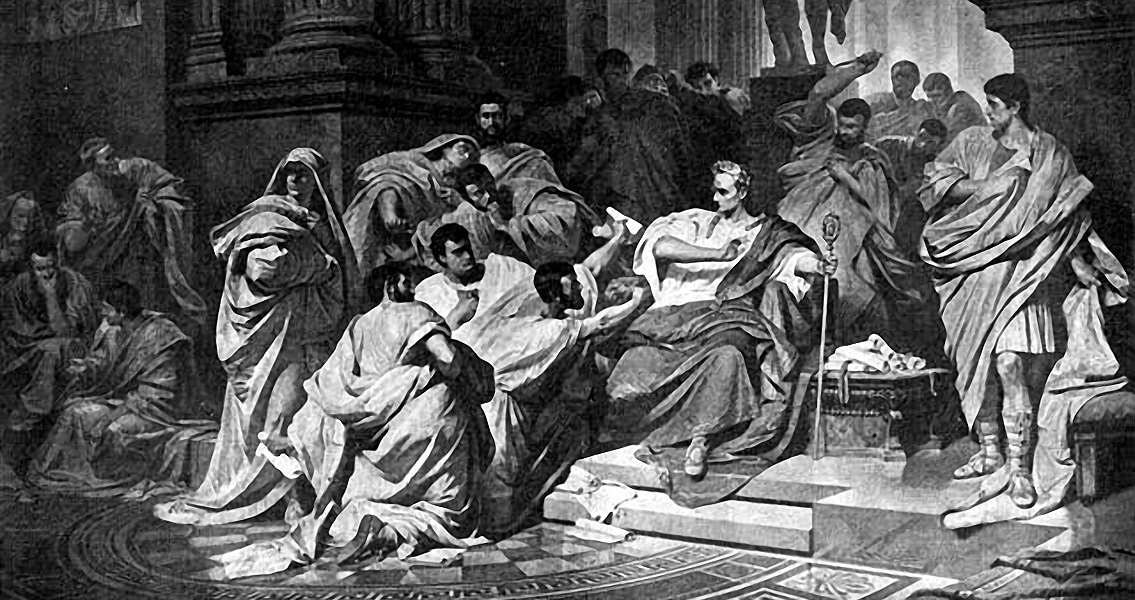
The Death of Julius Caesar

Categories
News

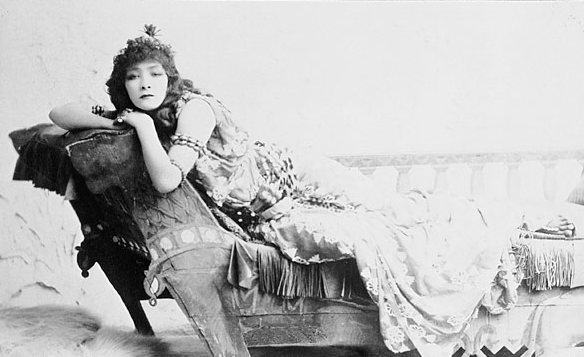
The Anniversary of Cleopatra's Death