Categories
Breaking News

History News of the Week: Nazi Loot, B-25s and Prehistoric Ochre

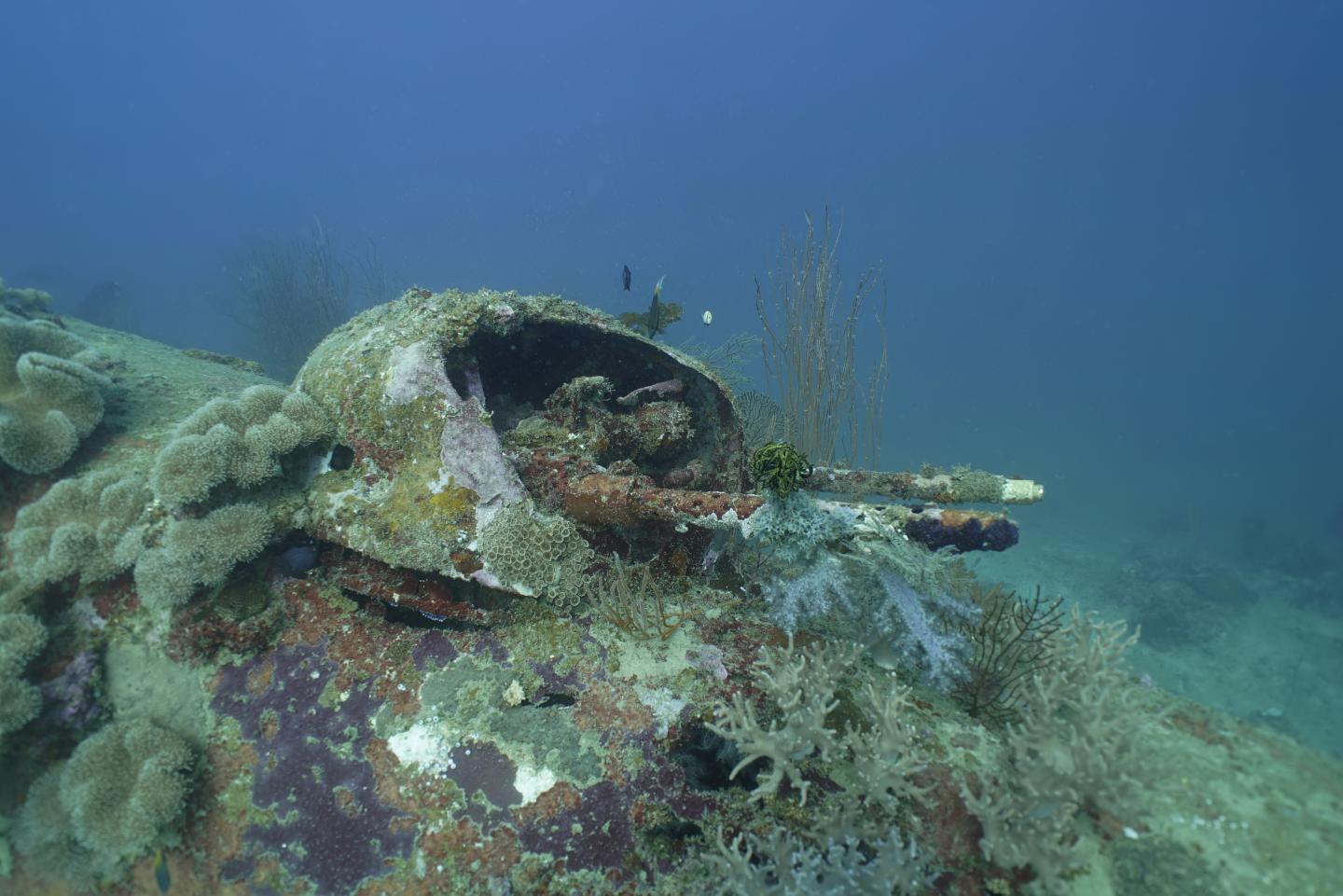
Middle Stone Age Humans used Ochre for Millennia A new study published in the journal PLOS ONE claims that Middle Stone Age humans living in a cave in what is now Ethiopia were using ochre for at least 4,500 years. An iron-rich rock, ochre is a common find at many Middle Stone Age sites. The Porc-Epic cave in Ethiopia contains the largest collection of ochre from the period, weighing 40 kg and believed to date to 40,000 years ago. The authors of the PLOS ONE study conducted a detailed analysis of 3792 pieces of ochre from Porc-Epic, using microscopy and experimental reproduction of grinding techniques to assess how the ochre had been processed and used over a period of 4,500 years. The researchers, led by Daniela Rosso from the University of Barcelona, Spain, found that the inhabitants of the cave persistently and consistently acquired, processed and used the same types of ochre throughout the period. Around 50% of the ochre pieces discovered had been modified by the prehistoric inhabitants, but the team also found that as time went on the inhabitants processed less ochre. The forms of modification also changed, with flaking and scraping becoming more popular while grinding became less so. These gradual changes in processing techniques could be explained by “cultural shifts”, according to the researchers. The authors state that their analysis of ochre treatments suggests a “cohesive behavioral system shared by all community members and consistently transmitted through time.” Two Missing B-25s Documented Two B-25 bombers, believed to be linked to missing US service personnel, have been documented in the waters off Papua New Guinea. The findings are part of Project Recover, a collaboration between marine scientists, archaeologists and volunteers to find US military aircraft and associated MIAs from World War Two. Searching over an area of 10 km2, Project Recover unearthed a B-25 that had been missing for over 70 years, one which is linked with a crew of six MIAs. “People have this mental image of an airplane resting intact on the sea floor, but the reality is that most planes were often already damaged before crashing, or broke up upon impact. And, after soaking in the sea for decades, they are often unrecognisable to the untrained eye, often covered in corals and other sea-life,” said Katy O’Connell, Project Recover’s Executive Director, who is based at the University of Delaware’s College of Earth, Ocean, and Environment. “Our use of advanced technologies, which led to the discovery of the B-25, enables us to accelerate and enhance the discovery and eventual recovery of our missing servicemen.” Former Nazi Loot Goes to Auction 80 years after being looted by the Nazis, an Italian masterpiece is set for auction at Sotheby’s in London, according to the Guardian. Depicting a stunning view of Venice, La Punta della Dogana e san Giorgio Maggiore was painted in 1739 by Michele Marieschi. In 1938 the painting belonged to the Grafs, a Viennese Jewish family who fled Austria after the country was annexed by Nazi Germany. Forced to leave their valued artwork behind, they searched in vain after the war for their lost masterpiece. In 1998, it was revealed that Christie’s knew the whereabouts of the painting, but could not disclose the information due to client confidentiality rules. After years of negotiation a settlement has finally been agreed with the descendants of the Graf family. Although the exact terms have not been disclosed, the painting will have to be sold so the current owners can receive a ‘significant’ sum in compensation, according to the Guardian. Going to auction on 5th July, the picture is expected to fetch somewhere between £500,000 and £700,000. Image courtesy of Project Recover ]]>
Categories
Breaking News

Art and Symbolic Objects Found From First Humans On Sulawesi

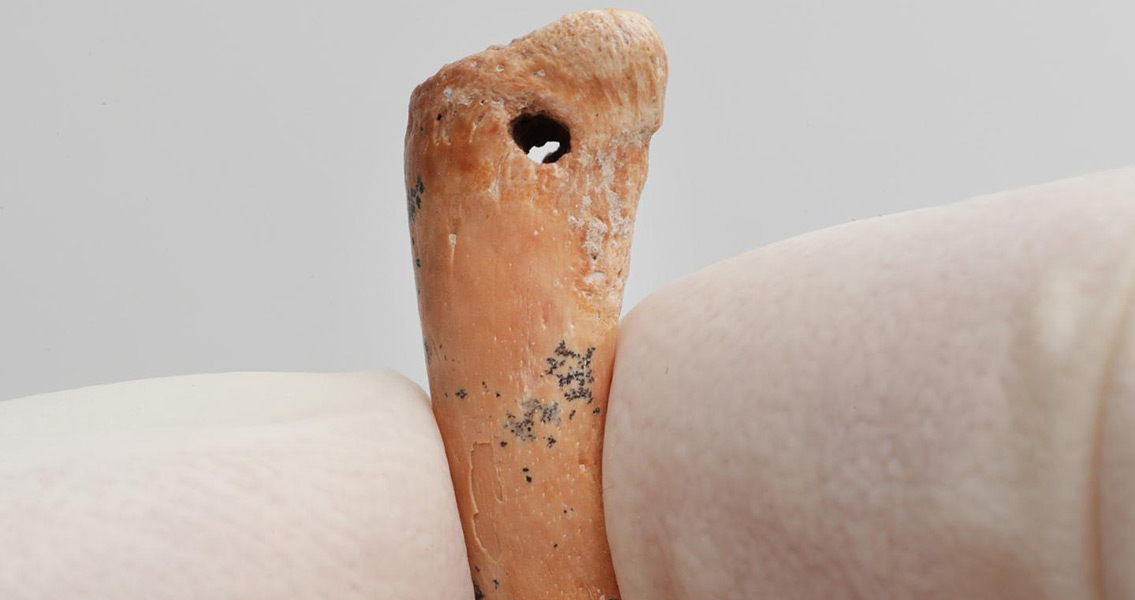
Proceedings of the National Academy of Sciences. The first Homo sapiens to inhabit the islands north of Australia arrived there sometime prior to 50,000 years ago. Little is known about these first human inhabitants of the Pacific Islands, which has led some to conclude the cultures were unsophisticated. A range of artefacts discovered recently however, are shedding new light on these people’s culture and symbolism. “Scientists have long been curious about the cultural lives of the first Homo sapiens to inhabit the lands to the immediate north of Australia sometime prior to 50,000 years ago — part of the great movement of our species out of Africa,” said Associate Professor Adam Brumm, an Australian Research Council (ARC) Future Fellow, who co-led the recently published study. “Some have argued that Pleistocene human culture declined in sophistication as Homo sapiens ventured beyond India into the Southeast Asian tropics and the island chains east of continental Eurasia, known as ‘Wallacea’. “However, the onset of new research programs in Wallacea is steadily dismantling this view.” The team led by Brumm and study co-author Dr. Michelle Langley have discovered a range of prehistoric rock art and ornaments. The breakthrough came in 2014, when they found 40,000 year old cave art on the Wallacean island of Sulawesi. This cave art is considered to be some of the oldest ever discovered anywhere on the planet. Since then, a host of other fascinating artefacts have been found, which are documented in the new study. These include an unusual assemblage of never seen before symbolic objects excavated from a Sulawesi cave site called Leang Bulu Bettue. Dated to between 22,000 and 30,000 years ago, the objects consist of disc shaped beads made from a babirusa (pig-deer) tooth, and a pendant fashioned from the bone of a bear cuscus. A series of stones incised with mysterious geometric patterns were also excavated. Evidence for rock art production at the site has also been found in abundance, such as discarded ochre pieces, ochre stains on tools, and a bone tube that could have been a ‘blow-pipe’ for creating hand stencil motifs. The oldest of these items date to at least 40,000 years ago. “Previously, assemblages of multiple and diverse types of Pleistocene ‘symbolic’ artifacts were entirely undocumented from Wallacea,” explained Dr Langley. “It was also unknown if or how Sulawesi cave artists adorned their bodies or whether their artistic repertoire even extended beyond rock paintings. Our understanding of the symbolic lives of these people is now much richer.” Fascinatingly, Brumm and Langley suggest that the art and jewellery they’ve discovered could be evidence that the spiritual beliefs of modern humans changed and developed as they encountered new types of animal life on the long migration from Asia to Australia. “Sulawesi, in particular, is renowned among biogeographers for its extremely high rate of species endemism – essentially all of the island’s land mammals, except for bats, occur nowhere else on earth,” said Associate Professor Brumm. “The discovery of ornaments manufactured from the bones and teeth of two of Sulawesi’s flagship endemics – babirusas and bear cuscuses – and a previously recorded painting of a babirusa dated to at least 35,400 years ago, shows that humans were drawn to these dramatically new faunal species. This may indicate that the conceptual world of these people changed to incorporate exotic animals.” Brumm and Langley speculate in their study that the progression through the diverse ecosystems of Wallacea could have prompted new ways of thinking about and engaging with the natural world. This, they suggest, could mean that elaborate human-animal spiritual relationships seen in Australian aboriginal cultures, could have their origins outside of Australia. Image courtesy of Griffith University ]]>