Categories
Breaking News

Mass Grave Revealed to be Viking Army Burial – The History News of the Week

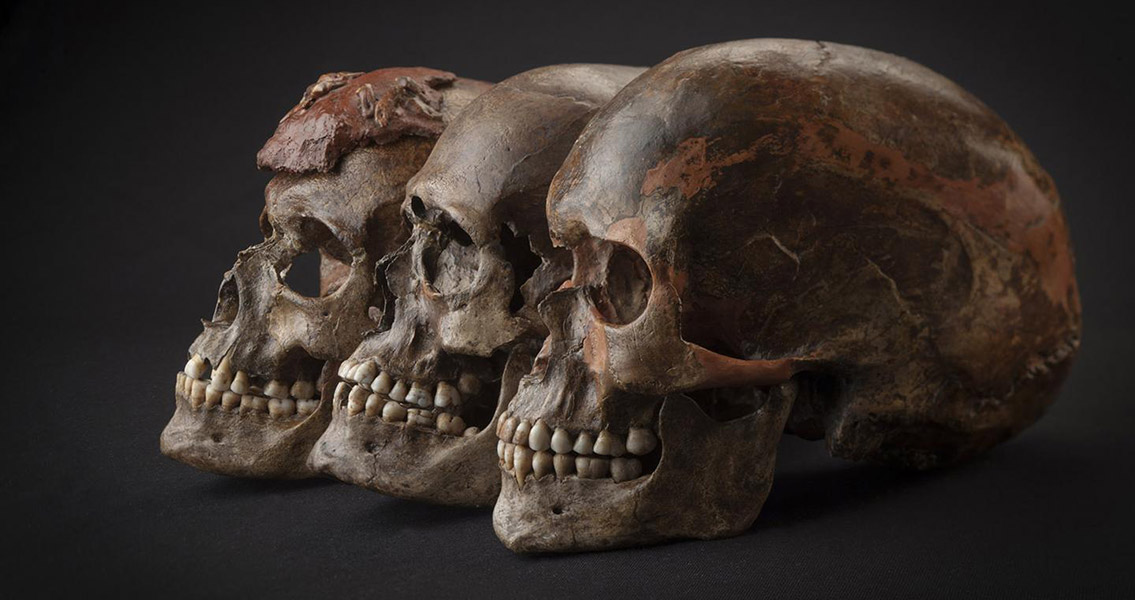
Mass Grave Could be Viking Army Burial A mass grave discovered in the 1980s could be a burial site for the war dead of the Viking Great Army, according to new research. Initial excavations at the site at St Wystan’s Church in Repton, Derbyshire, UK unearthed several Viking graves and a charnel deposit of nearly 300 people underneath a shallow mound in the vicarage garden. Later radiocarbon dating seemed to suggest that the grave consisted of bones collected over several centuries, throwing doubt on whether it was a mass Viking burial. However, the new scientific research, led by Cat Jarman from the University of Bristol, shows that in fact all the bones are consistent with a date in the late ninth century. The mound appears to have been a burial monument linked to the Great Viking Army. According to historical records, the Great Viking Army wintered in Repton in 873 CE, driving the Mercian king into exile. One room of the burial site was packed with the remains of a minimum of 264 people, around 20% of whom were women. Viking weapons and artefacts were found among the remains, including knives, axes and pennies. Mostly aged between 18 and 45 when they died, several of the male sets of remains showed signs of violent trauma. Viking Swords at Bergen museum (2) Jarman and team re-dated the remains, showing that contrary to what the previous carbon dating had suggested, the remains were all consistent with a single date in the ninth century, and the Great Viking Army. Jarman said: “The previous radiocarbon dates from this site were all affected by something called marine reservoir effects, which is what made them seem too old. “When we eat fish or other marine foods, we incorporate carbon into our bones that is much older than in terrestrial foods. This confuses radiocarbon dates from archaeological bone material and we need to correct for it by estimating how much seafood each individual ate.” The study has been published in the journal Antiquity. According to Jarman, the research could be a starting point for learning more about the Great Viking Army. “The date of the Repton charnel bones is important because we know very little about the first Viking raiders that went on to become part of considerable Scandinavian settlement of England. “Although these new radiocarbon dates don’t prove that these were Viking army members it now seems very likely. It also shows how new techniques can be used to reassess and finally solve centuries old mysteries.” Prehistoric Weapons Recreated Archaeologists from the University of Washington have recreated the weapons used by hunter-gatherers in the post-Ice Age Arctic up to 14,000 years ago. Janice Wood, a recent anthropology graduate, and Ben Fitzhugh, a professor of anthropology, reconstructed projectiles and points from ancient sites in what is now Alaska, and studied the qualities that made them effective hunting weapons. Their study, published in the Journal of Archaeological Science, focused on hunting weapons from the earliest archaeological records of Alaska (10,000 to 14,000 years ago), when a range of different projectiles and points were in use. Their study has provided insights into the technological choices made by prehistoric Alaskans. “The hunter-gatherers of 12,000 years ago were more sophisticated than we give them credit for,” Fitzhugh said. “We haven’t thought of hunter-gatherers in the Pleistocene as having that kind of sophistication, but they clearly did for the things that they had to manage in their daily lives, such as hunting game. They had a very comprehensive understanding of different tools, and the best tools for different prey and shot conditions.” Wood travelled to the area around Fairbanks, Alaska, and crafted 30 projectile points of various kinds, staying as close to the original materials and manufacturing processes as possible. Projectiles were made from poplar, with birch tar used as an adhesive to affix the points to the tips of the projectiles. The anthropologist then tested how well each point could penetrate and damage two different targets: blocks of ballistic gelatin (a synthetic gelatin meant to mimic animal muscle tissue), and a fresh reindeer carcass purchased from a local farm. Instead of an atlatl, a kind of throwing board used by ancient Alaskans, Wood used a maple recurve bow to shoot the arrows. Three different types of point were tested: composite microblades, stone and bone. It was found that the microblades were more effective on smaller prey, due to their versatility and ability to inflict more damage. The bone points penetrated more deeply and created narrower wounds, suggesting they could be used to stun larger prey such as bison. The stone points could have cut wider wounds, especially on larger prey, resulting in quicker kills.Iceage Weapon or Tool For Wood, these findings show that the hunter-gatherers were sophisticated enough to recognise which points to use and when. “We have shown how each point has its own performance strengths. It has to do with the animal itself; animals react differently to different wounds. And it would have been important to these nomadic hunters to bring the animal down efficiently. They were hunting for food.” The authors believe that the research could also shed new light on debates over whether human hunting practices could have led to the extinction of certain species. “I see this line of research as looking at the capacity of the human brain to come up with innovations that ultimately changed the course of human history,” she said. “This reveals the human capacity to invent in extreme circumstances, to figure out a need and a way to meet that need that made it easier to eat and minimised the risk.” History of Dice Revealed in New Study New research has charted the history and development of dice, revealing how they’ve changed over the last 2,000 years to become unbiased, with every number having an equal probability of being rolled. The research was led by Jelmer Eerkens, professor of anthropology at the University of California, Davis. It reveals that in the Roman era, many dice were lopsided, in contrast to the perfect cubes seen today. It also highlights that Roman dice varied drastically in shape, size, material and the configuration of numbers. Between 400 CE and 1100 CE, dice are apparently extremely rare in the archaeological record, corresponding with the Dark Ages. According to Eerkens and colleagues’ research, a new awareness of the importance of form in dice became apparent around 1450, reflecting the onset of the Renaissance. “A new worldview was emerging — the Renaissance. People like Galileo and Blaise Pascal were developing ideas about chance and probability, and we know from written records in some cases they were actually consulting with gamblers,” he said. “We think users of dice also adopted new ideas about fairness, and chance or probability in games.” “Standardising the attributes of a die, like symmetry and the arrangement of numbers, may have been one method to decrease the likelihood that an unscrupulous player had manipulated the dice to change the odds of a particular roll,” Eerkens continued. Eerkens and his co-author, Alex de Voogt of the American Museum of Natural History, looked at hundreds of dice in museums and archaeological depots across the Netherlands, assembling a set of 110 carefully dated, cube shaped dice to analyse. For Eerkens, dice present a fascinating artefact for archaeologists, embodying shifting worldviews. “In this case, we believe it follows changing ideas about chance and fate.” The study has been published in the journal Acta Archaeologica. Featured image is one of the female skulls from the Repton charnel. Image credit: Cat Jarman]]>
Categories
Breaking News

History News of the Week: Nazi Loot, B-25s and Prehistoric Ochre

Middle Stone Age Humans used Ochre for Millennia A new study published in the journal PLOS ONE claims that Middle Stone Age humans living in a cave in what is now Ethiopia were using ochre for at least 4,500 years. An iron-rich rock, ochre is a common find at many Middle Stone Age sites. The Porc-Epic cave in Ethiopia contains the largest collection of ochre from the period, weighing 40 kg and believed to date to 40,000 years ago. The authors of the PLOS ONE study conducted a detailed analysis of 3792 pieces of ochre from Porc-Epic, using microscopy and experimental reproduction of grinding techniques to assess how the ochre had been processed and used over a period of 4,500 years. The researchers, led by Daniela Rosso from the University of Barcelona, Spain, found that the inhabitants of the cave persistently and consistently acquired, processed and used the same types of ochre throughout the period. Around 50% of the ochre pieces discovered had been modified by the prehistoric inhabitants, but the team also found that as time went on the inhabitants processed less ochre. The forms of modification also changed, with flaking and scraping becoming more popular while grinding became less so. These gradual changes in processing techniques could be explained by “cultural shifts”, according to the researchers. The authors state that their analysis of ochre treatments suggests a “cohesive behavioral system shared by all community members and consistently transmitted through time.” Two Missing B-25s Documented Two B-25 bombers, believed to be linked to missing US service personnel, have been documented in the waters off Papua New Guinea. The findings are part of Project Recover, a collaboration between marine scientists, archaeologists and volunteers to find US military aircraft and associated MIAs from World War Two. Searching over an area of 10 km2, Project Recover unearthed a B-25 that had been missing for over 70 years, one which is linked with a crew of six MIAs. “People have this mental image of an airplane resting intact on the sea floor, but the reality is that most planes were often already damaged before crashing, or broke up upon impact. And, after soaking in the sea for decades, they are often unrecognisable to the untrained eye, often covered in corals and other sea-life,” said Katy O’Connell, Project Recover’s Executive Director, who is based at the University of Delaware’s College of Earth, Ocean, and Environment. “Our use of advanced technologies, which led to the discovery of the B-25, enables us to accelerate and enhance the discovery and eventual recovery of our missing servicemen.” Former Nazi Loot Goes to Auction 80 years after being looted by the Nazis, an Italian masterpiece is set for auction at Sotheby’s in London, according to the Guardian. Depicting a stunning view of Venice, La Punta della Dogana e san Giorgio Maggiore was painted in 1739 by Michele Marieschi. In 1938 the painting belonged to the Grafs, a Viennese Jewish family who fled Austria after the country was annexed by Nazi Germany. Forced to leave their valued artwork behind, they searched in vain after the war for their lost masterpiece. In 1998, it was revealed that Christie’s knew the whereabouts of the painting, but could not disclose the information due to client confidentiality rules. After years of negotiation a settlement has finally been agreed with the descendants of the Graf family. Although the exact terms have not been disclosed, the painting will have to be sold so the current owners can receive a ‘significant’ sum in compensation, according to the Guardian. Going to auction on 5th July, the picture is expected to fetch somewhere between £500,000 and £700,000. Image courtesy of Project Recover ]]>

Categories
Breaking News

41,000 Year Old Fires Shed Light on Hobbits' Fate

Homo floresiensis, the extinct ‘hobbit’ species of human. Published in the Journal of Archaeological Science, the new study presents evidence that modern humans (Homo sapiens) were likely using fire at Liang Bua 41,000 years ago. It’s a conclusion that narrows the gap between the disappearance of Homo floresiensis and the arrival of the first modern humans on the Island of Flores, and could provide new insight into the fate of H.floresiensis. Called the discovery of the century, the first H.floresiensis remains were unearthed in the Liang Bua cave on Flores in 2003. Surrounded by stone tools and animal remains, the female H.floresiensis would have been 3.5 foot (1.06 metres) tall and thirty years old at the time of her death. Subsequent discoveries of eight similarly diminuitive individuals led scientists to conclude in a study published in 2009 that the initial discovery had not been an anomally. The latest discovery on the Island of Flores provides some of the earliest evidence yet found of the presence of modern humans in South East Asia. Lead author of the study Dr Mike Morley, a research fellow and geoarchaeologist at UOW’s Centre for Archaeological Science (CAS), said the discovery could be “extremely important” in the mission to determine how and why the hobbit species disappeared, roughly 50,000 years ago. In March, a study published in the journal Nature revised the initial dating estimates for the original hobbit skeleton, concluding the bones were between 190,000 and 60,000 years old, much older than previous studies that claimed the creature survived on Flores until as recently as 12,000 years ago. With the most recent stone tools on the island dated to 50,000 years old, scientists were suddenly presented with a glaring gap in the chronology of the site’s sediment sequence: What happened there, and who lived there between 46,000 and 20,000 years ago? Dr Morley and colleagues, including CAS geoarchaeologist Professor Paul Goldberg and archaeologist Thomas Sutikna, have now been able to fill in some of that gap. On top of detailing environmental changes at the site between 190,000 and 20,000 years ago, they found evidence of fire places that were in use between 41,000 and 24,000 years ago. With no evidence that H.floresiensis used fire in their 130,000 year occupation of the site ever discovered, Morley’s team believe these fire places were most likely the work of modern humans. “We now know that the hobbits only survived until around 50,000 years ago at Liang Bua. We also know that modern humans arrived in Southeast Asia and Australia at least 50,000 years ago, and most likely quite a bit earlier” Dr Morley said in a press release from UOW. “This new evidence, which is some of the earliest evidence of modern human activity in Southeast Asia, narrows the gap between the two hominin species at the site.” A technique known as micromorphology was part of the team’s study, allowing sediments from the site to be examined in microscopic detail. Sediment blocks from the rear of the cave, an area separate from where the fossils were discovered, were extracted and shipped to UOW. Wafer thin slices (just 30 microns thick) were studied under microscopes, subjected to spectroscopic analyses and radiocarbon dated to determine the age of each layer. The team’s findings add further support to the idea that modern humans dispersed through South East Asia and Australia around 50,000 years ago. The researchers at Liang Bua are now looking for more evidence to narrow the time gap between modern humans and H.floresiensis; allowing them to decipher exactly when humans first inhabited the island, and perhaps even revealing a cross over between the two species. Image courtesy of University of Wollongong]]>

Categories
Breaking News

Prehistoric Rock Paintings Seen in Living Color

Internet Archaeology. The virtual model is available here]]>

Categories
Breaking News

Ice Age Migration and Displacement Shown in Study

Nature on 2nd May, the study analysed the DNA of prehistoric humans to chart population changes over a period that stretched from the initial inhabitation of Europe by modern humans, to the end of the last Ice Age. The research was led by David Reich, Howard Hughes Medical Institute Investigator at Harvard Medical School. Two massive changes in prehistoric populations are revealed by the genetic data used in the research, which seem to be related to the end of the Ice Age around 19,000 years ago. The first has been documented previously, although in less detail. As the ice sheet retreated, northern Europe was repopulated by prehistoric humans from regions of southwest Europe, such as Spain. A second, more surprising event came some 5,000 years after that initial re-population. Populations from the southeast of Europe, such as what is now Turkey and Greece, migrated into Europe and displaced the first group of humans who had relocated there. The findings have the potential to cause a drastic rethink on how we understand the history of European migration and population. Previously, genetic data were only available for four samples of prehistoric European modern humans between 45,000 and 7,000 years old, but Reich and colleagues’ study has changed that; allowing much better insights to be gleaned on human populations in this distant period. “Trying to represent this vast period of European history with just four samples is like trying to summarize a movie with four still images. With 51 samples, everything changes; we can follow the narrative arc; we get a vivid sense of the dynamic changes over time,” said Reich, in a press release from the Howard Hughes Medical Institute. “And what we see is a population history that is no less complicated than that in the last 7,000 years, with multiple episodes of population replacement and immigration on a vast and dramatic scale, at a time when the climate was changing dramatically.” According to the team’s findings, all Europeans come from a single 37,000 year old population that survived through the last Ice Age. One of the branches of this population, which was represented by a specimen from Belgium, was displaced from most parts of Europe around 33,000 years ago, during the height of the last Ice Age. Some 19,000 years ago, a population related to it expanded across Europe, which the researchers believe could have originated in Spain. The second event took place 14,000 years ago, and would define Europe’s population until the advent of agriculture. “We see a new population turnover in Europe, and this time it seems to be from the east, not the west,” said Reich. “We see very different genetics spreading across Europe that displaces the people from the southwest who were there before. These people persisted for many thousands of years until the arrival of farming.” Fascinatingly, the study also showed the percentage of Neanderthal DNA in humans is decreasing, it consisting of between 3% and 6% of the prehistoric humans’ genetic makeup, but only 2% in most humans today. The results suggest that natural selection could be removing the toxic Neanderthal DNA. Reich and colleagues’ study shows that migration has long been an integral, complicated part of human history, shaping the world’s populations for thousands of years. Image courtesy of Martin Frouz and Ji?í Svoboda]]>

Categories
Breaking News

Venus of Mal’ta Statuettes More Human Than Godly

Categories
Breaking News

Earliest Massacre in History Discovered

www.nature.com Image courtesy of Marta Mirazon Lahr]]>

Categories
Breaking News

Cave Art Shows France Ravaged By Prehistoric Volcano

discovered in Northern Spain, but these images were dated to 13,000 years ago. In 2012 Nomade visited the Bas-Vivarais region with the aim of dating volcanic eruptions which would have coincided with the initial Homo sapien habitation of southern France. Through measuring the levels of certain isotopes of radioactive argon gas, he determined that the region had been struck by a series of spectacular eruptions between 19,000 and 43,000 years ago. Once it was clear that those living in the Chauvet-Pont d’Arc cave could have witnessed volcanic eruptions just a short distance away, Nomade and his team set about determining that the mysterious, as yet unidentified images in the cave were of volcanoes. The fact that the designs are unprecedented from the time period and region is a key part of the team’s reasoning: “The distinctive design of spray-shape signs specific to Chauvet-Pont d’Arc cave is reminiscent of typical lava fountains associated with strombolian eruptions. Such symbols have no close equivalent within the considered time period (i.e Aurignacian), or even among the more than 340 known ornate caves in France and Spain”, they write in the study. In addition, the iconography of the designs in France bares a resemblance to the petroglyohs depicting the Porak volcano in Armenia. The authors of the study point out that many of the images in the cave tend to be symbolic rather than naturalistic depictions of dangerous animals such as cave lions and bears. As mentioned above, there is no evidence of the inhabitants of the cave depicting scenery. However, the image of the volcano could be interpreted as reflecting a broader fascination with things seen as powerful or threatening. “We must add that as there is no other example in prehistoric rock art of natural scenery it is here perhaps the strength of the eruption image that might have inspired the Aurignacian artists”, the authors write in the study. For more information: www.plosone.org Image courtesy of Plos One ]]>

Categories
Breaking News

Farming Not Responsible for Prehistoric Population Growth

Categories
Breaking News

Evidence of the First Americans Found in Chile