Categories
Breaking News

Art and Symbolic Objects Found From First Humans On Sulawesi

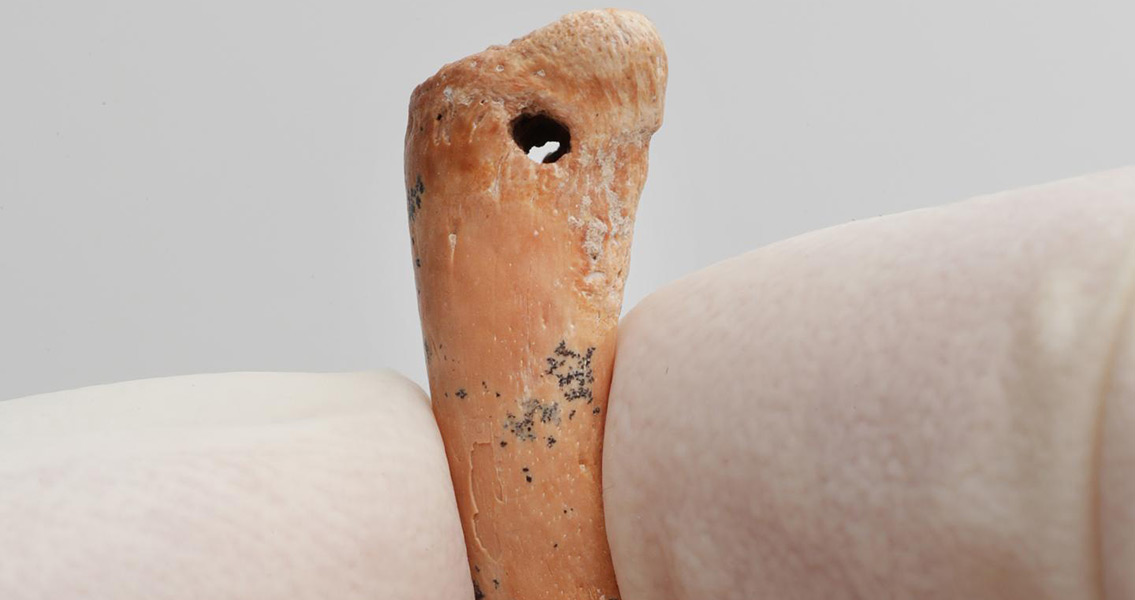
Proceedings of the National Academy of Sciences. The first Homo sapiens to inhabit the islands north of Australia arrived there sometime prior to 50,000 years ago. Little is known about these first human inhabitants of the Pacific Islands, which has led some to conclude the cultures were unsophisticated. A range of artefacts discovered recently however, are shedding new light on these people’s culture and symbolism. “Scientists have long been curious about the cultural lives of the first Homo sapiens to inhabit the lands to the immediate north of Australia sometime prior to 50,000 years ago — part of the great movement of our species out of Africa,” said Associate Professor Adam Brumm, an Australian Research Council (ARC) Future Fellow, who co-led the recently published study. “Some have argued that Pleistocene human culture declined in sophistication as Homo sapiens ventured beyond India into the Southeast Asian tropics and the island chains east of continental Eurasia, known as ‘Wallacea’. “However, the onset of new research programs in Wallacea is steadily dismantling this view.” The team led by Brumm and study co-author Dr. Michelle Langley have discovered a range of prehistoric rock art and ornaments. The breakthrough came in 2014, when they found 40,000 year old cave art on the Wallacean island of Sulawesi. This cave art is considered to be some of the oldest ever discovered anywhere on the planet. Since then, a host of other fascinating artefacts have been found, which are documented in the new study. These include an unusual assemblage of never seen before symbolic objects excavated from a Sulawesi cave site called Leang Bulu Bettue. Dated to between 22,000 and 30,000 years ago, the objects consist of disc shaped beads made from a babirusa (pig-deer) tooth, and a pendant fashioned from the bone of a bear cuscus. A series of stones incised with mysterious geometric patterns were also excavated. Evidence for rock art production at the site has also been found in abundance, such as discarded ochre pieces, ochre stains on tools, and a bone tube that could have been a ‘blow-pipe’ for creating hand stencil motifs. The oldest of these items date to at least 40,000 years ago. “Previously, assemblages of multiple and diverse types of Pleistocene ‘symbolic’ artifacts were entirely undocumented from Wallacea,” explained Dr Langley. “It was also unknown if or how Sulawesi cave artists adorned their bodies or whether their artistic repertoire even extended beyond rock paintings. Our understanding of the symbolic lives of these people is now much richer.” Fascinatingly, Brumm and Langley suggest that the art and jewellery they’ve discovered could be evidence that the spiritual beliefs of modern humans changed and developed as they encountered new types of animal life on the long migration from Asia to Australia. “Sulawesi, in particular, is renowned among biogeographers for its extremely high rate of species endemism – essentially all of the island’s land mammals, except for bats, occur nowhere else on earth,” said Associate Professor Brumm. “The discovery of ornaments manufactured from the bones and teeth of two of Sulawesi’s flagship endemics – babirusas and bear cuscuses – and a previously recorded painting of a babirusa dated to at least 35,400 years ago, shows that humans were drawn to these dramatically new faunal species. This may indicate that the conceptual world of these people changed to incorporate exotic animals.” Brumm and Langley speculate in their study that the progression through the diverse ecosystems of Wallacea could have prompted new ways of thinking about and engaging with the natural world. This, they suggest, could mean that elaborate human-animal spiritual relationships seen in Australian aboriginal cultures, could have their origins outside of Australia. Image courtesy of Griffith University ]]>
Categories
Breaking News

Mycenaean and Egyptian Artefacts Discovered in Cyprus Grave

Categories
Breaking News

Seeing Life in Death: Understanding a Pre-Roman Culture

toilets, smaller, less prominent cultures are often consigned to the dimly lit corners of history. New research from the University of Cincinnati has taken a novel approach to this problem by looking into life’s only constant – death. Through analysing ancient bereavement practices from the Central Apulian region in pre-Roman Italy, they have gained an insight into economic and social mobility, military service and even drinking customs in a region and time that had previously been invisible to history. “After going through volumes of collected material, I realized that there was so much more that could be said about what was happening in the development of this particular culture”, said University of Cincinnati Classics Doctoral student Bice Peruzzi, the leader of the research, who recently presented the findings at the 2016 Archaeological Institute of America/Society for Classical Studies Annual Meeting in San Francisco. Analysing the logistics of burials, treatment of the deceased, and contents in graves dating from roughly 525 – 200 BCE, Peruzzi discovered strong evidence of a clear social hierarchy. Men’s tombs from the same period often had metal weaponry lying close to or even across the remains. This has been interpreted as evidence of the commonality of military service in the Central Apulian region in the time period. Peruzzi placed her findings into the broader historical context of the Mediterranean, allowing her to understand the meanings of certain practices, and understand how the lives of the people in the Central Apulian region changed over time. “In spite of having no written history, I was able to distinguish three different periods and then connect them to the larger Mediterranean history to see how their society changed.” An impressive increase in the number of tombs in the region over a period of just fifty years in the fourth century BCE for instance, indicates newer social groups gaining access to ceremonial burials. Evidence suggests that these elaborate burials initially included use of the space for a period of dancing and banqueting by the attendees at the burial ceremony, a practice which had died out by the end of the period under investigation. The First Period that Peruzzi identified in the region, 525 – 350 BCE, unsurprisingly reflected the significant Greek influence over Apulia at the time. Valuable Greek vases and artefacts were found among the contents of many of the tombs. The detailed imagery on some of these artefacts focused specifically on women taking part in every day activities often thought to have been restricted to men, raising interesting questions about the role of women in the society. Along with the increase in the number of tombs in the Second Period (350 – 300 BCE) mentioned above, Peruzzi found evidence of the community’s elites starting to break away and distinguish themselves from others with their burial customs. The burial sites also revealed the onset of urbanisation in the region. “The new growth of specific burial sites to the detriment of others in addition to newly constructed walls surrounding the communities also indicates a general movement toward urbanization in Period 2.” Evidence of entering a time of great transformation can be found in what Peruzzi defines as the Third Period (300-200 BCE). A shift occurred from individual tombs to large chambers sometimes containing whole families. Weaponry was no longer put in graves, while iconography depicting female beauty had disappeared from grave goods, replaced with simple, undecorated ceramics. Meanwhile, the elites had completely abandoned elaborate ceremonial burials, further distinguishing themselves from the other elements of society. Peruzzi’s study provides insights into a period and a region historians and archaeologists have long struggled to understand. Through highlighting changing burial customs she has tracked the onset of social stratification, the emergence of an elite, and the first steps in urbanisation. “From the emergence of new social groups at the end of the 6th century BCE to the gradual urbanization and separation of “ethnic” groups during the 3rd century BCE, the evolution of funerary practices can be successfully used to highlight major transformations in the social organization of Central Apulia communities.” Image courtesy of Source/Riccardi 2003 ]]>

Categories
Breaking News

Must Farm Yields Comprehensive Picture of Bronze Age Life

Culture24. The whole settlement collapsed into the river after the fire and later it sank beneath the sediments in the river bed. Over time the artefacts sank deeper below what became fens, so today they are in a deeper palaeochannel, which has ensured their much better preservation than same-age discoveries made in shallower channels, according to the Must Farm website. This combination of circumstances has allowed researchers a glimpse into the everyday life of late Bronze Age people. Among the best preserved items are nine log boats, pots, jars, parts of clothing and personal decorations, and glass beads, Culture24 reports. The team even found footprints from the inhabitants of the settlement. There are also structural elements that have led the researchers to suggest that the settlement was protected by wooden posts. The team are now hoping to find remains from the timber structure that allowed people to go around the fens, fishing gear and more artefacts shedding light on how people in this settlement lived. However, Gdaniec added they were not looking forward to finding human remains because that would mean those people had died a violent death in the fire, a possibility which cannot be ruled out. Commenting on the latest finds, another team member, David Gibson, who is the archaeological manager of the Cambridge Archaeological Unit, told Culture 24 that the diversity of the artefacts discovered at Must Farm is pretty much unique. Usually, he said, the discoveries at late Bronze Age sites consist of pits, post holes and some metal artefacts. At Must Farm, on the other hand, a site spanning 1,100 square metres, there is evidence that can tell us a lot more about life at the time. Duncan Wilson from Historic England compared the site to the Mary Rose, the Tudor warship that contained thousands of well preserved artefacts, allowing scientists to gain vital insights into life in England under Henry VIII. The current dig season at Must Farm will take a total of nine months and is part of a four-year project. The artefacts will be put on display at the Peterborough Museum. Image courtesy of Wikimedia Commons user: Hugh Venables]]>

Categories
Breaking News

Building Discovered in Derry Predates City's Walls

Categories
Breaking News

River Clean Up Could Reveal American Civil War Hardware

Categories
Breaking News

Ancient Kazakh Burial Mound Excavated

Categories
Breaking News

Stone Age Artefacts Found By 15-Year-Old Girl

Categories
Breaking News

2,000 Stolen Archaeological Items Recovered

Categories
Breaking News

16th Century Irish Castle Could Have Been "Party House"