Categories
Breaking News

New Papyrus Discovery May Not Be Genuine, Experts Warn

New Historian covered in detail recently – sent shockwaves through the archaeological community, especially in light of a new UNESCO resolution that has been interpreted by some as an attempt to devalue the historical ties of Israel to the city. Many in the Israeli government, up to and including Prime Minister Benjamin Netanyahu, have cited the papyrus discovery as proof that UNESCO’s decision was incorrect, according to Haaretz. However, there are more than a few Israeli researchers who doubt not just the veracity of the papyrus and its text but also the decision to publicize the find, especially as the papyrus was not discovered at a supervised dig site. Initial analysis of the papyrus itself through carbon-14 dating revealed its age to be anywhere from 2,500 to 2,800 years old. The Hebrew text with which the scroll is inscribed is a match for the type of epigraphy used during the seventh century BCE, but Prof. Aren Maeir of Bar-Ilan University, leveling criticism at the IAA , said that while the papyrus may indeed be from that date, there are no indications that the script on the scroll isn’t a clever forgery. There are several well-known cases of antiquities thieves and forgers engaging in similar activity in the past, Prof. Maeir remarked. These forgers would purposely “sacrifice” a legitimate artifact in such a way to whet the appetite of collectors, thus setting up unsuspecting, credulous buyers for any more scrolls they “find” in the future. Additional tests are needed to verify the document, the professor stressed. George Washington University’s Prof. Christopher Rollston agreed with Prof. Maeir, claiming on his blog that there are no indications that the inscriptions on the piece of papyrus are as old as the medium they’ve been placed upon, even when the papyrus, as in this case, has been dated to a specific time. With the abundance of ancient papyrus available to the public – Prof. Rollston claims that nearly anyone can find and order some over the internet – he remains unconvinced of the legitimacy of the inscription. Despite this, the IAA continues to refer to the papyrus as a legitimate find, as it claims to have subjected the new scroll to the same rigorous study that the Dead Sea Scrolls were upon their discovery. However, skepticism still abounds, perhaps most likely due to the seemingly coincidental publication of the find so soon after the UNESCO resolution that sought to downplay and perhaps even sever Judaism’s connection to the Temple Mount, a location of high religious significance to all the Abrahamic faiths. ]]>

Categories
Breaking News

Ancient Judean Scroll Bears First non-Biblical Mention of Jerusalem

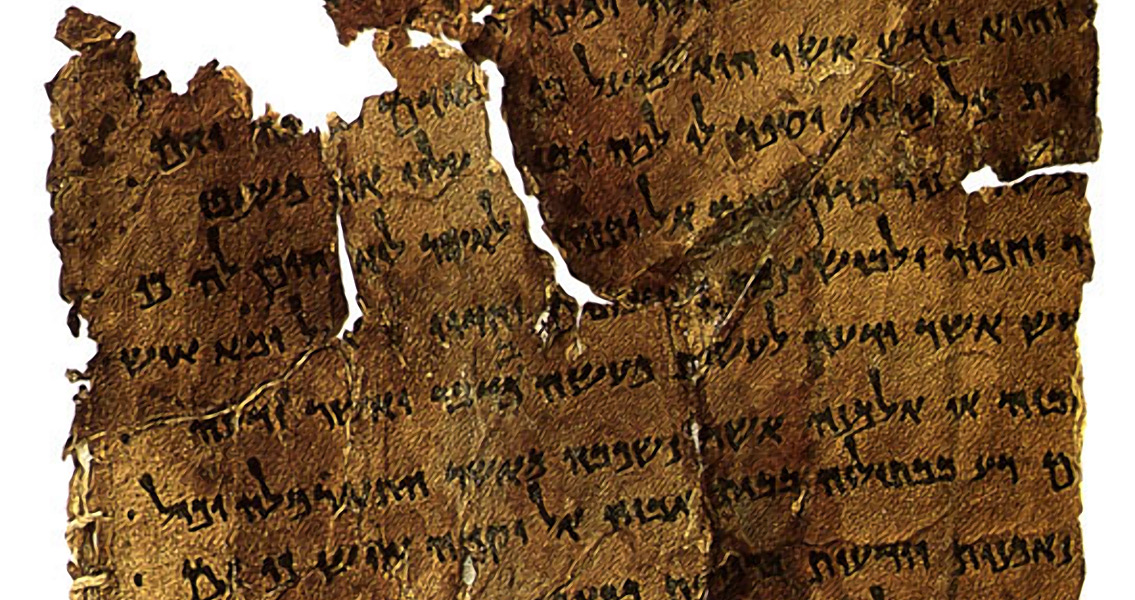
USA Today, Israeli archaeologists have dated the scroll to the seventh century BCE, the time of the First Temple. The scroll itself, written in ancient Hebrew, is made of papyrus; once translated it revealed the details of a purchase order for a shipment of wine, with the relevant text reading “from the King’s maidservant, from Na’arat, jars of wine, to Jerusalem.” The Israel Antiquities Authority robbery prevention unit recovered the papyrus. As it was initially discovered decades ago in the same region as the famous Dead Sea Scrolls, this shipping order was likewise well-preserved thanks to the dry, arid climate of the West Bank, a region also known as the Judean Desert. Eitan Klein, the unit’s deputy director, remarked that the newly-recovered and analyzed scroll is some of the rarest evidence that the Kingdom of Judah had some sort of organized administrative bureaucracy in place at the time. The find, Klein added, underlines just how central a role Jerusalem played as the financial capital of the entire kingdom during the time period, especially the second half of the seventh century BCE. There are three possible kings that the wine might have been intended for, Klein said, based on historical data gleaned from the Hebrew Bible. Israel Hasson, the director of the IAA, remarked that this new discovery proves that the caves of the Judean Desert hold an untold number of archaeological finds of such tremendous importance. Calling for a systematic investigation into the desert cave systems, Hasson added that time is of the essence, considering how delicate these scrolls are – and how susceptible they are to changing climatic conditions. The new find is not without controversy, however, especially in light of a highly contentious and criticized decision by UNESCO, the world heritage administrative arm of the United Nations, to ratify a pair of resolutions to refer to the Temple Mount – the epicenter of Jewish worship around the globe – exclusively by its Arabic name. While Jerusalem is considered the third holiest site in Islam behind Mecca and Medina, the decision to exclude Judaism’s ties to the city – and by extension the city’s ties to the Christian faith – has resulted in a public outcry from many in Israel’s government. One such politician, Miri Regev, a former Israeli Defense Forces brigadier-general and the current minister of culture and sport for the country, seized on the discovery of the papyrus scroll as a tool for politicizing the event, declaring that the reference to Jerusalem was additional tangible proof that Jerusalem “was and will remain the eternal capital of the Jewish people.” Regev added that the Temple Mount, a site that she called “the very heart of Jerusalem and Israel”, will nonetheless continue to be the most holy site for Judaism and the Jewish people regardless of the UNESCO ratifications, both now and in the future. ]]>