Categories
Breaking News

Church of the Holy Sepulchre at Risk of Collapse

National Geographic, the Edicule housed within the Sepulchre and thought by the faithful to be the final resting place of Jesus Christ, is at “very real risk” of collapse because of the church’s crumbling foundation. To make matters worse, the Edicule itself rests on a mix of rubble, mortar, and warren-like passageways and tunnels, all of which have compromised the integrity of the ground beneath it. Ironically, the discovery of the damaged floor was made during a $4 million project to restore and renovate the church itself to protect it for future generations of visitors. In some cases, more than four feet of unconsolidated rubble lie beneath the floor, which is doing its best to support the stone pillars that in turn hold the rotunda of the Church’s roof above the Edicule; each of these pillars is thought to weigh more than 20 tons. NTUA’s chief scientific supervisor Antonia Moropoulou spoke in dire terms of the foundation of the Edicule failing. Saying it’s a matter of when, not if, it occurs, Moropoulou remarked that the process will be slow but catastrophic. Such an event is unlikely to occur, however, considering the deep religious significance of the church to the world’s Christians. A newly-proposed project, drafted by the NTUA, calls for a $6.5 million excavation to shore up the foundation, which would take nearly a year and involve replacing rotted mortar and ancient rainwater and sewage drain systems around the holy site. The history of the site itself is inextricably tied with the state of the Edicule’s foundation, researchers say. In the time of Christ, the site was likely an old limestone quarry that had been repurposed as a burial ground for influential Israelites. Additional tombs discovered on the grounds lend credence to this theory. During the Roman occupation of Judea, a temple was built over the site sometime after it had become the supposed resting place of Christ. This temple was razed to the ground in 324 CE, revealing what the first Christian Emperor assumed to be the tomb of Jesus. Constantine built a shrine around the tomb, which stood until the seventh century CE when Persian invaders partially destroyed it. It was again razed by the Fatimids in the early eleventh century before being rebuilt once again. Periods of rebuilding punctuated the site’s history after this, from attempts by Europeans during the Crusades to later reconstruction efforts in the sixteenth and nineteenth centuries. Many of these construction phases are encompassed by the Church’s existing edifice. The dome of the rotunda, held up by those massive pillars on the Edicule’s crumbling foundation, is thought to mark the foundation of the original shrine erected by Constantine. Researchers hope that the new restoration work will provide opportunities for archaeologists to learn more about the church and its shrine, though there are fears that the cadre of religious authorities that oversee the site will not permit the activity. ]]>

Categories
Breaking News

Ancient Judean Scroll Bears First non-Biblical Mention of Jerusalem

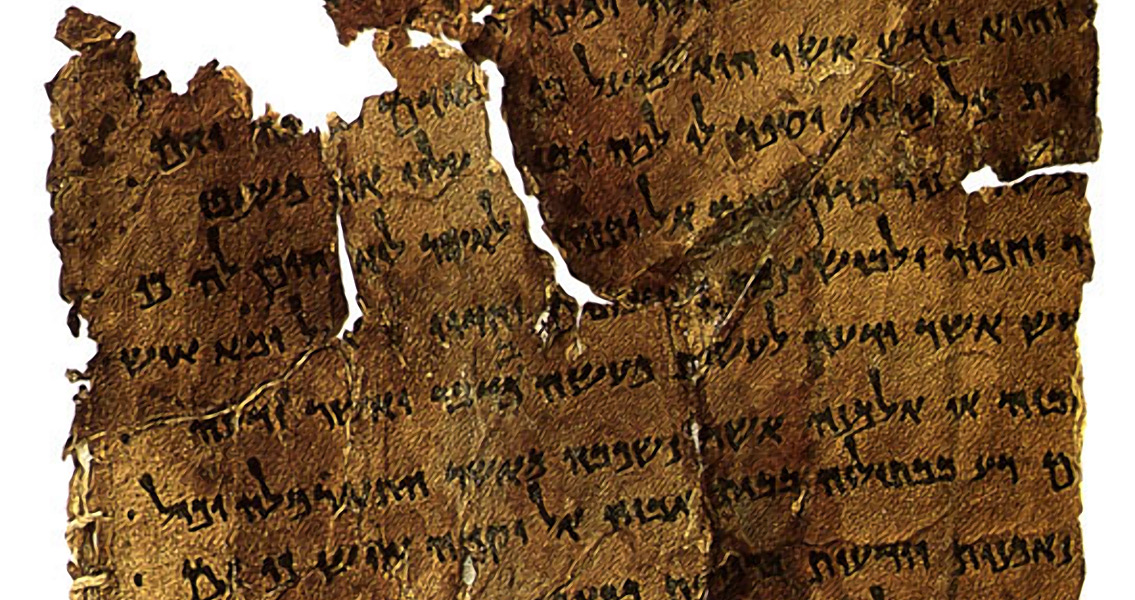
USA Today, Israeli archaeologists have dated the scroll to the seventh century BCE, the time of the First Temple. The scroll itself, written in ancient Hebrew, is made of papyrus; once translated it revealed the details of a purchase order for a shipment of wine, with the relevant text reading “from the King’s maidservant, from Na’arat, jars of wine, to Jerusalem.” The Israel Antiquities Authority robbery prevention unit recovered the papyrus. As it was initially discovered decades ago in the same region as the famous Dead Sea Scrolls, this shipping order was likewise well-preserved thanks to the dry, arid climate of the West Bank, a region also known as the Judean Desert. Eitan Klein, the unit’s deputy director, remarked that the newly-recovered and analyzed scroll is some of the rarest evidence that the Kingdom of Judah had some sort of organized administrative bureaucracy in place at the time. The find, Klein added, underlines just how central a role Jerusalem played as the financial capital of the entire kingdom during the time period, especially the second half of the seventh century BCE. There are three possible kings that the wine might have been intended for, Klein said, based on historical data gleaned from the Hebrew Bible. Israel Hasson, the director of the IAA, remarked that this new discovery proves that the caves of the Judean Desert hold an untold number of archaeological finds of such tremendous importance. Calling for a systematic investigation into the desert cave systems, Hasson added that time is of the essence, considering how delicate these scrolls are – and how susceptible they are to changing climatic conditions. The new find is not without controversy, however, especially in light of a highly contentious and criticized decision by UNESCO, the world heritage administrative arm of the United Nations, to ratify a pair of resolutions to refer to the Temple Mount – the epicenter of Jewish worship around the globe – exclusively by its Arabic name. While Jerusalem is considered the third holiest site in Islam behind Mecca and Medina, the decision to exclude Judaism’s ties to the city – and by extension the city’s ties to the Christian faith – has resulted in a public outcry from many in Israel’s government. One such politician, Miri Regev, a former Israeli Defense Forces brigadier-general and the current minister of culture and sport for the country, seized on the discovery of the papyrus scroll as a tool for politicizing the event, declaring that the reference to Jerusalem was additional tangible proof that Jerusalem “was and will remain the eternal capital of the Jewish people.” Regev added that the Temple Mount, a site that she called “the very heart of Jerusalem and Israel”, will nonetheless continue to be the most holy site for Judaism and the Jewish people regardless of the UNESCO ratifications, both now and in the future. ]]>

Categories
Breaking News

New Evidence of a Battle Still Mourned during Jewish Fast

Jewish Press: “This is a fascinating testimony of the intensive bombardment by the Roman army, led by Titus, on their way to conquering the city and destroying the Second Temple. The bombardment was intended to attack the sentries guarding the wall and provide cover for the Roman forces so they could approach the wall with battering rams and thereby breach the city’s defenses.” As described by historian Flavius Josephus, who witnessed the event, the last battle against the Jewish rebels started with the Romans using catapults to hurl large stones, spears and gravel at the outer third wall and its defenders. The Romans were firing from siege towers which Jewish weapons were unable to reach. When the Jews were forced to retreat, they were no longer able to prevent the endless onslaught of Roman battering rams which gradually destroyed the wall. Josephus wrote: “The soldiers who reached the top of the wall opened the gates and brought the entire military force inside. Therefore on the 15th day of the siege, the 7th day of Artemisius [corresponding to the Hebrew month of Iyar], the Romans took control of the … wall, most of which was destroyed to the foundations along with the northern part of the city.” It took another two and a half months of battle before Titus was able to breech the remaining two walls. The findings attesting to the battle at the third wall were discovered in the Russian Compound, an area west of Jerusalem’s Old City, named for the Russian Orthodox church built there during the nineteenth century. Construction of Jerusalem’s third wall was started by Judean King Agrippa I, however, construction was halted and the wall was only completed years later, haphazardly and with inadequate resources making it a weak spot in the city’s defense. The destruction of the first and second temples is still mourned yearly as the Jewish fast Tisha B’Av, while the Arch of Titus, which celebrates the Roman’s victory in Jerusalem and the Temple’s destruction, is still standing in Rome. The excavation findings are scheduled to be presented at the “New Studies in the archaeology of Jerusalem and its Region” conference. ]]>

Categories
News

Siege of Jerusalem Turns into a Massacre

Categories
Breaking News

Evidence of Greek Fortress Finally Discovered

Categories
Breaking News

New Construction Once Again Leads to an Old Discovery

Categories
Breaking News

Impression of King Hezekiah’s Seal Found in Jerusalem

Categories
Breaking News

Acra Fortress Found in Jerusalem

Categories
Breaking News

10 Year Old Volunteer Discovers Ancient Coin in Israel

Categories
Breaking News

Ancient Ritual Bath Found Under Jerusalem Home