Categories
News

The Battle of Changping- The decisive battle of the Warring States

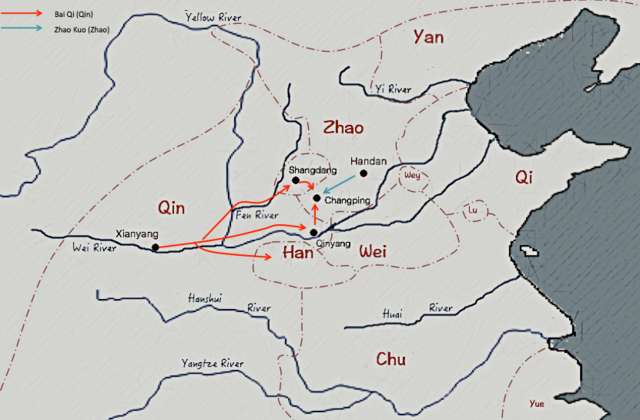
The battle in numbers The powerful army of the State of Zhao had 450,000 soldiers under the command of Lian Po and later Zhao Kuo. At the end of the battle when the survivors of this army had surrendered the youngest 240 soldiers were released, the remainder were executed, buried alive in pits that even today occasionally bone or bone fragments are unearthed. The State of Qin was led by Wang He and he was replaced by the legendary military leader Bai Qi. This change led to the final battle where the tactics of Bai Qi outmanoeuvred those of the Zhao leader. In all over 650,000 soldiers were killed or seriously wounded during the conflict making it one of the most lethal battles in military history.  

Before we look at the battle, we should look at the military equipment and tactics used at that time.

The military chariot was still in use in Chinese warfare long after it had ceased to be used in the Middle East. The chariots use was however in decline during the Warring States Period.   Massed infantry were beginning to excel largely due to the massed use of the crossbow. The increase in use of an infantry force meant the peasantry could easily be drafted and relied less on the nobility to control the chariots. Further back in ancient Chinese history at the Battle of Muye in 1046BC, the victorious Zhou army had 45,000 soldiers and 300 chariots. By the time of the Warring States the military strength of each state had grown considerably. The Qin had an army of over 1 million infantry, 1,000 chariots and 10,000 cavalry on horses. Another factor in the increased size of each army was the increase in casualties with 340,000 killed at the battles of Maling and Yique. The Qin general Bai Qi was reported to have been responsible for close to 900,000 enemy being killed during his military career. At that time records may have been inaccurate and soldiers were paid on the number of enemy they killed so enemy deaths may have been exaggerated. None the less the Warring States was a period of excessive bloodshed. This was largely due to the use of mass infantry units where fighting became more intense and at close quarters. As the aristocracy became less involved on the battlefield their leaders became more despotic as Chinese nobles became part of the literate class and not the warrior class. The chief weapons used were the crossbow, which was mass-produced with training easily accomplished. It was a powerful, accurate long range weapon at the time. The infantry were equipped with several weapons although the dagger-axe was the most popular. They were on a pole of 9 to 18 feet and consisted of a spear with a slashing blade.

Back to the Battle of Changping- the beginning of the conflict

In 265BC, the state of Han was invaded by the Qin. The intention was to take the province of Shangdang. The Qin army quickly passed through the territory with main roads and fortresses all falling within the next four years. Shangdang was cut off from the Han territory and due to fall into Qin hands. In a remarkable act the Han then gave their neighbours, the Zhao kingdom the prize of Shangdang. At that time, Shangdang was of great importance strategically to the Zhao, if it fell into Qin hands then the Zhao heartland would be liable to attack. King Xiaocheng accepted the offer of Shangdang and sent an army under the leadership of Lian Po to quell the threat posed. They met at Changping with Wang He leading the Qin army. Lian Po had already suffered several minor defeats to the Qin during his military career and decided to wait and hope the Qin would eventually go. He had several fortresses built and waited, this turned into a stalemate lasting three years. The Qin did attack one time, even breaching the walls of the Zhao defenders. The attack though did not have sufficient numbers to bring defeat, so the stalemate continued.

A change in strategy

The Qin sent some of their spies into Zhao and Han territory spreading the message that Lian Po was too old and a coward not wanting to fight. The Zhao king removed Lian Po and replaced him with Zhao Kuo, the son of a famous general, Zhao She. Before he died, Zhao She had said that his son should never command an army, Zhao She’s wife had approached the king asking that her son not be given the appointment, the king refused and Zhao Kuo was sent to Changping. In the meantime the Qin had replaced their own general with Bai Qi, a renowned fighter and tactician. Zhao Kuo’s command of the Zhao army began in July 260 BC. He had an army of around 400,000 and he ordered them to invade the Qin camp. During the attack the Qin operated a manoeuvre that looked like a retreat that actually became an ambush. The forward lines of the Zhao army advanced as far as the Qin fortress. The Qin in ambush positions cut off the rearguard of the Zhao forces while simultaneously surrounding the fortress belonging to the Zhao. The Zhao army found itself split into two and all its supply lines were cut off. Bai Qi, the commander of the Qin forces ordered constant counter attacks against the Zhao. The Zhao were positioned on a hillside where they hastily made fortifications and hoped for reinforcements to arrive.
Zhao Foreign Policy

For decades, opportunism had been the focus or drive of the Zhao foreign policy. They had ever shifting alliances with their surrounding states in an effort to stop the expansionism of the Qin state. Since 295 BC they had even had alliances with the Qin themselves when the opportunity suited their needs. On this occasion the states of Chu and Qi would not come to the aid of the Zhao. Meanwhile, the Qin king, Zhaoxiang sent messages to the Henei region in today’s Henan province ordering all males over 15 years of age to assemble south of Changping and block any Zhao supplies and reinforcements. After being besieged on the hillside for 46 days, the Zhao encampment, driven by hunger and despair, made several desperate attempts to escape. They were unable to break out of the stranglehold the Qin had erected. Zhao Kuo, led his finest troops in a last desperate attempt and was cut down by the massed ranks of crossbowmen.  

Surrender and Execution

The remainder of the Zhao army surrendered but fearing a revolt and opposition from the people of Shangdang towards the Qin, Bai Qi ordered the execution of the prisoners. He spared 240 of the youngest soldiers sending them back to their homes to spread the fear about the Qin army. The Battle of Changping is regarded as one of the bloodiest battles in world history with around 650,000 casualties, 450,000 being on the side of the losing Zhao state. Those soldiers executed were mostly buried alive in pits and centuries later Emperor Xuanzong of Tang erected a temple on the execution site which became known as the Temple of Bones.

Aftermath of the battle

Both states of Qin and Zhao were financially crippled and exhausted of domestic supplies after more than three years of fighting. The Qin state was able to quickly recover, however the Zhao state was not able to. In the years leading up to the Battle of Changping, the state of Zhao was one of the stronger participants in the Warring States Period. The Zhao never fully recovered from this defeat and they were conquered by the state of Qin around thirty years later. This gave the state of Qin military superiority over the surrounding states. Further battles took place against the state of Chu before the dominance of the state of Qin led to the unification of China in 221 BC.]]>

Categories
Breaking News

Kings Dethroned—Who Reigns Supreme in the Field of Astronomy?

Kings Dethroned. Gerrard Hickson and His Discovery Kings Dethroned is based on research from Gerrard Hickson. Reportedly, in 1907, he made an astonishing discovery. Based on his findings and calculations, he came to believe that the sun was remarkably closer to the earth than previously thought. Such a finding flew in the face of previous research and the teachings even from the greatest astronomers. It could upend the entire field. Hickson more broadly came to believe that the actual methods for calculating the earth’s distance from the sun and all the subsequent conclusions by the great astronomers were seriously flawed. He followed the work of these astronomers backwards to find the flaws in their work and conclusions. Then he followed their work and conclusions forward to identify the erroneous consequences. In his book, written in 1922, Hickson lays out the history of this work, what he considers to be an evolution of the field. This evolution spans work completed as far back to the days of the Roman Empire up to Hickson’s own work. He believed that this information must be put forth for the general public to better understand the field of astronomy and the gravity of these ‘truths’ he had discovered. Hickson took his book Kings Dethroned one step further by not only proclaiming a mistake and a ‘truth’ but also by debunking large portions of the field of astronomy. He presents arguments for how one error led to more, essentially indicating that the field had built itself on a faulty foundation. He also takes things even one step more by, at times, suggesting a conspiracy to protect those false conclusions. Public and Scientific Reception to Hickson’s Work You might imagine that Hickson’s discoveries and writings would be astonishing. Such information should have entirely upended the field of astronomy. Would this not mean that people’s understanding of the earth and its place in space was entirely wrong? Surely people would want to know the truth and the field of science would quickly set about towards correcting all those old falsehoods. Yet, if you think about your own education in science and anything you do know about astronomy, you probably do not recall hearing about any great revolution in the field. You also probably do have a sense that the earth is fairly far away from the sun. So, what gives?  Well, what gives, is that Hickson was himself wrong. His own calculations were flawed. His book and theories were later debunked. Ultimately, Hickson’s book was considered so spectacularly wrong that, in 1989, the archivists at MIT identified it as a member of their “Nut Collection.” This is their affectionate term for useless research that now has no bearing on the scientific community. Hickson’s work is not alone in that collection, but it certainly stands out for its spectacular inaccuracy and the high degree of hubris it displays. Today’s, Hickson’s view (and his prideful certainty) that the earth is quite close to the sun, is considered almost laughable. Indeed, it may even sit aside other erroneous theories such as that old view that the earth is flat. However, what makes Hickson’s views more easily criticized is that he was working in a time with access to more data and better scientific equipment to avoid such erroneous conclusions. Further, Hickson was indeed overly prideful when he wrote his work and it makes his own inaccuracy all the much more ironic. He had proclaimed that his work would dethrone the great ‘kings’ of the field. However, their reigns were left solidly in tact and rather than sitting atop his own throne, he is considered to have no relevance in the field (aside from being a footnote example of faulty findings). Utility for Modern Audiences As a modern reader, with sometimes limited time, you may wonder if you should put forth the effort to read Kings Dethroned. In many cases, yes you should make the time. The book is iconic for putting forth erroneous information and it does highlight the hubris of a man who thought he had it all figured out. If you are in the field of science, why not read a book that will broaden your understanding for the field and the scope of its history. Hickson’s work should not just be a footnote of inaccuracy, it should be considered as a work that does have a place in the history of the development of the field of astronomy. When you read the book King’s Dethroned, you may find yourself sometimes feeling astonished at Hickson’s thought processes, conclusions, and written statements. Read it as a bit of scientific history. Read it as a source of entertainment. Read it so you have some fun trivia to share at parties. Finally, read it as a warning against exercising any similar levels of hubris in your own scientific work.    ]]>

Categories
Book Reviews

Better Understand Your Bible with the Gospel Parallels

Gospel Parallels. Learn all about the Gospel Parallels and how this great resource can increase your knowledge of, understanding for, and connection to the word of the Bible: What are the Gospel Parallels? In general, a gospel parallel is a text that provides multiple pieces of information in tandem. Oftentimes, this means presenting the multiple versions of the gospel (Matthew, Mark, Luke, and John) beside each other so that each can be read for a more holistic and sometimes comparative understanding. At other times, a gospel parallel will present biblical analysis and enlightening information to accompany the actual word of the biblical gospels. The texts tend to be formatted so that the gospel and accompanying information are presented on a single page, with various columns and footnotes. In 1949 Burton H. Throckmorton Jr. produced the definitive version of a gospel parallel in his definitive text Gospel Parallels: A Comparison of the Synoptic Gospels. Based on the Revised Standard Version of the bible, Throckmorton utilized many resources, including ancient texts, to produce his comprehensive examination of the Synoptic Gospels (those written by Matthew, Mark, and Luke). Why own the Gospel Parallels? At one point in human history, it was believed that only an elite few could read, comprehend, and convey the word of God to others. This made biblical study and inquiry inaccessible to the common person. It also led to an indirect connection between the average person and their spiritual practices. Many people started to recognize that the Bible should be not only for the elite. Instead, they felt “the good word” should be printed and disseminated wide and far, so that everyone could personally access it. This process was, of course, made easier by the printing press. Now, everyone can indeed easily access a Bible. The text is even handed out for free whenever possible to enlighten interested minds. If you believe that it is important for anyone to be able to access the word of the Bible, then know that it is equally important for anyone to be able to compare, contrast, and generally analyze that word. There is no sin in inquiry, or even doubting and searching for answers. The true problem would be in being unable to carry out that inquiry, especially if doing so would ultimately bring you greater knowledge. For this reason, it is recommended to get texts that will allow you to engage in that inquiry. When you have them on hand, you can easily analyze and answer your own questions at any time they enter your mind. When investing in a gospel parallel, be sure to consider the definitive text from Throckmorton. How did Throckmorton’s text become definitive? First, you may wonder who exactly Burton H. Throckmorton Jr. was and why his gospel parallels should be relied upon above other options. Throckmorton was born in 1921 in Elizabeth, New Jersey (United States). His strong interest in religious studies led him to pursue an education in that arena. That gave him the knowledge necessary to write this text (along with several others that were equally popular). He also acted as a minister and taught on these subjects at Bangor Theological Seminary in Maine (U.S.). Throckmorton’s text, Gospel Parallels: A Comparison of the Synoptic Gospels became definitive, in part, because it was put together with a true dedication to thoroughness and a high attention to detail. For Throckmorton, good enough was not good enough. It was important to him to delve deep into all the available resources and pull that information together, to fully analyze the three Synoptic Gospels Also, the Gospel Parallels: A Comparison of the Synoptic Gospels was published in 1949, and while it was well-researched and well-organized to present comprehensive information, it was also put together at a certain point in time that allows the reader a sort of glimpse into the theological past. Throckmorton compiled his work at a time prior to the re-organization of the Catholic church (which occurred largely in the 1960s). Thus, when using this text, you can obtain not only a deeper understanding of the Bible and the Synoptic Gospels, but also a deeper understanding of the spiritual context at that time. Final Recommendations Throckmorton’s Gospel Parallels: A Comparison of the Synoptic Gospels is strongly recommended for theologians and biblical scholars. It may also hold particular interest for those who study literature. However, this text is not only for academics making serious inquiries, it is accessible and strongly recommended reading for any person who simply wants to increase their understanding of the Bible. You can buy a print copy of Gospel Parallels from Amazon with the link below, or find an ebook version here on the Forgotten Books website.

]]>

Categories
Book Reviews

A Farewell to Arms by Ernest Hemingway

A Farewell to Arms was published to critical acclaim. The book quickly became a best-seller and it remains a popular portrait of World War I. However, Hemingway’s classic novel is so much more than a war story. It also contains timeless themes of love and tragedy. Brief Synopsis of the Plot The plot of A Farewell to Arms is centered around the main character, Frederic Henry, a lieutenant in the Italian Army ambulance corps. Given Hemingway’s own history in that profession, it is believed that at least some elements of the novel are inspired by his own personal experiences. As a paramedic, Henry’s time at the warfront is cut short by a significant injury. Yet, that injury also allows him the opportunity to grow close to his love interest, Catherine Barkley, while he recovers at hospital. The two form a relationship that is wrought with challenges from the war, and life in general. Although primarily thought of as a book about the toils of war, Hemingway’s book is simultaneously a romance novel with some painful twists that make it a tragic read. A focused reading reveals the following themes and imagery that highlight the complexity of the characters and the overall plot: Relevant Themes in the Text Literary scholars have long analyzed Hemingway’s great work, A Farewell to Arms for relevant themes and images that would provide deeper meanings to the story. A modern reading can reveal those same elements against the current context. You may find these themes seem not so different from what you might see in your other favorite books, as well as in your favorite songs, television shows, and films.

War-What is it Good For?

That old song may have had it just about right—what is war good for? Absolutely nothing. Or at least very little, according to Hemingway. In A Farewell to Arms, the characters see very little value in the war effort. Their participation is not met with feelings of honor, but rather with feelings of fear and a belief that their time (and lives, in some cases) have been wasted.

It is this aspect of the book that most lends itself to the title. When Hemingway’s characters are saying their farewells to arms (aka war), it is because they see it as only bringing pain and suffering. It is really a cautionary tale—give up this approach or face greater loses for humanity.

Love is a Battlefield

As it has been said, Hemingway’s novel is generally considered a portrait of war. However, it is also secretly a tragic romance novel, not unlike many that were so popular in the past and still so popular today. The romantic aspects of the book do bring much of the drama to the story.

When Henry is injured, it provides him with the opportunity to fall in love. The only problem is, his love interest is fresh off a previous relationship, in which her fiancé died. She is quick to run into Henry’s arms, but seemingly as an escape from her pain and grief. Sadly, that impulsive and poorly thought out choice is only met with greater and greater challenges as the story unfolds.

Here Comes the Rain Again

In many great works, rain is used as a symbol of growth and renewal. This makes sense because rain serves to wash away all that is old, and it feeds new life. However, Hemingway subverts this traditional approach. In this novel, the rain is associated with impending doom and failure. Since it occurs quite frequently, as a reader you might be left thinking “when it rains, it pours.”

Yet, the rain is not just a portent foreshadowing doom and gloom, it also does serve to wash away the fantasies that the characters illusion themselves with. When the rain goes away (and the sun does not really emerge), the characters are left with only a stark and harsh reality.

Analysis of Writing Style A Farewell to Arms is not just a classic because of its timeless themes, it also earned this spot in literature because of the writing style. Hemingway is a wordsmith, but he also does not mince words. He composed this novel with a high level of detail that was, at times, graphic. Hemingway’s depiction of war was brutal and realistic, leaving little to the imagination. By the end of his highly descriptive battlefield descriptions, most readers will also be inclined to say farewell to arms. Further, all the primary characters of the novel are well-crafted. Each feels like a real person (even someone you could know). Their wartime struggles will evoke strong emotional reactions. Relevant Themes for Today If you have ever heard the saying ‘everything that is old, is new again’ then you may also know everything new is actually inspired by something old. It is not only today’s war movies that take inspiration from the stylings of Hemingway, today’s romance novels and romantic dramas do too. Truly, you may be surprised to learn that if you enjoy a good complex and sometimes tragic love story, perhaps something in the Nicholas Sparks realm of book or book-to-movie adaptation, then you will also enjoy A Farewell to Arms. You need only read the book yourself to see the truth in this comparison. Final Recommendations For many people, when they think of a text such as A Farewell to Arms, they assume an older book, about a war, will be dry and boring. They assume it will have little relevance to them and that they will be unable to connect with the characters and the story. However, Hemingway’s classic is a timeless work that speaks to the tragic challenges any one can face at any time in human history. If you enjoy books that simultaneously chronicle the common experiences any one may have (love, loss) and the most challenging times of the human condition (war, great tragedy), then you will likely find A Farewell to Arms to be a worthwhile read. In fact, you may even find it ranks with your other favorites.    ]]>

Categories
Breaking News

Who do you think you are?

The DNA test uses some of the most advanced autosomal testing technology. Science combines with the store of information now available on line to map ethnicity going back through multiple generations. This is all achieved through a simple saliva test. The test looks at a person’s entire genome and covers both the maternal and paternal sides of the family tree. However, some pundits maintain that ethnic testing is not reliable. The methods used for ancestral DNA testing are not the same as DNA testing for other purposes. The autosomal testing base is considered to be one the less reliable forms of DNA testing. Further, the results are partly based on responses from a pool of other people who have had similar testing, what are described as a reference population. So the results could come across as a little skewed. Arguably until many more people have put themselves forward for ethnicity testing, there will remain naturally limiting factors. Some ethnicities are easier to identify than others, for example, Jewish results seem to be highly accurate. But if you look at the evolution of the European landmass, war followed by shifting borders followed by more war and so on, most Europeans are actually an ethnic mix. In the same way, the inhabitants of the British Isles are a mix of invaders and the resident population who were themselves probably also invaders at an earlier point in time. Living ancestry is becoming a real thing and there are people who create heritage tours. These are based on documented evidence of past family members and genetic testing. The idea is to make it possible for you to stand on the same soil as your ancestors. But ethnicity testing has a long way to go if it is going to catch up and compete with hard historical evidence when it comes to clear and factual accuracy.    ]]>

Categories
Breaking News

A totally new perspective on being an egghead

st century, the phrase ‘egghead’ remains in use and is the name of a popular television quiz show still supporting the concept that a big egg-shaped head holds a large and intelligent brain. As medical science developed, phrenology was largely discredited in the late nineteenth century but it experienced something of a revival amongst criminologists in the twentieth century. Phrenology sits within the field of Anthropological Criminology which supports the theory that the crime is somehow linked to the physical characteristics of the perpetrator.   The idea behind Phrenology was that different parts of the brain were attributed with distinct mental abilities or capacity. As the brain developed, so did the shape of the skull. A particular shape to the skull would therefore indicate either an over or under development of a certain part of the brain. An over development was viewed as a lump or bump and an under development as a dip or depression.  This is something akin to the line that the Collauga were working along. Phrenology always had its critics and dissenters even when there was little alternative knowledge offered by way of medical science. Phrenologists spent much time in the dissection room, analysing the brains of convicted criminals in relation to the shape of their skulls. Discredited now, it is easy to look back with all the advances in medical science and think of it as nonsense but at the time, with little to counter it, Phrenology held sway amongst a hardened group of believers.]]>

Categories
Breaking News

Wasn’t the ark…well, just ark shaped?

The Middle East department at the museum has a huge collection of clay tablets with cuneiform inscriptions. Dr Finkel’s department researches and decodes the inscriptions, linking the tablets together where possible to provide a linear story. This is where the true revelation about Noah’s Ark came from. Cuneiform is an ancient system of writing used in the Middle East. The word, Cuneiform, means wedge-shaped and indeed the script comprises wedge-shaped marks on clay tablets. A clay tablet of some 4,000 years old in the British Museum has revealed that the famed vessel was, in fact, round and not as has been thought and portrayed, rectangular. Not only has the tablet revealed this piece of information but it has also detailed the materials used to build the ark and the precise measurements. The discovery was a chance find made by deciphering the Cuneiform and linking it to other tablets to compile the ancient Babylonian story, the Story of the Flood. The ark was constructed out of wooden ribs and palm fibre rope with hot bitumen used after construction to render the vessel waterproof. The instructions were given by a Mesopotamian god and the dimensions are translated to be 3,600 square metres, with walls to a height of six metres. This equates to an area around two thirds the size of a modern football field. The sixty lines on the tablet also include the order that the animals must enter, ‘two by two’. The odds surrounding this discovery were revealed to be even greater when the story of how the tablet came into the possession of the Museum was recounted by Dr. Finkel. A man called Douglas Simmonds came into the museum with a clay tablet which he wanted identified, a normal day at the office for Dr. Finkel. The tablet was a family piece given to the owner by his father as a reward for passing his exams. The tablet had been acquired by Mr Simmonds’ father, Leonard, along with a few other less interesting bits and pieces in the late 1940s after serving with the RAF in the Middle East. This unique tablet recounts the story of the ark and is far older than the known biblical accounts. Finkel has described the discovery of the tablet as one of the most important human records ever found but in a shocking paradox, is absolute in his belief that the ark never actually existed. The tablet remains on display at the British Museum where it has been since 2014 on loan from Mr Simmonds.]]>

Categories
Breaking News

Thieves' Coins

th century birch bark manuscript. Russian pickpocketry takes on a different form now in this modern age, and with arguably a far greater reach than merely arms’ length. Russia has a fearsome reputation as home to some of the most deadly and serious cyberhacking groups such as Anonymous International and the Koobface Gang. They are to modern cyber crime what their villainous ancestors were to the pockets and valuables of eighteenth century Russia.   Sometimes hackers are motivated by political ideology and a cause to believe in but Russian hackers simply seem intent on emptying other peoples’ bank accounts, and not a thieves’ coin in sight.          ]]>

Categories
Breaking News

RAF Centenary

st April 1918 just prior to the end of the Great War as the Royal Flying Corps with planes made from canvas and wood, the service rapidly developed and changed to meet the needs of more modern warfare a short 21 years after its formation.   The defence of the British Isles by Spitfires and Hurricanes was pivotal in preventing Nazi invasion and the inclusion of heavy bombers later on the war, whilst controversial, secured victory in Europe for the Allies. The bombing raids across Europe resulted in a casualty rate higher than that incurred by the other two services during the Second World War.   Other iconic aircraft have followed as scientific and global developments have demanded. The Typhoon Jet has a speed of 1,550 miles per hour; compare that to the very first plane, the BE2, which had a maximum speed of just 70mph.   What is interesting about the RAF is its meritocracy; even from its infancy, men of all social classes rubbed shoulders together, not the case at all in either the Army or the Navy which reflected the UK’s class-ridden society. Women were also included in the force during the Second World War, not as main crew but within the Air Transport Auxiliary which delivered aircraft to their destinations from the factories.   The female contingent had to wait until 1994 to see the first female RAF jet pilot, Jo Salter, flying a Tornado and until 2009 to see the first all female jet crew who were deployed to Afghanistan.   The motto for the service, ‘per ardua ad astra’ was chosen by a junior officer and is translated as, ‘through adversity to the stars’. The man to whom this choice is accredited, Lieutenant J.S. Yule, is believed to have taken the phrase from a novel by Sir Henry Rider Haggard entitled, ‘The People of the Mist’ and it is thought Rider Haggard himself borrowed it from the Irish Mulvany family who have had this as their family motto for centuries. Red Arrows Still so relevant today in modern conflicts in the Arab state, the RAF is held in great affection by the British people. The UK is awash with a year of events and celebrations to mark the first one hundred years of the RAF.   With an eye watering budget of £8 million, concerts, flypast and tattoos are all planned. A commemorative £2 coin has been struck by the Royal Mint featuring five different designs.   The Ministry of Defence has released an iconic set of pictures to tell the story of the RAF through the decades. Some of the pictures have been colourised by an expert which is a relatively modern technique designed to breathe life into old pictures. The colourised versions convey a depth of feeling and atmosphere that is not present in the black and white originals.]]>
Categories
Book Reviews

The Last Slave

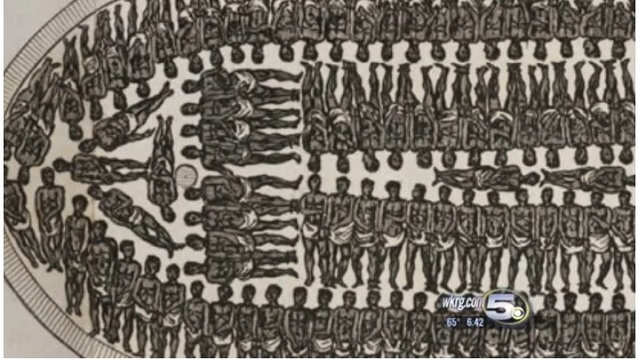
Barracoon: The Story of the Last ‘Black Cargo’ by Zora Neale Hurston was refused publication and then languished unseen for the next 87 years in a dusty archive. That is, until now.   ‘Barracoon: The Story of the Last ‘Black Cargo’ is the tale of Cudjo Lewis born in 1840 and kidnapped in 1859 from his West African village.   He was transported along with one hundred others to Alabama in the US, despite the fact that African slavery had been abolished in America in 1807.   The word ‘Barracoon’ is the term used to describe the barracks where the slaves were housed before their buyers collected them. Lewis is widely held to be the last black African to be sold into slavery and arrived on the last slave ship.   Hurston interviewed Lewis, whose African name was Kossola, when he was approaching 90 years of age. The interviews formed the basis of Hurston’s book which ended up in the archives at Howard University after the books’ failure to publish and Hurston’s death in 1960. Harper Collins have agreed to publish the manuscript in its original form; Kossola’s African dialect appears intact, the main basis for rejection of the manuscript all those years ago.   Kossola was freed in 1865 after working for six years for a shipping business on the Alabama River. The man behind the slave transport, Timothy Meaher, escaped prosecution for breaking the law. The ship on which they were all transported, the Clotilda, was burned by the ship’s Captain, William Foster upon arrival in the US.   [caption id="attachment_8617" align="aligncenter" width="950"]Clotilda discovered in Alabama Remains of the Clotilda[/caption]   All of the slaves were either sold or kept for personal use by Meaher and Foster. After the Civil War in 1865 when he became free, Kossola along with other former slaves founded Africatown in Alabama, where they remained and where Hurston came to interview him in the late twenties.   The author spent a lot of time living in Africatown with Kossola, where the men spoke their own language and kept up their traditional, African customs. She walked alongside Kossola as he cleaned the church and accompanied him on his crabbing trips to the bay. Some of their time was spent in silence, itself speaking volumes about Kossola’s loss of his people and homeland even after so many years.   Her time spent with Kossola moved Zora Hurston hugely and she was profoundly affected by his story. During one of her last visits to his home, she asked to photograph him. Kossola appeared in his best suit but without any shoes. He told Hurston that he wanted to look like he would if he were in Africa as this is where he really wanted to be.   This work was one of her earliest projects following the end of her studies; Hurston studied Anthropology at Barnard College and then Howard University. Hurston was part of the Harlem Renaissance which was an intellectual and social movement within Harlem during the 1920s also sometimes known as, ‘the New Negro Movement’.   Her Biography, ‘Wrapped in Rainbows: The Life of Zora Neale Hurston’ by Valerie Boyd portrays the effect that the interviews with Kossola had on Hurston quite vividly. Hurston’s work is truly unique because it is the first hand testimony of a man who was there, a living record from a truly shameful period of history.]]>