Categories
Breaking News

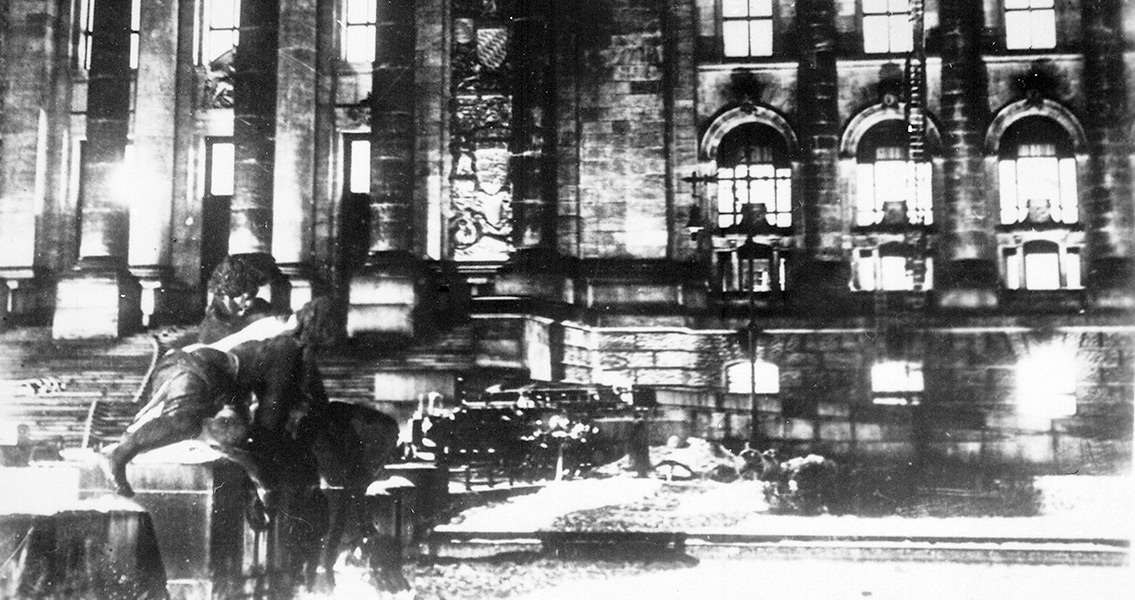
The Reichstag Fire and the Difficulties of Contemporary History

Central European History. “It tells us about the subterranean forces, especially of legal and political interest, that have shaped the master narrative; and it tells us about our attitudes toward different kinds of sources and authors.” Hett argues that the two conflicting arguments about who started the Reichstag fire – van der Lubbe acting alone, or the blaze being instigated by the Nazis – allow us to view major trends in the history of Germany. The version of the Reichstag fire in which the Nazis were the culprits was a narrative developed and presented by victims of Nazism, Hett explains. The theory that van der Lubbe was the sole culprit, on the other hand, began as a self-serving perpetrators’ story. “The critical moment in the development of the single-culprit narrative—and in the Reichstag fire controversy overall—came in late 1951 or early 1952 when the Lower Saxon interior ministry ordered Fritz Tobias to research the fire in an effort to defend Lower Saxon police official (and former Nazi political police detective)Walter Zirpins”, Hett writes. It is very difficult to use victim narratives as historical sources as they are often personal accounts of people in extreme situations. As a result, victim narratives have evoked discomfort for earlier historians; only recently have these stories been examined. “It was precisely such [victim narrative] sources that tended to tell of Nazi responsibility for the Reichstag fire,” Hett notes, explaining why the single-culprit narrative has been so pervasive. Researchers are still in the very early stages of an important process of determining which accepted narratives need to be re-examined. Through much of the postwar era, Hett notes, victims have repeatedly been lost in the historiography because historians discounted their testimony, favouring ‘objective’ sources. Contemporary history is a troublesome area in particular, because it is not removed from the present. Accounts of the recent past are often intertwined with current political interests. Hett, among others, has effectively shown that accepted accounts of the past require significant scrutiny. For more information: www.journals.cambridge.org Image courtesy of Wikimedia Commons user: DIREKTOR]]>
Categories
Breaking News

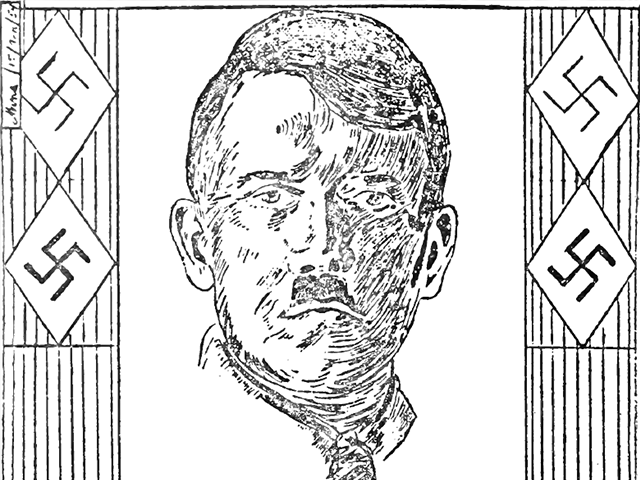
New Documentary Estimates Hitler's Net Worth in the Billions

Hitler was not only a war-machine, but also a money-making machine as well. He had numerous financial schemes that made him money, including copyrighting his image, which earned him royalties for every stamp that was sold with his face on it. Most of these money-making schemes were running in the country unbeknownst to Germany’s tax authorities. Copies of Mein Kampf, which were given to newlyweds on their wedding day, are thought to have earned him the equivalent of at least $1 million a year in royalties. The makers of the documentary surmise that Hitler owed the German tax authority over $3 million in tax in today’s money. Shortly after his death his will was found by a German Jew, Herman Rothman, working in British Intelligence, and questions were raised about his fortune. Mr. Rothman, now in his 90s, told the makers of the documentary that the Counter Intelligence Unit that he was working with spotted a man dressed in civilian clothing whom they believed was a Nazi. They captured him and took his jacket, which contained a seven-page document detailing Hitler’s last will. In this will, Hitler blamed the Jews for starting the conflict, and from the second page onwards, it is seen how much of a shrewd investor he was. Earning money from different appearances, speeches, and royalty claims, he built himself a personal $6 billion empire. It is even said that his family members living today could claim a portion of those missing billions from his image rights alone, although it is yet to be seen if anyone will come forward. “The Hunt For Hitler’s Missing Millions” aired on Britain’s Channel 5.]]>

Categories
News

The D-Day Invasion

The D Day Invasion was one of the most notable events in World War 2. In fact, it is one of the world’s most remembered events as it was a precursor to the fall of Adolf Hitler. Following yearlong planning, The United Allies launched what was and still remains the largest seaborne attack in history. D Day Invasion refers to the invasion of Normandy (also called Operation Neptune) by the united armies of America, Canada and England on June 6, 1944. It proved a significant turning point for Hitler’s Nazi Army and had been in the planning phase from the previous year. The then commander of the Allied forces who went on to become president of the United States, Dwight Eisenhower, was one of the key players in launching an attack on the unsuspecting Germans. Planning had officially commenced in 1943, and launched a year later on June 6th 1944, two days later than originally planned. British, Canadian and US fleets took over the shoreline and sky at around midnight on June 6 1944. The attack was originally planned for June 2, 1944 but had to be delayed due to inclement weather conditions.  The attacks commenced at midnight with the launch of airborne divisions who parachuted their way in. The German troops saw the largest army advancing towards shore on the morning of June 6 1944. There was a fierce battle and even though the Germans fought back heavily, they eventually retreated. D Day attacks saw a resistance in the German army which encouraged the united troupe’s top push towards Berlin. Prior to D Day, Operation bodyguard was launched as a decoy to distract the German troops so they were unaware of the details of the location and timing of Operation Neptune. D Day Invasions came as a result of Hitler’s refusal to surrender to the Allies. Key points in France were taken over even though it was being occupied by the Nazis. The operation was a catalyst for a number of important event s which led to Hitler’s defeat. It was meticulously planned and carried out with expert precision. The Allies could hardly believe some of the discoveries that were made as they marched on Germany. The discovery of concentrations camps that were being used to “cleanse” the world of Jews, homosexuals or anyone else the Nazi regime had declared deviant was a true testament to just how large the holocaust was.  The D Day invasions saw the start of a new beginning for many people who were under fear of Hitler’s rule. Following the Battle at Normandy, Hitler’s army was defeated, his closest allies surrendered or changed sides and he finally committed suicide before the allied or Russian forces could reach him. The memories of Operation Neptune are recognized annually in the form of memorials and tributes at the location points where the invasion took place. Most notable among them are Omaha Beach, Pegasus Bridge and the German war cemeteries that exist nearby. A recognition ceremony for those who fought and perished in the D Day invasion is held yearly to honor the brave soldiers who went above and beyond their call of duty to fight for their country to achieve a greater good.]]>