Categories
Editorial

How did 'dazzle painting' affect World War One military tactics?

German U-boats: A looming challenge As a Royal Navy volunteer, Norman Wilkinson was all too aware of the threat from Germany’s U-boats. The Kaiser had declared a no-holds-barred approach to submarine warfare on January 31st 1917 and, desperate to bring an end to such a costly and gruesome war, he ordered torpedoes on any ship entering the warzone. Unbridled horror ensued: on April 17th 1917, the HMHS Lanfranc, a hospital ship with wounded German soldiers, was torpedoed by Imperial U-boats. 40 died, including 18 Germans. Maritime camouflage became one of the big questions being passed around the British Royal Navy offices. On a ship’s journey, it moves through changing light and visibility. If a camouflage was to work, it would need to evolve every second. What worked on land simply wouldn’t work at sea. As imaginative ideas from artists and inventors arose, they were discussed, trialled and ultimately vetoed. Thomas Edison’s idea, to adorn a vessel with trees to make it look like an island, was actually put into practice on the S.S. Ockenfels. It made it to New York harbour before the winds got the better of the disguise.

Hidden in plain sight

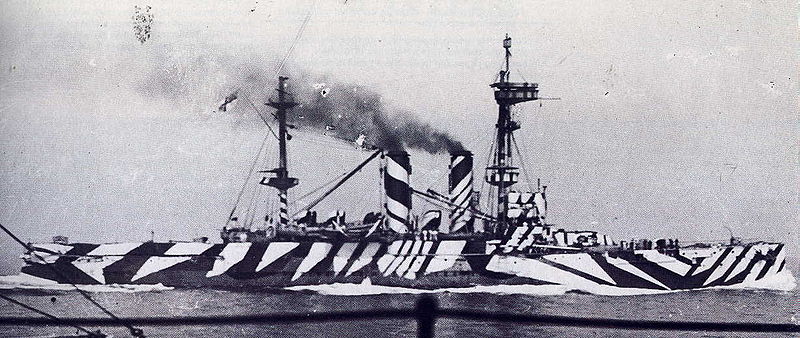
Artist-turned-Royal-Navy-volunteer Wilkinson took a different approach. Rather than hide the boat, he’d distort it. Reflecting on his idea, he said: “Since it was impossible to paint a ship so that she could not be seen by a submarine, the extreme opposite was the answer – in other words, to paint her, not for low visibility, but in such a way as to break up her form and thus confuse a submarine officer as to the course on which she was heading.” A U-boat gunner would need to hit the target from between 300 and 1900 metres away. He had under 30 seconds to pick out the ship through his periscope before he would be spotted, thus revealing the submarine’s location. Terribly expensive and often slow, torpedoes were in limited supply: a typical U-boat would only carry 12. For the gunner, getting it right first time was imperative. The visibility of a British ship may have been its vulnerability; but the gunner’s weakness was his reliance on his own guesswork during that 30-second window. Spotting this, Wilkinson realised that ‘dazzling’ the gunner was the only way to compromise his estimation. In that split moment, he’d have to decide: should he risk shooting a precious torpedo when he couldn’t be certain where the ship was heading? With this theory in place, Wilkinson started to design. He used broad strokes of intense colours in geometric shapes to blur the vessel’s shape, size and direction. For example, a curve on the side of the ship could conjure up a phantom wave; making the ship seem smaller. Bold patterns on the stern or bow could create an optical illusion, turning the ship around in the eye of the gunner and his low-down viewpoint. [caption id="attachment_8786" align="aligncenter" width="500"] HMS London in May 1918. Credit: British Royal Navy[/caption] Consciously or not, Wilkinson’s newly militarised creativity reflected the overwhelming strides being made in contemporary art.

What was happening in the art world?

As an artist, Wilkinson would have been aware of the truly ground-breaking movements occurring in art during the First World War. Consumed by nihilism, many international artists had begun to express their anguish at a humanity hell-bent on tearing itself apart. In 1915, one artist, the Russian Kazimir Malevich, painted a simple black square on a canvas. Representing the end of everything, the omnipresence of death, and a bleak hopelessness, Black Square remains one of the most influential artworks of the 20th Century. Malevich’s Black Square was part of the artist’s Suprematist movement: a bold visual language of abstract geometric shapes and stark colours. The first ever Suprematist exhibition was held in 1915, showing 35 of Malevich’s seemingly random arrangements of shapes and colours. Despite the sparse conversation around the relationship between Suprematism and dazzle painting, the influence is clear. [caption id="attachment_8785" align="aligncenter" width="500"] Supremus 58 by Kazimir Malevich. Credit: Russian Museum[/caption] More frequently discussed is the impact Cubism may have had on dazzle painting. Picasso, a leading artist of the Cubist movement that first gained traction in 1907, claimed inspiration for the new military technique. Whether Cubism, Suprematism or something else, Wilkinson was functioning in an art world obsessed with randomised geometric shapes and a gripping use of colour. His subconscious would have been overflowing with an aesthetic intended to confuse.

Dazzle painting gets the royal approval

By late October, Wilkinson’s idea had come to fruition. King George V was sent to inspect the ‘Dazzle Section,’ a new division of the British merchant naval service. At first, the King was presented with a small model of a ship. Rather than the classic battleship grey, it had been painted with a joyous palette of contrasting colours. Looking through a periscope about 10 feet from the tiny model, he was asked to guess the ship’s course. As an ex-Naval officer, he knew what he was doing. “South by west,” he answered. Had he been a gunner, he’d have wasted one of 12 precious torpedoes on that guess. The dazzle-painted ship had actually been heading east by southeast. The king was first confounded, and then convinced.

Dazzle artists at work

The Royal Academy of Arts offered four unused studios as dazzle-painting headquarters. Wilkinson’s team of 19 was made up of 5 artists, 3 model makers and 11 female art students who hand-painted the technical plans. To become predictable was to become defunct; so each design was unique and tailored to individual ships. Within a year, 2,300 British ships were painted with dazzle. By the end of the war, that number would grow to 4,000. [caption id="attachment_8787" align="aligncenter" width="500"] A Dazzled Merchantman by Charles Pears. A Merchant vessel at sea during choppy weather conditions. The ship is painted in a dazzle camouflage scheme, which incoporates shades of blue, pale green, mauve and also black and white. Credit: Imperial War Museum[/caption]
Did dazzle painting work?

Whether or not dazzle painting worked is up for debate. In the first three months of 1918, 72% of dazzled British ships that were attacked were sunk or damaged. In the second quarter, though, this dropped to 60%; compared to the 68% of non-dazzled ships. Dazzled ships in America fared better: of 1,256, only 18 were sunk. The conversation continues to this day. In 2011, the University of Bristol released research concluding that dazzle painting can certainly disrupt a person’s perception of the speed of a moving target. In truth, though, it didn’t matter whether dazzle painting worked. Insurance companies thought it did, so they lowered the premiums on painted boats. Morale on dazzled ships was higher, making deployment of the strategy a no-brainer. Despite being met with general derision in the press, dazzle ended up having a distinct effect on the identity of wartime Britons. Its distinctive visuals appeared on fashion items, cars and even high street windows. People attended ‘dazzle balls,’ where they would dress up in dazzle-inspired costumes and raise money for the war effort. Its military effect may be debatable but one thing is certain: a creative injection into a flailing war can have a morale boost at sea and at home.]]>

Categories
Breaking News

Secrets of the Neanderthals: collaborative, intelligent hunters

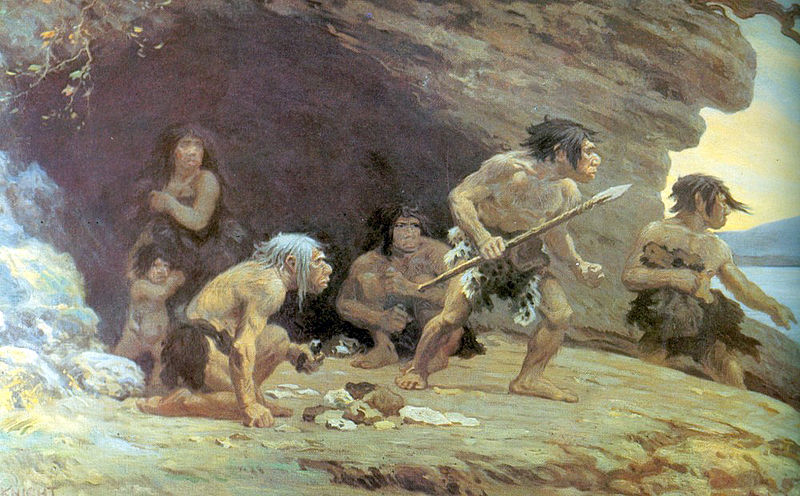
they, and not humans, created the first cave paintings. Now, with an analysis of prehistoric animal remains from Germany, we can deduce that Neanderthals were capable of sophisticated and collaborative hunting strategies. [caption id="attachment_8773" align="aligncenter" width="500"] Credit: Le Moustier Neanderthals by Charles R Knight, 1920[/caption]

120,000-year-old secrets

Cut marks on the bones of two deer from 120,000 years ago provide the earliest evidence that weapons were used to stalk and kill prey. The findings, published in Nature Ecology and Evolution, used microscopic imaging and ballistics experiments to confirm that at least one of the blows was delivered at low velocity with a wooden spear. Sabine Gaudzinski-Windheuser, a researcher at Johannes Gutenberg-University Mainz, Germany has commented: “This suggests that Neanderthals approached animals very closely and thrust, not threw, their spears at the animals, most likely from an underhand angle.” “Such a confrontational way of hunting required careful planning and concealment, and close cooperation between individual hunters,” she continues.

A brief history of the Neanderthals

Neanderthals occupied areas in Europe from around 300,000 years ago. They died out 30,000 years ago, when they were overtaken by humans. For a long time, it was considered that Neanderthals simply lacked the intelligence to compete with humans, but evidence such as this new study has turned that argument on its head. For instance, it was thought that Neanderthals lacked symbolic culture; but as we now know, they were creating cave paintings 20,000 years before humans arrived in Europe. Similarly, they buried their dead in a ritual fashion, proving a symbolic culture in itself. New Historian has previously published a study on the differences between the Neanderthals and humans, which you can read here. [caption id="attachment_8774" align="aligncenter" width="500"] A model an adult Neanderthal male head and shoulders on display in the Hall of Human Origins in the Smithsonian Museum of Natural History in Washington, D.C. Credit: Tim Evanson[/caption]

Neanderthals: cleverer than we might have thought

Hominins, which include both early human species as well as our own, are likely to have hunted with weapons more than 500,000 years ago. 300-400,000 year old wooden staves have been found in England and Germany, and are the oldest known spear-type implements that could have been used to kill prey. However, with no physical evidence that they were indeed used for hunting, scientists have speculated. This new finding removes any doubt: these were hunting tools. “As far as spear use is concerned, We now finally have the ‘crime scene’ fitting to the proverbial ‘smoking gun’,” Gaudzinski-Windheuser says. Excavations from nearby sites have provided us with tens of thousands of bones from huntable animals such as deer, horses and bovids. Thousands of stone artefacts also found nearby help to paint the picture of a flourishing Neanderthal forest lifestyle between 135,000 and 115,000 years ago. Despite having been discovered around 20 years ago, these deer bones have now been examined with new technologies. They have allowed us to tell which injuries were fatal, the kind of weapon used and what kind of distance there was between the hunter and his prey. Annemieke Milks, a researcher at the Institute of Archaeology at University College London writes in Nature Ecology and Evolution: “the ballistics work is experimental archaeology at its best”.]]>

Categories
Breaking News

Elongated skulls reveal female-biased immigration to Early Medieval Germany

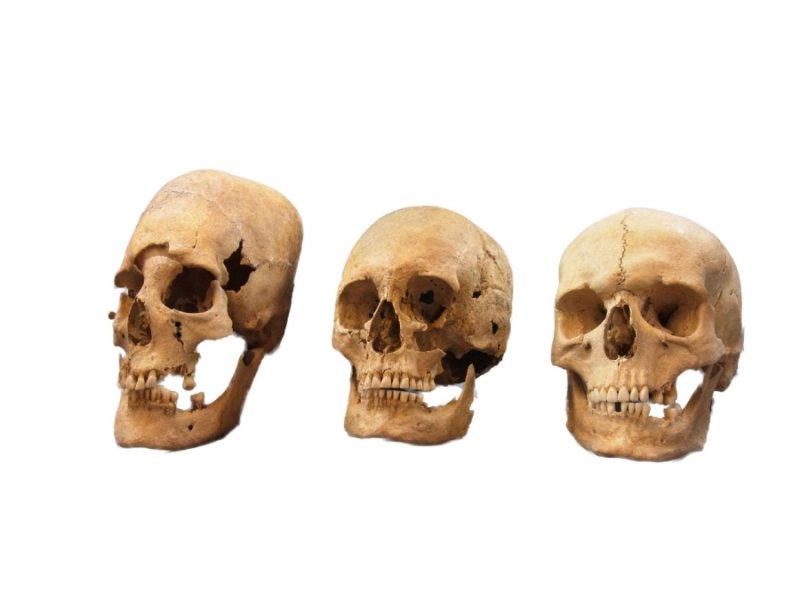
These are strong, intermediate, and non-deformed skulls (from left to right) from the Early Medieval sites Altenerding and Straubing in Bavaria, Germany.
Credit: State Collection for Anthropology and Palaeoanatomy Munich[/caption] In recent years, an international and interdisciplinary team of anthropologists and population geneticists has congregated to explore this transition. The team has now published a palaeogenomic study, which investigates early medieval migration in southern Germany and the peculiar phenomenon of artificial skull deformation. They performed the first genomic analysis of populations that occupied German Bavaria around 500 AD; shedding light on the complex population dynamics of the Völkerwanderung, or Migration Period. Dr Michaela Harbeck from the Bavarian State Collection for Anthropology and Palaeoanatomy (SAPM) teamed up with population geneticist Professor Joachim Burger of Johannes Gutenberg University Mainz (JGU). Working with them were Dr. Krishna Veeramah from US Stony Brook University and colleagues from the UK and Switzerland.  

A curious genetic profile

The study, which analysed 40 different inhabitants, revealed that most ancient Bavarians had a genetic similarity to Central and Northern Europeans. But one group had a particularly diverse genetic profile: the female skulls had been artificially deformed into a tower shape. [caption id="attachment_8728" align="aligncenter" width="500"] Credit: State Collection for Anthropology and Palaeoanatomy Munich. Artificially deformed female skull from Altenerding, an Early Medieval site in Bavaria[/caption] “Parents wrapped their children’s heads with bandages for a few months after birth in order to achieve the desired head shape,” says Dr. Michaela Harbeck. “It is difficult to answer why they carried out this elaborate process, but it was probably used to emulate a certain ideal of beauty or perhaps to indicate a group affiliation.”  

Elongated skulls: A long history

Elongated skulls are found in civilisations across history. The earliest written record refers to the Macrocephali, or Long-heads, and dates to 400 BC; though studies have determined its prevalence in cultures for many thousands of years earlier. Dr. Krishna Veeramah, first author of the study, says: “The presence of these elongated skulls in parts of eastern Europe is most commonly attributed to the nomadic Huns, led by Atilla, during their invasion of the Roman Empire from Asia, but the appearance of these skulls in western Europe is more mysterious, as this was very much the fringes of their territory.”  

Migrating from east to west

DNA analyses of these skulls revealed that the women migrated to early Bavarian settlements from areas across eastern Europe. As well as their deformed skulls, the women tended to have darker colouring in comparison to the other Bavarians they were living with, who generally had fair hair and blue eyes. “Although there is evidence that there was some genetic contribution from Central Asia, the genomic analysis points to the fact that women with deformed skulls in this region are genetically most similar to today’s south eastern Europeans, and that the Huns likely played only a minor role in directly transmitting this tradition to Bavaria,” Burger says. Those with deformed skulls were not the only women migrating to Bavaria. Two women closely resembling modern Greeks and Turks can also be identified. “Most of these foreign women are found with grave goods that look unremarkable compared to the rest of the buried population,” adds Veeramah. “These cases of female migration would have been invisible from the material culture alone.”  

Strategic alliances during political upheaval

“This is an example of long-range female mobility that bridges larger cultural spaces and may have been a way for distant groups to form new strategic alliances during this time of great political upheaval in the absence of a previous Roman hegemony,” notes Burger. “We must expect that many more unprecedented population-dynamic phenomena have contributed to the genesis of our early cities and villages.” “Interestingly, though our results are preliminary, there are no major traces of genetic ancestry in these early inhabitants of Bavaria that might have come from soldiers of the Roman army,” says Harbeck. “We need to keep investigating on an even broader basis how much Celtic and Roman ancestry is in these early Bavarians.”]]>

Categories
Editorial

Nazi Germany and its curious treatment of lesbians

Memorial “to the gay and lesbian victims of National Socialism” in Cologne: The inscription on the left side of the monument (to the viewer’s right from the angle depicted) reads “Totgeschlagen – Totgeschwiegen” (“Struck Dead – Hushed Up”). Credit: Jörg Lenk via Wikimedia Commons[/caption]

Female oppression as a cause for the tolerance of lesbians?

Some have argued that lesbians weren’t as harshly persecuted as gay men, simply because female sexuality wasn’t taken seriously. Others have said that the regime’s policy of pronatalism, which encouraged reproduction and the nuclear family, didn’t face as much of a threat from lesbians as it did gay men. Further still, the Nazis believed women were inferior to men and thus dependent on them. Under this theory, a lesbian would still rely on the men in her community, and is hardly a threat to male dominance. The Nazis also dismissed lesbianism as they believed lesbians could still occupy a German woman’s primary role: to mother as many German babies as possible. Sexuality, they believed, did not interfere with a woman serving the Nazi state as a wife and mother. There is another prominent narrative, which has gained attention over the past year. Samuel Clowes Huneke from Stanford University posits that Nazi officials didn’t see lesbians as a strong political threat, due to the fact that women were barred from politics and public life. “In light of both the fearsome persecution of homosexual men and scholarship that places it in the context of National Socialist pronatalism, the regime’s seeming lack of interest in female homosexuality is startling, for in other respects the government placed considerable burdens on women,” says Huneke.  

Four couples betrayed

Specialising in homosexuality in the Third Reich, Huneke has examined 4 cases of investigation by the Kriminalpolizei, or the German criminal police. Discovered at the Landesarchiv Berlin in 2015, the files shed light on the investigation of 8 women. They show us signed statements from witnesses and the women themselves. In all 4 of the cases, the women were accused by a person they knew and trusted: whether that was a neighbour, co-worker or even a parent. “That these eight women were denounced to the Berlin criminal police in the early 1940s is striking on its own, given the archival silence when it comes to female homosexuality,” Huneke says. Astonishingly, there is no evidence that any of the 8 women were punished as a result. All 4 cases tell us that the women could not be prosecuted for same-sex relations under the criminal code, in the way that gay men would have been. Huneke was fascinated: “To scholars accustomed to seeing in the Nazi state a jungle of overlapping jurisdictions, personal initiative and law based solely on the Führer’s wish, this is a curious portrait of the Nazi justice system, one marked by an unexpected concern for the strict interpretation of statute.” One case stands out as particularly peculiar. Margot Liu née Holzmann was a Jewish lesbian living in Berlin. In 1941, she married a male Chinese waiter and received Chinese citizenship, which protected her from being deported to a concentration camp. However, when her husband discovered she was in a lesbian relationship, he filed for divorce and reported her to the police. Curiously, the police did not intervene. Moreover, they insisted, in multiple documents, that she was protected because of her Chinese citizenship – despite being a German Jewish lesbian. At this point, it is worth noting that in all 4 of these cases, including Margot Holzmann, we are looking at the judgment of one single officer. That particular officer may have just been less inclined to pursue homophobic policy than other officers. However, the rules were very closely followed, which has led some historians to consider this to be an indication of relative tolerance for lesbians.  

“Open – but not enviable – lives”

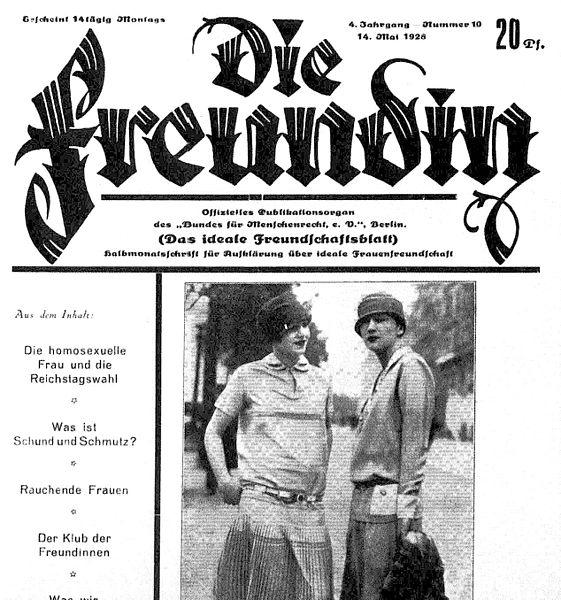
The files show that the 8 women had led relatively open – though certainly not enviable – lives as lesbians before being denounced to the authorities. Ordinary German citizens would have been aware of their female friends, co-workers and acquaintances in same-sex relationships, but were less likely to report them to the police. A patronising understanding of female sexuality comes into play: “Gender is perhaps why lesbians weren’t persecuted in the same ways… [but] these files throw into sharper relief the duplicity of tolerance that has characterised societies’ views of female sexuality for centuries,” says Huneke. By no means was life as a lesbian in Nazi Germany easy, though. In 1928, for example, the police banned popular lesbian journals such as Die Freundin (Girlfriend) based on the Protection of Youth from Obscene Publications Act.   [caption id="attachment_8709" align="aligncenter" width="561"] Credit: Bund für Menschenrecht/Wikimedia Commons[/caption] Many conservatives are documented as demanding the enactment of criminal statutes against lesbian sexual acts. Pamphlets with messages against homosexuals, feminists, Republicans and Jews were everywhere, usually bringing with them the ideas of a conspiracy from marginalised peoples to destroy Germany. These pamphlets denounced the movement for women’s rights, saying that feminism was nothing more than a seduction into lesbianism. Culturally, it seems there was a war against lesbians; and yet there appears to be at least some level of tolerance when it came to prosecution.  

Tolerance and the nature of dictatorships

The case of lesbian life in Nazi Germany is considered to demonstrate that dictatorships often rely not purely on overt oppression; but on limited tolerance of certain groups. Huneke calls it the ‘divide-and-conquer approach’. “One of the most important takeaways from this research, to my mind, is to break the popular idea that authoritarian governments maintain their power only through repression.” Moreover, Huneke says: “the experiences of lesbians in Nazi Germany can help shed light not only on how gender operates in multivalent ways, but also the complex negotiation of both repression and toleration on which authoritarian regimes depend.”]]>

Categories
Editorial

The History of Advent: Romans, Calendars and President Eisenhower

Categories
Breaking News

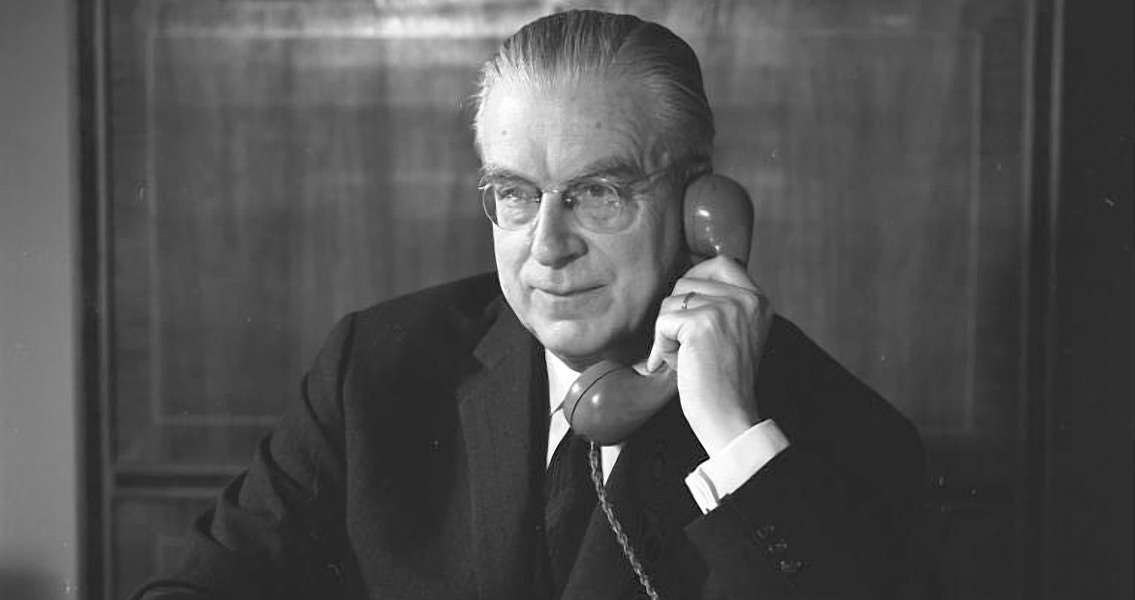
Nazi Networks in Post War Germany Under Investigation

Adolf Eichmann, were eventually captured, while others managed to evade justice for the rest of their lives. While many who’d worked in the higher echelons of the Nazi regime were either killed in the Second World War or prosecuted at the Nuremberg Trials, lower level party members or soldiers were often allowed to continue unpunished, forging careers in Germany’s post war society. ]]>

Categories
Breaking News

Paleolithic Rope-Making Tool Discovered in Germany

Categories
Breaking News

Neanderthals in Germany Went Extinct Right After Population Peak

Homo neanderthalensis was the dominant human species in Europe, populating the whole of the continent. Although archaeologists have discovered numerous settlements in Germany, they have also uncovered evidence which shows that Neanderthal populations there came to an unexplained, sudden end. Based on the analysis of several archaeological sites, Jürgen Richter (Collaborative Research Center 806 — Our Way to Europe), has concluded that shortly after Neanderthals reached their peak population in Germany, their numbers rapidly declined, leading to their extinction. Neanderthals lived during the Middle Paleolithic, the time between 200,000 and 40,000 years ago. Richter’s research suggests that over 50 percent of the identified Neanderthal settlements in Germany specifically date back to between 60,000 and 43,000 years ago. Therefore, the peak Neanderthal population lies within this period. Neanderthals were an ancient human species, part of the genus Homo, that became extinct approximately 40,000 years ago. With 99.5% of the same DNA, they’re closely related to modern humans. Bone and stone tools left by Neanderthals have been found throughout Eurasia, in western to central Europe, and northern and western Asia. Their species is generally classified as Homo neanderthalensis, believed to have separated from Homo sapiens around 600,000 years ago. Some experts however, believe Neanderthals were a subspecies of Homo sapiens and therefore should be classified as Homo sapiens neanderthalensis. The number of Neanderthal sites, as well as the analysis of artifacts discovered in them, indicate the Neanderthal population in Germany were subjected to extreme demographic changes. For example, during the Middle Paleolithic there seem to have been numerous migrations, increases and declines in population, even extinctions in certain locations followed by a return of settlers. During the time period between 110,000 and 70,000 years ago there were only four identified Neanderthal settlement sites in Germany, however, during the following period between 70,000 and 43,000 years ago there were ninety-four. Less than 1,000 years later, after this peak in population, there was a rapid decrease and the Neanderthals disappeared. Why the species went extinct is still unknown. It may have been the result of decreased genetic diversity; another possibility is competition for resources with the growing number of Homo sapiens. Around 55,000 years ago, the climate began to fluctuate back and forth from extremely cold to milder cold conditions in the span of a few decades. Neanderthals had bodies that were well suited for surviving in cold climates, with stocky limbs and barrel chests that stored body heat much better than Cro-Magnons (the first early modern humans). However, these rapid climate fluctuations also caused ecological changes that the Neanderthals could not easily adapt to; familiar animals and plants would have been replaced by completely new ones within the space of a lifetime, and the Neanderthals’ ambush hunting technique wouldn’t have worked as trees replaced the grasslands. Neanderthals eventually went extinct in Europe between 41,000 and 39,000 years ago, coinciding with a period of extreme cold. This article has been published in the Quaternary International Journal. Image courtesy of Wikimedia Commons user Claire H. ]]>

Categories
Breaking News

Early Humans Used Spears Against Saber-tooth Cats

Categories
News

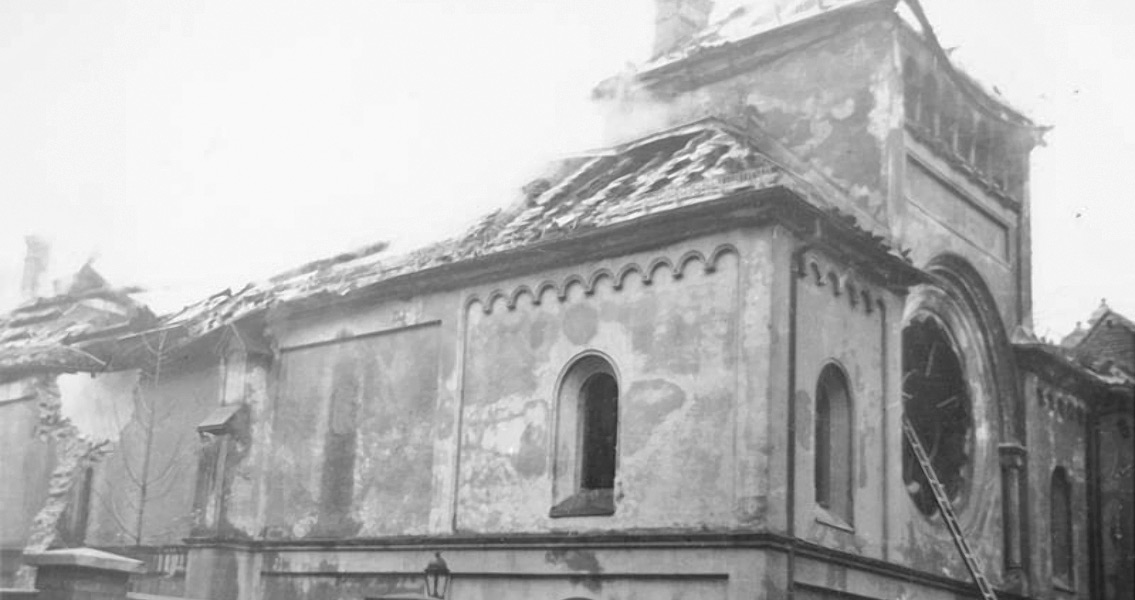
Jews Massacred On Kristallnacht