Categories
Editorial

Oswald Mosley – From Tory MP to Anti-Semitic Fascist

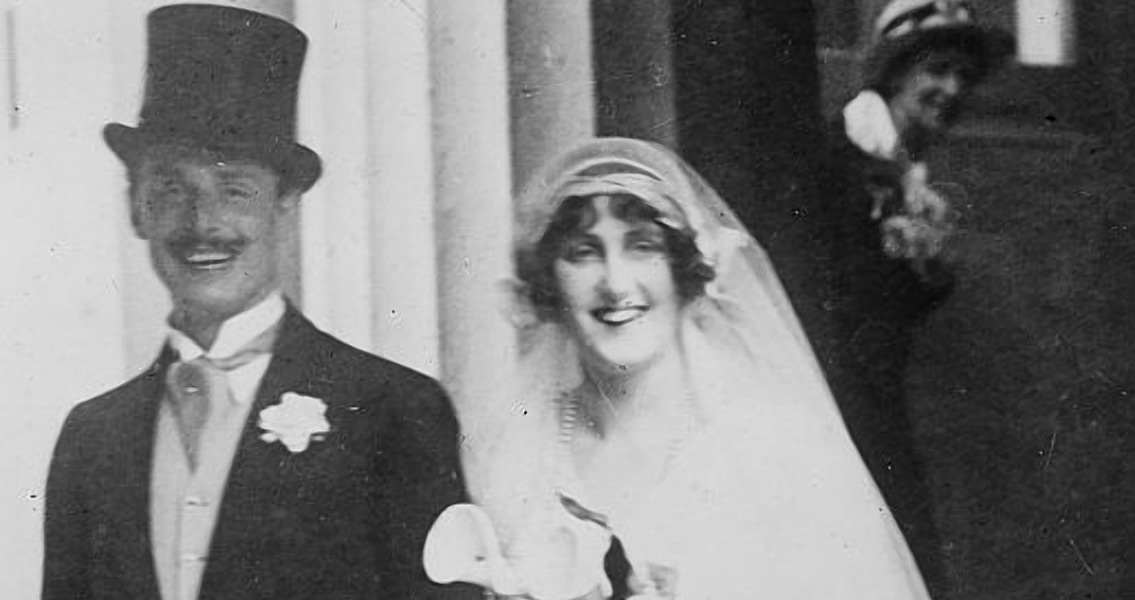
Who Was Oswald Mosley? “He struck me as being an earnest, rather humourless man; a bit of a bore, but in no way abhorrent; just rather dreary, like a Jehovah’s Witness, or one of those figures one meets in out-of-the-way places who produce a cyclostyled plan for world government which they have sent to Adlai Stevenson, Mrs Roosevelt and the late Duchess of Atholl.” Said Malcolm Muggeridge about Oswald Mosley in 1962, shortly after interviewing him for the BBC. Muggeridge’s description of the former leader of the British Union of Fascists makes him seem timid and harmless. Maybe by 1962 that was the case, but in the years leading up to the Second World War Oswald Mosley was a dangerous and influential voice in British politics. In 1932 Mosley united Britain’s fascist movements into the British Union of Fascists. The BUF gained widespread attention: MI5 claimed it had 50,000 members, including several prominent figures in society, and it won public support from the Daily Mail newspaper. The BUF was obsessively nationalistic to the point of authoritarianism. It was explicitly anti-Semitic and anti-Communist, while publicly supporting the policies and governments of Benito Mussolini and Adolf Hitler. The party, its members distinguished by their black shirt uniforms, was frequently involved in violent clashes. The most famous example came in 1936, when Blackshirts attempted to march through East London, an area with a high Jewish and Irish immigrant population. The violent confrontation that ensued has come to be known as the Battle of Cable Street. Mosley’s connections to the worst proponents of fascism was deep. His wedding to Diana Guiness took place in the home of Nazi propaganda minister Joseph Goebbels , and boasted Adolf Hitler as one of its few guests. Oswald Mosley and the Tory and Labour Parties Oswald Mosley was born in London in 1896. He served on the front lines of the First World War, as both a pilot and then as a soldier in the trenches on the Western Front. From 1916, when he was deemed unfit for front line duty due to an ankle injury, he took up a desk job for the rest of the war. In 1918 he became the youngest MP in the House of Commons, winning the Harrow seat for the Conservative Party. In 1924 he switched allegiances, joining the Labour Party. By 1927 he had become one of the leading figures in the party, viewed as a charismatic individual whose ideal of European Socialism meant many saw him as a future Labour prime minister. Mosley was influenced by the economic ideas of John Maynard Keynes, in particular government investing heavily to boost employment and secure the economy. In 1930 he proposed a radical programme to deal with Britain’s unemployment problem. Among other things it advocated a complete overhaul of the systems of government, with public funds being used to bolster the industrial sector. The proposals, which included the provision of old age pensions from the age of sixty, met massive resistance in the Labour government and Mosley’s radical ideas were ultimately blocked. Infuriated, he abandoned the Labour Party and founded the New Party in 1931. That year’s general election proved a disaster, with none of the New Party candidates being elected. Mosley Turns to Fascism and Antisemitism In 1932 Mosley met Benito Mussolini, who had been in power in Italy since the 1920s. Mosley was impressed by the Italian dictator’s government. Upon returning to England he dissolved the New Party, and replaced it with the British Union of Fascists. The new party quickly gained support, taking a fierce stand against Communism, and by October 1933 had its first elected official when Charles Bentinck Budd won a seat on Worthing Town Council. Soon however, the unsettling reality of the BUF’s ideology became apparent. BUF deputy leader William Joyce pledged to a public meeting in 1934 to rid British industry of foreigners “be they Hebrew or any other form of alien… Reclaim what is your own in the fullness of Fascist victory.” The anti-Semitic sentiment also saw the Blackshirts begin staging provocative marches in primarily Jewish populated areas, fostering tensions and igniting riots on British streets. Second World War and Mosley’s Arrest Throughout the 1930s the BUF remained a potent force in British politics, until the outbreak of World War Two. The declaration of war with Germany increasingly turned public opinion against the BUF, Mosley’s support of Hitler proving particularly alienating. On 23rd May, Mosley was arrested as part of new legislation allowing the Home Secretary to imprison without trial anyone believed to be a danger to national security. Soon other prominent BUF members were incarcerated, its publications banned, and the organisation quietly dissolved by 30th May 1940. ]]>
Categories
Editorial

Fascism USA – Priests, Nazis and the New Deal

How do you define fascism? Like any political ideology, it is difficult to define fascism convincingly; debates over definition clouded by historical examples serving as inescapable archetypes. The Oxford Dictionary defines fascism as: “a political philosophy, movement, or regime (as that of the Fascisti) that exalts nation and often race above the individual and that stands for a centralized autocratic government headed by a dictatorial leader, severe economic and social regimentation, and forcible suppression of opposition.” Taking this as a basis, elements of fascism have been seen throughout US history, and in particular in the 1930s. Fascism Versus the New Deal Fascism took hold in Europe in the wake of economic calamity. In the USA, the response to the Great Depression was the election of Franklin D. Roosevelt to the presidency and the implementation of the New Deal – a program of government investment, extension of federal authority and welfare spending designed to stabilise the US economy. Roosevelt was elected president four times, but his liberal politics were far from universally popular. Like Europe, there were those in the US who felt fascism was the only way forward. Father Charles Coughlin Eleven days after the Kristallnacht massacre of Jews in Germany, Michigan based Catholic priest Father Charles Coughlin took to the airwaves in defence of the Nazis’ actions. A swift backlash ensued against Coughlin, culminating in New York radio station WMCA cancelling his show. Nevertheless, Coughlin continued broadcasting from his Michigan church. Father Coughlin associated Judaism with Russian Communism. To him, the actions of the Nazis, including their blatant antisemitism, were a means to fight off Communists. Speaking to a reporter in the late 1930s about the path of politics in the USA, Coughlin said: “I take the road of fascism”. A few years earlier the charismatic priest had formed his own political party, and even made a run for the White House. In 1933 the radio stations carrying Coughlin’s broadcasts had a potential audience of some 40 million people. Rallying against internationalism, bankers and Jews, Coughlin started a new political organisation in 1934, the National Union for Social Justice. Two years later, the party had a candidate in the presidential election. At a rally in Rhode Island, Coughlin declared, “I shall have the courage to stand up and advocate the use of bullets”, promising “more bullet holes in the White House than you could count with an adding machine.” Coughlin’s candidate, William Lemke, suffered an embarrassing defeat by winning just nine hundred thousand votes. Combined with the backlash against his post Kristallnacht broadcast, Coughlin was increasingly pushed into retiring from public life. The German American Bund Father Coughlin wasn’t alone in backing Hitler and the Nazis. Supporters of the German American Bund remained loyal to the Nazis throughout the Great Depression, and into the 1940s. The German American Bund was essentially an organisation of ethnic Germans living in the USA. Its support of Nazism stretched to antisemitism, anti-communism, and an insistence that the USA should remain neutral in the Second World War. German American Bund leader Fritz Kuhn was regarded as the leading antisemite in the USA. His organisation carried out a range of activities around the USA, publishing books and magazines, organising rallies, even maintaining youth organisations similar to the Hitler Youth in Germany. Kuhn was ultimately imprisoned for embezzling funds, while other leaders of the group were arrested as the USA headed towards war with Germany. With support waning, the organisation was eventually banned after the USA entered the fray of World War Two. Father Charles Coughlin and the German American Bund are two American Fascist movements that existed in the run up to the Second World War. There were others, such as the Black Legion; a Ku Klux Klan splinter group which indulged in acts of terrorism and vigilantism, but what makes the German American Bund and Father Coughlin so shocking is the level of public respectability their representatives and their ideas seemed to win. Fascist governments never took hold in the USA in the twentieth century like they did in Spain, Italy, Germany and elsewhere in Europe. However, that doesn’t mean that fascism hasn’t left its mark on US history. ]]>

Categories
Editorial

Astrology, Antisemitism and Other Answers for The Plague

Compendium de Epidemia per Collegium Facilitatus Medicorum Parisius. Better knowledge about disease and bacteria has improved our understanding of the Black Death, and how it was able to spread so rapidly and devastatingly across Europe. Scientists have shown that the disease was spread by a bacillus called Yersina pestis. Possibly transferable between people pneumonically through the air, as well as through the bites of infected fleas, the Plague was spread through trade routes from Asia into Europe, and across the whole continent via major trade hubs such as Rome. Yet even now, some controversy and debate surrounds the disease, in particular regarding how it seemed to keep returning after decades of dormancy. ]]>