Categories
Breaking News

History News of the Week – Minoan 'Masterpiece' Unearthed

Discovery of Minoan Sealstone Could ‘Rewrite’ History of Ancient Greek Art Researchers working at the tomb of 3,500 year old Bronze Age warrior in the southwest of Greece have unearthed an ‘intricately carved’ sealstone which University of Cincinnati (UC) archaeologists are heralding as one of the finest works of prehistoric Greek art ever discovered. Depicting an intense hand-to-hand battle, the artefact has been dubbed the ‘Pylos Combat Agate’. “Looking at the image for the first time was a very moving experience, and it still is,” said Shari Stocker, a senior research associate in UC’s Department of Classics “It’s brought some people to tears.” “What is fascinating is that the representation of the human body is at a level of detail and musculature that one doesn’t find again until the classical period of Greek art 1,000 years later,” explained Jack Davis, the university’s Carl W. Blegen professor of Greek archaeology and department head, in a statement from UC. Davis and Stocker have been leading a dig at the tomb of the Bronze Age warrior, which was first discovered in 2015. The tomb’s occupant has been dubbed the ‘Griffin Warrior’, and his final resting place has already yielded a wealth of fascinating artefacts, including four gold signet rings. The size of the hand carved stone is perhaps the most remarkable thing about it, measuring just 3.6cm in length. Many of its details can only be viewed with a powerful camera lens and photomicroscopy. “Some of the details on this are only a half-millimetre big,” said Davis. “They’re incomprehensibly small.” The dramatic image of a warrior plunging a sword into a shielded enemy’s neck is reminiscent of the kinds of scenes described in Homer’s Iliad. Although the researchers can’t say if the image reflects a Homeric epic, they’re confident it would be from a legend familiar to Minoans and Mycenaeans. “It would have been a valuable and prized possession, which certainly is representative of the Griffin Warrior’s role in Mycenaean society,” Stocker explained. “I think he would have certainly identified himself with the hero depicted on the seal.” The sheer skill that would have been needed to create the sealstone is causing a re-evaluation of the history and development of Ancient Greek art. “It seems that the Minoans were producing art of the sort that no one ever imagined they were capable of producing,” explained Davis. “It shows that their ability and interest in representational art, particularly movement and human anatomy, is beyond what it was imagined to be. Combined with the stylised features, that itself is just extraordinary.” “This seal should be included in all forthcoming art history texts, and will change the way that prehistoric art is viewed,” said Stocker. Date of Biblical Eclipse Pinpointed Researchers have determined the date of an ancient eclipse which is referred to in the Bible. They believe it could be the oldest date of a solar eclipse yet recorded. The researchers used a combination of the Bible and Ancient Egyptian texts to pinpoint the date of the eclipse to 30th October 1207 BCE. From this information they’ve been able to refine the dates of Egypt’s ancient pharaohs, particularly the reign of Ramesses the Great. Biblical scholars have long been perplexed by the book of Joshua, which describes Joshua leading the people of Israel in Canaan, a region which covers modern day Israel and Palestine. According to the Biblical text, Joshua prayed “Sun, stand still at Gibeon, and Moon, in the Valley of Aijalon. And the Sun stood still, and the Moon stopped, until the nation took vengeance on their enemies.” “If these words are describing a real observation, then a major astronomical event was taking place – the question for us to figure out is what the text actually means,” said paper co-author Professor Sir Colin Humphreys from the University of Cambridge’s Department of Materials Science & Metallurgy. “Modern English translations, which follow the King James translation of 1611, usually interpret this text to mean that the sun and moon stopped moving,” said Humphreys, who is also a Fellow of Selwyn College. “But going back to the original Hebrew text, we determined that an alternative meaning could be that the sun and moon just stopped doing what they normally do: they stopped shining. In this context, the Hebrew words could be referring to a solar eclipse, when the moon passes between the earth and the sun, and the sun appears to stop shining. This interpretation is supported by the fact that the Hebrew word translated ‘stand still’ has the same root as a Babylonian word used in ancient astronomical texts to describe eclipses.” Evidence that the Israelites were in Canaan between 1500 and 1050 BCE can be found in the Merneptah Stele, an Egyptian text dating from the reign of the Pharaoh Merneptah, son of Ramesses the Great. The large granite block, held in the Egyptian Museum in Cairo, says that it was carved in the fifth year of Merneptah’s reign and mentions a campaign in Canaan in which he defeated the people of Israel. Using an innovative eclipse code, one which considers variations in the planet’s rotation, the team determined that the only annular eclipse visible from Canaan between 1500 and 1050 BCE was on 30 October 1207 BCE, in the afternoon. If the team’s calculations, which have been published in the Journal of Astronomy and Geophysics, are correct, then it is possible to date the reign of both Ramesses and his son to within a year. “Solar eclipses are often used as a fixed point to date events in the ancient world, Humphreys said. If Humphreys et al’s results of accepted, then the reign of Merneptah began in 1210 or 1209 BCE. As it is known from Egyptian texts how long he and his father reigned for, it would mean that Ramesses the Great reigned from 1276-1210 BCE, with a precision of plus or minus one year, the most accurate dates available. Hitler Only Joined the Nazis After Being Rejected by Another Far-Right Group Adolf Hitler only joined the Nazi Party after being rejected by another far right group, a historian at Aberdeen University is claiming. According to the Independent, historian Dr Thomas Weber unearthed an unpublished document which reveals that the German Socialist party told Hitler in 1919 they did not want him in their party nor to write for their newspaper. Weber argues that this rejection by the German Socialist Party should be seen as a crucial historic event, a turning point which ultimately led to Hitler joining the Nazi party and becoming its leader. Weber suggests that Hitler would have found it much more difficult to rise to the leadership of the much larger German Socialist Party. “I can only speculate why they did not let him join but one would imagine it had something to do with the fact Hitler was opinionated and they did not want to have someone there who was telling them what to do,” he told the Independent. He added: “If he had been accepted into the German Socialist party he would have almost certainly remained on the sidelines. Hitler managed to push over the established leadership of Nazi party but that would have been very unlikely to have happened if he had joined the German Socialist party.” The document Weber has discovered is from the testimony of Hans Georg Grassinger, the founding chairman of the German Socialist party, reports the Guardian. It describes how, in 1919, Hitler approached Grassinger to join the Party. Hitler also asked Grassinger to borrow money. Hitler, who was 30 at the time, was informed that the party did not him in their ranks. Featured image: The tiny sealstone depicting warriors in battle measures just 1.4 inches across but contains incredible detail. Credit: University of Cincinnati ]]>

Categories
Editorial

Oswald Mosley – From Tory MP to Anti-Semitic Fascist

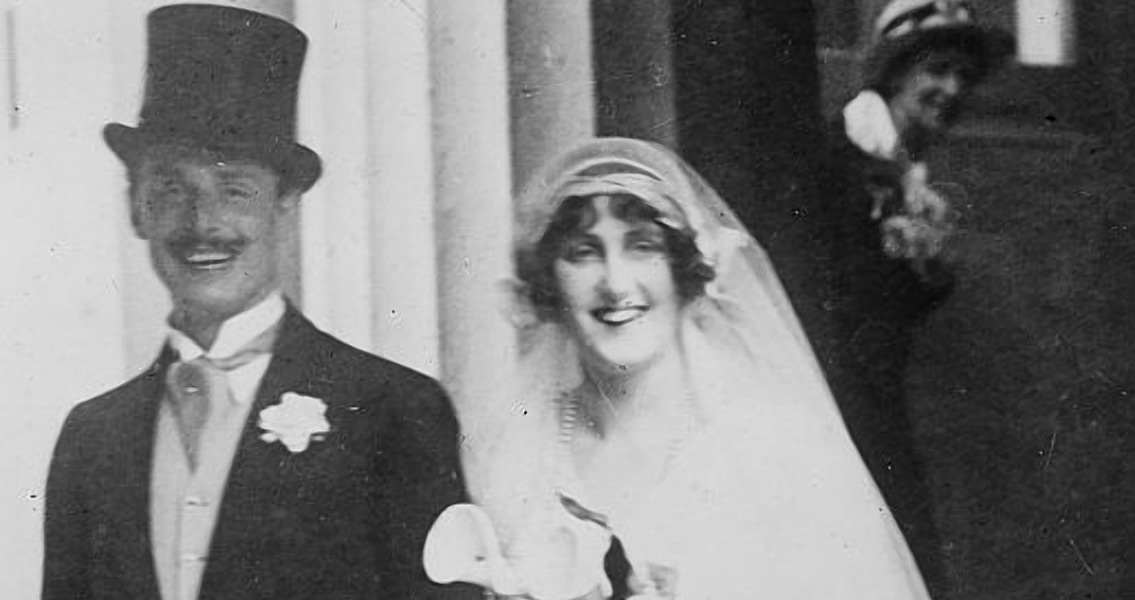
Who Was Oswald Mosley? “He struck me as being an earnest, rather humourless man; a bit of a bore, but in no way abhorrent; just rather dreary, like a Jehovah’s Witness, or one of those figures one meets in out-of-the-way places who produce a cyclostyled plan for world government which they have sent to Adlai Stevenson, Mrs Roosevelt and the late Duchess of Atholl.” Said Malcolm Muggeridge about Oswald Mosley in 1962, shortly after interviewing him for the BBC. Muggeridge’s description of the former leader of the British Union of Fascists makes him seem timid and harmless. Maybe by 1962 that was the case, but in the years leading up to the Second World War Oswald Mosley was a dangerous and influential voice in British politics. In 1932 Mosley united Britain’s fascist movements into the British Union of Fascists. The BUF gained widespread attention: MI5 claimed it had 50,000 members, including several prominent figures in society, and it won public support from the Daily Mail newspaper. The BUF was obsessively nationalistic to the point of authoritarianism. It was explicitly anti-Semitic and anti-Communist, while publicly supporting the policies and governments of Benito Mussolini and Adolf Hitler. The party, its members distinguished by their black shirt uniforms, was frequently involved in violent clashes. The most famous example came in 1936, when Blackshirts attempted to march through East London, an area with a high Jewish and Irish immigrant population. The violent confrontation that ensued has come to be known as the Battle of Cable Street. Mosley’s connections to the worst proponents of fascism was deep. His wedding to Diana Guiness took place in the home of Nazi propaganda minister Joseph Goebbels , and boasted Adolf Hitler as one of its few guests. Oswald Mosley and the Tory and Labour Parties Oswald Mosley was born in London in 1896. He served on the front lines of the First World War, as both a pilot and then as a soldier in the trenches on the Western Front. From 1916, when he was deemed unfit for front line duty due to an ankle injury, he took up a desk job for the rest of the war. In 1918 he became the youngest MP in the House of Commons, winning the Harrow seat for the Conservative Party. In 1924 he switched allegiances, joining the Labour Party. By 1927 he had become one of the leading figures in the party, viewed as a charismatic individual whose ideal of European Socialism meant many saw him as a future Labour prime minister. Mosley was influenced by the economic ideas of John Maynard Keynes, in particular government investing heavily to boost employment and secure the economy. In 1930 he proposed a radical programme to deal with Britain’s unemployment problem. Among other things it advocated a complete overhaul of the systems of government, with public funds being used to bolster the industrial sector. The proposals, which included the provision of old age pensions from the age of sixty, met massive resistance in the Labour government and Mosley’s radical ideas were ultimately blocked. Infuriated, he abandoned the Labour Party and founded the New Party in 1931. That year’s general election proved a disaster, with none of the New Party candidates being elected. Mosley Turns to Fascism and Antisemitism In 1932 Mosley met Benito Mussolini, who had been in power in Italy since the 1920s. Mosley was impressed by the Italian dictator’s government. Upon returning to England he dissolved the New Party, and replaced it with the British Union of Fascists. The new party quickly gained support, taking a fierce stand against Communism, and by October 1933 had its first elected official when Charles Bentinck Budd won a seat on Worthing Town Council. Soon however, the unsettling reality of the BUF’s ideology became apparent. BUF deputy leader William Joyce pledged to a public meeting in 1934 to rid British industry of foreigners “be they Hebrew or any other form of alien… Reclaim what is your own in the fullness of Fascist victory.” The anti-Semitic sentiment also saw the Blackshirts begin staging provocative marches in primarily Jewish populated areas, fostering tensions and igniting riots on British streets. Second World War and Mosley’s Arrest Throughout the 1930s the BUF remained a potent force in British politics, until the outbreak of World War Two. The declaration of war with Germany increasingly turned public opinion against the BUF, Mosley’s support of Hitler proving particularly alienating. On 23rd May, Mosley was arrested as part of new legislation allowing the Home Secretary to imprison without trial anyone believed to be a danger to national security. Soon other prominent BUF members were incarcerated, its publications banned, and the organisation quietly dissolved by 30th May 1940. ]]>

Categories
Breaking News

Nazi Networks in Post War Germany Under Investigation

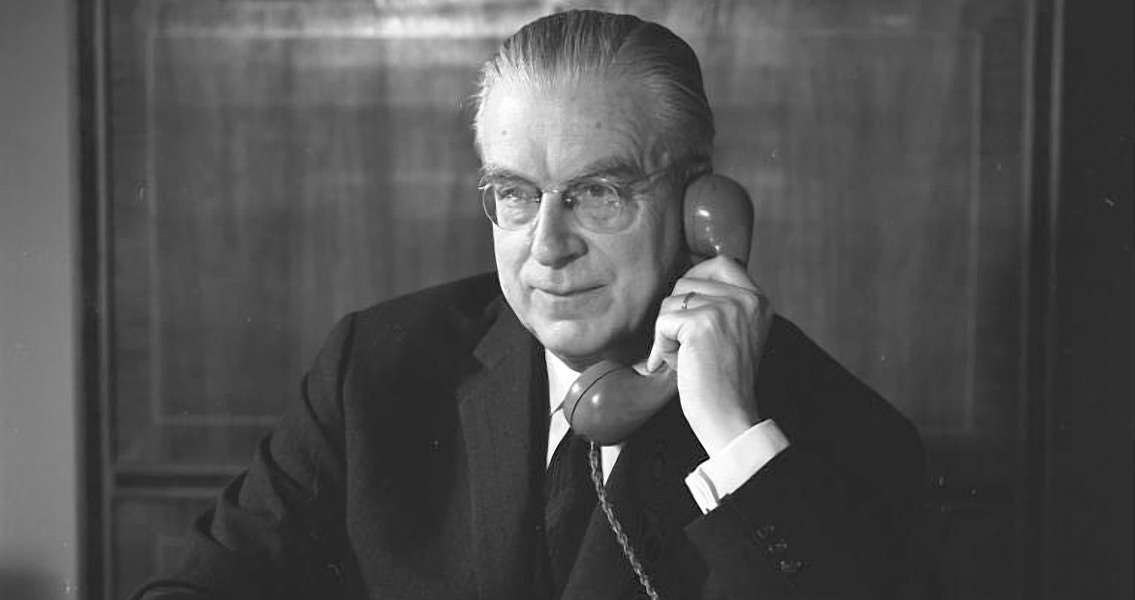
Adolf Eichmann, were eventually captured, while others managed to evade justice for the rest of their lives. While many who’d worked in the higher echelons of the Nazi regime were either killed in the Second World War or prosecuted at the Nuremberg Trials, lower level party members or soldiers were often allowed to continue unpunished, forging careers in Germany’s post war society. ]]>

Categories
News

Revealed: The Nazis' 'Who's Who' Contact List for LA

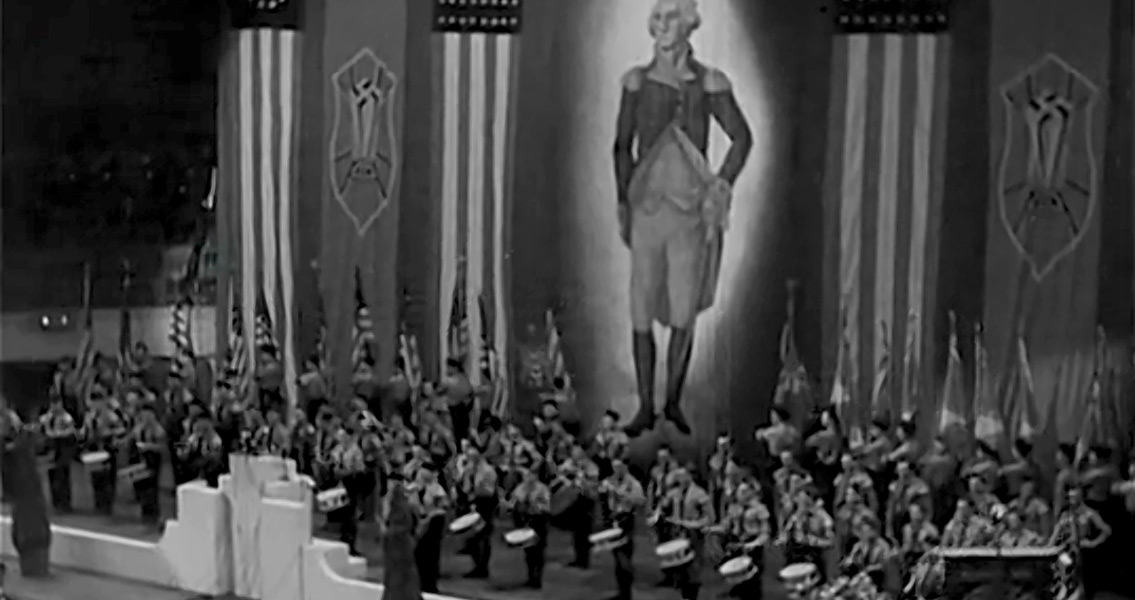
Novak, a writer for Gizmodo. “The card index file was found among the Consulate Office effects stored in the Bekins Warehouse, 116 South Western Avenue, Los Angeles. The cards were 3″x 5″ in size and for the most part contained no further information than the name, address and telephone number.” reads a 1945FBI memorandum about the list. “The file apparently contained the names, addresses and telephone numbers of individuals contacted by the Consul or other members of the Consulate staff. Many of the names on the list are those of prominent citizens in Southern California. No explanation accompanied the list.” Why the Nazi regime stored such a list is far from clear. It shouldn’t be assumed that everyone on it worked with the Nazis, or even came into regular contact with them. It does raise interesting questions however, about the links the Nazis were able to make with American society, particularly in the years before the USA entered the Second World War against the Axis powers. Some on the list definitely did work with the Nazis. Dr Erich Breitung, for example, was head of the Nazi party’s American Information Services in 1933. The organisation’s sole goal was to distribute Nazi propaganda throughout the USA, and it had offices throughout the country to that end. Norman Chandler, a future publisher of the LA Times, is unsurprisingly on the list. Chandler visited Nazi Germany in the 1930s as a guest of the regime. He had spent much of the decade defending Hitler and the Nazis against liberal journalists, until war made it impossible to continue doing so. Others listed make the cards seem like a who’s who of American society. Show business names recorded include Jason Joy; Twentieth Century Fox’s head of public relations, Hans Peter; an art director at Twentieth Century Fox, and Henry Noerdlinger; from MGM’s research department. From the world of Academia is Ernest C. Moore, the co-founder of UCLA, and Dr. M. Delbruck from Caltech. A host of other university professors and lecturers are included, as well as W.A. Bryan, the director of the Los Angeles Museum. From the world of business is Robert Gross, at the time the head of Lockheed, and from the media: Mrs. R. W. Trueblood and Edwin Schallert of the LA Times. The list provides a shocking reminder of just how involved the Nazis were in the culture of their future Allied enemies in the decade before the outbreak of the Second World War. For years, representatives of the regime went to great lengths to spread Nazi propaganda internationally, and it is often easy to forget just how successful they were, and how divided opinion was concerning the Nazis. In Britain, King Edward VIII agreed with some Nazi policies, and famously disagreed with his country’s involvement in the Second World War. In 1937, a year after abdicating the throne, he had personally met Hitler in Germany. For some in the US and Western Europe, the Nazis were a more attractive prospect than the Communists that had taken over the Soviet Union, and therefore garnered some sympathy. The Consulate list provides a reminder that public opinion towards the Nazis was far from unified in the 1930s. ]]>

Categories
Editorial

The Ghost Army that Helped Bring Down Hitler

Categories
News

Hitler Sends Bombers to Aid Rashid Ali al-Gailani's Iraq

Categories
News

Bonhoeffer, the Priest Who Defied Hitler, Is Executed

Categories
News

The Great Escape Begins at Stalag Luft III

Categories
News

Hitler Narrowly Escapes Suicide Bomber

Categories
Breaking News

New Investigation Questions Hitler's Suicide