Categories
Breaking News

Leprosy Bacterium Virtually Identical Now to Middle Ages Epidemic

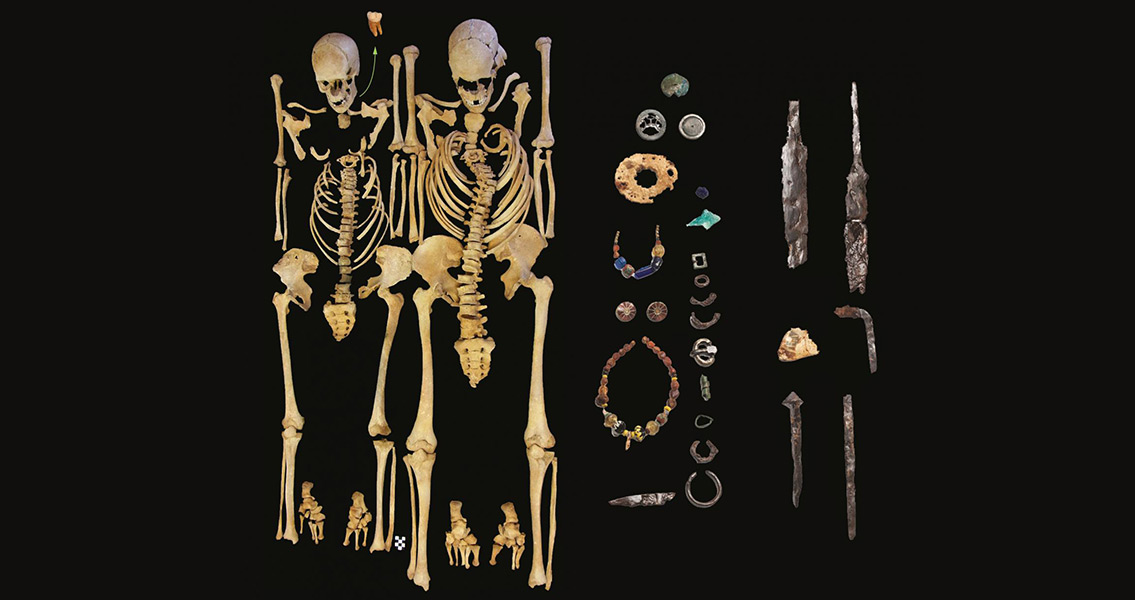
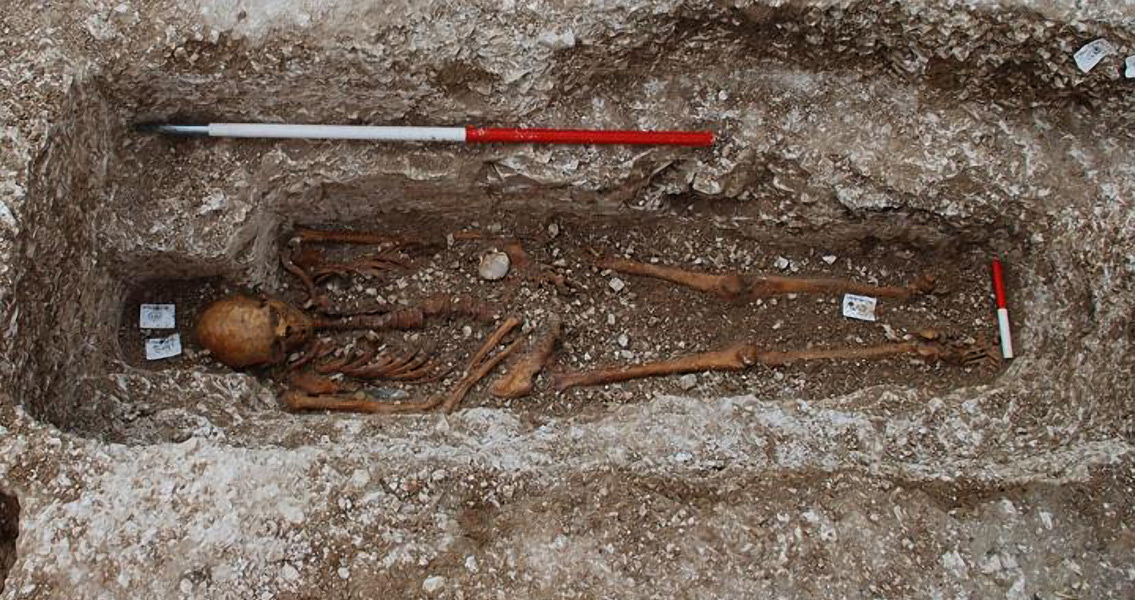
Mycobacterium leprae or Mycobacterium lepromatosis, it has affected human societies across the world for millennia. Reaching epidemic levels in the Middle Ages, leprosy continues to infect people to this day. The organisms responsible for leprosy are close relatives of M. tuberculosis, the bacteria that causes tuberculosis. Scientists theorise that leprosy enters the body through either breaks in the skin or through the mucous membranes of the nose, a theory supported by the fact that the disease tends to get transmitted after prolonged periods of close contact. Ultimately however, scientists are still unsure of the exact mechanism behind leprosy’s transmission. A multidisciplinary team investigated the strain of leprosy found in a leprosy hospital cemetery in Winchester, UK. Extensive tests were performed on a skeleton excavated from the cemetery, including genotyping, radiocarbon dating, biomolecular analysis, osteology, strontium, and oxygen isotopic analyses, as well as host of archaeological tests. Radiocarbon dating revealed that the remains studied had been buried in either the late eleventh or early twelfth century. The team believe that the individual was likely a wealthy religious pilgrim from outside the UK. As well as analysing the single skeleton in great detail, the team found that 86% of all remains sampled at the burial site displayed skeletal lesions indicative of leprosy. Simon Roffey and Katie Tucker, of the University of Winchester UK, and Michael Taylor of the University of Surrey, UK, along with their colleagues, determined that the M.leprae genome had not changed significantly since the terrible epidemic that ravaged the Middle Ages. The finding is hugely significant, suggesting that the lack of variation in the genome has allowed humans to build up a resistance to leprosy, leading to the substantial decline in the disease’s transmission. The strain of M.leprae sampled from the skeleton was found to belong to the 2F lineage, a strain which today is associated with leprosy cases in South-Central and Western Asia. Although most of the M.leprae strains found at the Winchester cemetery fall into the 2F lineage, the sample presented in the paper was genetically distinct from these isolates. It remains unclear exactly where or when the pilgrim actually contacted leprosy. Nevertheless, the team’s findings have the potential to greatly enhance our understanding of the transmission of leprosy in the past, and the present. “These findings confirm the benefits of a multidisciplinary approach which allows investigation of the wider relationship between leprosy, medieval pilgrimage and M. leprae transmission.” the authors write in the study, published in open access journal PLOS Neglected Tropical Diseases. Image courtesy of Roffey, S. and colleagues, PLOS Neglected Tropical Diseases ]]>
Categories
Breaking News

One of History's Deadliest Diseases isn't as Ancient as we Think

Current Biology are correct however, then historians might have to reevaluate just what role the disease played. “Scientists don’t yet fully comprehend where smallpox came from and when it jumped into humans,” said evolutionary geneticist Hendrik Poinar, a senior author of the study, director of the McMaster Ancient DNA Centre and a researcher with Michael G. DeGroote Institute of Infectious Disease Research. “This research raises some interesting possibilities about our perception and age of the disease.” The results look likely to reignite a longstanding debate over when variola, the virus that causes smallpox, originated and then evolved in response to vaccination and inoculation. Historians have long thought that the disease afflicted the populations of ancient Egypt, India and China thousands of years ago. Some accounts even claim that the pharaoh Ramses V may have died from smallpox in 1145 BCE. For their study, the researchers extracted DNA from the partial mummified remains of a Lithuanian child thought to have died between 1643 and 1665. The child’s death coincided with a series of severe smallpox outbreaks in Europe, making the team hopeful they would find evidence of the disease. Smallpox DNA was captured from the remains, sequenced and then the genome completely reconstructed. There was no evidence of live virus in the sample, meaning there was no chance of the remains being infectious. The researchers then set about tracing the evolutionary history of smallpox using the genome, which is when they made their surprising discovery. Comparing and contrasting the seventeenth century strain with a databank of samples of the disease dating from 1940 up to its eradication in 1977, they found that all the studied strains of the virus had an ancestor from no further back than 1580. “This study sets the clock of smallpox evolution to a much more recent time-scale” said evolutionary biologist Eddie Holmes, a professor at the University of Sydney, Australia, in a press release from McMaster University. “Although it is still unclear what animal is the true reservoir of smallpox virus and when the virus first jumped into humans.” Significantly, the team also found that the smallpox virus started to evolve in two separate strains after Edward Jenner developed a vaccine for it in 1796. One form of the variola virus, V. major, was highly virulent and deadly, the other, V.minor, was much more benign. Seemingly the ancestor of the minor strain corresponded with the Atlantic Slave Trade which likely helped disseminate it across the globe. “This raises important questions about how a pathogen diversifies in the face of vaccination. While smallpox was eradicated in human populations, we can’t become lazy or apathetic about its evolution – and possible reemergence–until we fully understand its origins.” said Ana Duggan, a post doctoral fellow in the McMaster Ancient DNA Centre, in the press release. Of course, the date of 1580 is hugely significant. It is commonly believed that European colonists to the Americas brought with them deadly strains of smallpox which had a devastating effect on indigenous populations. If accurate however, the team’s results seem to preclude that explanation, meaning further study might need to be done on the remains of indigenous populations. “This work blurs the line between ancient diseases and emerging infections. Much of smallpox evolution apparently happened in historic time,” says Margaret Humphreys, historian of medicine at Duke University. Image courtesy of Kiril ?achovskij ]]>

Categories
Breaking News

New Insight into the Deadly Reach of Sixth Century Plague

Yersinia pestis, the bacterium behind the Black Death, could also have been behind the sixth century plague epidemic. Michal Feldman, Johannes Krause and Michaela Harbeck, scientists based in Germany who are among the authors of the study, have recovered the bacterial culprit from sixth century skeletons found in Altenerding, an ancient southern German burial site near Munich. The genome found at Altenerding dates back to the beginnings of the outbreak of the plague, and confirms Yersinia pestis was the bacteria behind the outbreak. The new sequence reveals new insights into the molecular evolution of Yersinia pestis since the Byzantine period. It has also revealed new features that couldn’t be detected in a previous ‘draft genome’ of the bacterium, including 30 newly identified mutations and structural rearrangements unique to the Justinianic strain. “The fact that the archeological skeletons which gave these exciting insights were excavated over 50 years ago underscores the importance of maintaining well curated anthropological collections,” said Harbeck. “We were very fortunate to find another plague victim with very good DNA preservation in a graveyard just a few kilometers from where the individual analyzed in Wagner et al. [a recent study describing a draft genome] was found. It provided us with the great opportunity to reconstruct the first high quality genome in addition to the previously published draft genome.” Harbeck and colleagues’ results suggest that the strain of Yersinia pestis behind the Justinian Plague was more genetically diverse than previously thought. They are still unable to determine how and why the lethal pathogen reached Germany, however. Beyond simply analysing the development of a sixth century disease, the study could have far reaching applications. The authors have used the results to develop new guidelines that may improve the quality and authenticity of genetic data recovered from ancient pathogens. In addition, with plague re-emerging in certain regions of the world, the study provides a historical resource for the evolutionary changes, adaptation and human impact of the disease. “Our research confirms that the Justinianic plague reached far beyond the historically documented affected region and provides new insights into the evolutionary history of Yersinia pestis, illustrating the potential of ancient genomic reconstructions to broaden our understanding of pathogen evolution and of historical events,” said Feldman. “Our reanalysis of previous datasets stresses the importance of following strict criteria to avoid errors in the reconstruction of ancient pathogen genomes.” Image courtesy of State Collection of Anthropology and Palaeoanatomy Munich]]>

Categories
Editorial

Astrology, Antisemitism and Other Answers for The Plague

Compendium de Epidemia per Collegium Facilitatus Medicorum Parisius. Better knowledge about disease and bacteria has improved our understanding of the Black Death, and how it was able to spread so rapidly and devastatingly across Europe. Scientists have shown that the disease was spread by a bacillus called Yersina pestis. Possibly transferable between people pneumonically through the air, as well as through the bites of infected fleas, the Plague was spread through trade routes from Asia into Europe, and across the whole continent via major trade hubs such as Rome. Yet even now, some controversy and debate surrounds the disease, in particular regarding how it seemed to keep returning after decades of dormancy. ]]>

Categories
Breaking News

Plague Emerged in the Bronze Age

Yersinia pestis, was common among humans much earlier than the first historical records of plague epidemics suggest. An analysis of DNA extracted from Bronze Age human teeth showed that Y. pestis affected people in Asia and Europe as far back as 4,800 years ago. However, it was not for another thousand years that the bacterium developed characteristics allowing it to cause bubonic plague, the disease typically associated with it. What led the scientists, from the Universities of Gothenburg and Copenhagen, to believe that the plague is much older than commonly thought was an earlier genomics study they did on people from the Bronze Age, EurekAlert reports. That study revealed that the period, between 3000 BCE and 1500 BCE, was very dynamic in terms of migratory trends. These trends were found to have had a substantial effect on the modern-day demographic make-up of Europe and Asia. The team’s interest was sparked by the reasons behind these migrations. One of the authors of the study, Morten Allentoft from the Centre of GeoGenetics at the University of Copenhagen, told EurekAlert that one of the reasons for migration could have been epidemics that drove people away from a certain area, or decimated the population in another area, creating conditions for its repopulation. The question they asked themselves was whether these epidemics may have been caused by pestilence. To find an answer, they studied 89 billion raw DNA sequences extracted from the teeth of 101 Bronze Age and early Iron Age individuals taken from archaeological digs and museums. In seven of the samples, dated to between 2794 BCE and 951 BCE, there was evidence of the Y. pestis bacterium. Further analysis suggested that the original pathogen that Y. pestis evolved from first emerged around 5,783 years ago. To compare, the first historical records of plague-like epidemics appear in the common era, first in the sixth century, with the so-called Plague of Justinian, and then, of course, in the Middle Ages, when the Black Death took the lives of as much as half the population of Europe. There have been suggestions that Y. pestis was responsible for the Plague of Athens from 2,500 years ago and the Antonine Plague, but no hard evidence in support of this suggestion has been presented so far. Interestingly, the DNA analysis showed that even though they could get infected by the pathogen, Bronze Age people did not get it from fleas, which are among the main vectors of plague transmission. The bacterium apparently only developed the gene that allowed it to survive in the gut of fleas later, in the Stone Age. One earlier study that New Historian recently reported, suggested that the plague is in fact older than humans, by tens of millions of years, and even as early as that a strain of it could be transmitted by fleas. For more information: “Early Divergent Strains of Yersinia pestis in Eurasia 5,000 Years Ago” ]]>

Categories
Editorial

Ebola and a History of Understanding Epidemics

Categories
Breaking News

Ancient Plague Victims Dound in Egypt

th Century BC for a steward named Harwa and was used even after his death. Harwa’s successor Akhimenru’s tomb can also be found here. A group of scientists who work for the Italian Archaeological Mission to Luxor (MAIL) have finally found a major breakthrough, laying fruit to the 15 years of excavation and research work that has been performed in the region. Recent archaeological excavations have unearthed the remains of a number of victims who fell to the ancient plague that was termed as the end of the world by St. Cyprian. LiveScience reports that the remains found by archaeologists at the site were covered with a layer of lime, an ingredient that was used as a disinfectant in history. Researchers have also uncovered kilns where this lime was produced and countless human remains that have been scattered over something that resembles a monstrous bonfire. This has led theorists to believe that the plague victims were incinerated in Ancient Egypt. Researchers have also found pottery within the kiln that allows them to date the site to the 3rd Century AD, a period when the Plague of Cyprian was ravaging through the entire Roman Empire. Bishop Saint Cyprian further chronicled accounts of the suffering of those afflicted by the plague in his Latin text that has been entitled De Mortalitate. According to the saint, excessive vomiting, limbs being taken off due to contagion and bleeding from the eyes were common among all plague victims. Plague might have been termed as a form of measles or smallpox by modern day scientists, but it certainly took its toll on the Roman Empire and Ancient Egypt. Apart from claiming more than 5000 people on a daily basis in Rome, it also claimed two emperors (Hostilian and Claudius II Gothicus). Even though the plague was not the end of the world as predicted by Saint Cyprian, most historians believe that the great plague of Cyprus was one of the major reasons that weakened the Roman Empire and ultimately led to its downfall. The lack of religious rites at the funeral complexes also give rise to theories that the ancients tried to curb the spread of the disease by burying their dead in a quick and efficient manner. The burial monument also has traces of being abandoned after the plague, never to be used again. According to Francesco Tiradritti, the director of MAIL, the fact that these sites were used for burial of infected corpses doomed them for centuries until tomb raiders once again entered them in the 19th century. The discovery of this undisturbed complex also allows historians to further their insights into an era known as the Pharaonic Renaissance, a period that lasted from the 7th Century BC to the 6th Century BC. ]]>