The Cambodia Daily, University of Illinois at Chicago archaeologist Mitch Hendrickson described the find: first the footprint of the furnace was discovered, along with some of the collapsed sidewalls. The base was also found, the Canadian researcher added. There isn’t a question as to whether the people of the Angkor Empire were aware of the process of smelting. In fact, there have been plenty of finds from the time period that point to Angkorian metalsmiths having the knowledge of processing ore in order to extract base metals. What is noteworthy, however, is that this discovery marks the first find of a furnace. The site that yielded the smelter was first surveyed in 2009 by Hendrickson and his colleague Phon Kaseka, the Royal Academy of Cambodia’s director of archaeology. The initial survey was noteworthy because of what appeared to be furnace pipes jutting from the ground; a return in 2013 saw researchers extracting charcoal for radiocarbon dating, revealing that it would have been produced sometime during the Angkor Empire era – between the eleventh and twelfth centuries CE. The new discovery also has implications for what is known about iron production during the Angkor Empire. The metal would have been a key component in all of Angkorian life, from making farming implements to forging weapons for war. Even the construction of Angkor-era temples would have made use of iron bars for reinforcement, according to Kaseka. Kendrickson also commented on the construction of the site, remarking that, based on the evidence, the team believes these furnaces were constructed from clay. The process would have been to smelt the iron within the clay furnace and then break down the walls in order to extract the “bloom”, a porous mass of iron and slag that would then be processed further. The site was likely used for quite some time for smelting, based on several indications. This makes it likely that the nearly intact furnace found by the excavation was the final one used at the facility before winding down smelting operations for some unknown reason. In fact, there were at least six or seven different smelting phases on site, based on one of the excavation trenches that cut through the entire mound, Hendrickson remarked. This, he believes, indicates that there are several more furnaces below where the team is excavating currently. Surprisingly, the size of the furnace was much smaller than anticipated. Kaseka states that even a modest clay furnace of just 1 meter by 2 meters would be sufficient, as long as it was set at a proper angle to allow molten iron ore to flow from it. Images of the excavation can be found here: here]]>
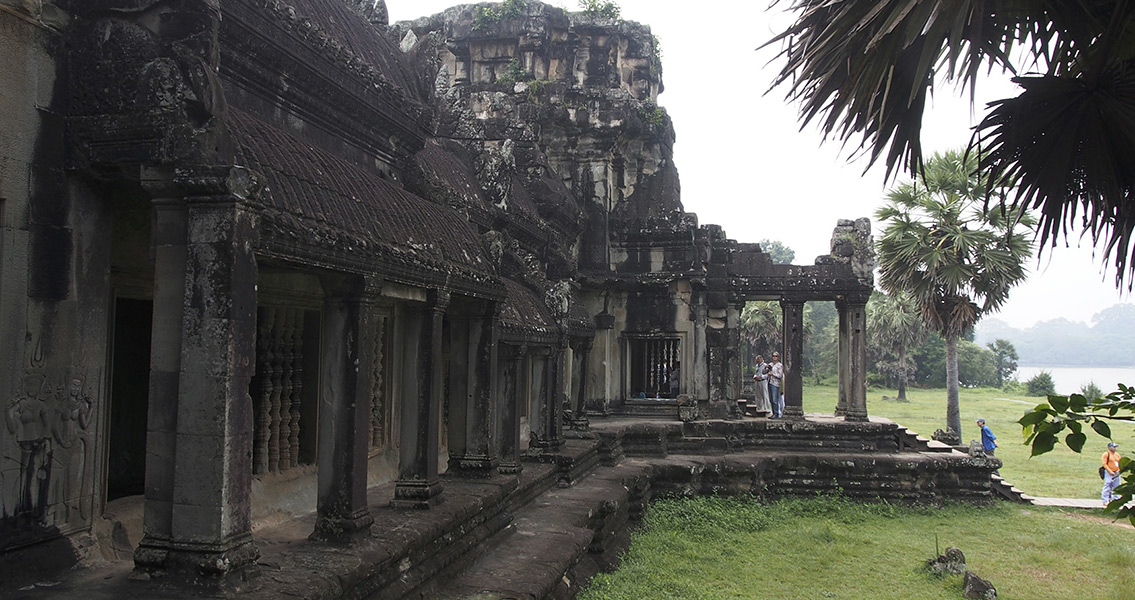
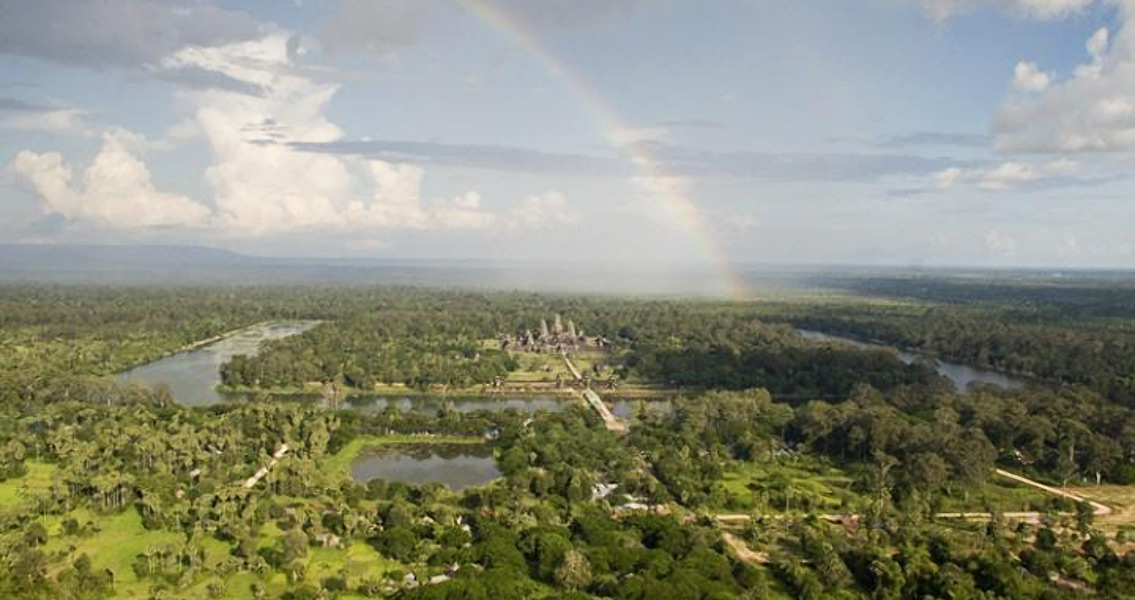
Live Science, archaeologist Damian Evans from the École française d’Extrême-Orient published the team’s findings recently, describing how low-flying helicopters were used in conjunction with laser scanning equipment in order to see beyond the Cambodian jungle’s thick foliage. The scans laid bare the dome fields as well as the telltale marks left from buildings that had once been constructed from organic materials and since decayed, Evans explained. More than 735 square miles of Cambodia were scanned by air, with the activity largely taking place during 2015. The revelations included more data about Mahendraparvata, an ancient Cambodian city that would have flourished more than a millennium ago as the Khmer Empire that once ruled much of southeast Asia rose to ascendancy. An initial scan in 2012, one that covered 140 square miles of jungle, had previously revealed a portion of the ancient city. The Khmer Empire is thought to have peaked during the twelfth and thirteenth centuries CE, with its center at the city of Angkor – the site of Angkor Wat today. However, Evans noted in the research paper that the conventional beginning of the classical Angkorian period is closely associated with Mahendraparvata, which is dated to the eighth to ninth century CE, located somewhat north of Angkor. Evans and the rest of the research team are still hard at work trying to determine the size of Mahendraparvata. However, even as they do so, evidence of archaeological topography from the Angkor period, otherwise known as the shape of the ground, seems to indicate human presence in a rough swath of around 15 to 20 square miles. Much of that region was filled with the dome fields arranged in their grid pattern. Ground excavations into these mounds have been relatively fruitless in yielding new information, however, leaving the purpose of these dome fields a mystery to researchers. The domes set out in geometric patterns have proven to be equally enigmatic according to Evans, despite how obvious it is that they were laid down in these shapes deliberately. The research paper, which was published in the Journal of Archaeological Science, is available online Image courtesy of Wikimedia Commons user Clay Gilliland ]]>
www.efeo.fr ]]>
www.journals.cambridge.org Image courtesy of Mike Coe]]>