Categories
Breaking News

New Evidence of a Battle Still Mourned during Jewish Fast

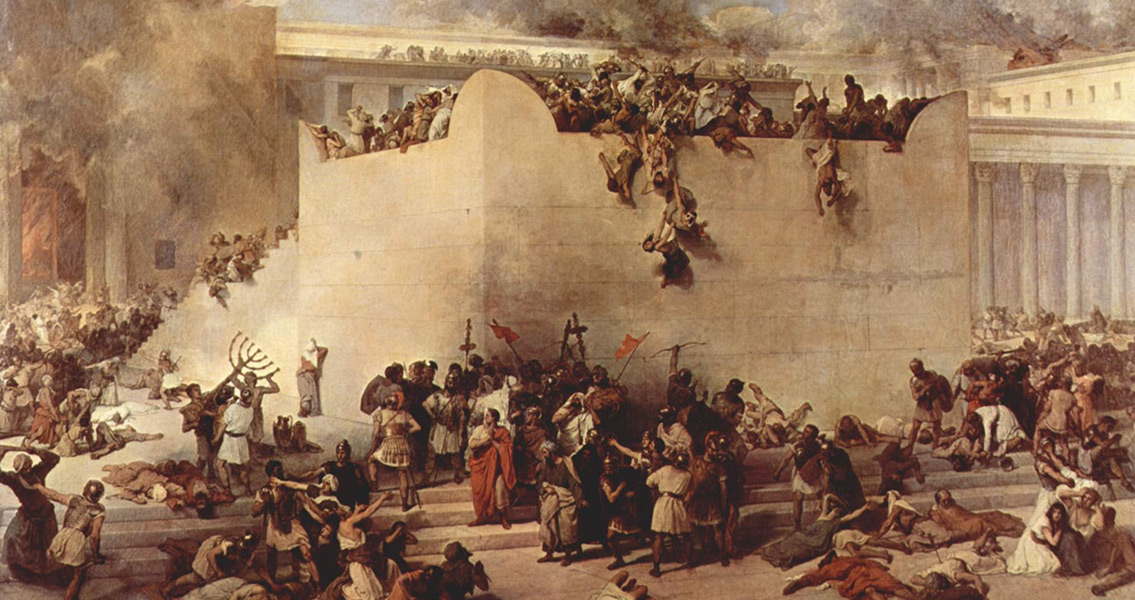
Jewish Press: “This is a fascinating testimony of the intensive bombardment by the Roman army, led by Titus, on their way to conquering the city and destroying the Second Temple. The bombardment was intended to attack the sentries guarding the wall and provide cover for the Roman forces so they could approach the wall with battering rams and thereby breach the city’s defenses.” As described by historian Flavius Josephus, who witnessed the event, the last battle against the Jewish rebels started with the Romans using catapults to hurl large stones, spears and gravel at the outer third wall and its defenders. The Romans were firing from siege towers which Jewish weapons were unable to reach. When the Jews were forced to retreat, they were no longer able to prevent the endless onslaught of Roman battering rams which gradually destroyed the wall. Josephus wrote: “The soldiers who reached the top of the wall opened the gates and brought the entire military force inside. Therefore on the 15th day of the siege, the 7th day of Artemisius [corresponding to the Hebrew month of Iyar], the Romans took control of the … wall, most of which was destroyed to the foundations along with the northern part of the city.” It took another two and a half months of battle before Titus was able to breech the remaining two walls. The findings attesting to the battle at the third wall were discovered in the Russian Compound, an area west of Jerusalem’s Old City, named for the Russian Orthodox church built there during the nineteenth century. Construction of Jerusalem’s third wall was started by Judean King Agrippa I, however, construction was halted and the wall was only completed years later, haphazardly and with inadequate resources making it a weak spot in the city’s defense. The destruction of the first and second temples is still mourned yearly as the Jewish fast Tisha B’Av, while the Arch of Titus, which celebrates the Roman’s victory in Jerusalem and the Temple’s destruction, is still standing in Rome. The excavation findings are scheduled to be presented at the “New Studies in the archaeology of Jerusalem and its Region” conference. ]]>
Categories
Breaking News

Children Sacrificed to Serve as “Guardians” for Chornancap Priestess

Categories
Breaking News

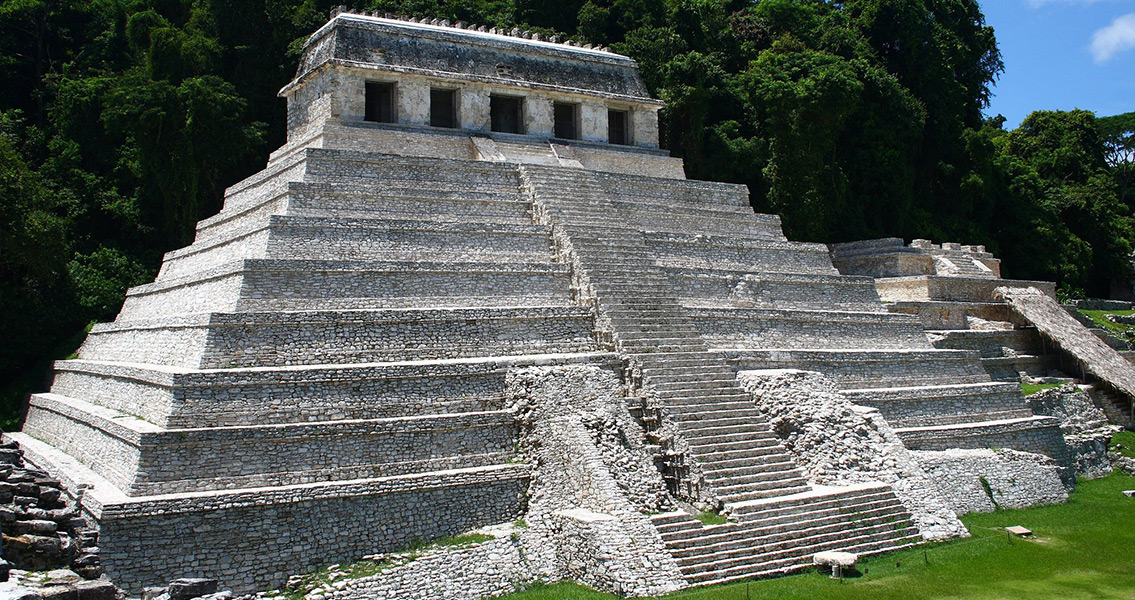
Water Tunnel Under Palenque Pyramid Was a Conduit to the Underworld

Sci-Tech Today that this belief was shared by other pre-Hispanic people as well; like those who lived at Teotihuacan near Mexico City, where a water tunnel was also found. Sanchez Nava cited the allegorical meaning that water had for these cultures, as the cycle of life beginning and ending Excavations began in 2012, when researchers using geo-radar detected underground anomalies in the area directly in front of the pyramid. Fearing a geological fault or hole that might cause the pyramid to settle or even collapse, they excavated the area and unearthed three layers of stone which had been carefully fitted to cover the top of the tunnel. Arnoldo Gonzalez, an archaeologist at the site, told Sci-Tech Today that the same type of layered stone covering had been discovered in the floor of Pakal’s tomb inside the pyramid, adding that there doesn’t appear to be a connection between the tunnel and the tomb, although the conduit hasn’t been thoroughly explored because it’s too small for a person to crawl through. Most of the tunnel has been viewed using a robotic camera. The Temple of Inscriptions was built as the funerary monument of Hanab-Pakal, the most famous ruler of Palenque. The temple is home to a glyphic text, the second longest from the Maya world, and records the city’s history from the fourth through the twelfth K’atun, a period of around 180 years. In his 1968 book ‘Chariots of the Gods?’, author Erich von Daniken suggested that Pakal’s stance, as engraved on the lid of the stone sarcophagus lid, resembled the position astronauts take. Von Daniken also claimed that it looked like the ruler was seated in a contraption that had flames shooting out of it. Experts, however, say that the “flames” are actually depictions of the Maya’s “Tree of Life” or “World Tree” which, the Maya believed, had roots that reached into the underworld. The Maya city of Palenque was at its peak during the seventh century. The Palenque ruins have been dated from 226 BCE to 799 CE. After it declined, the city was enveloped by the jungle of cedar, sapodilla, and mahogany trees. It has since been unearthed and restored, becoming a popular archaeological site that attracts thousands of visitors annually. ]]>

Categories
Breaking News

Discovery of Submerged Structures May Turn Myth to Fact

Indian Times that many of these structures were concealed with a thick layer of aquatic growth, making them difficult to identify. “Some of them are badly damaged due to strong underwater currents and swells. However, we could make out that they were part of a building complex,” Nigam is quoted as saying. Archaeologists believe that the structures may be between 1,100 and 1,500 years old. From previous experiences and as a result of studies on the historical patterns of the sea level in this region, researchers have determined the sea-level approximately 3,500 years ago was lower than it is now, but 6,000 years ago it was actually higher. Archaeologist, T. Sathyamurthy, with the Archaeological Survey of India (ASI), Chennai Circle, told the Indian Times that explorations of this type were gradually providing evidence that myths are often facts. Using sonar technology, researchers with ASI began exploring the coastline of Mahabalipuram and discovered the row of stones seen by people immediately before the tsunami on 2004 and determined they were part of a larger 70-meter-long, six-foot-high wall. They also found the remains of three additional temples; two of which were submerged, and a cave temple within 500 meters of the coast. Historians believe a majority of these structures, as well as the port, may have become submerged as a result of a past tsunami-like occurrence which took place around 952 CE. Geophysical data from previous surveys and explorations also point to a large building complex, possibly a township, being submerged in the sea. A global rise in sea levels of even 1mm to 2mm annually could easily inundate several hundred meters of shoreline over a 2,000-year time period. Another explanation for the structures being under water is tectonic movement or soil erosion.]]>