here]]>

here]]>

here.]]>

Homo hidelbergensis, the species of early hominin found in a coal mine in Schöningen, Germany, that would have been alive around 300,000 years in the past, are thought to have lived in social groups highly reminiscent of modern human cultures, according to new data gathered from the most recent forays into the mine. Other cultural traits that H. hidelbergensis seemed to possess far before their time include hunting in coordinated groups, communication concepts such as the passage of time from the past to the future, and incorporating a division of labor system as well, researchers say. Schöningen is one of the most noteworthy sites for documenting how hominins existed while the Ice Age gripped northern Europe; it’s also an indispensable resource for its highly-detailed and accessible climate change record of the Ice Age as well. The coal mine has been subjected to rigorous scientific study almost constantly since 1994. The latest research into hominin culture, which began in 2008, has been conducted by a scientific team led by Dr. Jordi Serangeli and Professor Nicholas Conard, both from the University of Tübingen, under the auspices of Lower Saxony’s Cultural Heritage Office. A wealth of discoveries have been made, such as a large collection of wooden artifacts, including spears used for hunting, many of which were found in excellent condition considering their age. Stone and bone tools were also discovered, many alongside the carcasses of Ice Age horses that were butchered for their meat. One of the most startling discoveries includes a bone hammer fashioned from the upper foreleg of a saber-toothed tiger – the first of its kind ever found. Curiously enough, the Schöningen site has not yielded any evidence that the hominins there were able to use fire in a controlled form, despite previous discoveries that seemed to indicate otherwise. The international team of scientists used advanced research methods such as thermoluminescence, Fourier-Transformation infrared spectrometry, and micromorphology in order to provide evidence for their claims. If they’re correct, it would mean that early hominins were able to survive the Ice Age in the region without having the ability to create and maintain the fires that would have been needed for warmth and cooking in a reliable manner. The entirety of the research findings, which consist of several scientific papers, have been gathered online in a special issue of the Journal of Human Evolution, which is available here Image courtesy of Thieme, 2007a ]]>

Science, revolves around the 4,500 year old remains of an Ethiopian man found in Mota Cave who supposedly bore genetic markers of Eurasian descent. The scientists had thought this discovery lent additional credence to the hypothesis, put forward in a 2013 study, that a “reverse migration” back to Africa occurred approximately 3,000 years in the past. While the general hypothesis has not been disproved, evidence of it was recorded incorrectly in the Mota Cave remains due to a computer error. The error, as explained by University of Cambridge geneticist and study co-leader Andrea Manica, was a result of software incompatibility between two programs used to reference human genetic material. Portions of the Ethiopian man’s genetics that he shared with Europeans were left out of the analysis, which made him seem to be more distantly related to Europeans than he was in actuality, while at the same time giving the impression that contemporary populations of Africans have a closer connection to Europeans through their DNA than they do. A software script designed to smooth out any errors generated by the two incompatible pieces of programming was not run, leading to the discrepancy. In the end, this led the team to surmise that the so-called “genetic backflow” into Africa was more widespread than the evidence supports. East African backflow is widely considered to have occurred, but the data error showed false evidence of the reverse migration reaching into West and Central Africa as well. In an interview with Scientific American, Harvard Medical School population geneticist Pontus Skoglund; part of the research team that checked the work of the original study, was heavy with praise for the initial paper. Remarking that “the genome itself is just fantastic”, he also applauded the willingness of the original scientists to not only share their data but to also respond to the revelation quickly in order to publish the error. Skoglund continued, remarking that the re-migration into East Africa is widely considered fact, and that the scientific community almost unilaterally agrees that Eurasian genetics did indeed flow back into East Africa, at the very least. So far, Science has yet to announce if it will be publishing the update on the research. However, Manica did comment that if her team had caught the error before it had gone into print, the scientific findings would have been different on a fundamental level. The initial article in its unaltered form, prior to discovering the error, can be found online here Image courtesy of Wikimedia Commons user Russ London]]>

here Image courtesy of Wikimedia Commons user: Joxemai]]>
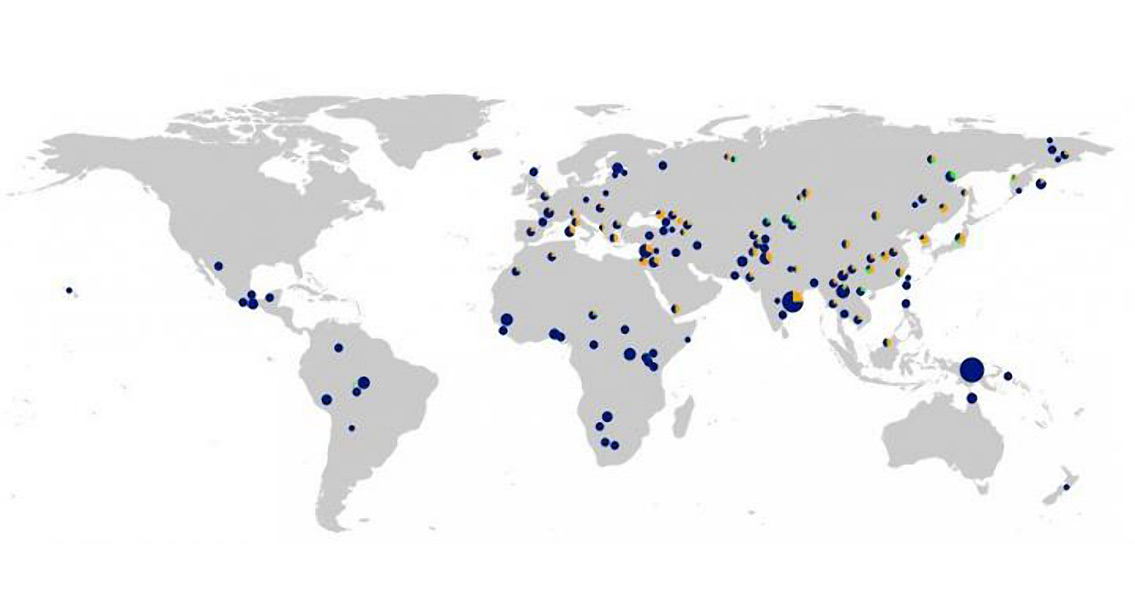
here and here Image courtesy of Dannemann et al./American Journal of Human Genetics 2016]]>

www.jeb.biologists.org]]>

www.advances.sciencemag.org Image courtesy of Wikimedia Commons user: David Benbennick]]>

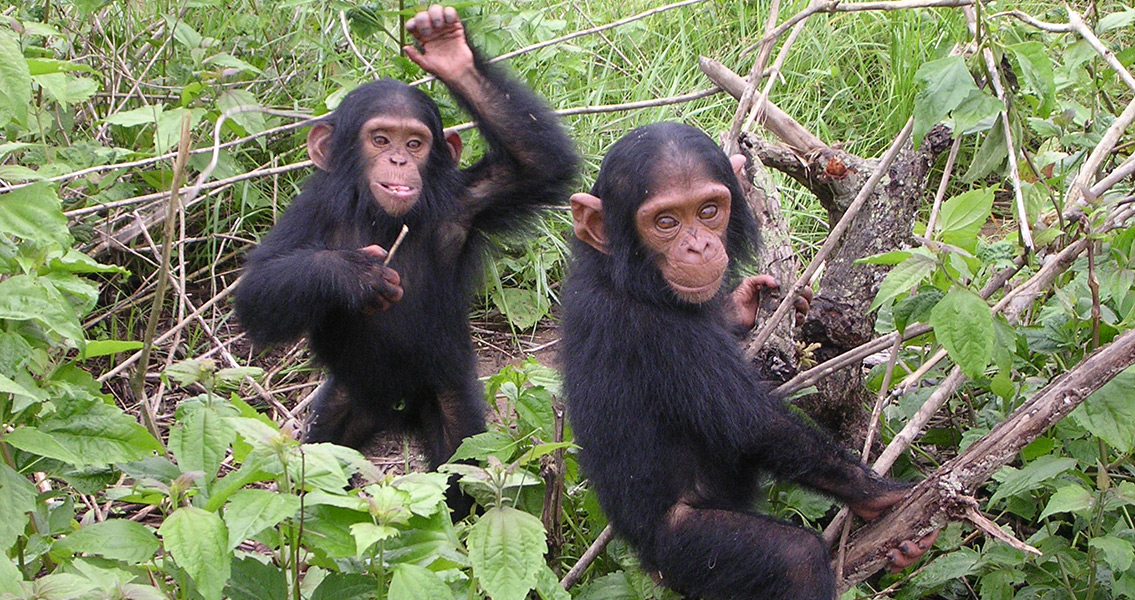
A. afarensis and A. sediba. The latter species are thought to be two of the best current candidates for being a direct ancestor, based on the study. The strongest model, according to Young, demonstrated “perfect immediate forms” between modern humans and African apes, suggesting that humanity shifted quite gradually from arboreal (tree dwelling creatures) into tool-using land-dwellers. These conclusions support the hypothesis that there was a final, African ape like common ancestor of humans and chimpanzees. For more information: www.pnas.org Image courtesy of Wikimedia Commons user: Delphine Bruyere]]>