Categories
Breaking News Editorial

Why Homo sapiens survived (and other hominins didn't)

Map of the potential distribution of archaic hominins, including H. erectus, H. floresiensis, H. neanderthalenesis, Denisovans and archaic African hominins, in the Old World at the time of the evolution and dispersal of H. sapiens between approximately 300 and 60 thousand years ago.
Credit: Roberts and Stewart. 2018. Defining the ‘generalist specialist’ niche for Pleistocene Homo sapiens. Nature Human Behaviour. [/caption]

Homo sapiens surviving extreme conditions

Archaeological and palaeoenvironmental datasets from the Middle and Late Pleistocene eras have come under critical review in the recent collaboration between the Max Planck Institute and the University of Michigan. Hominin movement and biological development within and beyond Africa proves our species’ ability to occupy diverse and ‘extreme’ settings around the world. This could well explain how Homo sapiens became the last surviving hominin on the planet. Previously, it was thought that early homo sapiens had stayed close to the coast or savannahs, not infiltrating extreme environments until around 15,000 years ago. But this new evidence has shown humans were in tougher climates far earlier, affecting the debate over what it means to be human – as a Homo sapien, at least.

What does it mean to be human?

“So much focus has gone into finding the next artwork, the next fossil, that in the search for a sort of ‘modernity’ as it is often put – other fundamental elements were neglected,” says Dr Patrick Roberts from the Max Planck Institute for the Science of Human History. Under this new theory, investigations into what separates Homo sapiens from our ancestors would shift away from attempts to uncover the earliest traces of art, language and technological complexity. They’d move, instead, towards understanding what makes our species ecologically unique.

New ideas of Neanderthal creativity

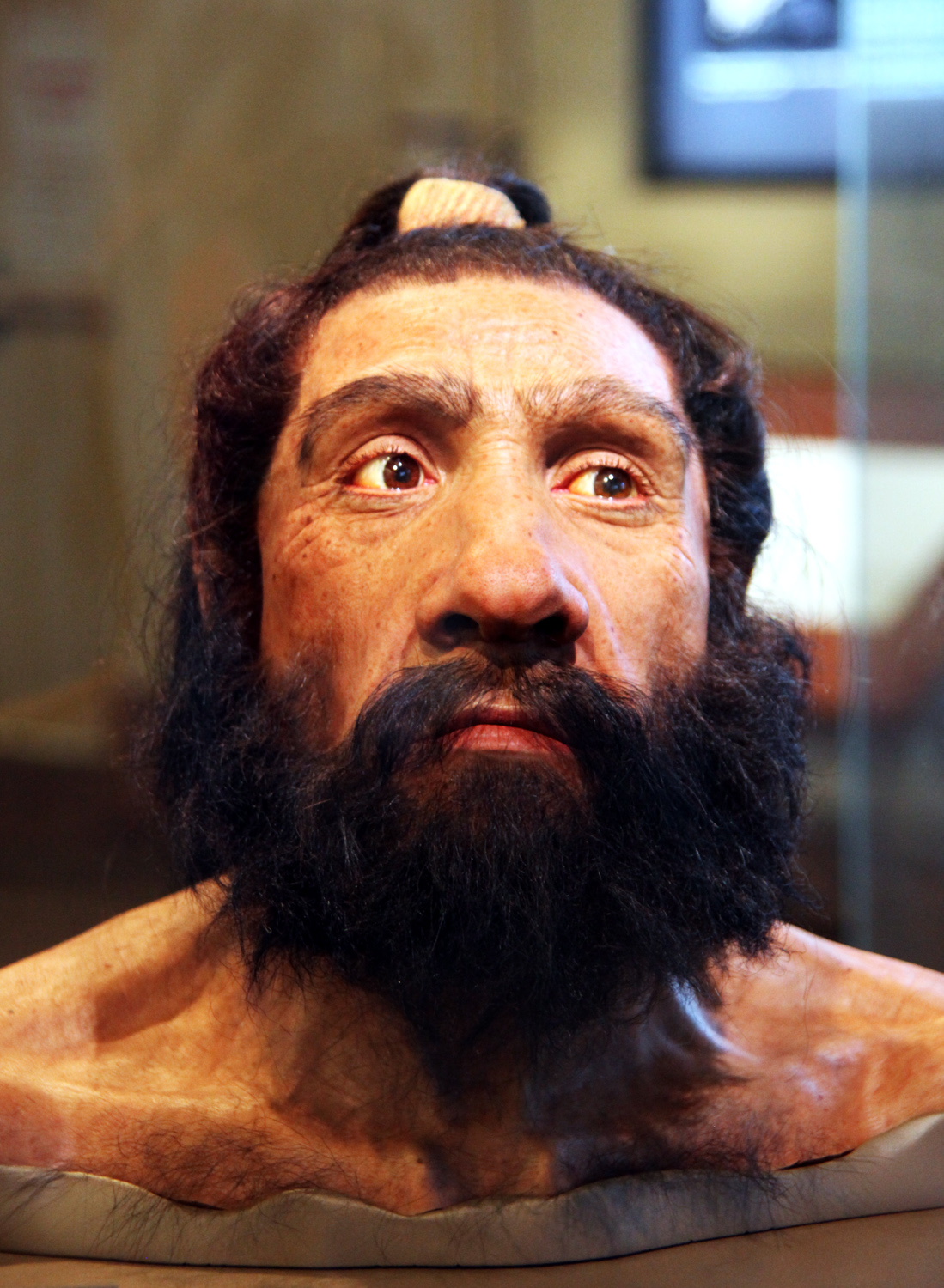
Recent research exposed the fact that our Neanderthal cousins created art before Homo sapiens, and were therefore capable of creating symbolism independently. Because of this, the lines between Homo sapiens and our ancestors are becoming increasingly blurred. You can read more about Neanderthal creativity and the recent discoveries that probe into it here. [caption id="attachment_8774" align="aligncenter" width="500"] A model an adult Neanderthal male head and shoulders on display in the Hall of Human Origins in the Smithsonian Museum of Natural History in Washington, D.C. Credit: Tim Evanson[/caption]

Ancestral ecologies

In contrast to other hominins, our species not only colonised environments as varied as deserts, tropical rainforests, high altitude settings and the palaeoarctic, but also flourished in these extreme conditions. Looking at our ancestral ecologies, we know that the genus Homo is highly diverse. Although often given the blanket name of ‘human,’ both academically and colloquially, using one term is certainly deceptive. There were a range of Homo species, all of which comfortably developed to reflect their surroundings. Homo erectus and Homo floresiensis (also known as ‘the Hobbit’) are thought to have occupied resource-scarce tropical rainforests from 1 million to 100,000 and 50,000 years ago respectively. The Neanderthals (Homo Neanderthalensis) occupied the high latitude areas of Eurasia between 250,000 and 40,000 years ago. To some extent, they backed themselves into an ecological corner, by only developing hunting skills in specialised environments.

What is the difference between ‘humans’ and Neanderthals?

While it might seem like there were gulfs between Homo sapiens and Homo Neanderthalensis, it would be remiss not to point out that the Neanderthals were our closest hominin relatives. In fact, Homo Neanderthalensis shares 99.7% of DNA with Homo sapiens. The history, appearance, intelligence and behavioural similarities and differences between the two are explored by Daryl Worthington on the New Historian – click here to read more.

Rapid Homo sapien colonisation

In contrast to the rest, Homo sapiens had spread to higher-elevation niches by around 80-50,000 years ago. By 45,000 years ago, the species was rapidly colonising both palaeoarctic and tropical rainforest conditions in Asia, Melanesia and the Americas. In order to decipher how our species demonstrated its colonising capacity elsewhere in places like northwest India and the high elevations of Tibet and the Andes, better-dated and higher resolution environmental datasets are required.

Homo sapiens: the ‘generalist specialist’

Ultimately, the new theory is that Homo sapiens were a ‘generalist specialist’. The ’generalist specialist’ is a new ecological niche: one that reflects Homo sapiens’ ability to occupy a huge diversity of environmental settings across the majority of the Earth’s continents by the Late Pleistocene. Dr Patrick Roberts has written: “A traditional ecological dichotomy exists between ‘generalists’, who can make use of a variety of different resources and inhabit a variety of environmental conditions, and ‘specialists’, who have a limited diet and narrow environmental tolerance.” He continues: “However, Homo sapiens furnish evidence for ‘specialist’ populations, such as mountain rainforest foragers or palaeoarctic mammoth hunters, existing within what is traditionally defined as a ‘generalist’ species.”

How did Homo sapiens become a ‘generalist specialist’?

Dr Brian Stewart, from the Department of Archaeology at the University of Michigan, thinks that this new niche was carved out through extensive cooperation between non-kin individuals. He writes: “Non-kin food sharing, long-distance exchange, and ritual relationships would have allowed populations to ‘reflexively’ adapt to local climatic and environmental fluctuations, and outcompete and replace other hominin species.” It comes down to empathy, as well as an ability to accumulate and pass on cultural knowledge.

How our species became the last surviving hominin on the planet

“As with other definitions of human origins, problems of preservation also make it difficult to pinpoint the origins of humans as an ecological pioneer. However, an ecological perspective on the origins and nature of our species potentially illuminates the unique path of Homo sapiens as it rapidly came to dominate the Earth’s diverse continents and environments”, says Roberts. He writes: “Understanding this ecological niche provides a framework for discussing what it means to be human and how our species became the last surviving hominin on the planet.”]]>
Categories
Breaking News

14,400-year-old flatbread proves baking predates agriculture by 4,000 years

14,000 year old food practices The excavation at Shubayqa 1 has unearthed 254 examples of food remains. Charred evidence of a flatbread baked 14,400 years ago has caused researchers to confirm that baking predates the advent of agriculture by at least 4,000 years. The findings indicate that bread production encouraged gatherer-hunters to cultivate cereals – therefore contributing to the agricultural revolution in the Neolithic period. The research team was comprised of academics from the University of Copenhagen, University College London and the University of Cambridge. [caption id="attachment_8845" align="aligncenter" width="500"] Dr. Amaia Arranz-Otaegui and Ali Shakaiteer sampling cereals in the Shubayqa area. Credit: Joe Roe[/caption]

From calories to culture: the evolution of eating

Nutritionally speaking, the process of making bread is entirely uneconomic. After harvesting wild cereals, the people of Shubayqa 1 had to separate the seeds, grind them down, make the dough, flatten the dough and cook it. They would have suffered a net loss of calories during the process – which suggests that the bread was not made for survival purposes. That leads us to the idea that this discovery represents a pivot in the history of human eating practices. No longer were people seeking pure nutrition from their food. For the people of Shubayqa 1, eating was now imbued with cultural, social and perhaps ideological significance. To strengthen this theory, the date and location of the flatbread places it close to the erection of the world’s oldest monumental buildings. Inside, ceremonies and rituals took place; perhaps with the first instances of socio-ideological feasting. [caption id="attachment_8846" align="aligncenter" width="500"] One of the stone structures of the Shubayqa 1 site. The fireplace, where the bread was found, is in the middle. Credit: Alexis Pantos[/caption]

Sedentary lifestyles lead to diet changes

The Danish Council for Independent Research has recently approved further funding for research into food production during the transition to the Neolithic period. University of Copenhagen archaeologist Tobias Richter, who led the excavations at Shubayqa 1 in Jordan, comments: “Natufian hunter-gatherers are of particular interest to us because they lived through a transitional period when people became more sedentary and their diet began to change.”

What came first: the chicken or the bread?

Professor Dorian Fuller from the UCL Institute of Archaeology says: “That it was produced before farming methods suggests it was seen as special, and the desire to make more of this special food probably contributed to the decision to begin to cultivate cereals.” Richter continues: “The flat bread found at Shubayqa 1 is the earliest evidence of bread making recovered so far, and it shows that baking was invented before we had plant cultivation. “So this evidence confirms some of our ideas. Indeed, it may be that the early and extremely time-consuming production of bread based on wild cereals may have been one of the key driving forces behind the later agricultural revolution where wild cereals were cultivated to provide more convenient sources of food.” The discovery comes shortly after new research revealed that barley spread across the world via multiple routes – suggesting human choices were made based on nutritional and perhaps cultural needs. Read more here.]]>

Categories
Breaking News

How barley spread across the world & helped culture formation

Different routes – an indicator of different cultures? Due to the fact that there were a number of different eastward routes for the spread of the barley population, the study suggests humans were choosing routes based on particular attributes of acting according to environmental adaptation. Choice and environment, therefore, are crucial factors for the spread of staple foods in prehistory. These different routes include ones to the north and south of the Iranian Plateau; through the Inner Asian Mountain Corridor in Central Asia, possibly connecting up to the Chinese section of the Silk Road; a high altitude spread on the southern edge of the Tibetan Plateau; a high latitude spread through the northern steppe; two distinct spreads into Japan; and a maritime route from South Asia. As previous research has provided radiocarbon dates, we know when the routes were followed. [caption id="attachment_8836" align="aligncenter" width="728"] Map showing proposed routes of spread of six different ancestral populations of barley landraces. Direct radiocarbon dates from archaeological barley grain have enabled the timing of these different routes to be elucidated. Credit: D. Lister[/caption]

Impacting rice-growing in East Asia

Lead author Dr Diane Lister, a researcher at the McDonald Institute for Archological Research at the University of Cambridge, says: “One barley population is widespread, particularly around the coastlines. This population may have travelled eastwards via a maritime route from South Asia, via Southeast Asia. This particular population is made up of winter-sown varieties of barley, which are thought to be important in rice-growing areas of East Asia, where a crop of rice is commonly grown in the summer months, and barley adapted to winter-sowing regimes can be planted after the rice harvest. The development of multi-cropping practices during prehistory is thought to have greatly increased productivity and stability, enabling more complex societies to develop.” [caption id="attachment_8837" align="aligncenter" width="257"] Diane Lister at work in the Glyn Daniel laboratory for archaeogenetics at the McDonald Institute for Archaeological Research, University of Cambridge Credit: A. Clarke[/caption]

Moulding Tibetan culture

“Another barley population predominates on the high Tibetan Plateau. This barley has a naked grain, making it a particularly attractive staple, as it doesn’t require the pearling process that hulled barley requires for human consumption. Along with the herding of yak, this naked type of barley is an essential for the Tibetan way of life, and their importance are clearly seen in the offerings of naked barley grains and yak butter in Tibetan Buddhist temples around the region. The staple carbohydrate eaten by the Tibetans is tsampa, made from roasted naked barley flour and mixed with salty Tibetan butter tea.” [caption id="attachment_8835" align="aligncenter" width="590"] Ethnically Tibetan women winnowing naked barley on a road on the edge of the Tibetan Plateau, near Xiahe, Gansu Province, China.
Photo credits Diane Lister[/caption]

New findings contribute to conversation around climate change

So what does this mean for today? Lister concludes: “Barley is an extremely hardy crop, able to grow in regions where other crops are unable to grow, and is an important staple in such environments. Understanding the spread of its cultivation during prehistory, and the various factors that affected its establishment in different regions of Eurasia, will contribute towards our understanding of climate change and its current and future effects on agriculture.” The paper has been published as a part of the Food Globalization in Prehistory project, funded by the European Research Council and awarded to Prof. Martin Jones. Additional funding was provided by a Royal Society International Joint Project grant.]]>

Categories
Breaking News

How intense Ice Age fishing led to the invention of pottery as we know it

Jōmon pottery from the Kanagawa Prefecture, Japan. Credit: Nara National Research Institute for Cultural Properties.[/caption] Examined over a course of three years by researchers from Japan, the Netherlands, Sweden and the University of York’s BioArCh, the findings indicate that ceramics were used by our gatherer-hunter ancestors to initially store and process fish. As fishing techniques evolved and intensified, the range extended to include shellfish, freshwater and marine fish and even mammals. Until recently, ceramic vessels were associated with the arrival of farming. This study, however, debunks that theory. We now know that pottery was a much earlier gatherer-hunter innovation, and was used for the consumption of fish. Professor Oliver Craig, from the Department of Archaeology and Director of the BioArCh research centre at York, who led the study, said: “Our results demonstrate that pottery had a strong association with the processing of fish, irrespective of the ecological setting.” Some of the pottery dates from the end of the Late Pleistocene period: a time when our ancestors were navigating glacial conditions. Other ceramics included in the study are from the post-glacial period, when the climate reached a level close to our current temperature, allowing pottery to be produced in a much greater quantity. Craig continues: “Contrary to expectations, this association remained stable even after the onset of warming, including in more southerly areas, where expanding forests provided new opportunities for hunting and gathering. “The results indicate that a broad array of fish was processed in the pottery after the end of the last Ice Age, corresponding to a period when hunter-gatherers began to settle in one place for longer periods and develop more intensive fishing strategies. [caption id="attachment_8832" align="aligncenter" width="634"] A reconstructed early pottery vessel from Torihama, Japan, dating to the end of the Late Pleistocene (ca 12,000 years old). Chemical analysis revealed that such vessels were used to process fish during the late Glacial period. Credit: Wakasa History and Folklore Museum, Fukui, Japan[/caption] “We suggest this marks a significant change in the role of pottery of hunter-gatherers, corresponding massively increased volume of production, greater variation in forms and sizes and the onset of shellfish exploitation.” Researchers used advanced technologies to recover diagnostic lipids from the charred surface deposits of the vessels. Most of the compounds derive from the processing of freshwater or marine organisms. Because of findings like this, we now know that ceramics played a key role in the ways pre-historic gatherer-hunters consumed fish. Lead author, Dr Alex Lucquin, from BioArCh, Department of Archaeology, University of York, said: “Thanks to the exceptional preservation of traces of animal fat, we now know that pottery changed from a rare and special object to an every-day tool for preparing fish. “I think that our study not only reveals the subsistence of the ancient Jomon people of Japan but also its resilience to a dramatic change in climate.” Dr Simon Kaner, from the University of East Anglia, who was also involved in the study, added: “The research highlights the benefits of this kind of international collaboration for unlocking some of the big questions about the human past, and the potential of engaging with established research networks as created by the Sainsbury Institute over the years.”]]>

Categories
Breaking News

Humans left Africa 270,000 years earlier than we thought

One of the tools from the discovery site in Shangchen, China. Credit: Professor Zhaoyu Zhu[/caption] Prior to this discovery, the earliest evidence of humanity outside Africa was a collection of skeletal remains and stone tools found in Dmanisi, Georgia, which have been dated to 1.85 million years ago – 270,000 years after the new discovery in Shangchen in the southern Chinese Loess Plateau. The research, published in the journal Nature, also suggests that the ancient humans returned to the same site repeatedly, possibly for hunting. The collection includes a notch, scrapers, cobble, hammer stones and pointed pieces. Each item shows sign of human use. The hammer stones, for instance, had been intentionally flaked. Fragments of animal bones that would have been contemporaneous with the items were also found. Most of the artefacts were made of quartzite and quartz, suggesting that the materials were sourced from the foothills and streams of the Qinling Mountains around 5 to 10 kilometres from the site. [caption id="attachment_8815" align="aligncenter" width="425"] The extensive collection of 2.1 million years old artefacts is causing archaeologists to reconsider the overall story of human migration. Credit: Professor Zhaoyu Zhu[/caption] Because the 96 stone artefacts were found in 17 different layers of fossil soils that had developed over a period of one million years, we now know that early humans occupied the Chinese Loess Plateau under varying climatic conditions between 1.2 and 2.12 million years ago. Professor Dennell says: “Our discovery means it is necessary now to reconsider the timing of when early humans left Africa.” The find “may add a new chapter to the story of hominin evolution, suggesting that some of these species left Africa far earlier than once believed and managed to travel over 8,000 miles east of their evolutionary birthplace,” The New York Times reports. The age of the tools “suggests that the hominins who made them were neither tall nor big-brained. Instead, they may have been small bipedal apes, with brains about the size of a chimpanzee’s.” Michael Petraglia, a paleoanthropologist at the Max Planck Institute for the Science of Human History comment:S “The implications of all this are large. We must re-evaluate our understanding of human prehistory in Eurasia.”]]>

Categories
Breaking News

3-million-year-old skeleton reveals the story of ancient toddlers’ lifestyles

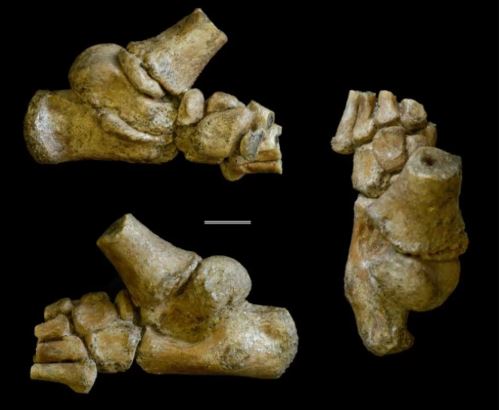
The 3.32 million-year-old foot from an Australopithecus afarensis toddler shown in different angles. Credit: Jeremy DeSilva & Cody Prang[/caption]

A complete 3-million-year-old skeleton

Discovered in 2002 by Zeresenay Alemseged, a professor of organismal biology and anatomy at the University of Chicago, the foot is about the size of a modern human’s thumb. Astonishingly, it is part of an almost complete skeleton of a young female Australopithecus afarensis living 3.32 million years ago in the Dikika region of Ethiopia. “This is the most complete foot of an ancient juvenile ever discovered,” Desilva says. “For the first time, we have an amazing window into what walking was like for a two-and-a-half-year-old, more than 3 million years ago.”

 “On the cusp of being human”

Alemseged is a world leader in palaeontology, specialising in the study of human origins and our evolution. He contributed to the study as a senior author. “Placed at a critical time and the cusp of being human, Australopithecus afarensis was more derived than Ardipithecus (a facultative biped) but not yet an obligate strider like Homo erectus. The Dikika foot adds to the wealth of knowledge on the mosaic nature of hominin skeletal evolution” explains Alemseged. The fossil record shows that these ancient ancestors were adept at walking upright. Desilva adds: “Walking on two legs is a hallmark of being human. But, walking poorly in a landscape full of predators is a recipe for extinction.” [caption id="attachment_8792" align="aligncenter" width="230"] The child’s foot (bottom) compared with the fossil remains of an adult Australopithecus foot (top). Credit: Jeremy DeSilva & Cody Prang[/caption]

A relative of the Lucy fossil?

The fossil of the toddler’s foot is not only the same species as the famous Lucy fossil, but was also found in the same vicinity in Ethiopia. Unsurprisingly, this led to it being erroneously called ‘Lucy’s baby’ by the popular press – despite this toddler having been around 200,000 years before Lucy.

What we know about the toddler’s lifestyle

With a remarkably preserved anatomy, the fossil foot has given the research time invaluable insight into the daily lifestyle of this toddler. After an examination into how the foot developed and what this tells us about human evolution, it can even start to tell the story of how our ancestors survived. At just two and a half years of age, this Dikika child was already walking on two legs. However, findings also suggest that she was still spending time in the trees, foraging for food while clinging to her mother. “If you were living in Africa 3 million years ago without fire, without structures, and without any means of defence, you’d better be able get up in a tree when the sun goes down,” adds DeSilva. Accordingly, the base of the big toe and the skeletal structure surrounding it suggests that vulnerable children spent more time in the trees than their adult carers. “These findings are critical for understanding the dietary and ecological adaptation of these species and are consistent with our previous research on other parts of the skeleton especially, the shoulder blade,” Alemseged notes.]]>

Categories
Breaking News

DNA Study Reveals Genealogy of Ancient Alaskan Remains

Science Online, human remains from On Your Knees Cave, dated to around 10,300 years old, were found to be closely related to a trio of ancient skeletons found along the Canadian coast of British Columbia. In turn, these three ancient individuals hold close relation to the Haida, Nisga’a and Tlingit tribes that inhabit the region today, revealing a direct line of descent to these tribes. Begun a generation ago thanks to an amicable collaboration between archaeologists and the Tlingit tribe living near the Alaskan remains, the research revolved around DNA extraction from the 10,300 year old skeletal remains. Named Shuká Káa, or “Man Ahead of Us”, the remains were first checked for maternally inherited mitochondrial DNA (mtDNA). Initially, there were no matches between the Tlingit tribe’s mtDNA and the data extracted from Shuká Káa, but it was revealed that the man had been an ancient mariner based on the isotopes in his teeth, which indicated a diet rich in seafood. Shuká Káa was ceremonially reburied in 2008, but with the advent of new DNA sequencing technology, researchers sought permission from the local Tlingit tribe as well as other tribes native to the region to take nuclear DNA samples from Shuká Káa. The three other ancient skeletons, one 750-year-old skeleton from Prince Rupert harbor in British Columbia, a 2500-year-old skeleton from the same region, and a 6075-skeleton located on Lucy Island in British Columbia, were all included in the survey. While the DNA sample taken from Shuká Káa was too damaged to sequence his genome completely, around 6% of it was recovered. The other three sets of remains were able to yield between one-third and two-thirds of their genomes as well, easily enough to compare genetic markers between these ancient humans and modern ones. The results of this study revealed that the Tsimshian tribe, and other Pacific Northwest tribes, were closely related to the Prince Rupert harbor and Lucy Island humans. Meanwhile, Shuká Káa seems to be a closer match to modern Southern and Central American tribes like the Ticuna, Surui, and Karitana of the Amazon. However, researchers say that the genetic markers aren’t particularly strong, and could simply represent a link to DNA shared by ancient ancestors living in Beringia or Asia before migrating to the Americas. Taken together with Shuká Káa‘s maternally inherited mtDNA, his nuclear DNA does raise the suggestion that he is also closely related to the younger skeletons found in British Columbia. Researchers played connect the dots between all four sets of remains, proposing that Shuká Káa is an ancestor of all related groups in the Pacific Northwest related to the Tsimshian. Meanwhile, there were genetic similarities found between the group and the remains of two other Paleo-indians: Kennewick Man, who is around 8545 years old and who was found in Washington state, and Montana’s 12,600-year-old Anzick child. The new research, published in the Proceedings of the National Academy of Sciences, is available online

Categories
Breaking News

Rare 400,000 Year Old Skull Discovered in Portuguese Cave

The Proceedings of the National Academy of Sciences, can be found here Image courtesy of Javier Trueba]]>

Categories
Breaking News

New Theory on Origin of Scythians Put Forward

According to a university press release, anthropologists conducted comparative analysis of non-metric cranial trait frequencies in the remains of Scythians found in the northern Black Sea region. These non-metric traits were then compared to those gathered from Central Asian and Eastern European remains dating to the Bronze Age to look for commonalities. These so-called “cranial series” are groups of skulls found from either one burial or several burials spaced closely together, and from either one archaeological culture or one ethnic group. Non-metric, varying cranial traits can reflect minor anatomical variations in the human skull. These variations take the form of irregular skull sutures and processes or additional and irregular holes, and are consistent among those with similar genetics. When compared to data gathered from molecular genetic markers, these non-metric cranial traits tell a similar tale in determining the genetic distances between populations. Many researchers have begun to use these cranial trait comparisons as an alternative to direct DNA research, which can be much more expensive and not necessarily always appropriate. There are two major hypotheses regarding the origin of the Scythians. One claims the Scythians came from Central Asia as invaders, resulting in local Indo-European populations being assimilated by them. The other claims that the ancient people were descended from the “Timber-Grave culture” of the Srubnaya people who lived between the Dneiper and Ural Mountains during the Late Bronze Age. According to lead author Alla Movesyan, the results of the study provide evidence for both of these theories. In other words, both hypotheses are partly correct: the Scythian gene pool was formed from descendants of the Srubnaya from the Late Bronze Age, but these descendants migrated from Central Asia and mingled with the Indo-Europeans living in the northern Black Sea region. This revelation could be a blow to Eurasian mythmakers who have enjoyed claiming the Scythians were predecessors of the Slavs. While there was undoubtedly some genetic intermingling thanks to geographic proximity, Movsesyan claims that the idea of Slavs being direct descendants of the Scythians is simply no longer supported by any scientific data. The new research study, published in The American Journal of Physical Anthropology, can be found here]]>

Categories
Breaking News

East Asian Human DNA Largely Unchanged Over 8000 Years

Science Advances, can be found here Image courtesy of Yuriy Chernyavskiy]]>