www.pnas.org ]]>
www.pnas.org ]]>
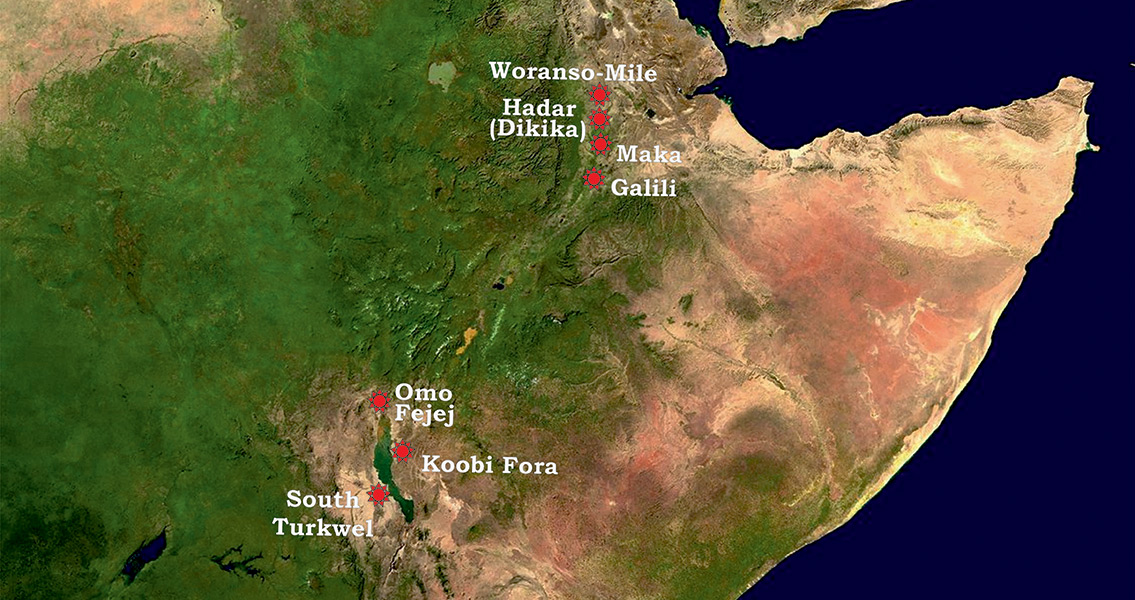
Australopithecus deyiremeda, as the new human ancestor has been named, lived in the Afar region of Ethiopia some 3.3 million to 3.5 million years ago. This means it would have lived alongside Australopithecus afarensis, another hominin species from the Afar region whose most famous representative, “Lucy”, was discovered in 1974. A. afarensis lived in what is now Ethiopia, between 2.9 million and 3.8 million years ago. “The new species is yet another confirmation that Lucy’s species, Australopithecus afarensis, was not the only potential human ancestor species that roamed in what is now the Afar region of Ethiopia during the middle Pliocene”, said Dr. Yohannes Haile-Selassie, curator of physical anthropolgy at the Cleveland Museum of Natural History and the project team leader of the study, in a press release. The fossil specimens were found on 4th March, 2011, in the Woranso-Mille Paleontological Project study area, situated in the centre of the Afar region, about 325 miles north east of Ethiopia’s capital Addis Ababa, and just 22 miles north of the site where Lucy’s remains were unearthed. Differences in jaw bone mark the two species apart. A. deyiremeda had thick enamel teeth of a different shape and size to Lucy, and a more robust lower jaw. The anterior teeth were also comparatively smaller in A. deyiremeda, suggesting it had a different diet. A. deyiremeda‘s discovery adds to the increasing ambiguity about the process of human evolution. For much of the twentieth century the general consensus among scientists, based on available sources, was that during the Pliocene period only one human ancestor species existed at any time. In 1995, a hominin species called Australopithecus bahrelghazali was discovered in Chad, and in 1999 another called Kenyanthropus platyops was discovered in Kenya. Both of these species were reported to have lived at the same time as Lucy, although this assertion was met with skepticism from the scientific community over whether they really were separate species or simply another example of A. afarensis. Skeptics in the scientific community may still need to be convinced that A. deyiremeda is indeed a distinct species but its discovery adds further weight to the idea that the evolution of homo sapiens was not just a straight line from A. afarensis. “Some of our colleagues are going to be skeptical about this new species, which is not unusual. However, I think it is time that we look into the earlier phases of our evolution with an open mind and carefully examine the currently available fossil evidence rather than immediately dismissing the fossils that do not fit our long-held hypotheses”, said Haile-Selassie. For more information: www.cmnh.org Image courtesy of Wikimedia Commons user: Chartep]]>
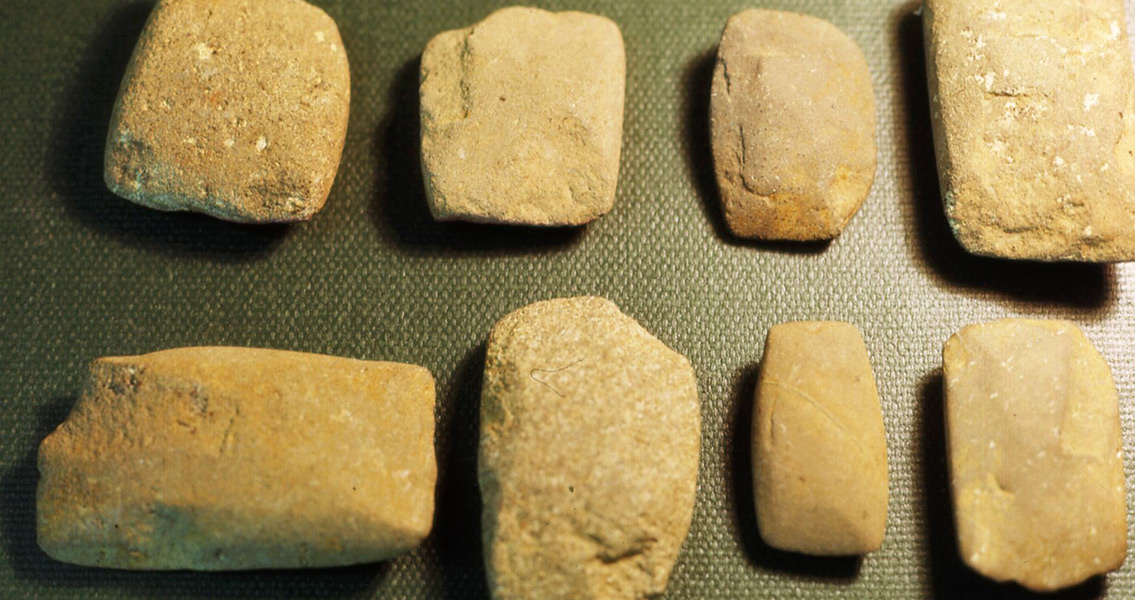
Homo genus was not the first species to discover how to do this. Lead researcher Sonia Harmand, an archaeologist at Stony Brook University, said the team found the site, near lake Turkana in northern Kenya, by accident four years ago after taking a wrong turn. They noticed several stone tools on the surface of the earth, and got digging. Their work yielded 20 more artefacts that were underground, and as many as 130 on the surface. These included cores – chunks of rock from which pieces are chipped to make tools, anvils and flakes (small pieces of stone used as tools). According to Harmand, the pieces bore marks of deliberate manipulation, so they could not have been the result of accidental fracture. The artefacts were well preserved in the sediment, so the researchers were able to date them quite accurately. One of the pieces was so well preserved that it could be fitted back to the core from which it had been chipped with the help of an anvil. As for the genus which made and used these tools, Harmand said she believed it had been either the Kenyathropus or the Australopithecus. The former was a species discovered in the same area, near lake Turkana, in 1999. The fossil was dated to between 3.2 and 3.5 million years ago, and is considered to be evidence of the diversity of pre-Homo species. The Australopithecus’ most famous representative is Lucy, the incomplete female skeleton discovered in the 1970s in Ethiopia, which supplied science with a lot of information about our early ancestors. One other interesting implication of this discovery is related to an earlier study, from 2010, when archaeologists working in Ethiopia unearthed a 3.4-million-year-old hominin child fossil, along with animal bones bearing what the authors of the study claimed were deliberate markings. The study was received sceptically, given the gap in time between what was until then considered the oldest known human tools, but now, thanks to Harmand’s team, its credibility could rise. According to the authors of the earlier study, the Australopitheci used stone tools to deflesh their prey and break the bones to get to the marrow. Both finds are evidence that technology played a major role in hominin evolution even at these early stages and, says anthropologist Alison Brooks from George Washington University, was a driver for the emergence of the Homo genus. Harmand’s team has now proposed a special term for these tools: Lomekwian technology, after the name of the excavations site, Lomekwi 3. Image courtesy of Wikimedia Commons user: John Atherton]]>