
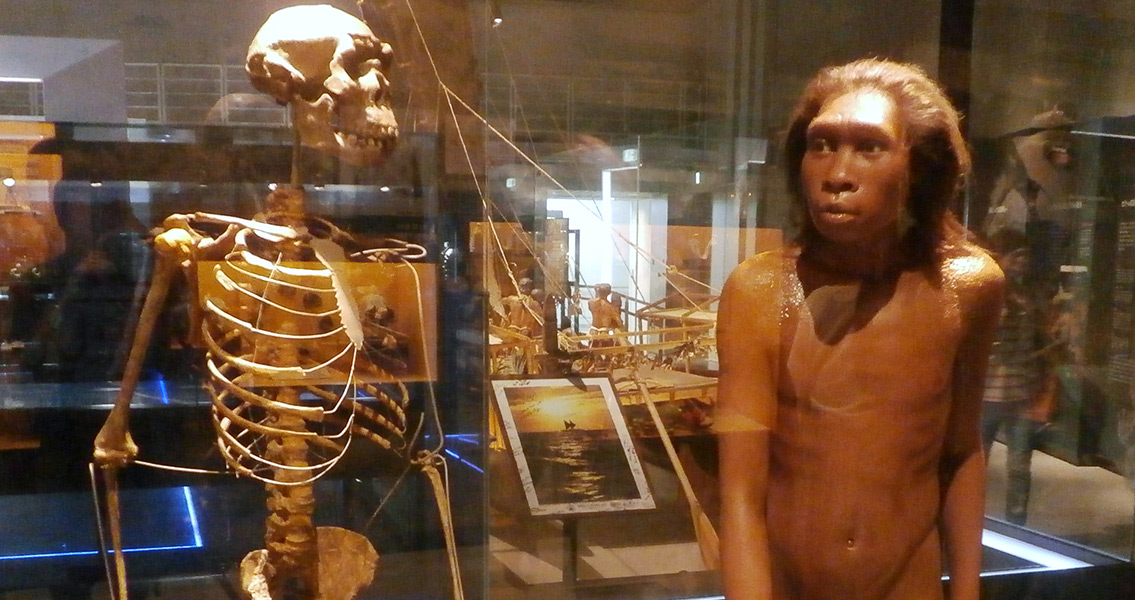
Homo erectus. While there’s no direct evidence that this was the case, the hominin, which is thought to have been the first to walk upright in a manner similar to modern humans, was the first to migrate from Africa. H. erectus fossils present in the Asian fossil record, dated to between 1.8 million years and 33,000 years old, put them in the right place at the right time to have contributed their genetic material. The only way to prove the theory would be to extract DNA samples from the remains of a H. erectus and then compare it to modern populations living in Australasia. This has proven difficult, as there has yet to be a H.erectus fossil discovery with enough genetic data intact to sample successfully. This differs from how scientists have derived the genome of an early hominin species known as the Denisovans after a cave in Siberia yielded a remarkably well-preserved finger bone. As if identifying the identity of the mystery species wasn’t complicated enough, it’s possible that the mystery DNA found within the samples was contributed by more than one unknown hominin living in or migrating to the region. With no frame of reference, there’s no way to isolate the new genetic material conclusively; with Denisovans, Neanderthals and at least one more hominin present within the region and interbreeding, it may be impossible to pinpoint just how many were there without additional ancient genomes to sequence. This is unlikely, as the climate of the Asia-Pacific features warm temperatures and high humidity levels which cause genetic material to degrade much more quickly than elsewhere. Regardless, this new study – and several others – have been building a case for just one single migratory movement by early humans out of Africa around 60,000 years in the past, changing the narrative when it comes to human evolution. The new study, published online in the journal Nature Genetics, can be found online at www.nature.com]]>
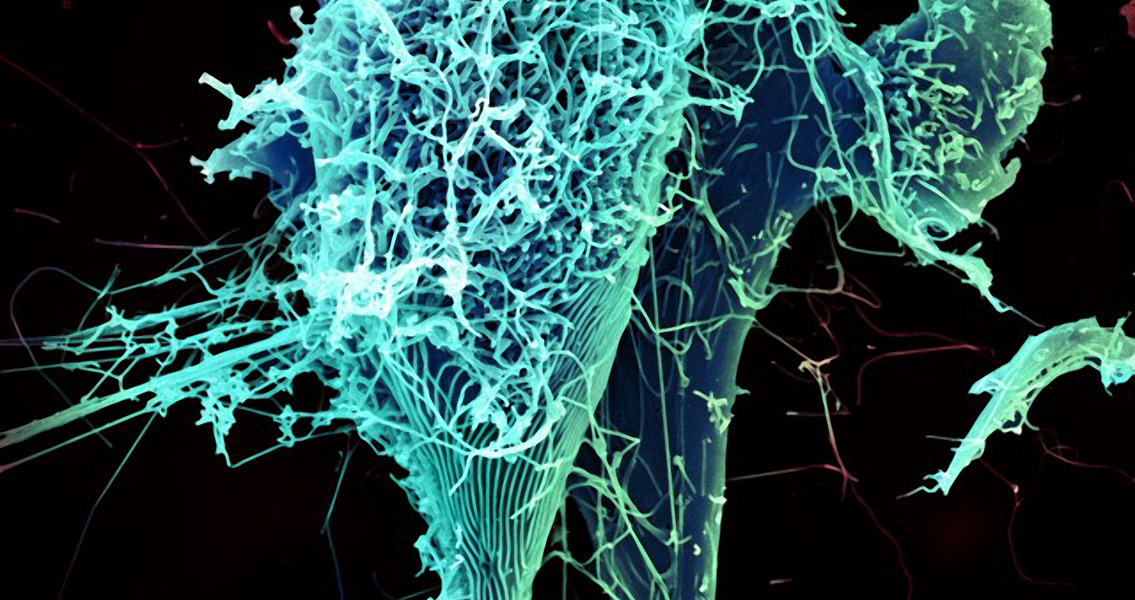
Phys.org, Stanford University postdoctoral fellow and study author David Enard remarked on these findings, stating that while the research team knew that an epidemic or a pandemic that affects a population will either lead to adaptation or extinction, the scientists were surprised at how strong and clear the pattern of viruses having this impact on adaptation was. Proteins are crucial to our biological function, as they are responsible for many different cellular functions. By pulling back the curtain on how small changes in the composition and shape of proteins have aided mammal populations’ response to viral threats, the way could be paved for new therapies against modern-day viruses. Stanford professor Dmitri Petrov, a co-author of the study, stated that researchers are hard at work determining which cell parts have played a role in fighting viral infections in the past, and how this was accomplished without compromising the organism’s health. Existing research has focused on understanding how proteins directly involved in immune response reacted to being exposed to viruses, but this study is the first of its kind to take a global approach to as many proteins as possible. Enard said that viruses don’t just cause adaptation in highly specialized immune proteins. In fact, any protein that happens to come into contact with a virus can be part of the adaptation process of overcoming the ill effects of that virus. The researcher added that data analysis had revealed this adaptation occurred at least as frequently outside the immune response as it did within. The first step of the research study was to flag every protein that we know has had physical interaction with viruses. This led the team to review several thousand scientific abstracts. In the end, Enard and his team whittled down the list to around 1,3000 relevant proteins. Next, big data algorithms were built by the team to see how proteins that interacted with viruses evolved compared to others. The results revealed that adaptations in virus-interacting proteins occurred three times as often as they did in non-interacting proteins. The new study, which has been published in the journal eLife, can be found online here Image courtesy of NIAID ]]>

PLOS ONE. Two major, seemingly contradictory hypotheses exist for the ways climate and environment could have influenced the wave of human progress that included the development of axes and other tools with handles, and the formation of sophisticated hunting techniques. One school of thought suggests that the technological advances were spurred on in response to climate instability. The other school advocates a more indirect approach, suggesting that environmental stability in fact provided a secure setting to foster the innovations. Until now, a disconnect between paleaoenvironmental records and archaeological sites has made it difficult to test these explanations; to determine whether climatic and environmental changes were in phase with waves of early human innovation. Patrick Roberts, the lead author of the study, along with his colleagues, acquired data concerning paleaoenvironmental conditions in the Middle Stone Age by carrying out analysis of animal remains, shellfish taxa and the stable carbon and oxygen isotope measurements in ostrich eggshell. The objects were taken from two archaeological sites, Blombos Cave and Klipdrift Shelter, spanning 98,000 to 73,000 years ago and 72,000 to 59,000 years ago, respectively. The team found that the climatic and environmental variations displayed in ostrich eggshell stable isotope measurements, faunal records, and shellfish indicators may not have occurred at the same time as technological and cultural innovations at the two sites under study. Although climate change may have had an impact on subsistence strategies, the results seem to show it wasn’t the driving force. “Our results suggest that although climate and environmental changes occurred, they were not coincident with cultural innovations, including personal ornamentation, or the appearance of complex tool-types. This suggests that we have to consider that other factors drove human innovation at this stage in our species’ evolution.” said Professor Roberts, in a PLOS ONE press release. The team’s results suggest that context specific analysis is necessary, analysing sites and innovations individually, to truly understand the driving forces behind the drastic changes of the Middle Stone Age. For more information PLOS ]]>

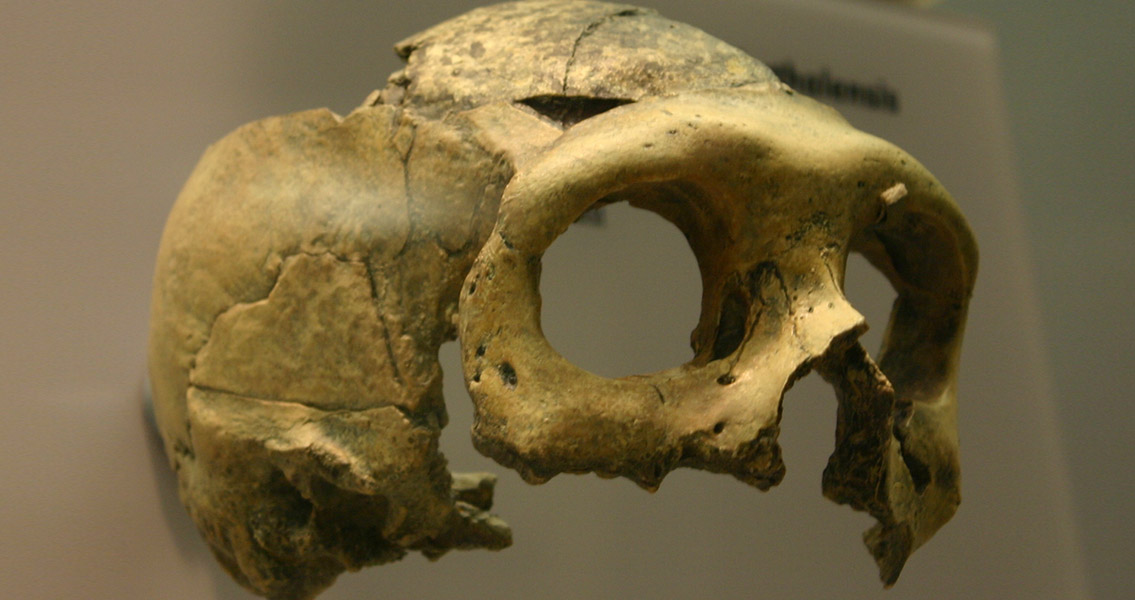
Scientific Reports, can be found online here Image courtesy of E. Trinkaus and A. Soficaru]]>
here]]>

Scientific American, the astrophysicist explained that the study focused on the 1,200-light year region of space surrounding the Earth known as the Local Bubble, which incorporates the region of the Milky Way that the Earth inhabits. Breitschwerdt and his team used a combination of existing supernova data and computer modeling to determine if the deep-sea deposits of iron-60 were from local supernovas that occurred around 2.2 million years in the past. The results led to the team pinpointing two supernovas that would have ejected their radioactive mass on trajectories that hit Earth – two stars that were around 290 light years and 325 light years from our own planetary system. Both of these supernovas, the first occurring 2.3 million years ago when a star almost 10 times the mass of our own sun exploded; the second 1.5 million years in the past when another star nearly as large exploded, occurred well within the window of human evolution. In fact, the oldest known member of the Homo genus – of which Homo sapiens is a member – has been dated to around 2.8 million years old. These explosions were two of the 14 to 20 supernovas that supplied the hot plasma making up the Local Bubble, researchers said. The other supernovas likely showered iron-60 onto Earth as well, albeit to a smaller extent because they happened farther away and longer ago. When the radiation from these two explosions reached earth, it could have triggered genetic mutations on Earth’s early life, Breitschwerdt remarked. In fact, mutations such as increase in brain size – one of the hallmarks of human evolutionary development – could have been jumpstarted by the supernova radiation. ]]>
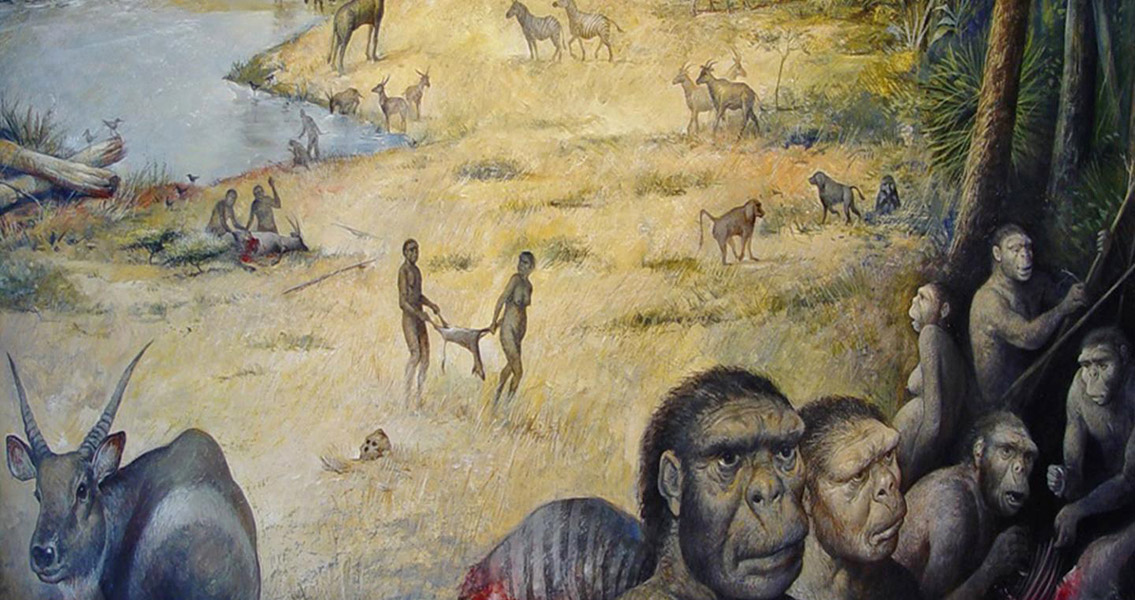
Homo habilis and Paranthropus boisei, these two species were similar in that they had a rough lifespan of anywhere from three to four decades and a height of around 4.5 feet to 5.5 feet. However, the latter is thought to have been more heavyset and with a smaller brain capacity than Homo habilis. Scientists involved in the research feel that the two species were unlikely to have camped there, but instead used the cover of the nearby acacia and palm trees to feed off of the carcasses of either their own kills or those taken from other carnivores. When and where early human ancestors began eating more meat are crucial questions, as an increased amount of protein in the diet of hominins is thought to be one of the first indicators of an increase in brain size. The research study can be found online here Image courtesy of M.Lopez-Herrera via The Olduvai Paleoanthropology and Paleoecology Project and Enrique Baquedano.]]>

Nature this week says that our Paleolithic evolutionary ancestors helped pave the way for their own evolution into modern humans by both eating meat, and preparing their food in certain ways prior to cooking it. The changes led humans living in the Stone Age to evolve with smaller teeth and faces thanks in no small part to adopting a more omnivorous diet that required some complexity to prepare, according to study author Daniel Lieberman from Harvard University. Research conducted into cooking in the past has singled out how pivotal it was to human evolution, but has been criticized for being too broad in giving credit for the changes that occurred to the face and head over the last 3 million years or so. The new study tackles this question; in an interview with USA Today, Lieberman did acknowledge that cooking food is certainly important, but the simple act of roasting raw meat over a fire isn’t the entirety of the story. The author and his colleagues point out in the research study how pounding, slicing, chopping, and other methods of food preparation and processing had effects on human anatomy and physiology that were profound – even to the point in helping humanity develop the ability to speak and run on two legs. There are other important facets of the paper, including the methods used to gather research. One of these methods involved volunteers willing to chew all manner of food while the researchers monitored their bite strength and other variables. Katherine Zink, a colleague of Lieberman from Harvard, worked together with him to see how humans handled masticating food like beets, carrots, yams, and even raw goat meat sourced from local goats. At first, the goat meat proved to be too tough for human teeth; however, once sliced into smaller pieces, the meat was much more manageable and was easily eaten. Vegetables that were eaten intact instead of first pounded by a stone tool were likewise harder to eat for the volunteers. Based on these findings, the research team feels that the inclusion of meat – sliced meat especially – into the diet of our human ancestors made it easier for them to enjoy relatively high levels of nutrition without having to work their jaws quite as hard. This could have contributed to the differences in jaw muscles and teeth in Homo erectus, a human ancestor that evolved shortly after the practice of using stone tools and eating meat. As humans no longer had to process and prepare their food by mouth but were instead able to do so with tools, early humanity evolved adaptations like shorter jaws and smaller faces that improved their ability to speak and to run. However, not everyone at Harvard is convinced that the new study is on the mark. Richard Wrangham, a colleague of both Zink and Lieberman, told USA Today that the relatively diminutive digestive tract of Homo erectus would have precluded the species from extracting enough calories from raw plants to thrive. Instead, he says that cooking food would have had to have played a much more important role than it does in the new study. The research can be found online here]]>

here Image courtesy of Wikimedia Commons user: Internet Archive Book Images]]>