Categories
Breaking News

Massive 1,500-Year-Old Stone Complex Discovered in Kazakhstan

Live Science, there were several types of stone structures discovered by archaeologists from the Siberian Department of the Russian Academy of Sciences and Kazakhstan’s Mangistau State Historical and Cultural Reserve. These structures range in size from a modest 13 feet by 13 feet to as large as 112 feet by 79 feet, and are made from stone slabs that were inserted vertically into the ground. Many of the structures have a passing resemblance to Stonehenge, the researchers report. Several of the slabs have also been carved to depict a wide variety of items, including weapons and animals. More than just stone structures were found. Archaeologists unearthed artifacts left behind by those that inhabited the complex, including a saddle featuring silver ornamentation which, like many of the stone structures, depicts animals such as deer, wild boar and prey animals that bear a passing resemblance to lions. Research into the saddle has led researchers to believe ancient artisans originally designed the embellishments using leather before gluing them to wooden boards. These pieces of leather would then have been covered by silver plates and held together until an impression was formed in the silver. The stone complex was originally discovered in 2010 by an amateur metal detector operator who found several artifacts, including parts of a silver saddle. It wasn’t until 2014 that the funds for archaeological research into the region could be secured; the fruits of this archaeological team’s labor, which includes the discovery of several more artifacts, have been recently published. Much of the excavation work and subsequent study has been preliminary in nature, according to the researchers. However, initial analysis indicates that some of the formal details of the stone enclosures and their construction methods point to nomadic tribes. Taking the artistry of the saddle into consideration, researchers are speculating that the Huns, a nomadic group of Eurasian warriors as famous for their horsemanship as they were notorious for their military dominance during the fifth century CE, may have been linked to the site. In fact, due to the design of the saddle, the precious metals involved in its construction and its artistry, archaeologists are nearly certain that its owner held privileged status. The saddle may even bear some indications as to which particular clan the individual belonged to. It could have been left behind as part of a burial ceremony or some other ritual event, researchers suggested; while there were skeletal remains discovered in the structure where the saddle was found, there are no indications that the skeleton was buried at the same time the saddle was left there. Additional research on the complex and other discoveries is ongoing. A research paper on the silver saddle is planned for 2017. The original research paper, published in the journal Ancient Civilizations from Scythia to Siberia, can be found online here Images of the stone complex can be found at Live Science]]>

Categories
Breaking News

Date of Siberian Unicorn’s Extinction Later Than Thought?

E. sibiricum, which was as big as a mammoth and was believed to have had a large horn on its forehead. The horn may have been used for defense – driving away competitors, attracting mates, digging for plant and water roots, and sweeping snow away from grass in the winter. Elasmotheres were herbivores, like all rhinoceroses. Unlike others however, its high-crowned molars were constantly growing and it had longer legs than those found on other rhinos, which had been adapted for galloping, giving it a gait similar to that of a horse. Presumed to have died off around 350,000 years ago the Elasmotherium rhinoceros roamed the vast territory between the Don River and east of what is now modern Kazakhstan. Residual Elasmotherium findings in Pavlodar Irtysh indicate a significant period of habitation by these rhinos in the southeast region of the West Siberian Plain. The researchers are now planning to complete mass radiocarbon studies of other mammalian remains which have previously been presumed to have gone extinct between 50,000 and 100,000 years ago. “Our research makes adjustments in the understanding of the environmental conditions in the geologic time in general. Understanding of the past allows us to make more accurate predictions about natural processes in the near future—it also concerns climate change,” Shpanski said in the American Journal of Applied Science ]]>

Categories
Breaking News

NASA Photographs Nazca Lines of Kazakhstan

Categories
Breaking News

Bronze Age Kazakhstanis Were Skilled Farmers

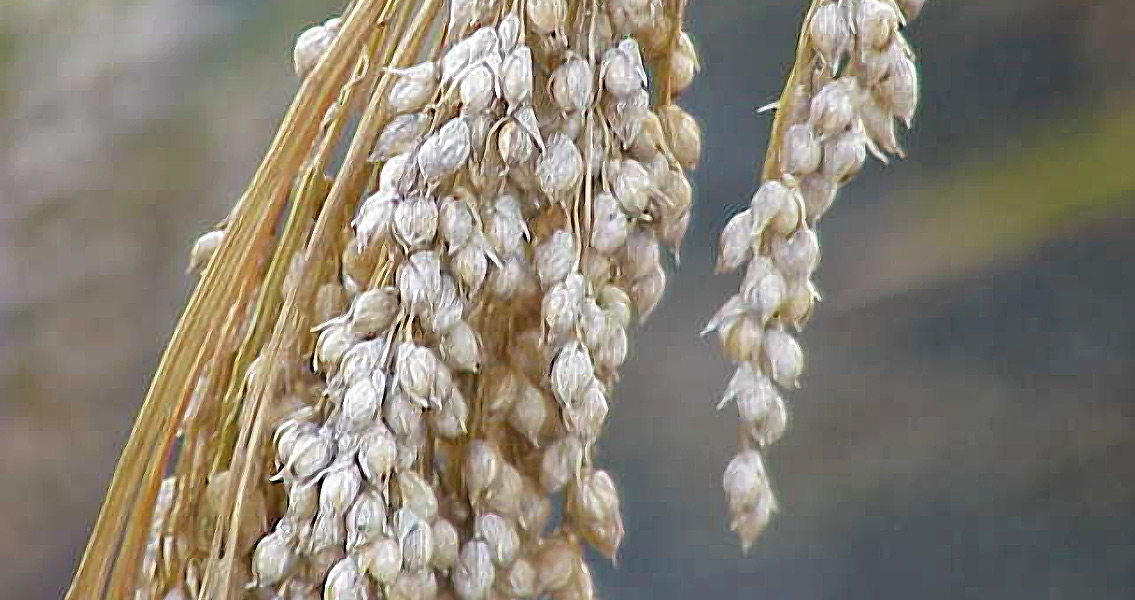
Panicum miliaceum and Setaria italica),” the team wrote in their report, published in the upcoming edition of the Journal of Archaeological Science. Intriguingly, there was very little evidence of C4 plants in the diets of individuals from Bronze Age northern Kazakhstan. In later periods, C4 plants were a major component in human diets across the region, but at this early stage – around 1,800 BCE – it appears that southern Kazakhstan was populated by agricultural societies. “The wide variety of stable isotope results, both within and between contemporary sites from the southern regions of Kazakhstan, indicates a diversity of food choice,” the team explained. The team’s research presents the earliest directly dated isotopic analysis of millet consumption outside of China. Their research suggests that millet was a significant dietary component for a substantial number of individuals in Bronze Age southern Kazakhstan, indeed, millet made up such a large proportion of their diet that it was detectable in analysis of human bone collagen. The evidence for substantial millet consumption in southern Kazakhstan – particularly when taken with the absence of the crop in the north during the same period – suggests that this region may have been the route for the spread of millet crops from China. This hypothesis, the team notes, warrants further archaeobotanical research. What the team have revealed conclusively is the great variation in human diet. Southern Kazakhstan during the Bronze Age had a great many different sources of food which has left an indelible mark in the bones of people who inhabited the area. The evidence of millet also implies that Bronze Age southern Kazakhstan could have been a very important area between China and further West, meaning that the region could have been the first area to properly cultivate the crop outside of China. For more information: www.sciencedirect.com Image courtesy of Wikimedia Commons user: Kurt Stüber]]>

Categories
Breaking News

Ancient Kazakh Burial Mound Excavated

Categories
Breaking News

Massive Geoglyphs Uncovered in Kazakhstan