Categories
Breaking News

Warrior Armor Made of Reindeer Antlers Found at Sacred Site

Siberian Times, adding, “The ornamentation on the plates can be individual, that is after the thorough analysis we could say how many warriors left armour here, judging by the style of decorations.’” The largest plates are between 23 and 25 centimeters long and in ancient times would have been attached to a leather surface, offering a dependable type of protection. Other plates, which are are between 12 and 14 centimeters in length, are thinner and richly ornamented. Conical shaped armor has also been seen on the plated helmets which were worn by ancient warriors in the taiga zone (also known as boreal forest) of Western Siberia. The discovery of iron helmets is extremely rare, however, bronze images from the middle of the first century CE that show people wearing headdresses that clearly resemble helmets have been found. The armor resembles the armor worn by warriors of the Kualai people, fishermen and hunters indigenous to the taiga. Previous finds at the site include a 2,000-year-old ring, believed to be evidence of a bear cult. These ancient people didn’t leave any written records. Made using high quality bronze, the ring, so tiny in diameter researchers believe it was put on a bear claw, features the image of the head and paws of a bear. Experts theorize that the ring was on the claw of a previously slain bear, an animal that was worshipped by Khanty tribes as sacred and an ancestor. After the slaying of the bear, the paws and head were adorned with rings and a handkerchief, followed by a festival honoring the animal. Image courtesy of Andrey Gusev ]]>

Categories
Breaking News

Remains of 13th Century 'Siberian Robin Hood' Discovered

the Siberian Times: “At the moment we have a birch bark quiver, two bone plates with elaborate ornaments, iron arrowheads, wooden arrow shafts, birch bark linings for a saddle, the remains of ribbons, likely silk, and what is left of a leather strap. Initially we thought that the bone plates were details of the bow, but they turned out to be the decorations of the quiver.” The warrior is believed to be Mongolian, although no other quivers like the one at the burial site have ever been found. The shape of the arrow heads suggest the man was a warrior, although they could also have been used for hunting. Archeologists are hopeful they’ll receive permission to examine the sarcophagus next year. In the meantime, steps have been taken to preserve the site, and work will continue to find the deceased archer’s bow. Vasily Oinoshev, the director of the Agency for Cultural and Historical Heritage of the Altai Republic, says in the Siberian Times: “The quiver is a very interesting one. It has separate ‘pockets’ for different types of arrows. This quiver is a great find, it is very well preserved. It will be important to examine it more thoroughly to understand its construction,” adding, “Sadly we cannot go and excavate the grave immediately. We need to have a special permission for work. Excavations are allowed in the period from 1 April to 1 November. So as soon as we get all the permits we will go to work on this grave. “ “We are doing all we can to ensure the safety of the grave in winter and to ensure the security of other archaeological objects. I have many questions to how these items were found. The story was that the locals found the grave in a hole in a cliff and took some items from there. But I am not completely sure they have not unearthed it. We need to check all this thoroughly.” Mongolians conquered the region of Altai in the twelfth century, and the area stayed under Mongolian control into the fourteenth and fifteenth centuries, yet finds from this time are rare in Altai. ]]>

Categories
Breaking News

Scientists Working Above the Arctic Circle Find 1,000-year-old Persian Cup

Siberian Times: “From the 6th and 7th centuries AD Central Asian merchants began to appear in the Upper Kama region. They exported walrus tusks, hunting birds and fur from the north. Through the Kama region they had penetrated to the Ob region in 7th and 8th centuries.” The Persian items that traders brought north with them often took on ritual meanings for the indigenous Khanty and Mansi peoples who lived in the area. They were seen as gifts to gods and spirits, stored in holy places and often used as serving dishes to carry ceremonial food given to the gods at festivals. Since the second millennium BCE, the regions between the Kama and the Irtysh rivers have been home to the indigenous Khanty and Mansi peoples. A number of researchers believe the Khanty’s ancestors were the prehistoric Andronovo culture, which are known for their ancient metalworking skills. Other researchers claim that the Khanty originated in the Ural steppe and then moved north to their present location around 500 CE. Traditionally, Khanty religion was closely connected to nature. The Crow Spring celebration is celebrated in April, while the Bear Celebration follows each successful bear hunt. The Bear Celebration can last 5 or 6 days (depending on the sex of the bear), and includes over 300 songs and presentations. With the arrival of Soviet power and the establishment of collective farming came the persecution of Khanty shamans along with the destruction of their burial grounds. Khanty children were even forcibly removed and sent to boarding schools. After an outburst of resistance, known today as the Kazym rebellion, the Khanty were brutally suppressed by the Soviet army; Khanty villages were burned along with anything else connected with their culture. Following that event, anyone who participated in the traditional bear funeral rites faced ten years in prison. In a census taken in 2010, only 30,943 people identified themselves as Khanty. The intention of the research expedition that brought the scientists to the Arctic to begin with was a project to monitor and compare the depth of the permafrost over a 30 kilometer area near Lake Parisento, on Gydan Peninsula. The scientists installed the monitoring equipment and then compared the recorded data with information that was obtained from the same location 25 years previously. Image of the artifacts can be seen here ]]>

Categories
Breaking News

Grave of Okunev “Noblewoman” Discovered in Siberia

Siberian Times, “For such an ancient epoch, this woman has a lot of items in her grave. We have not encountered anything like this in other burials from this time, and it leads us to suggest that the items in her grave had some ritual meaning. We hope to get even more rare and spectacular finds next year, when we will continue to study this unique (burial) mound and open the central burial plot.” The funerary items which had been buried with her include approximately 100 decorations (made with the teeth of various animals), bone and horn carved items, an incense burner, bone needles, jars, and a bronze knife. Additionally, her funeral costume was embellished with more than 1,500 beads. Researchers were particularly excited after the discovery of a clay incense burner because it’s decorated with the same sun-shaped faces previously-discovered on ancient rock art in Siberia. Polyakov explained in the Siberian Times, “Its importance is hard to overestimate. All such images previously discovered had been found only on cliffs or separate stones. Now there is the prospect to find out when they were made,” adding, “Now, thanks to our current research, we can definitely say that these rock arts were made by the representatives of the Okunev culture.” The location where the grave was found is known as the Itkol II burial site. Excavations at the site started in 2008, with around 560 archeologically significant finds unearthed so far. The culture owes its name to the nearby city of Okunev, in the south region of Khakassia, where the first burial site was discovered in 1928. The Okunev Steles, anthropomorphous stone columns which are several meters high, are the most well-known monuments attributed to the Okunev culture. Dr. Polyakov is quoted in the Siberian Times as saying, “Okunev archaeological culture is a unique phenomenon of the Early Bronze Age of Southern Siberia. We have a huge quantity of artistic heritage in the form of numerous images – ‘masks’, carved or engraved on the rocks. They have special style, which is a kind of symbol of Okunev culture.” After the incense burner has been restored and precisely dated it will be exhibited at the Hermitage Museum in St Petersburg. ]]>

Categories
Breaking News

Ancient Stone Furnaces Discovered Under a Road to Russian Tourist Spot

Siberian Times. “The first finds were made in 1998 and the numerous discoveries came in the following years showing us that the Baikal region was one of the largest metallurgical regions in Asia at the end of first millennium B.C., and early in the first millennium A.D.” Despite the migration processes occurring at the time, these metallurgical technologies not only continued, they were improved upon and passed on to future generations. The earliest known metal used by humans appears to have been gold which is naturally occurring. Small quantities of natural gold have been unearthed in Spanish caves used during the late Paleolithic era (around 40,000 BCE). Silver, tin and copper can also be found in their native form, and allowed for limited metalworking in ancient cultures. ]]>

Categories
Breaking News

Date of Siberian Unicorn’s Extinction Later Than Thought?

E. sibiricum, which was as big as a mammoth and was believed to have had a large horn on its forehead. The horn may have been used for defense – driving away competitors, attracting mates, digging for plant and water roots, and sweeping snow away from grass in the winter. Elasmotheres were herbivores, like all rhinoceroses. Unlike others however, its high-crowned molars were constantly growing and it had longer legs than those found on other rhinos, which had been adapted for galloping, giving it a gait similar to that of a horse. Presumed to have died off around 350,000 years ago the Elasmotherium rhinoceros roamed the vast territory between the Don River and east of what is now modern Kazakhstan. Residual Elasmotherium findings in Pavlodar Irtysh indicate a significant period of habitation by these rhinos in the southeast region of the West Siberian Plain. The researchers are now planning to complete mass radiocarbon studies of other mammalian remains which have previously been presumed to have gone extinct between 50,000 and 100,000 years ago. “Our research makes adjustments in the understanding of the environmental conditions in the geologic time in general. Understanding of the past allows us to make more accurate predictions about natural processes in the near future—it also concerns climate change,” Shpanski said in the American Journal of Applied Science ]]>

Categories
Breaking News

Venus of Mal’ta Statuettes More Human Than Godly

Categories
Breaking News

Denisovans More Genetically Diverse Than Neanderthals

Categories
Breaking News

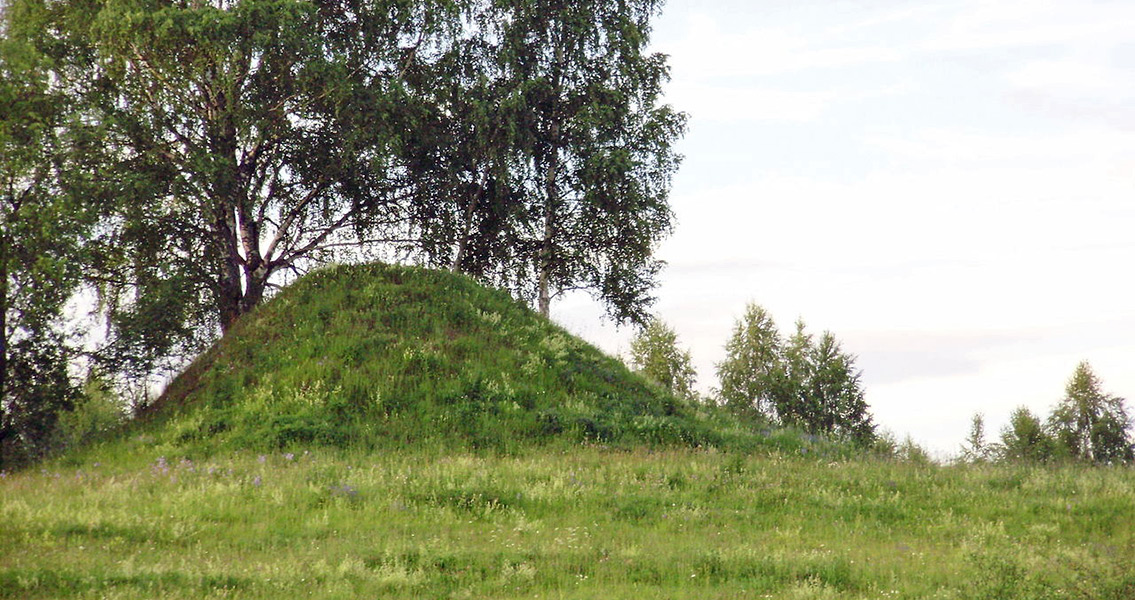
Stone Age Burial Mound Discovered in Siberia

Categories
Breaking News

New Study Names Siberia as Origin of Native Americans

Beringia for the Bering Strait that separates Alaska and Russia, was indeed the route taken by early Native American forebears. In a press release accompanying the publication of the report, University of California, Berkeley associate professor Yun Song commented that while there is a level of uncertainty in when this migration occurred and when the northern and southern Native American populations diverged, researchers will be able to become more precise in their estimates as additional ancient genomes become sequenced. Song, one of the co-authors of the new study, added that there were three different statistical models used in conjunction with one of the most modern and comprehensive sets of data ever to be used in the quest to identify the genetic forebears of Native Americans. The data sets consisted of genomes mapped from the remains of 23 different North and South American individuals that have been dated to between 200 and 6,000 years ago. These ancient genome sequences were then compared to genetic data collected from modern humans belonging to Native American tribes as well as those inhabiting Siberia. According to the team’s findings, the populations that would eventually become the northern and southern Native American civilizations broke apart from one another sometime between 11,500 and 14,500 years ago. While the majority of those that migrated to the south are the forebears of native Central and South American populations, part of North America was populated by these individuals as well. According to UC Berkeley professor Rasmus Nielsen, the first unique Native American culture, known as the Clovis, first appeared around 13,000 years in the past, which corresponds with the time that modern Native American bloodlines began to diversify. This date can be pinpointed with such confidence thanks to the discovery of the remains of a 12,600 year old boy who was revealed to have been associated with the Clovis after careful analysis. ]]>