Categories
Breaking News

Will the Story King Solomon be Validated by Animal Droppings?

National Geographic interview. “There’s clear evidence of an Egyptian presence during those centuries… But high-precision radiocarbon dating of the dung, as well as textiles and other organic material, showed that the mining camp’s heyday was the tenth century BCE—the era of the biblical kings David and Solomon.” In the Bible, King Solomon ruled a wealthy kingdom with a temple decorated extravagantly with objects made of bronze and gold in Jerusalem. To build something this grand would have necessitated the import of metal from large-scale mining operations, most likely from the Middle East. The validity of Solomon’s wealthy kingdom has never been agreed on. Some archaeologists make the argument that Solomon was actually just a small-time chieftain and incapable of organizing such a large-scale undertaking. However, in the late 1990s, another team of archaeologists discovered a copper-rich area in Jordan which indicated that metal had been produced there on an enormous scale. This site, along with the other smelting camps across the region, support the theory that the legend of the biblical king’s vast wealth may have been true. The mining operation discovered in Timna Valley has not been connected to Solomon directly, it does suggest however, that a more complex society than originally believed, possibly the Edomites, had inhabited that area and may have paid taxes to Jerusalem. The manure samples included pollen spores and seeds, enabling Ben-Yosef’s team to determine what the animals ate. Surprisingly, they found that the feed had been imported from a region over 100 miles north, near the Mediterranean cost. Long distance trade was essential to survival in the desert and during this period metal was an essential commodity, making the investment in such an operation worthwhile. During the interview, Ben-Yosef explains that more than 1,000 tons of smelting debris have been discovered on Slaves’ Hill, making it an industrial-scale operation worthy of such a kingdom. Whether or not this site is directly linked to the kingdom of King Solomon in the tenth century is yet to be determined. Ben-Yosef remains encouraged by the findings, saying in the interview: “Until recently we had almost nothing from this period in this area. But now we not only know that this was a source of copper, but also that it’s from the days of King David and his son Solomon.” ]]>


Categories
Breaking News

Archeologists Discover a Palatial Complex at Palenque

Proceedings of the National Academy of Sciences. ]]>

Categories
Breaking News

Mammoth Preservation Project Underway in Mexico

IB Times, adding, “The discovery in Tultepec is important because it indirectly supports the presence of humans 40,000 years ago.” Preliminary research reports the woolly mammal was approximately 25 years old at the time of its death, it was 3.5 meters (11.5 feet) tall and 5 meters (16.5 feet) in length, and weighed around 5 tons. The experts are hopeful that the mammoth remains are in good enough condition to be reassembled and displayed. Woolly mammoths died off around 5,000 years ago. “We are talking about 40,000 years ago so it is a very considerable period of time. The affect (on the bones) over such a period is that the bones are very sensitive.” explained assistant archaeologist Felipe Munos in the article. However, the fact that the remains were found in sediment at the bottom of a lake, and the mud was of a good level, helped to conserve the mammoth remains. Mexico was a hotbed of dinosaur activity at one time, and although the area surrounding modern-day Tultepec is arid, in earlier eras it is thought to have had an ample water supply and lush vegetation. Off the coast of Yucatan, around 825 miles south of Mexico City, is the Chicxulub crater, an impact crater that’s buried underneath Mexico’s Yucatán Peninsula. It was left behind when a large comet or asteroid, approximately 6 miles (10 kilometers) in diameter, struck the Earth. The impact coincides exactly with the Cretaceous–Paleogene (K–Pg) boundary some 66 million years ago, and it’s widely accepted that the global climate disruption caused by the event caused the mass extinction (the Cretaceous–Paleogene extinction event) of 75% of the earth’s animal and plant species, including all of the non-avian dinosaurs. ]]>

Categories
Breaking News

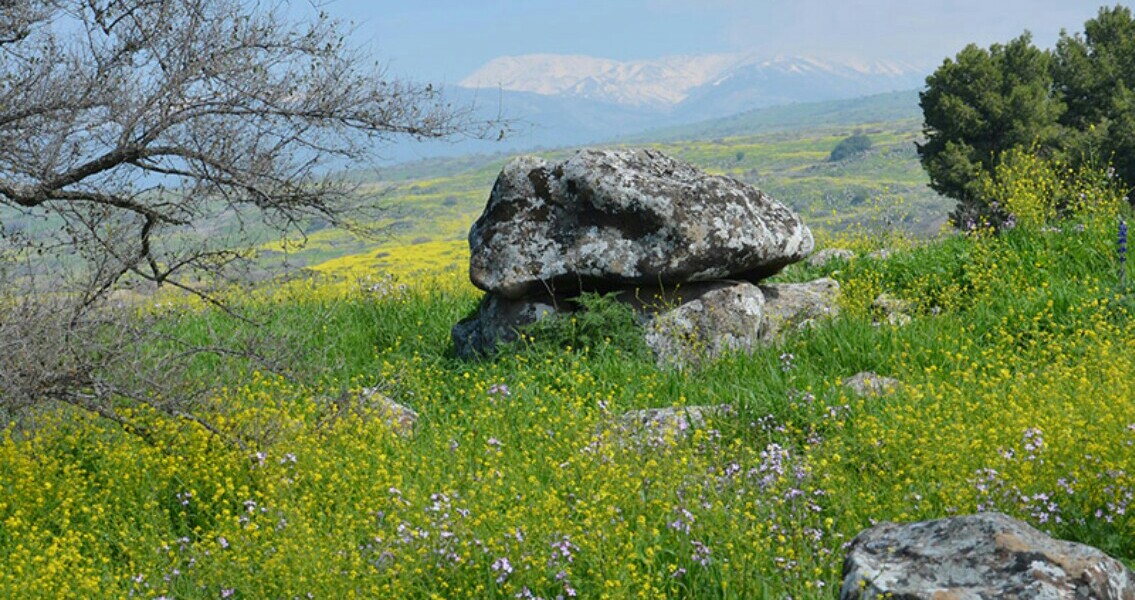
Unusual 4,000 Year Old Dolmen Discovered in Galilee

JewishPress.com, “during that time all of those people had to be housed and fed. The building of such a huge construction necessitated knowledge of engineering and architecture that small nomadic groups did not usually possess. And even more importantly, a strong system of government was required here that could assemble a large amount of manpower, provide for the personnel and above all direct the implementation and control of a large and lengthy project.” The study has been published in the scientific journal PLOS One. Image courtesy of Gonen Sharon/Tel Hai College ]]>

Categories
Breaking News

Stone Age Fences Discovered in Denmark Surround Mystery

Science Nordic. “The openings don’t seem to sit next to each of the post rows, and we’re slightly amazed by that. But maybe it functioned as a sort of labyrinth–at least that’s how we imagine it. That way you weren’t able to look inside the common space, which may have been an advantage.” Generally, a palisade type of construction is built for defense, however, the rows of poles at Stevns would have stood approximately two meters tall and were placed in a way that would have allowed a person to squeeze through, suggesting a gathering area. Numerous palisade enclosures have been discovered in Denmark and Sweden in recent years, with some of the most intriguing sites found on Bornholm, a Danish island in the Baltic Sea. In 1988 a large timber palisade (one of two on the island) enclosing a sun temple was excavated by archeologists at Vasagårds Field on the south side of the island. The Stevns site may have also had a ritualistic purpose. One difference between the Stevns site and the Bornholm palisades is that the poles at Bornholm are located much more tightly together. It’s also probable the Bornholm fences were built prior to the ones at Stevns. Dating analysis of the Stevns site is not yet complete, however, several of the pottery fragments found there indicate it may date to the latter half of the Middle Neolithic Funnel Beaker Culture between 2900 BCE and 2800 BCE. The Funnel Beaker culture draws its name from its characteristic beakers, ceramics and amphorae which were formed with funnel-shaped tops and found in dolmen burials. A dolmen is a type of megalithic tomb with a single chamber, which typically consisted of a flat horizontal capstone supported by at least two vertical megaliths. “We’ve unfortunately not found any circular shaped constructions like they have on Bornholm, but the similarities between the enclosures makes me think about rituals in our finds too,” Sloth says in the article. Image courtesy of Danish Geodata Agency / Pernille Rohde Sloth ]]>

Categories
Breaking News

The Lost Arthurian Kingdom of Rheged Discovered in Scotland

Categories
Breaking News

2,400-year-old Skeletons Discovered in Northern Iraqi Tomb

Categories
Breaking News

A Menorah and Cross Etched Side-by-Side Hundreds of Years Apart

here ]]>

Categories
Breaking News

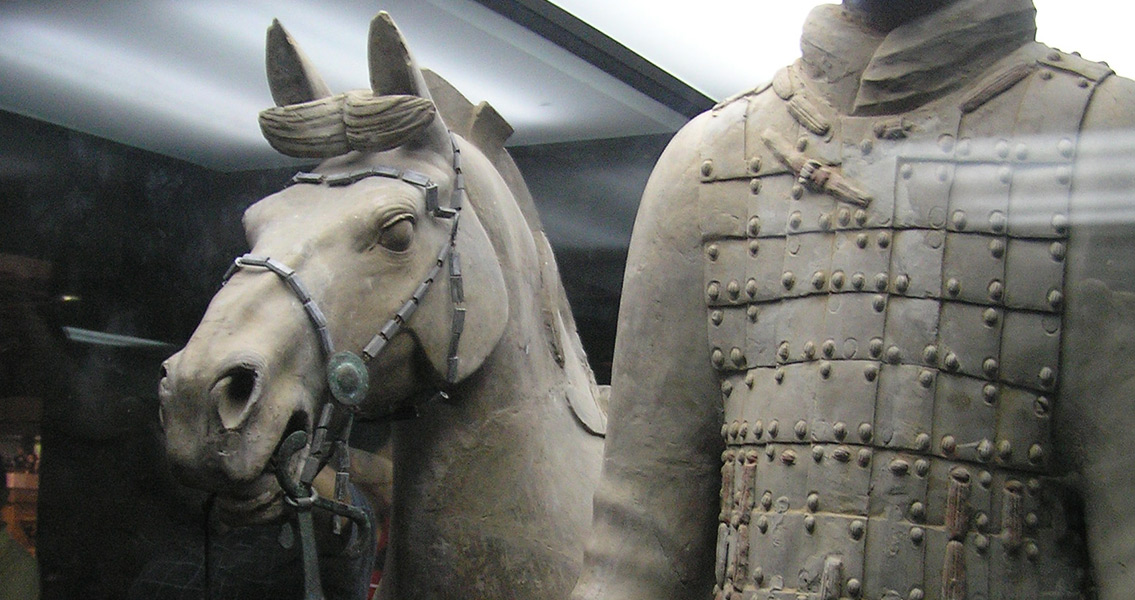
Thousands of Animal Artifacts Entombed with Emperor

Categories
Breaking News

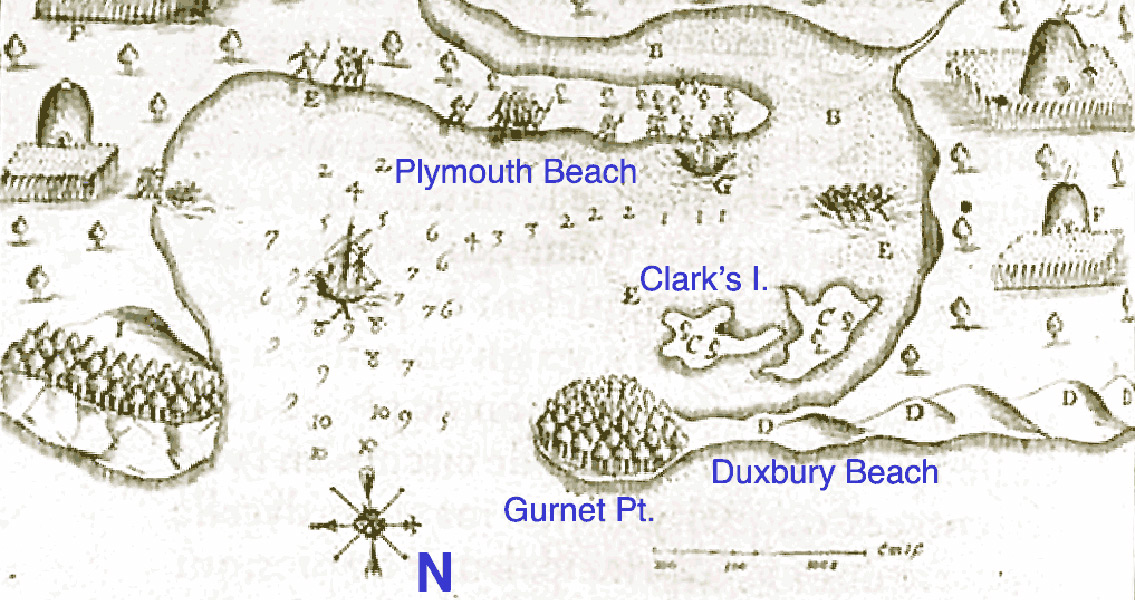
Original Site of the Plymouth Colony Identified