Categories
Editorial

Nazi Germany and its curious treatment of lesbians

Memorial “to the gay and lesbian victims of National Socialism” in Cologne: The inscription on the left side of the monument (to the viewer’s right from the angle depicted) reads “Totgeschlagen – Totgeschwiegen” (“Struck Dead – Hushed Up”). Credit: Jörg Lenk via Wikimedia Commons[/caption]

Female oppression as a cause for the tolerance of lesbians?

Some have argued that lesbians weren’t as harshly persecuted as gay men, simply because female sexuality wasn’t taken seriously. Others have said that the regime’s policy of pronatalism, which encouraged reproduction and the nuclear family, didn’t face as much of a threat from lesbians as it did gay men. Further still, the Nazis believed women were inferior to men and thus dependent on them. Under this theory, a lesbian would still rely on the men in her community, and is hardly a threat to male dominance. The Nazis also dismissed lesbianism as they believed lesbians could still occupy a German woman’s primary role: to mother as many German babies as possible. Sexuality, they believed, did not interfere with a woman serving the Nazi state as a wife and mother. There is another prominent narrative, which has gained attention over the past year. Samuel Clowes Huneke from Stanford University posits that Nazi officials didn’t see lesbians as a strong political threat, due to the fact that women were barred from politics and public life. “In light of both the fearsome persecution of homosexual men and scholarship that places it in the context of National Socialist pronatalism, the regime’s seeming lack of interest in female homosexuality is startling, for in other respects the government placed considerable burdens on women,” says Huneke.  

Four couples betrayed

Specialising in homosexuality in the Third Reich, Huneke has examined 4 cases of investigation by the Kriminalpolizei, or the German criminal police. Discovered at the Landesarchiv Berlin in 2015, the files shed light on the investigation of 8 women. They show us signed statements from witnesses and the women themselves. In all 4 of the cases, the women were accused by a person they knew and trusted: whether that was a neighbour, co-worker or even a parent. “That these eight women were denounced to the Berlin criminal police in the early 1940s is striking on its own, given the archival silence when it comes to female homosexuality,” Huneke says. Astonishingly, there is no evidence that any of the 8 women were punished as a result. All 4 cases tell us that the women could not be prosecuted for same-sex relations under the criminal code, in the way that gay men would have been. Huneke was fascinated: “To scholars accustomed to seeing in the Nazi state a jungle of overlapping jurisdictions, personal initiative and law based solely on the Führer’s wish, this is a curious portrait of the Nazi justice system, one marked by an unexpected concern for the strict interpretation of statute.” One case stands out as particularly peculiar. Margot Liu née Holzmann was a Jewish lesbian living in Berlin. In 1941, she married a male Chinese waiter and received Chinese citizenship, which protected her from being deported to a concentration camp. However, when her husband discovered she was in a lesbian relationship, he filed for divorce and reported her to the police. Curiously, the police did not intervene. Moreover, they insisted, in multiple documents, that she was protected because of her Chinese citizenship – despite being a German Jewish lesbian. At this point, it is worth noting that in all 4 of these cases, including Margot Holzmann, we are looking at the judgment of one single officer. That particular officer may have just been less inclined to pursue homophobic policy than other officers. However, the rules were very closely followed, which has led some historians to consider this to be an indication of relative tolerance for lesbians.  

“Open – but not enviable – lives”

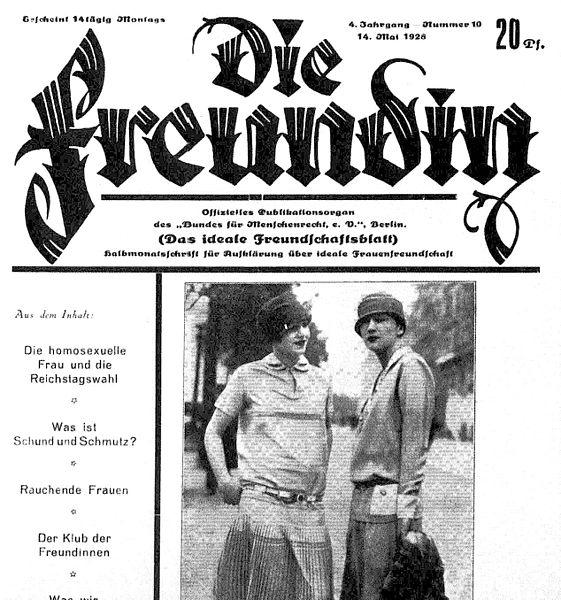
The files show that the 8 women had led relatively open – though certainly not enviable – lives as lesbians before being denounced to the authorities. Ordinary German citizens would have been aware of their female friends, co-workers and acquaintances in same-sex relationships, but were less likely to report them to the police. A patronising understanding of female sexuality comes into play: “Gender is perhaps why lesbians weren’t persecuted in the same ways… [but] these files throw into sharper relief the duplicity of tolerance that has characterised societies’ views of female sexuality for centuries,” says Huneke. By no means was life as a lesbian in Nazi Germany easy, though. In 1928, for example, the police banned popular lesbian journals such as Die Freundin (Girlfriend) based on the Protection of Youth from Obscene Publications Act.   [caption id="attachment_8709" align="aligncenter" width="561"] Credit: Bund für Menschenrecht/Wikimedia Commons[/caption] Many conservatives are documented as demanding the enactment of criminal statutes against lesbian sexual acts. Pamphlets with messages against homosexuals, feminists, Republicans and Jews were everywhere, usually bringing with them the ideas of a conspiracy from marginalised peoples to destroy Germany. These pamphlets denounced the movement for women’s rights, saying that feminism was nothing more than a seduction into lesbianism. Culturally, it seems there was a war against lesbians; and yet there appears to be at least some level of tolerance when it came to prosecution.  
Tolerance and the nature of dictatorships

The case of lesbian life in Nazi Germany is considered to demonstrate that dictatorships often rely not purely on overt oppression; but on limited tolerance of certain groups. Huneke calls it the ‘divide-and-conquer approach’. “One of the most important takeaways from this research, to my mind, is to break the popular idea that authoritarian governments maintain their power only through repression.” Moreover, Huneke says: “the experiences of lesbians in Nazi Germany can help shed light not only on how gender operates in multivalent ways, but also the complex negotiation of both repression and toleration on which authoritarian regimes depend.”]]>

Categories
Breaking News

History News of the Week: Did the Nazis Tolerate Lesbians?

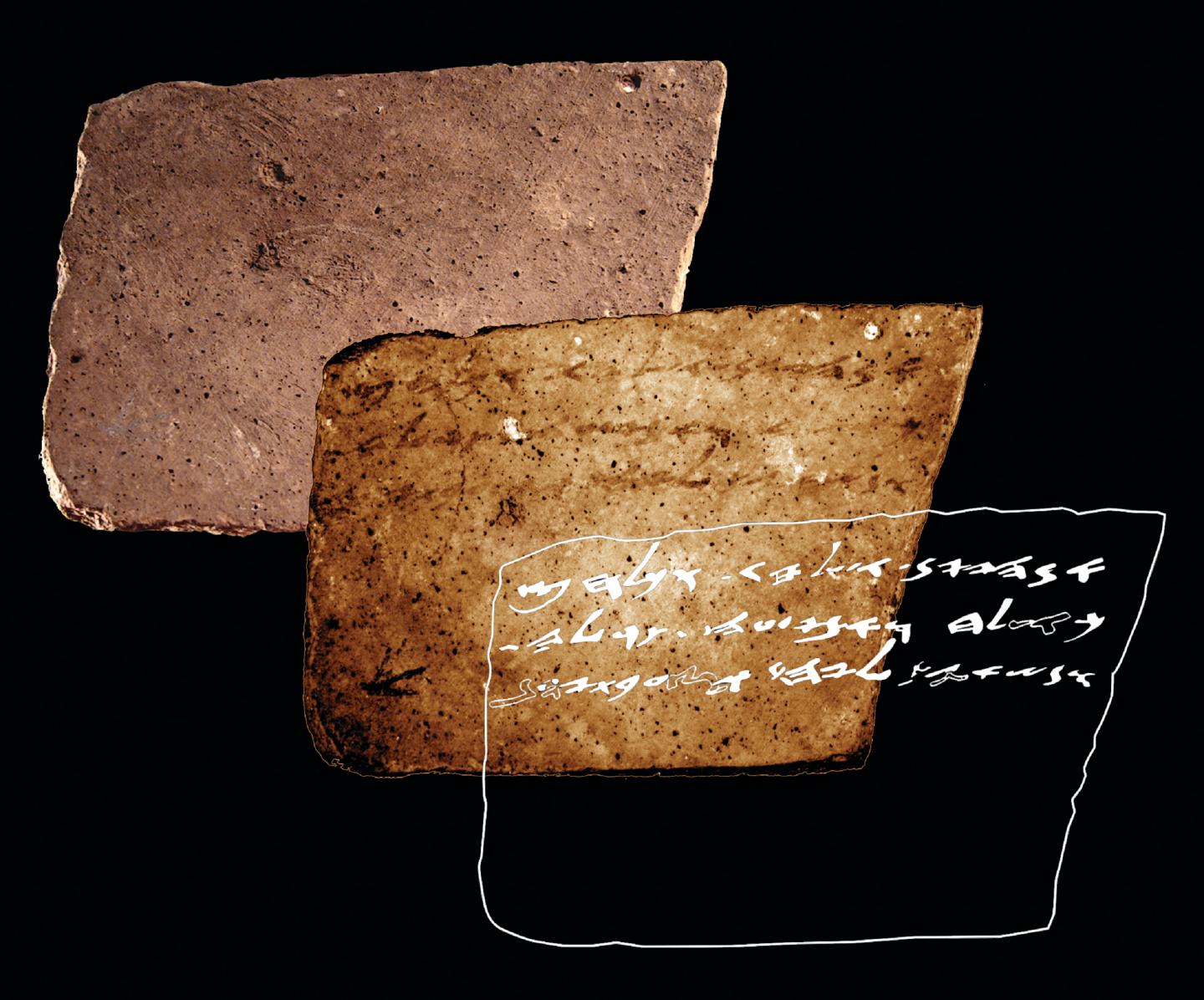
Limited toleration of Lesbianism in Nazi Germany A new study claims that the Nazi regime, infamous for its discrimination and oppression, had some toleration for Lesbians. Samuel Clowes Huneke, a doctoral candidate in history at Standford University in the USA, analysed police examination files from the 1940s related to alleged violations of same sex relations laws. His findings have been published in the Journal of Contemporary History. “These files add a new level of nuance to existing scholarship,” Huneke said in a statement from Stanford. “They hint at a more normal existence that was the daily experience of some lesbians in the Third Reich.” The Nazi regime’s persecution of homosexual men is well known, with homosexual acts between men explicitly criminalised. Somewhere between 5,000 and 15,000 alleged homosexual men were incarcerated in concentration camps under the Nazi regime, with up to 60% of them dying in the camps. The experience of homosexual women in Nazi Germany however, is much more ambiguous, especially because women were excluded from the laws that made homosexuality illegal among men. Huneke argues that Nazi officials didn’t view lesbians as a threat, as women were banned from most spheres of politics and public life “In light of both the fearsome persecution of homosexual men and scholarship that places it in the context of National Socialist pronatalism, the regime’s seeming lack of interest in female homosexuality is startling, for in other respects the government placed considerable burdens on women,” writes Huneke, who is working on a dissertation about the history of homosexuality in postwar Germany. Files Huneke discovered in 2015 show that Nazi authorities investigated eight women in Berlin, all denounced for violating same sex laws. In each case, authorities determined the women could not be prosecuted for same-sex relations under the criminal code. “To scholars accustomed to seeing in the Nazi state a jungle of overlapping jurisdictions, personal initiative and law based solely on the Führer’s wish, this is a curious portrait of the Nazi justice system, one marked by an unexpected concern for the strict interpretation of statute,” Huneke writes in his article. Invisible Hebrew inscription revealed Tel Aviv University (TAU) researchers have discovered and deciphered an invisible inscription on the back of a pottery shard which has been on display in the Israel Museum for over 50 years. The ostracon – an ink inscribed pottery shard, dates back around 2,600 years, to the period just before the destruction of the kingdom of Judah by Nebuchadnezzar. An inscription on the ostracon’s front side was noticed when the object was first unearthed in 1965, and has been thoroughly studied by scholars. Opening with a blessing by Yahweh, it also discusses money transfers. The back of the shard had been considered blank however, until now. “Using multispectral imaging to acquire a set of images, Michael Cordonsky of TAU’s School of Physics noticed several marks on the ostracon’s reverse side. To our surprise, three new lines of text were revealed,” said Arie Shaus of TAU’s Department of Mathematics and one of the principal investigators of the study published in the journal PLOS ONE. Deciphering 17 words on the object’s reverse, the researchers concluded it was a continuation of the text on the front side. “The new inscription begins with a request for wine, as well as a guarantee for assistance if the addressee has any requests of his own,” said Shaus, in a statement. “It concludes with a request for the provision of a certain commodity to an unnamed person, and a note regarding a ‘bath,’ an ancient measurement of wine carried by a man named Ge’alyahu.” Tel Arad was a military outpost at the southern border of the kingdom of Judah, stationing 20 to 30 soldiers. One tonne World War Two bomb exploded at Sevastopol Explosive experts in Sevastopol have successfully destroyed a one-tonne World War Two bomb, according to the Daily Mail. The parachute mine was found seventeen metres under the surface, in the bay of Sevastopol, on the Crimean Peninsula. It seems likely that the massive bomb was dropped in 1941 as part of a Nazi campaign to block the entrance to Sevastopol’s port – in turn disrupting shipping to and from the city. According to the Daily Mail, the bomb had to be destroyed due to its proximity to a gas pipeline, hydraulic engineering facility and a shellfish farm. The delicate operation took nine hours, and saw divers move the bomb into open sea, before it was detonated remotely using a robot submarine. The ferocious detonation included a massive amount of seawater being blown some 100 feet (30.5 metres) into the air. ]]>