Categories
Breaking News

Identity of 17th Century Shipwreck Revealed as The Fame

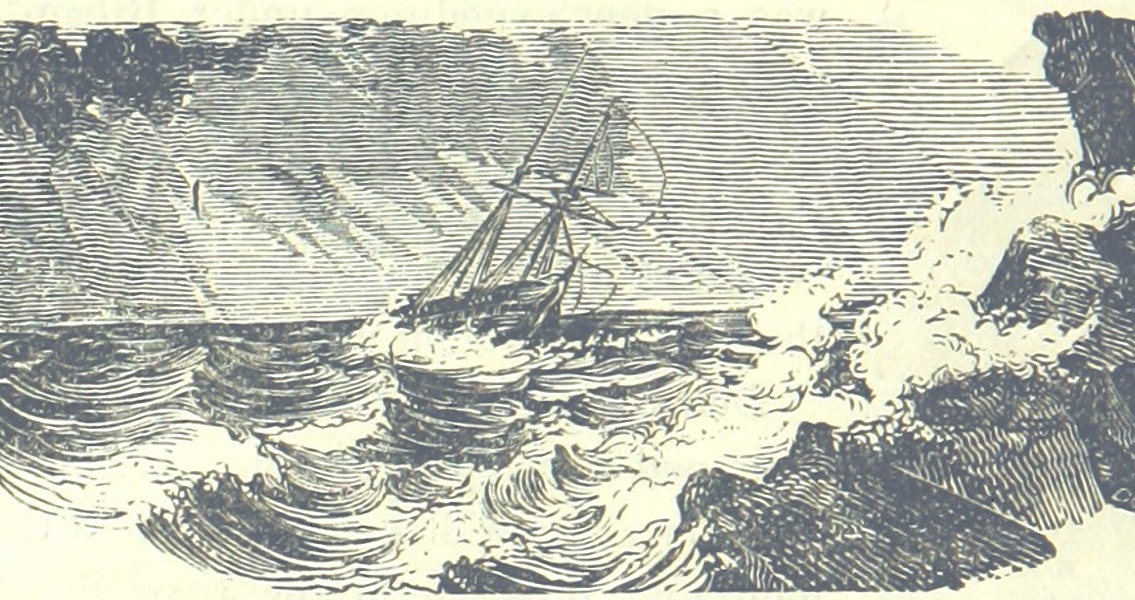
The Fame, a Dutch merchant vessel lost in a storm in 1631. The ship, long known as the ‘Swash Channel Wreck’ after the location it was found, was discovered lodged in a sand and shingle bank outside Poole Harbour. The rudder of the wreck was raised in 2013 from the seabed after nearly ten years of investigation and excavation. Pulling the 28-foot rudder from the depths revealed a male face, complete with moustache, had been carved into it. The rudder has been placed on display for the public at Poole Museum after historians confirmed it belonged to The Fame. The timbers of the rudder were analyzed and historical records were studied in order to match the rudder with the ship says Dave Parham, a marine archaeologist from Bournemouth University. Parham said that while one can never be sure, everything from investigations into the rudder fits the theory that it belongs to The Fame. The timbers are the right age, according to the marine archaeologist, and the dates and names all match historical records. The likelihood that the ship had been traveling from the Netherlands to the Americas, using Poole as a port of call, is high. The discoveries add a human element to the wreck and provide a lens to view the history of Poole, according to Parham. Dr. Ian Friel, the historian who carried out the lion’s share of the research into the rudder, called the find “remarkable”. While there wasn’t any central shipwreck record dating back to the seventeenth century, Dr. Friel was able to discover local accounts attesting to how the wreck was considered a danger to shipping after it broke up and sank on a sandbank after dragging its anchor. The historian also surmised, according to the records he was able to find, that The Fame could have sailed without any cargo in its hold at the time of its watery demise. It would have set sail from Hoorn, a port near Amsterdam, in January of 1631, bound for the West Indies with around 45 people aboard. While the ship broke up on Hooks Sand in February 1631 after dragging its anchor in a storm, there were no fatalities when The Fame sank. According to Dr. Friel, this precluded the sunken ship from being legally considered a “wreck”. Despite this, there’s evidence that much of the ship’s contents, including its cannon, were looted. The wreck was originally discovered in 1990, when a dredger struck the ruins. It took two long years to raise the rudder of The Fame, which was brought up alongside the bowcastle of the ship in 2013. York Archaeological Trust then undertook a three-year conservation effort to dry and preserve the raised rudder before placing it on display at Poole Museum alongside other artifacts from the wreck. The rest of The Fame has since been covered in sand to protect it from the corrosive effects of seawater. ]]>

Categories
Breaking News

Crusader Shipwreck Discovered off Israel's Coast

Haaretz. Taking Acre was a major victory for the Mamluks, as Christian European forces had long used the site as a landing point for countless knights and soldiers. When Jerusalem fell out of Crusader hands after being recaptured by Saladin in 1187, Acre became the new Crusader capital in the Holy Land. Marine archaeologists from Haifa University Prof. Michal Artzy and Dr. Ehud Galili spearheaded the investigation of the Crusader shipwreck. The ship itself suffered damage while the modern harbor of Acre was being dredged during its construction; the surviving wreckage includes some ballast-covered wooden planks, the ship’s keep, and a few sections of its hull. Carbon dating has revealed the wood used to construct the hull dates to between 1062 CE and 1250 CE, firmly within the window for Crusader activity in the region. In addition to the associated golden coins found near the wreckage, marine archaeologists also discovered imported ceramic bowls and jugs from southern Italy, Syria, and Cyprus; corroded pieces of iron, mostly nails and anchors, were additional finds. The biggest find, however, is certainly thought to be the gold coins found with the wreck. A total of 30 florins were found, according to the Israel Antiquities Authority’s coin expert Robert Kool; minted in the Italian republic of Florence – where the coins get their name – the florins were minted from 1252. Speculation as to how the ship – and the florins – ended up on the bottom of Acre’s harbor is closely tied to the Siege of Acre, as historical eyewitness accounts from the event reported nobles and merchants fleeing from the besieged fortress by boat, often after bribing the owners of these boats with valuables. Many never made it out of the harbor, thought to have drowned there with their riches as the Christian defenders sought futilely to buy them some time to escape. The Crusader fortress fell on May 18th, 1291, after more than 100 years of Frankish rule. The final defenders, a contingent of Knights Templar, refused to abandon their holdfast. As a result, when Mamluk sappers undermined the walls of the Templar fortress, the entire edifice collapsed, killing the remaining defenders – and around a hundred of the Sultan’s own soldiers as well. The fall of Acre was the last gasp of the Christian crusades during the medieval era. Once the stronghold was taken by the Mamluks and summarily destroyed, the Catholic Church and the European nobles that supported it abandoned their quest to “liberate” the Holy Land. ]]>

Categories
Breaking News

Robot Subs Will Aid the Hunt for Ancient Sunken Cities in 2017

The Guardian has revealed a new archaeological initiative to plumb the depths of the Mediterranean to search out the secrets of cities like Atlit-Yam. The program, called Archaeosub, will be spearheaded by Italian researchers. One of these researchers is Benedetto Allotta, head of industrial engineering at the University of Florence, who claims that there are any number of human settlements to be found not far from the Mediterranean coast – with the possibility of several more Atlit-Yams just waiting to be explored. The Archaeosub initiative is focusing on the construction of advanced underwater vehicles (AUVs) that can be operated remotely – partly in an effort to make it more affordable to access the technology. Many academic research organizations have found it difficult to use expensive technologies developed by the offshore oil industry or the military, which has inspired Archaeosub to create lighter, cheaper robotic submersibles that can be easily deployed without having to rely on large research vessels. The project is an ambitious one, and not just for making marine archaeology more accessible. Plans to create underwater Wi-Fi networks through the use of a number of cheap, small Archaeosub AUVs are in the works as well, making it easier for these unmanned robotic vehicles to communicate with one another and the surface. So far Archaeosub has shown promise. A 2016 trial saw Archaeosub test three of its AUVs off the Sicilian coast to survey a well-known shipwreck at Marzamemi. The so-called “church wreck”, a Roman ship that sunk in the sixth century CE hauling marble parts for an early Christian church, was studied by the AUVs, which passed through the site on a lookout for new clues. The vehicles gathered enough data to do a reconstruction of the area, Allotta reported. The researcher and his team hope to perfect wireless communication beneath the surface in order to create an “internet of underwater things” that can send and receive data to boats above or at the shore. This could be challenging, as traditional Wi-Fi works poorly underwater, calling for new technologies relying on GPS data and embracing acoustic wave or even light beam transmission instead. Relay systems that make use of one AUV sending data to another underwater and then that second robot surfacing to create a satellite uplink to send and receive data are also being considered as a possible solution. Allotta says one of the newest sites the team has on its radar is the Gulf of Baratti, off the Tuscan coast, at the site of a 2000-year-old shipwreck that was originally discovered in 1974. The ship is remarkable because of the plethora of medical supplies it was found to have been carrying; Archaeosub hopes to explore the site of the medical supply ship to further refine its methods. ]]>

Categories
Breaking News

Shipwreck That Changed History Found off Florida Coast

Categories
Breaking News

Human Remains Found in Antikythera Shipwreck

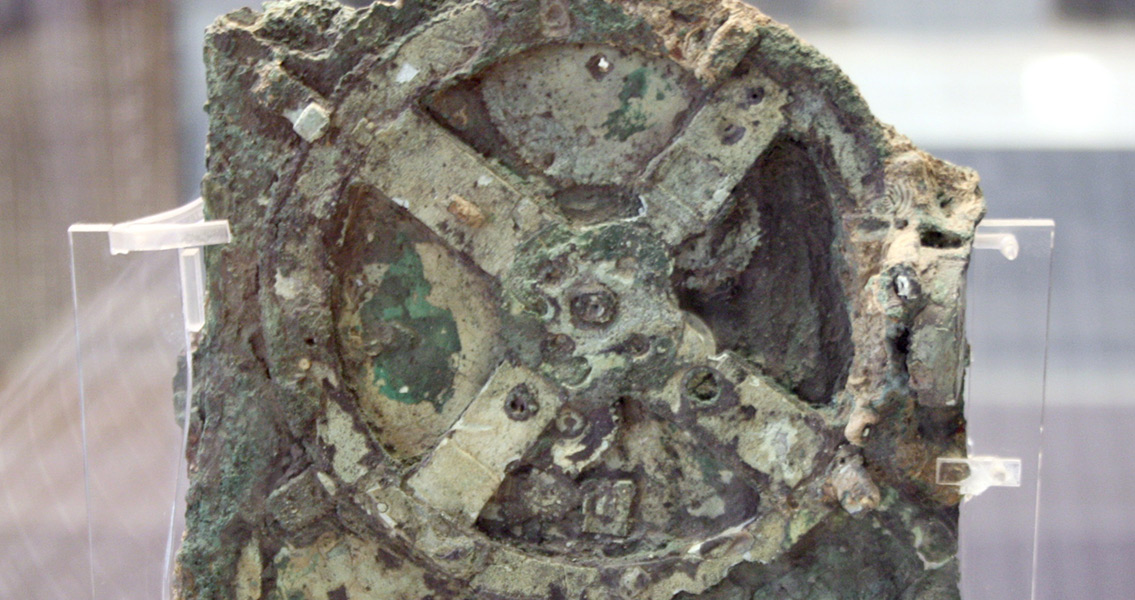
The Guardian, an international team of researchers from the Greek Ephorate of Underwater Antiquities and the Woods Hole Oceanographic Institution discovered the jumbled skeleton near the end of August during an exploratory dive to the seafloor where the ship rests. Woods Hole representative Brendan Foley, one of the participants in the underwater study of the Antikythera wreck, says that the remains may be the most exciting scientific discovery made during the current efforts to study the sunken ship. Judging by the well-preserved state of the bones, researchers say the person was male, likely a teenager or in his early twenties, and might have been trapped when the ship went down. Foley added that the remains of the young man, who has been dubbed “Pamphilos” by the researchers, may have been buried fairly quickly in silt as a result. This bodes well for the possibility of extracting genetic material from Pamphilos’ bones and sequencing them successfully, raising hopes that this will lead to the first instance of a victim of an ancient shipwreck having his entire DNA mapped for study. In fact, the only similar efforts include remains from the Vasa, a Swedish warship that sank beneath the waves in 1628, and the Mary Rose, the great British warship of King Henry VIII. Pamphilos – or what was left of him – was discovered in a jumble of bones: arm bones lying atop leg bones and rib pieces, with teeth and the skull all scattered close by. The skeleton was found surrounded by other artifacts such as broken pieces of pottery. The young man’s nickname comes from a drinking vessel bearing the name discovered on a previous underwater dig. In ancient Greek, Pamphilos means “friend of all.” There is of course no proof that the identity of these remains is the same as the original owner of the cup. However, Foley says that it can be surmised that a Greek male bearing that name had been either a passenger or a crewmember present on the ship during its final, fateful voyage. These remains are not the first to be found within the wreck. Indeed, the famous Jacques Cousteau, who visited the site in 1976, brought several bone fragments to the surface. However, the most recent find is much more complete, much more well preserved, and has the merit of being discovered after several decades’ worth of advances in archaeological technology methods for analyzing ancient remains. ]]>

Categories
Breaking News

Return to Antikythera Shipwreck Yields New Treasures

Categories
Breaking News

Wreck of WWI-Era British Navy Vessel Surveyed by ROV

Categories
Breaking News

Medieval-Era Ship Raised from Dutch Riverbed

Categories
Breaking News

Researcher Explains First Modern Diving Bell Mechanism