Categories
Breaking News

History News of the Week – USS Indianapolis Discovered

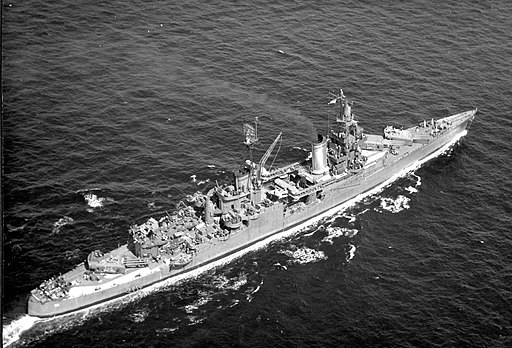
USS Indianapolis Shipwreck Discovered 72 years after its sinking, the wreckage of the USS Indianapolis has been discovered 18,000 feet beneath the surface of the Philippine Sea, according to the New York Times. In July 1945, in the final months of the Second World War, the USS Indianapolis was sunk by a Japanese torpedo, as it returned from a secret mission to deliver parts that were used in the atomic bomb dropped on Hiroshima. The ship’s sinking was the worst loss of life in the history of the US Navy. Of the 1,196 crew on board, just 316 were rescued. Although somewhere between 800 and 900 people escaped the sinking ship, no distress signal was sent. When the survivors were found by chance four days later in shark infested waters, just a fraction were left alive. On Saturday 19th September, a civilian team led by Paul G. Allen, the co-founder of Microsoft, announced that it had found unmistakable wreckage of the Indianapolis. They had been directed to the site by new research from a naval historian which determined a specific region of the ocean where the ship had been sited the night before its destruction. “To be able to honour the brave men of the USS Indianapolis and their families through the discovery of a ship that played such a significant role during World War Two is truly humbling,” Allen told the BBC. Ancient Pompeii’s Water Supply was Poisonous New research claims that the water transported through the pipelines of the ancient Roman city of Pompeii was probably poisonous on a scale that would have likely led to diarrhea, vomiting and liver and kidney damage for anyone who drank it. Kaare Lund, a chemist from the Southern University of Denmark (SDU), analysed water pipes from Pompeii and found high levels of the toxic element antimony, which he believes may have poisoned the drinking water. Antimony is acutely toxic, meaning it causes a quick reaction in anyone who consumes it. According to a statement from SDU, the element is particularly irritating to the bowels, and the reactions are excessive vomiting and diarrhea that can lead to dehydration. In severe cases it can also affect the liver and kidneys and, in the worst-case scenario, can cause cardiac arrest. Pompeii’s location, close to Mount Vesuvius, likely meant the concentration of antimony was higher there than elsewhere in the Roman Empire, as the toxic chemical element naturally occurs in groundwater close to volcanoes. Lund and colleagues’ findings have been published in the journal Toxicology Letters. Hannibal’s defeat and the rise of Rome written in coins Chemical analysis of Roman coins has found that the defeat of Hannibal led to a flood of wealth through the Empire from the silver mines of Spain. According to scientists, the discovery tracks Rome’s transition from regional power to empire. Regarded as a key event in European history, the Second Punic War saw Hannibal lead his formidable Carthaginian army across the Alps in 218 BCE in a failed assault on Rome. Hannibal’s defeat saw the Romans conquer the Iberian Peninsula, with the Romans slowly gaining control over the region’s lucrative silver mines circa 211 BCE. War reparations from Carthage combined with the revenue taken from the Spanish mines ultimately funded Rome’s rapid territorial expansion. The new geochemical analysis has now provided clear proof of the importance of the Spanish silver in funding Roman conquest. A group of scientists based in Germany and Denmark and led by Prof Fleur Kemmers and Dr Katrin Westner (Institute for Archaeological Sciences, Goethe University, Frankfurt) analysed 70 Roman coins dating from 310-300 BCE to 101 BCE, the period surrounding the Second Punic War. Using Mass Spectrometry, the team determined that the lead in the coins from after 209 BCE had distinctive isotope signatures which identified them as presumably originating from Spain. “Before the war we find that the Roman coins are made of silver from the same sources as the coinage issued by Greek cities in Italy and Sicily2. In other words the lead isotope signatures of the coins correspond to those of silver ores and metallurgical products from the Aegean region”, said Katrin Westner. “But the defeat of Carthage led to huge reparation payments to Rome, as well as Rome gaining high amounts of booty and ownership of the rich Spanish silver mines. From 209 B.C. we see that the majority of Roman coins show geochemical signatures typical for Iberian silver”. “This massive influx of Iberian silver significantly changed Rome’s economy, allowing it to become the superpower of its day. We know this from the histories of Livy and Polybius and others, but our work gives contemporary scientific proof of the rise of Rome. What our work shows is that the defeat of Hannibal and the rise of Rome is written in the coins of the Roman Empire.” ]]>
Categories
Breaking News

Identity of 17th Century Shipwreck Revealed as The Fame

The Fame, a Dutch merchant vessel lost in a storm in 1631. The ship, long known as the ‘Swash Channel Wreck’ after the location it was found, was discovered lodged in a sand and shingle bank outside Poole Harbour. The rudder of the wreck was raised in 2013 from the seabed after nearly ten years of investigation and excavation. Pulling the 28-foot rudder from the depths revealed a male face, complete with moustache, had been carved into it. The rudder has been placed on display for the public at Poole Museum after historians confirmed it belonged to The Fame. The timbers of the rudder were analyzed and historical records were studied in order to match the rudder with the ship says Dave Parham, a marine archaeologist from Bournemouth University. Parham said that while one can never be sure, everything from investigations into the rudder fits the theory that it belongs to The Fame. The timbers are the right age, according to the marine archaeologist, and the dates and names all match historical records. The likelihood that the ship had been traveling from the Netherlands to the Americas, using Poole as a port of call, is high. The discoveries add a human element to the wreck and provide a lens to view the history of Poole, according to Parham. Dr. Ian Friel, the historian who carried out the lion’s share of the research into the rudder, called the find “remarkable”. While there wasn’t any central shipwreck record dating back to the seventeenth century, Dr. Friel was able to discover local accounts attesting to how the wreck was considered a danger to shipping after it broke up and sank on a sandbank after dragging its anchor. The historian also surmised, according to the records he was able to find, that The Fame could have sailed without any cargo in its hold at the time of its watery demise. It would have set sail from Hoorn, a port near Amsterdam, in January of 1631, bound for the West Indies with around 45 people aboard. While the ship broke up on Hooks Sand in February 1631 after dragging its anchor in a storm, there were no fatalities when The Fame sank. According to Dr. Friel, this precluded the sunken ship from being legally considered a “wreck”. Despite this, there’s evidence that much of the ship’s contents, including its cannon, were looted. The wreck was originally discovered in 1990, when a dredger struck the ruins. It took two long years to raise the rudder of The Fame, which was brought up alongside the bowcastle of the ship in 2013. York Archaeological Trust then undertook a three-year conservation effort to dry and preserve the raised rudder before placing it on display at Poole Museum alongside other artifacts from the wreck. The rest of The Fame has since been covered in sand to protect it from the corrosive effects of seawater. ]]>

Categories
Breaking News

Crusader Shipwreck Discovered off Israel's Coast

Haaretz. Taking Acre was a major victory for the Mamluks, as Christian European forces had long used the site as a landing point for countless knights and soldiers. When Jerusalem fell out of Crusader hands after being recaptured by Saladin in 1187, Acre became the new Crusader capital in the Holy Land. Marine archaeologists from Haifa University Prof. Michal Artzy and Dr. Ehud Galili spearheaded the investigation of the Crusader shipwreck. The ship itself suffered damage while the modern harbor of Acre was being dredged during its construction; the surviving wreckage includes some ballast-covered wooden planks, the ship’s keep, and a few sections of its hull. Carbon dating has revealed the wood used to construct the hull dates to between 1062 CE and 1250 CE, firmly within the window for Crusader activity in the region. In addition to the associated golden coins found near the wreckage, marine archaeologists also discovered imported ceramic bowls and jugs from southern Italy, Syria, and Cyprus; corroded pieces of iron, mostly nails and anchors, were additional finds. The biggest find, however, is certainly thought to be the gold coins found with the wreck. A total of 30 florins were found, according to the Israel Antiquities Authority’s coin expert Robert Kool; minted in the Italian republic of Florence – where the coins get their name – the florins were minted from 1252. Speculation as to how the ship – and the florins – ended up on the bottom of Acre’s harbor is closely tied to the Siege of Acre, as historical eyewitness accounts from the event reported nobles and merchants fleeing from the besieged fortress by boat, often after bribing the owners of these boats with valuables. Many never made it out of the harbor, thought to have drowned there with their riches as the Christian defenders sought futilely to buy them some time to escape. The Crusader fortress fell on May 18th, 1291, after more than 100 years of Frankish rule. The final defenders, a contingent of Knights Templar, refused to abandon their holdfast. As a result, when Mamluk sappers undermined the walls of the Templar fortress, the entire edifice collapsed, killing the remaining defenders – and around a hundred of the Sultan’s own soldiers as well. The fall of Acre was the last gasp of the Christian crusades during the medieval era. Once the stronghold was taken by the Mamluks and summarily destroyed, the Catholic Church and the European nobles that supported it abandoned their quest to “liberate” the Holy Land. ]]>

Categories
Breaking News

More Orichalcum Ingots Discovered on Shipwreck Near Sicily

Seeker. “It was likely caught in a sudden storm and sunk just when it was about to enter the port.” Long considered a mystery, orichalcum has, until now, never been found in any significant quantity, and its origin and composition have been widely debated. In Greek mythology, it was invented by the Phoenician founder Cadmus, who was also the first king of Thebes. Although orichalcum is mentioned in a number of ancient texts that go back to Hesiod, a Greek poet believed to have been active between 750 BCE and 650 BCE, it was the Greek philosopher Plato, from the fourth century BCE, who made it a legend. Plato’s Critias dialogue tells the story of the island kingdom of Atlantis and its failed effort to conquer Athens. In the dialogue, Critias, an Athenian figure, claims orichalcum was mined in Atlantis and used to cover the interior walls, floors and columns of Poseidon’s temple. Critias describes the metal as shiny and more precious than any other metal except gold. According to the story, the metal was so revered that inside the temple was an orichalcum pillar that had been inscribed with Poseidon’s laws. Plato wrote, “The outermost wall was coated with brass, the second with tin, and the third, which was the wall of the citadel, flashed with the red light of orichalcum.” Today, most scholars agree that while orichalcum is rare, it’s much less precious than described in Plato’s writing. It’s actually a brass-like alloy, produced in antiquity through a cementation process using zinc ore, copper metal and charcoal. X-ray fluorescence analysis indicates the recovered ingots are indeed an alloy produced using between 75 and 80 percent copper, and 15 and 20 percent zinc, along with small percentages of iron, nickel, and lead. The archeological work to fully excavate the sunken ship and retrieve its cargo is ongoing. ]]>

Categories
Breaking News

Wreck of WWI Hospital Ship Given War Grave Status

HMHS Anglia, a hospital ship sunk during the First World War, was recently given war grave status, recognizing the remains of the more than 160 soldiers and sailors who lost their lives aboard her. The ship sunk in November of 1915 off the coast of Chepway after hitting a German mine. Other sunken warships, including the MHS Hogue, HMS Cressy, and HMS Aboukir, all of which sunk in September of 1914 in a German U-boat attack, have been declared war graves as well with the stroke of the same pen. The new “war grave” designation provides legal protection to the wreck of the HMHS Anglia and the other Royal Navy ships, barring them from casual visits from divers or scavengers. Maritime historians spearheaded the campaign to get the ships listed and protected. According to an article on Kent Online, campaigner Christopher Conn said he was glad to see the Anglia given the protection she deserved. Conn hails from Folkestone, just a few miles from the final resting place for HMHS Anglia in Folkestone Harbour on the English Channel. The campaigner said he had been fearful that “spot divers” were visiting the ship to take souvenirs back up to the surface, and was keen to see legal protections put in place for the sunken hospital ship. There were nearly 400 injured aboard HMHS Anglia when it struck the mine that sealed its fate on November 17th. A team of medical staff were also onboard, tending to the wounds of the injured soldiers. While nearby ships did their best to rescue victims of the attack, it’s thought that around 167 people went down with the ship that day. Meanwhile, the sinking of the Aboukir, Cressy, and Hogue has long been recognized as one of the British Royal Navy’s darkest hours, even if their wrecks were not protected by law until recently. The incident that led to their destruction – and the deaths of 1,459 sailors serving aboard them – earned them the moniker of the “Livebait Squadron”, an epithet that expressed how severely demoralized the British people had become as a result of the massive loss of life. The three cruisers, left behind after their destroyer escort had turned around due to bad weather, fell prey to German submarine U9 on September 22nd, 1914. The older cruisers, sporting highly visible smokestacks from their steam engines, stood out starkly once the weather cleared, making them an easy target for the U-boat. The three ships were subjected to a salvo of eight torpedoes that crippled them, sending them to the deep. In total, there are 13 wartime vessels that have been added to the lists of protected military vessels this month, including HMHS Anglia, HMS Aboukir, HMS Cressy and HMS Hogue. This brings the grand total of ships and submarines protected as war graves to 79. The majority of these are ships dating from the First World War, though there are five German submarines and Second World War-era Allied cargo vessels on the list as well. ]]>

Categories
Breaking News

Shipwreck That Changed History Found off Florida Coast

Categories
Breaking News

Black Sea Mapping Project Uncovers Shipwrecks, Prehistoric Lands

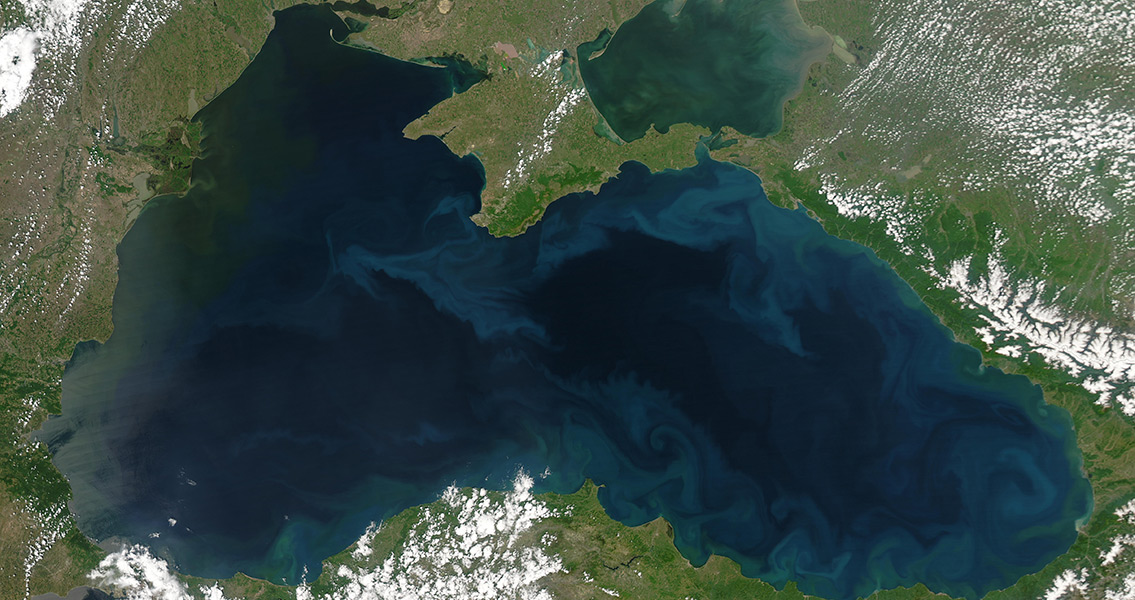
ScienceDaily that the team is attempting to answer some of the biggest unknowns when it comes to when the water level of the Black Sea rose, how rapidly it did so and what type of impact it might have had on human populations that were inhabiting the coast of Bulgaria at the time. The majority of the work has consisted of geophysical surveys, thanks to the aid of two specially designed Remotely Operated Vehicles (ROVs), but the investigation also calls for several core samples to be taken from the seabed in order to reconstruct the prehistory of the Black Sea, Professor Adams added. These two ROVs have already discovered a wealth of new information, especially when it comes to ancient shipwrecks. Thanks to the highly advanced technologies fitted to these two submersibles, which includes the ability to take high-resolution 3D images, laser scans and gather other types of geophysical data, the remains of more than forty ships have so far been found resting on the bottom of the Black Sea within the search area. Many of these ships date back to the Ottoman and Byzantine empires and offer some of the first real-world examples of shipbuilding dating to these time periods. Additionally, thanks to the lack of oxygen in the waters of the Black Sea at depths over 150 meters, these ships are also remarkably well-preserved. Professor Adams remarked that the images the team has been able to capture have been “astonishing”, especially in light of the fact that the technology being used by these ROVs has been able to operate without necessitating the disturbance of the Black Sea’s seabed. The scientist had high words of praise for the public/private partnership that made this expedition a reality, singling out the EEF as being one of the “enlightened bodies” that funded the academic research. The Centre for Marine Archaeology allied with the Bulgarian Centre for Underwater Archaeology and the Bulgarian National Institute of Archaeology in order to launch the Black Sea MAP project. It’s joined by the Marine Archaeological Research Institute from Sweden’s Södertörn University, Greece’s Hellenic Centre for Marine Research, and the University of Connecticut in the United States. ROV technology innovations were provided by private company MMT. ]]>

Categories
Breaking News

HMS Terror Found 168 Years After Sinking

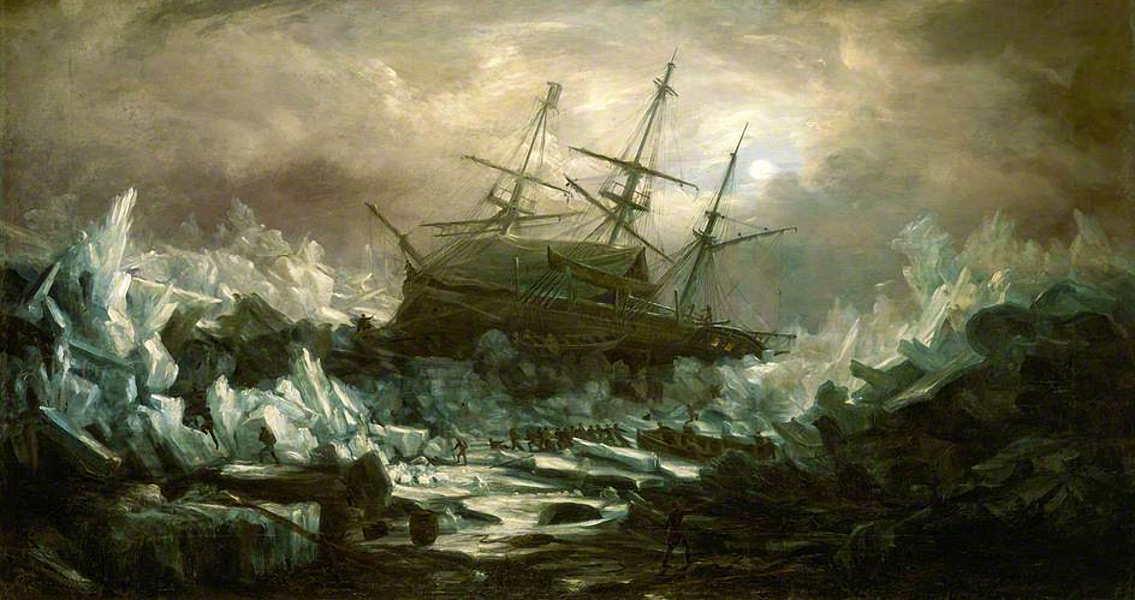
The Guardian, the Arctic Research Foundation sent a small, remote-controlled submersible watercraft through one of the wreck’s open hatches, sending back remarkable images of the exterior and interior of the ship. Foundation operations director Adrian Schimnowski, corresponding from the research vessel Martin Bergmann, informed the newspaper that the researchers positively identified the ship’s mess hall, several of the cabins, and the food storage compartment – complete with plates still on the shelves. Other finds include a pair of wine bottles, several tables, and even a desk with its drawers still open. The newly-found wreck is almost certainly HMS Terror, but estimates of where the Royal Navy explorer vessel was thought to have succumbed to the sea ice say the wreck should have been located around 60 miles further north of its current location. If this wreck, located in Terror Bay: an uncharted body of water off the shore of King William Island, is indeed the HMS Terror the accepted narrative of polar exploration may need to be rewritten, researchers say. From the wreck’s discovery on September 3rd to the most recent series of images gathered by the researchers’ remote-operated vehicle, the team has been hard at work comparing the gathered data to the builder’s plans for HMS Terror. Many correlations have been made, helped by the fact that the condition of the wreck is excellent, with the metal-sheathed hull largely intact. Sheathing was added to the Terror prior to its expedition to help it withstand sea ice during its exploration. Sitting 80 feet below the surface, HMS Terror was found level on the seafloor, something that indicates the ship sank gently to the bottom, Schimnowski remarked. Study of the vessel suggests that before the wreck sank beneath the waves the ship’s crew may have deployed an anchor line, based on a long, heavy rope spotted protruding through a hole in the deck of the ship. The implications of the new find could be groundbreaking – researchers suggest that after it was initially abandoned, HMS Terror might have been re-manned by British explorers seeking an escape route from the all-encompassing ice. This may explain why the ship, which was originally abandoned at the top of Victoria Strait, was found 60 miles south of where it was expected to be. ]]>

Categories
Breaking News

Sunken WWII-Era British Submarine Found off Danish Coast

Categories
Breaking News

340-Year-Old Stinky Cheese Found in Shipwreck

The Local Sweden recounts how divers undertaking excavation work on the Kronan, a royal ship that sunk in the waters of the Baltic, made the discovery in July, with the cheese housed within a black tin jar resting on the seabed off the coast of the island of Öland. According to the Kalmar County Museum’s Lars Einarsson, researchers are reasonably sure that the object contained within the sealed jar is some sort of dairy product, with it most likely being cheese of some kind. The scientist added that the substance is both thick and gooey, has a strong smell of yeast and cheese, and particularly resembles a rather granular Roquefort, a blue cheese traditionally created from sheep milk. Einarsson remarked that the smell to him was quite appetizing, thanks to his own personal tastes for exotic food. However, while it’s been reasonably well preserved by being in the frigid mud of the Baltic, the 340-year-old cheese isn’t something he’s going to be tasting any time soon; the researcher likened the seafloor to be about as far as possible from the kind of ideal preservation conditions in a location such as Tutankamun’s burial chamber. It wasn’t just exceptionally fragrant ancient cheese that the researchers found. Over the course of a two-week dive, Einarsson and his colleagues also discovered other salvage, such as a diamond ring and over a dozen golden coins. The Kronan sank on June 1st of 1676 at noon, prior to the beginning of a sea battle known as the Battle of Southern Öland, which was a clash between a Danish-Dutch allied fleet and the Swedish one. The warship turned too sharply to port, and water began to flood into the vessel through the dozens of gunports, filling the Kronan with water. Soon, the forward powder magazine of the warship ignited, resulting in a massive explosion that sealed the fate of many of the sailors. The death toll from the wreck was massive, with approximately 800 ship hands perishing in the waters off the coast of the Baltic island; only around 40 men survived the Kronan’s sinking. One of the largest warships ever built during its heyday, the Kronan was found once again in 1980. It has since been subjected to careful study over the decades. In excess of 20,000 artifacts have been recovered from the wreck of the 110-gun three-decker so far, including the cranial remains of several crew members complete with intact traces of brain tissue. The suspected cheese is to be subjected to scientific analysis to confirm its identity, and is being kept in low temperature storage until the mystery can be put to rest in a more decisive manner. Hopes are high that, if it is indeed cheese, it will help to paint a broader picture of what it might have been like aboard a seventeenth century Swedish warship. ]]>