Categories
Breaking News

Genome Sequencing Pushes Back Neanderthal Origins

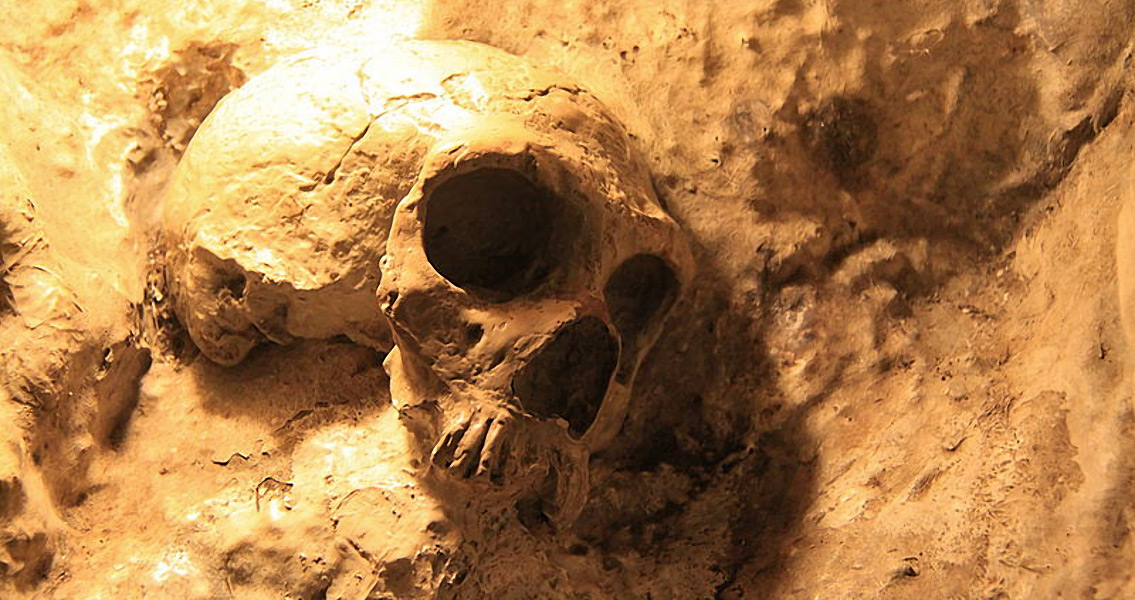
Homo heidelbergensis, the species believed to have given rise to both the Neanderthals and modern humans. Homo heidelbergensis lived in Europe, Asia, and Africa around 600,000 to 250,000 years ago, according to the Science report. Later, however, tracing the origins of these fossils became complicated. Two years ago, analysis of mitochondrial DNA – the non-nuclear genetic information in the cell that is inherited on the maternal side only and is very useful in tracing a person’s ancestry – revealed that the Sima de los Huesos fossils did not have as much in common with Neanderthals as they did with another ancient hominin species, the Denisovans. Researchers suggested that the inhabitants of the Sima de los Huesos cave had interbred with Denisovans or maybe that this Denisovan mitochondrial DNA actually belonged to a common ancestor, possibly Homo erectus. This is when the Max Planck Institute of Human Evolution joined the study and tried to extract and sequence nuclear DNA to settle the matter. This took two years, with Matthias Meyer’s team focusing on a tooth and a leg bone fossil from which they managed to extract enough fragments to work with. According to Meyer, they got as many as a couple of million base pairs – not a lot but enough for a reasonable level of accuracy in the results, which were in the form of unique genetic markers for Neanderthals, modern humans, and Denisovans. What these results showed was that the occupants of the Sima cave had split from the ancestor they shared with the Denisovans more than 430,000 years ago and they were Neanderthals, the Mail Online quotes Meyer’s report from the meeting. The implications of these results are that first of all, the Neanderthals are much older than previously believed, and also that the split between them and modern humans occurred much earlier. Talking about the findings to Mail Online, palaeoanthropologist Chris Stinger from the Natural History Museum in London said the results suggested modern humans and Neanderthals split around 650,000 years ago, while Neanderthals and Denisovans separated some 450,000 years ago. This constitutes a serious shake-up of the human evolution tree, adding further evidence to the idea that it was much more complex than previously believed. Image courtesy of Wikimedia Commons user: Bjorn ]]>
Categories
Breaking News

Finger Bone Find Pushes Back Origins of Modern Human Hand

Homo habilis and Paranthropus boisei, the researchers say, but was more modern human-like than them. In fact, this species could be a “missing link” between Homo habilis and Homo sapiens. The bone was discovered in Olduvai Gorge, northern Tanzania, at a rich palaeontological site called Philip Tobias Korongo, or PTK, and, according to UPI, moves forward the point at which hominins climbed down the trees and evolved hands suitable for holding tools by as many as 400,000 years. In their paper, the researchers who discovered the bone note that there has been ongoing debate about the cause and effect relationship between the evolution of a hand capable of manipulating tools and the invention of these tools, a debate in which the discovery represents a valuable input. For one thing, it brings the evolution of the modern human-like hand closer to the oldest stone tools, discovered earlier this year in Kenya. Still, the tools predate the finger fossil by more than a million years, suggesting there could be even older fossils of modern human-like hands. The lead author of the study, Manuel Dominguez-Rodrigo from the Institute of Evolution in Africa, told New Scientist that the bone “belongs to somebody who’s not spending any time in the trees at all”. It is straighter than the phalangeal bones of tree-dwelling hominins who used their hands as modern-day primates do, to move in trees by hanging from branches and swinging between them. Speaking to the Christian Science Monitor, Dominguez-Rodrigo also said that this species was already capable of using tools and it was larger than its contemporaries. Based on the size of the fossil, the hominin it belonged to must have stood about five foot nine, which is quite a bit more than Homo habilis, (the first hominin who left Africa), who has been estimated to have stood at around three feet tall. The authors of the study note that the evolution of the hand has been a major driver for the evolution of humans, because the more capable of manipulating objects it became, the more capable hominins got at using increasingly sophisticated tools. However, recent discoveries, including this one, are revealing a much more complex hand evolution picture. For instance, the researchers write, the hand bones of some Pliocene australopiths have proven to be much more modern human-like than the bones of hominins from a more recent era, the Pleistocene. This suggests that hands capable of manipulating tools evolved before the tools were invented, feeding more evidence into the debate about the causal link between hand evolution and tool invention. For more information: “Earliest modern human-like hand bone from a new >1.84-million-year-old site at Olduvai in Tanzania” ]]>

Categories
Breaking News

Rabbit-Hunting Helped Modern Humans Gain Upper Hand

DNA analysis that the Neanderthals started declining in numbers very soon after the first modern humans set foot in Europe. Part of the reason may have been the new diseases that modern humans brought to the Neanderthals, and the fact that the latter had no immunity against them, unlike the modern humans. Climate change also had a big part to play in the decline of the Neanderthals, with some authors suggesting the cause of the change was a series of volcano eruptions, which could explain why they declined so fast. It seems one could say with a reasonable degree of certainty that there was no one single reason why the Neanderthals died out and modern humans thrived, but each of the reasons so far identified allows us a deeper understanding of this stage in human evolution and greater insight into how our own species came to be where it is today. For more information: Rabbits and hominin survival in Iberia Image courtesy of Wikimedia Commons user: Bernard Dupont]]>