Categories
Breaking News

Human Stride Older than Thought – The History News of the Week

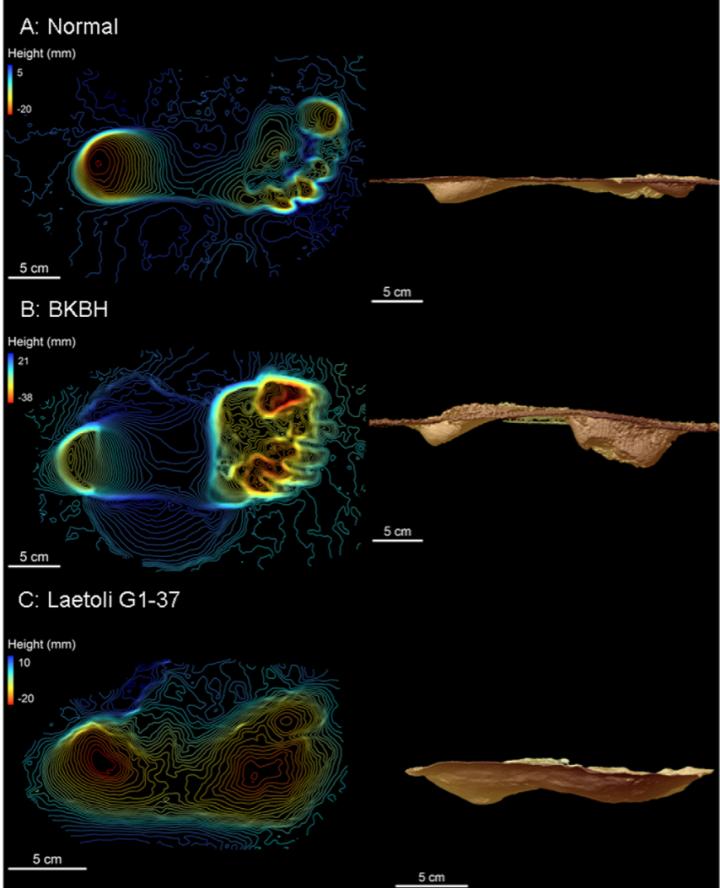
Footprints Show Human Gait Evolved Pre-Homo genus 3.6-million-year-old footprints suggest early hominins may have made the transition from ape like shuffling to upright walking much earlier than thought. “Fossil footprints are truly the only direct evidence of walking in the past,” said David Raichlen, PhD, associate professor at the University of Arizona, in a press release. Raichlen is part of a team analysing the footprints discovered in Laetoli, Tanzania. “By 3.6 million years ago, our data suggest that if you can account for differences in size, hominins were walking in a way that is very similar to living humans. While there may have been some nuanced differences, in general, these hominins probably looked like us when they walked.” It is generally considered that hominins, the name given to human ancestors prior to the homo genus, began walking on two legs around seven million years ago. However, it is also assumed that they had a crouched, bent legged posture while walking. Raichlen and colleagues used footprints and skeletons to reconstruct how these early hominins walked. These tests included comparing the Laetoli footprints with those of eight volunteers walking in an upright or ‘stooped’ (i.e. bent knees) posture. It was found that the volunteers walking upright left footprints closer to those at Laetoli. “This work suggests that, by 3.6 million years ago, climate and habitat changes likely led to the need for ancestral hominins to walk longer distances during their daily foraging bouts,” said Raichlen. “Selection may have acted at this time to improve energy economy during locomotion, generating the human-like mechanics we employ today.” Raichlen recently presented his research at the American Association of Anatomists annual meeting. Origins of the Carambolo Treasure Scientists claim to have found the source of the gold used to create the Carambolo Treasure. Currently housed in the Seville Archaeological museum, the Carambolo Treasure is a selection of gold items from 650 BCE. Discovered by chance in 1958, the Treasure comprises 16 rectangular plates, two breastpieces or pendants, a necklace and two bracelets. The items were discovered hidden inside an oval structure which also contained numerous animal bones and ceramics, leading archaeologists to conclude it was a place of ritual or worship. Ever since its discovery, archaeologists have debated the origins of the Bronze Age treasure. Now, using isotope and chemical analysis, a team of scientists from the UPV/EHU’s Geochronology and Isotopic Geochemistry Service – Ibercron, have concluded that the gold originated from a deposit 2km away from the site of the discovery, and not thousands of kilometres away has been suggested. [caption id="attachment_8598" align="alignnone" width="720"]The Carambolo Treasure Image of the Carambolo Treasure © Consejería de Cultura de la Junta de Andalucía / J. Morón[/caption] The scientists behind the study deployed an innovative method to avoid damaging the priceless artefacts. Using a form of laser ablation, they made a hole of around 0.1mm in size in the gold, in order to analyse it. This laser ablation is combined with plasma mass spectrometry, “with which we not only do isotope analyses but also elemental analyses directly on solid samples with the minimum possible impact”, according to Dr Sonia García de Madinabeitia, who worked on the study. “We base ourselves on a kind of footprint of the lead,” explained the researcher. “The isotope ratios of lead vary in terms of the function of the materials used and the age of the materials, and we determine the isotope ratio that the lead has. The fact is that there are considerable differences between some mineral deposits and others.” In addition, the scientists also carried out ‘trace and ultratrace’ analyses on the Carambolo Treasure, “because we know that mines, however much they may be gold or silver mines, never consist of pure materials, but have a series of trace and ultratrace elements that subsequently allow links between the archaeological materials and the geological materials to be established,” added García de Madinabeitia. Lessons From the World’s Oldest Peace Treaty ‘The world’s oldest peace treaty’ is challenging our image of antiquity and shedding new light on ancient conflicts. In preparation for a new exhibition at the Berlin Pergamon Museum, archaeologists have been analysing a 3,200-year-old peace treaty between Ramesses II and Ḫattušili III. They claim that contrary to the popular idea that ancient conflicts were settled through the total humiliation of the loser, complex negotiations were in fact at play. “More than 3,200 years ago, Egyptians and Hittites ensured each other mutual support in the treaty; neither of them triumphed. This must have been preceded by much negotiating, as is evidenced by extensive correspondence between the rulers”, write Director Prof. Dr Achim Lichtenberger and Curator Dr Helge Nieswandt of the University of Münster’s Archaeological Museum, in a press release. “Although the ‘victorious peace’ dominates over the ‘peace of reconciliation’ in peace images of antiquity, our research shows that the latter also existed.” In addition, the researchers claim that many ancient peace images were actually created in times of conflict. They cite the example of the Roman goddess of peace, Pax, who was present on Roman coins even at times of war. “Despite the glorification of war in antiquity, which undoubtedly existed and alienates us: images of the ideal of peace were particularly widespread during wars,” says Nieswandt. “When the order of the Roman Empire fell apart in the 3rd century AD, and when mostly short-lived soldier emperors took turns, there was an ‘inflation of peace’ on coins.” The exhibition, entitled Frieden. Von der Antike bis heute (Peace: From Antiquity to the Present Day), opened on 28th April at the Berlin Pergamon Museum. Featured Image: Footprints from (A) a modern human walking normally, (B) a modern human walking with a stooped posture known as the “bent knees, bent hip,” or BKBH, posture, and (C) 3.6 million-year-old hominin footprints found in Laetoli, Tanzania. The team’s analysis suggests ancient hominins probably walked in a way that is very similar to modern humans. Credit: David Raichlen, University of Arizona. ]]>
Categories
Breaking News

Revealed: Cavemen Picked Their Teeth and had a Raw Food Diet

The Science of Nature. Traces of raw animal tissue, uncooked starch granules indicating consumption of grasses, pollen grains from a species of pine and insect fragments were among the other microfossils extracted from the hominin molar. All of these were uncharred and showed no evidence of inhalation of microcharcoal, in other words, they displayed none of the characteristics usually associated with having been in close proximity to fire. The teeth investigated by the team come from one of the two oldest sets of hominin remains found in Europe. The piece of jawbone, discovered at Sima del Elefante in 2007, is between 1.1 and 1.2 million years old. The site itself is one of several in the region covering a period between 300,000 and 1.2 million years old. Exactly when early humans first started to use fire is hotly contested, and the new study seems to add to the debate. Some researchers suggest habitual fire use started as far back as 1.8 million years ago, while others argue it happened as recently as 300,000 – 400,000 years ago. Some have argued that hominins mastered fire while still in Africa, but didn’t bring the skills with them when they reached Europe, something the lack of fire evidence at Sima del Elefante would seem to support. The earliest definitive evidence of fire use in Europe is 800,000 years ago at the Spanish site of Cueva Negra, and at Gesher Benot Ya’aqov, Israel, a short time later. Taken together, a timeline emerges suggesting that the development of fire technology in Europe occurred sometime between 800,000 and 1.2 million years ago. Dr Karen Hardy, lead author and Honorary Research Associate at the University of York and ICREA Research Professor at the Universitat Autònoma de Barcelona, said in a press release: “Obtaining evidence for any aspect of hominin life at this extremely early date is very challenging. Here, we have been able to demonstrate that these earliest Europeans understood and exploited their forested environment to obtain a balanced diet 1.2 million years ago, by eating a range of different foods and combining starchy plant food with meat.” According to Dr Hardy, the results follow ideas about the development of certain characteristics in humans. “This new timeline has significant implications in helping us to understand this period of human evolution – cooked food provides greater energy, and cooking may be linked to the rapid increases in brain size that occurred from 800,000 years ago onwards.” “It also correlates well with previous research hypothesising that the timing of cooking is linked to the development of salivary amylase, needed to process cooked starchy food. Starchy food was an essential element in facilitating brain development, and contrary to popular belief about the ‘Paleodiet’, the role of starchy food in the Palaeolithic diet was significant.” Image courtesy of Karen Hardy ]]>

Categories
Breaking News

Monkeys Make Stone Flakes Similar to Human Ancestor's Tools

Sapajus libidinosus) uses rocks for a variety of purposes, such as cracking open a seed or fruit to extract the edible part. In addition, they hammer rocks against stone outcroppings, with the clear intention of smashing them. The process frequently produces sharp-edged conchoidal flakes with smooth rounded facets resembling the shape of a scallop shell. Crucially, the flakes are discarded by S.libidinosus, they are not used as tools. The monkeys performing this process have been observed licking and sniffing the quartz dust created by the rock fragmentation, leading scientists to speculate that the routine is performed for a dietary reason – perhaps in search of the trace element silicon, or to extract lichen from the rocks. A team of researchers from Sao Paulo University’s Psychology Institute (IP-USP), in collaboration with colleagues at the University of Oxford’s Archeology School and University College London’s Archeology Institute in the UK, have analysed the inadvertently produced rock fragments as part of the Thematic Project “Tool use by wild bearded capuchin monkeys (Sapajus libidinosus)”. Their results have been published in the online edition of the journal Nature. “We discovered that some of the stone flakes produced accidentally by these capuchin monkeys were very similar to Oldowan stone tools”, said Tiago Falótico, a postdoctoral fellow of IP-USP and one of the authors of the study, in a press release. First identified in Tanzania, Africa, Oldowan tools are among the oldest stone tools ever found and considered the earliest evidence of cultural behaviour, dating to as far back as 2.6 million years ago. Named after Olduvai Gorge, where they were first found, the tools are usually associated with Homo habilis, one of the earliest species of the Homo genus. The stone flakes and other materials gathered by Falótico and principal investigator Eduardo Ottoni over the course of several years were analysed by Tomos Proffitt, a researcher at Oxford University’s Archaeology School and expert on Oldowan tools, and Michael Haslam, a researcher at UCL’s Archaeology Institute. Proffitt and Haslam’s results showed that the stone flakes produced by the capuchin monkeys had identical characteristics and morphology to deliberately produced hominin tools. Half of the flakes exhibited conchoidal fractures, an attribute usually associated with the hominin production of tools. They also displayed varying levels of percussive damage as well as sharp edges, again, characteristics associated with hominin tools. “Paleoanthropologists use the characteristics of sharp-edged stone flakes both to distinguish them from naturally broken stones and to attribute them to the hominins that produced flakes with these shapes intentionally in order to use them as tools,” Falótico said. The fact the capuchin monkeys produced flakes which are indistinguishable from hominin produced ones, however, opens up a range of interesting questions about how we read the paleontological record. “When sharp-edged flakes are found at an archeological site, it’s usually easier to attribute them to hominins because the same digs generally also turn up many stone cores and signs of human occupation, such as fires,” Falótico said. “However, when they’re found in isolation with few or no other archeological artifacts, we should bear in mind that they might not necessarily have been produced by human ancestors.” ]]>

Categories
Breaking News

Earliest Human Cancer Pushes its Origins Back Over a Million Years

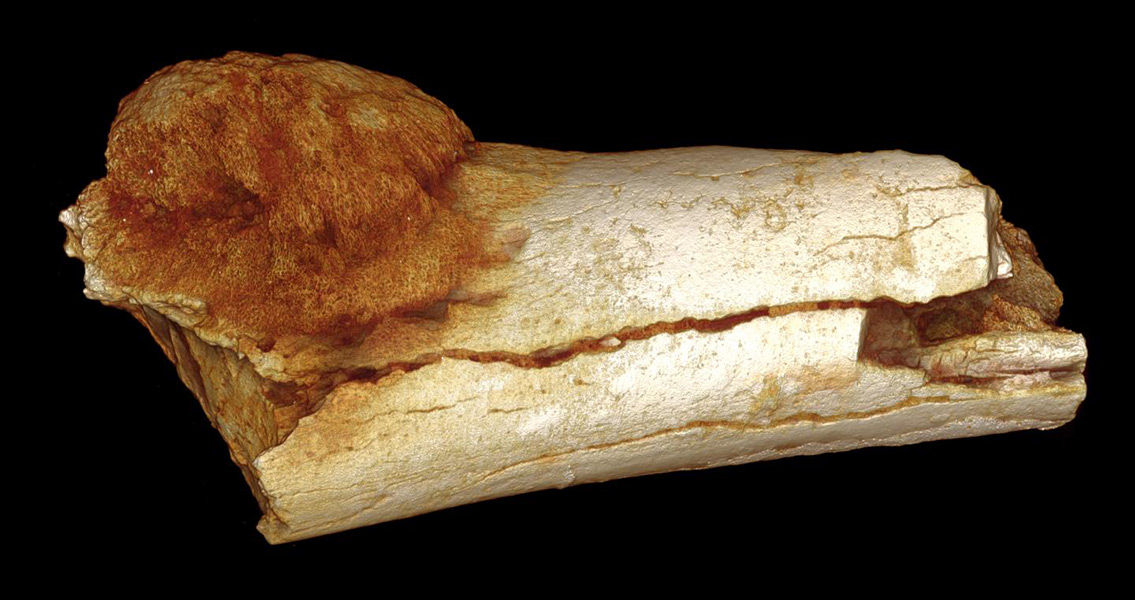
South African Journal of Science, an ancient cancer case and an ancient tumour case are detailed. Until now, the oldest documented incidence of a tumour had been discovered on the 120,000 year old remains of a Neanderthal. The two new studies suggest that cancer and tumours were in fact around well over a million years ago. A 1.7 million year old foot bone discovered in Swartrans, South Africa, bore definitive evidence of malignant cancer. Although the species to which the foot belongs remains unclear, the researchers behind the first paper say it is clearly that of a hominin or bipedal human relative. The accompanying paper identifies the oldest tumour ever found in the human fossil record. A benign neoplasm was found in the vertebrate of Karabo, the close to two million year old remains of an Australopithecus sediba child discovered at the site of Malapa. “Modern medicine tends to assume that cancers and tumours in humans are diseases caused by modern lifestyles and environments.” said Edward Odes, a Wits doctoral candidate and lead author of the cancer paper, and co-author on the tumour paper. “Our studies show the origins of these diseases occurred in our ancient relatives millions of years before modern industrial societies existed”. In the case of the foot bone, the cancer: an agressive osteosarcoma, was discovered on the metatarsal. It’s a form of cancer most commonly found in younger humans, which if left untreated proves fatal. “Due to its preservation, we don’t know whether the single cancerous foot bone belongs to an adult or child, nor whether the cancer caused the death of this individual, but we can tell this would have affected the individual’s ability to walk or run”, explained Dr Bernard Zipfel, a Wits Scientist and expert on the feet and movement of early human relatives. Both discoveries further complicate the picture we have of the causes and history of cancer and tumours. The diseases are typically linked to aspects of modern life, such as our diet, urban living and background radiation. Prevailing thought also suggests that the reason cancer and tumours seem to exhibit themselves more often now is due to increasing life expectancies. However, the tumour discovered on the child’s vertebrate is one associated with adulthood. Indeed, it is the first evidence of the disease in a young individual in the whole of the fossil record. Professor Lee Berger, the leader of the Malapa project and an author on both papers, highlighted just how much of a game changer in the study of oncology both discoveries could prove to be. “…not only has there been an assumption that these sorts of cancers and tumours are diseases of modernity, which these fossils clearly demonstrate they are not, but that we as modern humans exhibit them as a consequence of living longer, yet this rare tumour is found in a young child. The history of these types of tumours and cancers is clearly more complex than previously thought”. In both studies, cutting edge imaging technology was used to diagnose the incidences of disease. The results show the potential of modern technology to not only further our understanding of our ancient human relatives, but also the origin and development of modern diseases. “This is another good example of how the modern clinical sciences and the science of palaeoanthropology are working together in South Africa and with international collaborators to advance our understanding of diseases in both the past and the present.” said Dr Jacqueline Smilg, a radiologist based at Charlotte Maxeke Hospital, who is an author on both papers and was involved in the clinical diagnoses. Image courtesy of Patrick Randolph-Quinney (UCLAN)]]>

Categories
Breaking News

The Cradle of Humankind Reveals Another Clue to Our Origin

Homo naledi – and more like Australopithecus afarensis, a much older species. A fossil’s degree of curvature is often associated with arborealism, but the new find lacks the expected muscle attachments. The shape is similar to the incomplete Homo habilis specimen from Olduvai Gorge, except it’s much larger. The second new fossil is relatively small by comparison; a tooth, an adult’s almost complete 1st molar tooth. This fossil is strikingly similar in shape and size to Homo habilis teeth as well. The cones on the tooth surface in particular suggest the specimen belonged to an early Homo genus member. Additional and more detailed analyses are currently being planned. The network of underground caves at the Sterkfontein site are filled with fossil bearing sediments which were deposited there for more than 3.67 million years. Very few however, have been excavated so far. Image courtesy of Jason Heaton]]>

Categories
Editorial

History of 2015: Migration, Conflict and Society

study by Nick and Isabelle Winder suggested that compassion and a willingness to accommodate ‘defective’ members of a community played a key role in our evolution and development. The study stands in stark contrast to readings of evolution which focus on competition and ‘survival of the fittest’. The Winders’ “Vulnerable Ape hypothesis” argues that small, isolated hominin communities provided few opportunities to enrich the gene pool. Rather than choosing not to mate, early hominins would often pick a close genetic relative, heightening the risk of offspring with ‘faulty’ genes which would put them at a disadvantage. The hypothesis argues that parents had to learn to work together as a community to cope with these disadvantages and ensure the survival of their genes. As Isabelle Winder summarised: “Genetic vulnerability was the trigger that set our ancestors on the path to symbolic language, innovation and pro-social co-operation.” Another study, carried out by the University of Utah’s Professor David Carrier, has added weight to a very different reading of human development. The “Primal Pugilism” theory suggests that aggressive behaviour, and particularly the ability to throw punches, had an important role to play in the development of the human hand. Carrier and his team took the arms of eight different cadavers, and carried out a variety of tests on them to prove that hands clenched in a fist were capable of hitting with more than double the force of an open hand. This was taken as support of the theory that aggression was an evolutionary advantage to early primates. Carrier and colleagues have done previous research along similar lines, including a study arguing that early hominins evolved to have skulls and faces more resistant to violence. The Primal Pugilism or Aggressive Ape theory is a controversial one, placing aggression and violence as drivers of early hominin evolution. In 2014 an article was published in National Geographic accusing the theory of being too simplistic, referring to it as “bro-science”. Whatever one’s opinions on Carrier’s ideas, the strong reactions the theory can trigger surely provide an insight into modern sensitivity and concerns. In November, Dr. Penny Spilkins conducted a new study on human dispersal in the Late Pleistocene around 100,000 years ago. Dr. Spilkins argues that a dramatic shift in the rate and pattern of human dispersal during the period can not be explained by population growth or environmental factors. Instead, Dr. Spilkins argues in the study that humans’ movement out of Africa and to the furthest corners of the globe can be explained in terms of social developments. As human relationships became more complex, laying the foundations for the bonds needed for early societies, so did the potential causes of conflict. The dark side of stronger social bonds was that the level of repulsion one felt at a betrayal, and the desire for revenge became stronger. This, Dr. Spilkins argues, could push humans into living further apart: outcasts forming groups and moving away from the community at large, eventually crossing oceans in search of isolation. The above studies show how a myriad of new techniques and information can be applied to our study of history. All of them are theories, models which attempt to explain the complexities of our development, and are not necessarily mutually exclusive to each other or other theories. The fact that the conclusions they’ve reached can at times seem so controversial, shows just how much value is placed on the past, and just how much there is still to learn. ]]>

Categories
News

Important Questions Answered about Evolution of Hominin Diet

Theropithecus oswaldi, during the early Pliocene. Most plant groups are placed into one of three categories, C3, C4 and CAM (Crassulacean acid metabolism). The main difference between the plants concerns the photosynthesis process: C4 plants process atmospheric carbon into a compound with four carbon atoms, whereas C3 convert it into a compound with just one. CAM plants on the other hand, are capable of using either pathway for photosynthesis. The crucial consequence of this difference is that C4 plants are much more suited to growing in a hot, dry climate – they photosynthesize at a faster rate and in a way which involves significantly less water loss. Examples of C4 plants include maize, millet, papyrus and sugarcane, while C3 plants include rice, wheat, spinach, potatoes and yams. By expanding their diet to include C4 plants, hominins may have been able to increase the variety of environments in which they could survive, or increase their chances of survival in more changeable environments. 152 fossil teeth from the Woranso-Mille site in Ethiopia were subjected to analysis as part of the study. The distinct carbon isotope signatures of C3 and C4 plants mean that the composition of an animal’s diet can easily be determined through their tooth enamel. This method allowed the scientists involved to fill in gaps about the chronology of the evolution of early hominin diets. “Fossil teeth from the Woranso-Mille paleontological study area are well-suited to fill the temporal gap in the isotopic record of hominin diet because they are part of a record of Pliocene mammalian fossils that spans 3.76–3.2 Ma”. The Pliocene is one of the most important periods in the evolution of humans, when early hominins left the trees and increasingly walked on two legs, and their diets diversified massively to include a much wider range of food sources than their ancestors. Consuming C4 foods was a crucial part of this transition. As the study explains, “The incorporation of C4 resources into hominin diet signifies increased dietary breadth within hominins and divergence from the dietary patterns of other great apes.” The analysis showed that both hominins and Theropithecus included substantial amounts of C4 foods in their diet as far back as 3.76 million years ago. In comparison, other primates and mammals showed evidence of widespread C4 consumption much earlier, as far back as the late Miocene period (11.6 to 5.3 million years ago). Although occurring at a similar time, the diversification into a C4 diet had different consequences for Theropithecus and hominins. For Theropithecus, it marked the beginnings of a dietary specialisation which culminated in them assuming the role of a grazer among the mammal species of Africa. For hominins on the other hand, the transition came in the wake of significant dentognathic changes which were part of a general broadening of their diets. As the study concludes, these changes played a significant role in the development and spread of hominins, and were subsequently vital to human evolution. “The unequivocal incorporation of C4 resources by hominins and cercopithecids as early as 3.76 Ma demonstrates that primates were expanding the types of food resources and potentially the environments that they were able to exploit.” For more information: www.pnas.org Image courtesy of Wikimedia Commons user: Thamizhpparithi Maari]]>

Categories
Breaking News

Homo naledi: Walker and Handyman

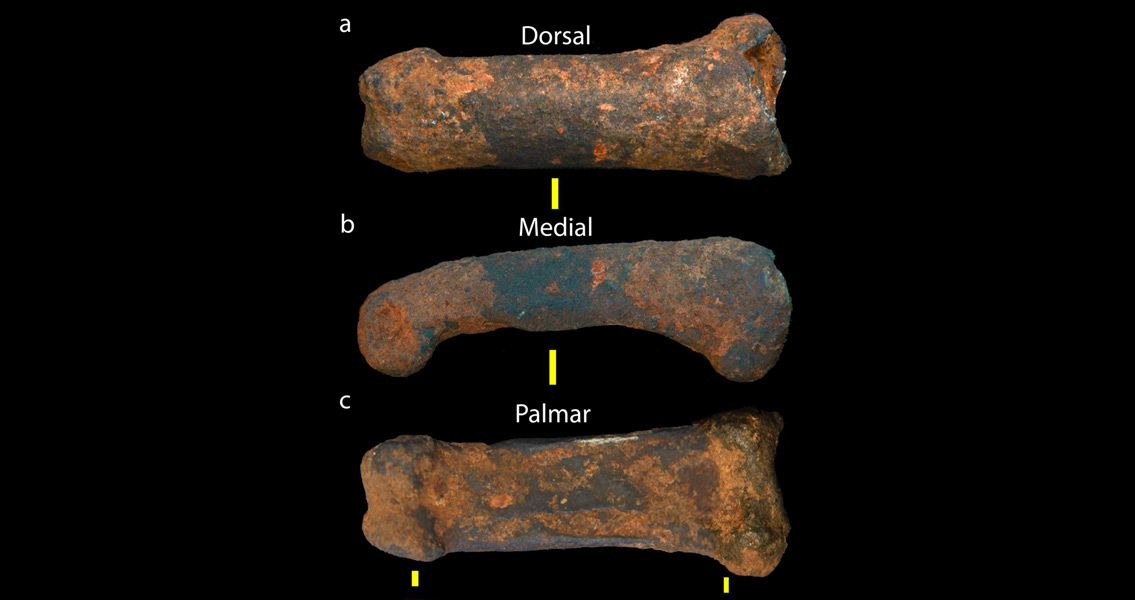
Homo naledi, has shown that the hominin was probably equally good at climbing trees as walking, even running, on the ground. What’s more, Homo naledi seems to have been handy with tools, media report. This new examination focuses exclusively on the anatomy of the hands and feet of the hominin and has found that the shape of the bones is very similar in many ways and distinctly different in others from our own. Among the similarities are the shape of the foot, specifically the ankle joint area, as well as the absence of a “grasping big toe”, the researchers say in their new paper, Still, the toes were more curved than ours, which suggests Homo naledi felt comfortable in the trees. Commenting on the paper, Jeremy Da Silva, an anthropologist from Dartmouth College, told Reuters that the foot and leg anatomy of Homo naledi revealed the species was well adapted for long-distance walking and running, with elongated bones, and ankles and knees like modern humans’. At the same time, however, Homo naledi had a lower arch than modern humans, and the toes were curved. Another commenter, William Harcourt-Smith from the American Museum of Natural History, told the BBC that the hominin’s lifestyle probably involved long periods of being on the ground, and going up in the trees to escape predators or to feed. All in all, however, Harcourt-Smith said the species was “much more bi-pedal than not, but not 100%.” The hand bone fossils found in the Rising Star cave in South Africa offered even more fascinating insight into this ancient ancestor of ours. The shape of the hand suggested that although the fingers were more curved than are ours, Homo naledi could manipulate tools. This suggestion could fuel a hypothesis that tool use is not as directly related to cognitive capacity as traditionally believed. Homo naledi’s brain was just a third of the size of ours, something that would usually make scientists think the species was unable to make and use tools, but apparently the case is the opposite. One palaeoanthropologist commenting on the paper, Tracy Kivell from the University of Kent, told Reuters that this discovery “causes us to perhaps rethink the cognitive requirements for tool use.” The Homo naledi fossils were found in August and the discovery was made public in September. Starting with one nearly complete skeleton, so far researchers working at the site have unearthed partial remains from around 15 individuals. Hand fossils alone number almost 150, with one almost complete specimen of the right hand of an adult, while foot bones total 107 so far, with one completely preserved right foot, again of an adult. Luckily for science, the bodies in the cave were not disturbed after they were put there or died there and they did not suffer the effects of the elements, such as floods, which would have dissolved some of the smallest bones, Tracy Kivell told the BBC. For more information: “The hand of Homo naledi”]]>

Categories
Breaking News

Grass-Based Foods in Hominin Diet Earlier Than Thought

Australopithecus afarensis diversified their diet, are important, because the dietary shift was directly linked to bipedalism and a better adaptability. When the first primates emerged on the evolutionary scene, they were pretty much tree-bound, which meant they were also bound to a certain limited number of habitats. By learning to walk on the ground, and upright at that, their hominin heirs gained access to more food sources and could move over greater distances, which meant they could survive and thrive in more diverse habitats than their ancestors. It is possible that climate change had a role to play in the dietary changes they observed, but the authors of the study report that they were unable to establish such a link firmly, instead suggesting that the emergence of new primate species was an important factor as it changed the ecology of the already existing primate communities. One of these new species was the now extinct baboon Theropithecus oswaldi, which joined the primate community around 3.76 million years ago, around the time the dietary change started to take place. It is with relation to these primates that Levin’s team found something very interesting. It appears that these large baboons started eating grass and grass-based foods before their teeth changed shape to be more suitable for grazing. This shape change only happened after they learned to walk on the ground. Study co-author Johannes Haile-Selassie from the Cleveland Museum of National History told Heritage Daily that the results “indicate that form does not always precede function. In the earliest baboons, dietary shift toward grass occurred before its teeth were specialized for grazing.” For more information: “Dietary change among hominins and cercopithecids in Ethiopia during the early Pliocene” Image courtesy of Wikimedia Commons user: Rehman Abubakr ]]>

Categories
Breaking News

Homo naledi – A New Link in Human Lineage

Homo naledi, was among our earliest ancestors and probably lived around three million years ago. The earliest human ancestors to date are believed to have been Ardipithecus ramidus, which, the BBC writes, probably lived around 4.4 million years ago, and based on the fossil record could both walk up right and climb trees. This H. naledi, the researchers explain, was ape-like in many ways but also had some features in common with modern humans. The skeleton found in the Rising Star cave resembled in size that of a modern human child, especially the skull, teeth and feet. It belonged, however, to an elderly female. The shoulders and pelvis were ape-like, and its brain size was likely similar to that of a gorilla. The reason it was classed as a hominin was the more advanced shape of the skull, the longer legs, the smaller teeth and the modern-like feet. The chamber in which this first skeleton was found was difficult to access because it was in the deepest recesses of the cave and one had to be quite slim to be able to pass through a constriction on the way. Yet once a team was gathered, work started and the researchers discovered something even more exciting: the chamber contained not just one remarkably well preserved skeleton but as many as fifteen, of all ages and sizes. The total number of specimens collected after three weeks of excavation reached 1,550. The scientists that analysed the fossils and tried to place them along the line of human lineage had a tough job. Some of the bones, like the tiny skulls, suggested these were apes, but others were too human-like to ignore. The conclusion was that this species lived some time between Australopithecines and Homo, Berger told the National Geographic, although he added that for him personally, these creatures belonged closer to Homo than Australopithecus. Then there is the much more fascinating question of how all these people ended up in that remote chamber of the Rising Star cave (the name of the species, by the way comes from the Sotho word for “star”). There was no fauna, tools or any other artefacts around them to suggest it was a dwelling, and there were no tooth marks on the bones, which would have been the case had they been dragged here by carnivores. One possible explanation is that they wandered into the cave and got trapped in the remote chamber but the position of the skeletons didn’t corroborate that hypothesis. The other could cause a rethinking of the fundamental link between brain size and evolution: it is the suggestion that this chamber was a burial ground, where bodies were deposited over a period of centuries. In other words, that this early species, despite its small head, was capable of allocating a special place to bury its dead, a tradition so far only found in much later hominins and up until now considered too complex behaviour to be found in such earlier species. Commenting on the news, anthropologist Isabelle Winder from the University of York, who wasn’t involved in the study, said: “Look at the hind limb of H.naledi and you will see a collection of features associated with upright stance. The forelimb, however shows ape-like characters. This may suggest that the Savannah Hypothesis, which emphasises life in Savannah mosaics, may be an incomplete explanation of human locomotion. H.naledi was a scrambler, living in complex landscapes.” Nick Winder from Newcastle University told New Historian that “If you compare the naledi material with the Dmanisi skeletons (a site in Georgia where a number of different early hominin fossils were found a few years ago) you make two striking observations. The first is that the naledi assemblage is described as morphologically homogenous — all the specimens look similar. At Dmanisi, however, there is a lot of morphological variation. Second, the mosaics of attributes in the two collections are very different. This suggests much more variability than one might have expected. There were clearly lots more ways of being a successful hominin than we imagined.” For more information: Homo naledi, a new species of the genus Homofrom the Dinaledi Chamber, South Africa]]>