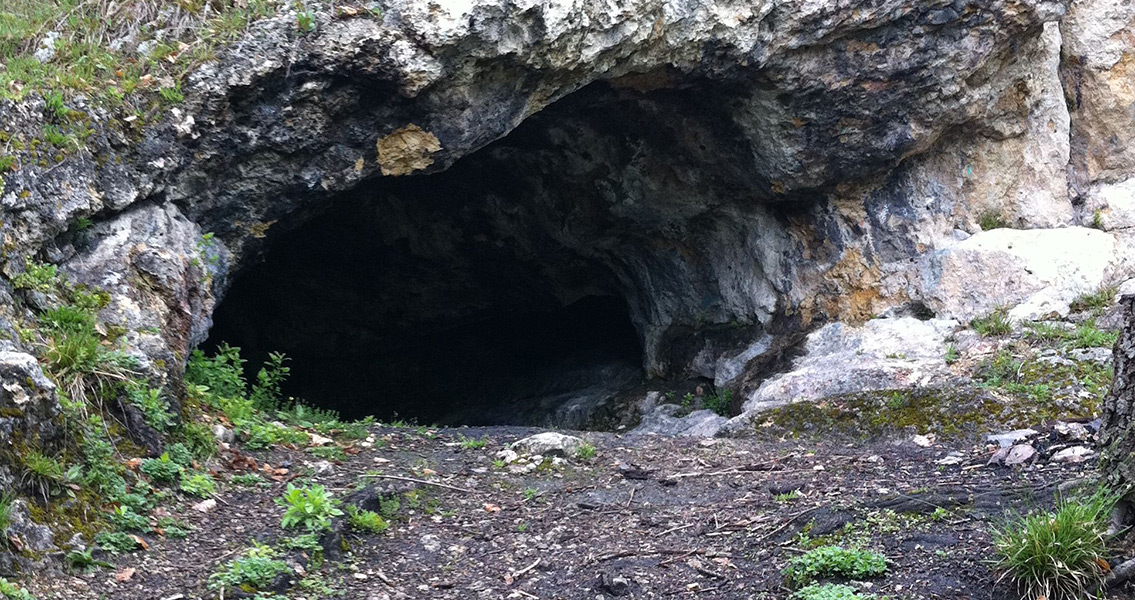
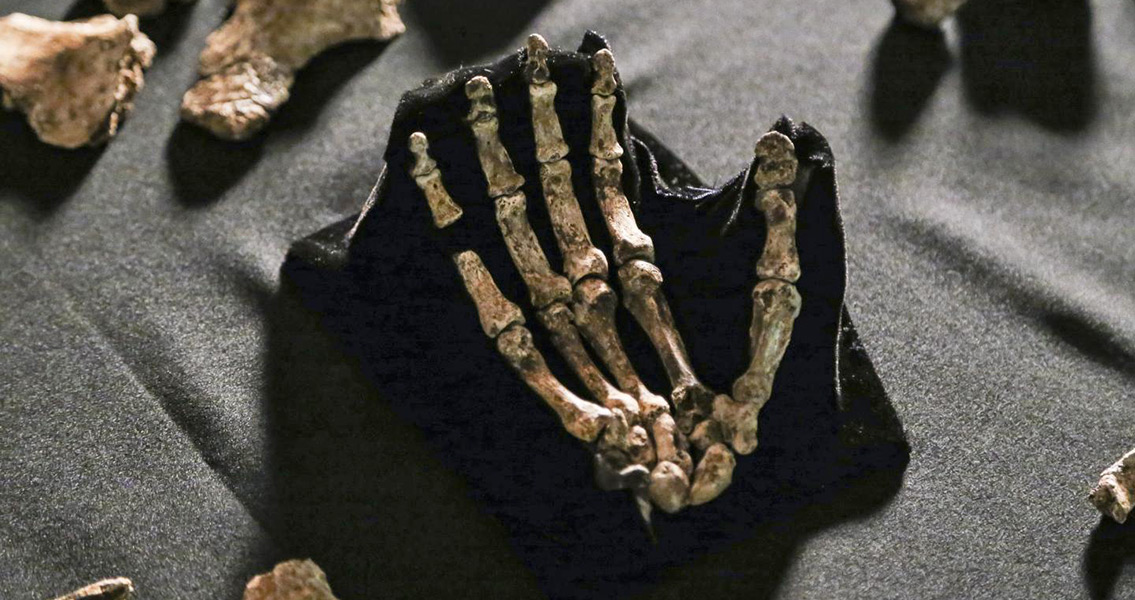
Homo naledi, has shown that the hominin was probably equally good at climbing trees as walking, even running, on the ground. What’s more, Homo naledi seems to have been handy with tools, media report. This new examination focuses exclusively on the anatomy of the hands and feet of the hominin and has found that the shape of the bones is very similar in many ways and distinctly different in others from our own. Among the similarities are the shape of the foot, specifically the ankle joint area, as well as the absence of a “grasping big toe”, the researchers say in their new paper, Still, the toes were more curved than ours, which suggests Homo naledi felt comfortable in the trees. Commenting on the paper, Jeremy Da Silva, an anthropologist from Dartmouth College, told Reuters that the foot and leg anatomy of Homo naledi revealed the species was well adapted for long-distance walking and running, with elongated bones, and ankles and knees like modern humans’. At the same time, however, Homo naledi had a lower arch than modern humans, and the toes were curved. Another commenter, William Harcourt-Smith from the American Museum of Natural History, told the BBC that the hominin’s lifestyle probably involved long periods of being on the ground, and going up in the trees to escape predators or to feed. All in all, however, Harcourt-Smith said the species was “much more bi-pedal than not, but not 100%.” The hand bone fossils found in the Rising Star cave in South Africa offered even more fascinating insight into this ancient ancestor of ours. The shape of the hand suggested that although the fingers were more curved than are ours, Homo naledi could manipulate tools. This suggestion could fuel a hypothesis that tool use is not as directly related to cognitive capacity as traditionally believed. Homo naledi’s brain was just a third of the size of ours, something that would usually make scientists think the species was unable to make and use tools, but apparently the case is the opposite. One palaeoanthropologist commenting on the paper, Tracy Kivell from the University of Kent, told Reuters that this discovery “causes us to perhaps rethink the cognitive requirements for tool use.” The Homo naledi fossils were found in August and the discovery was made public in September. Starting with one nearly complete skeleton, so far researchers working at the site have unearthed partial remains from around 15 individuals. Hand fossils alone number almost 150, with one almost complete specimen of the right hand of an adult, while foot bones total 107 so far, with one completely preserved right foot, again of an adult. Luckily for science, the bodies in the cave were not disturbed after they were put there or died there and they did not suffer the effects of the elements, such as floods, which would have dissolved some of the smallest bones, Tracy Kivell told the BBC. For more information: “The hand of Homo naledi”]]>
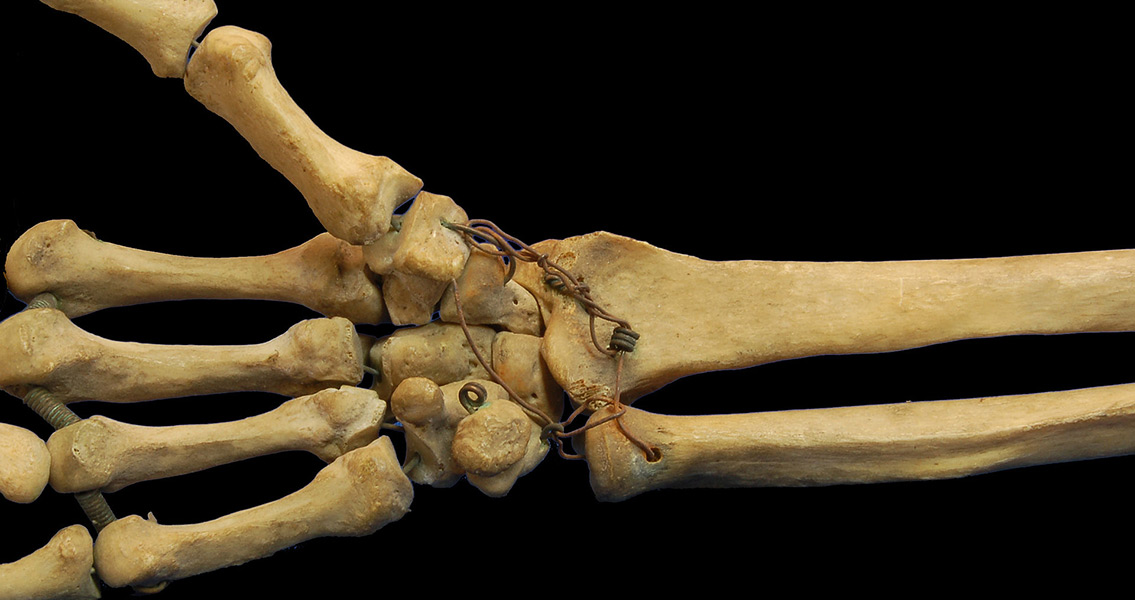
Homo habilis and Paranthropus boisei, the researchers say, but was more modern human-like than them. In fact, this species could be a “missing link” between Homo habilis and Homo sapiens. The bone was discovered in Olduvai Gorge, northern Tanzania, at a rich palaeontological site called Philip Tobias Korongo, or PTK, and, according to UPI, moves forward the point at which hominins climbed down the trees and evolved hands suitable for holding tools by as many as 400,000 years. In their paper, the researchers who discovered the bone note that there has been ongoing debate about the cause and effect relationship between the evolution of a hand capable of manipulating tools and the invention of these tools, a debate in which the discovery represents a valuable input. For one thing, it brings the evolution of the modern human-like hand closer to the oldest stone tools, discovered earlier this year in Kenya. Still, the tools predate the finger fossil by more than a million years, suggesting there could be even older fossils of modern human-like hands. The lead author of the study, Manuel Dominguez-Rodrigo from the Institute of Evolution in Africa, told New Scientist that the bone “belongs to somebody who’s not spending any time in the trees at all”. It is straighter than the phalangeal bones of tree-dwelling hominins who used their hands as modern-day primates do, to move in trees by hanging from branches and swinging between them. Speaking to the Christian Science Monitor, Dominguez-Rodrigo also said that this species was already capable of using tools and it was larger than its contemporaries. Based on the size of the fossil, the hominin it belonged to must have stood about five foot nine, which is quite a bit more than Homo habilis, (the first hominin who left Africa), who has been estimated to have stood at around three feet tall. The authors of the study note that the evolution of the hand has been a major driver for the evolution of humans, because the more capable of manipulating objects it became, the more capable hominins got at using increasingly sophisticated tools. However, recent discoveries, including this one, are revealing a much more complex hand evolution picture. For instance, the researchers write, the hand bones of some Pliocene australopiths have proven to be much more modern human-like than the bones of hominins from a more recent era, the Pleistocene. This suggests that hands capable of manipulating tools evolved before the tools were invented, feeding more evidence into the debate about the causal link between hand evolution and tool invention. For more information: “Earliest modern human-like hand bone from a new >1.84-million-year-old site at Olduvai in Tanzania” ]]>