Categories
News

Genghis Khan's Forces Starve Beijing into Submission

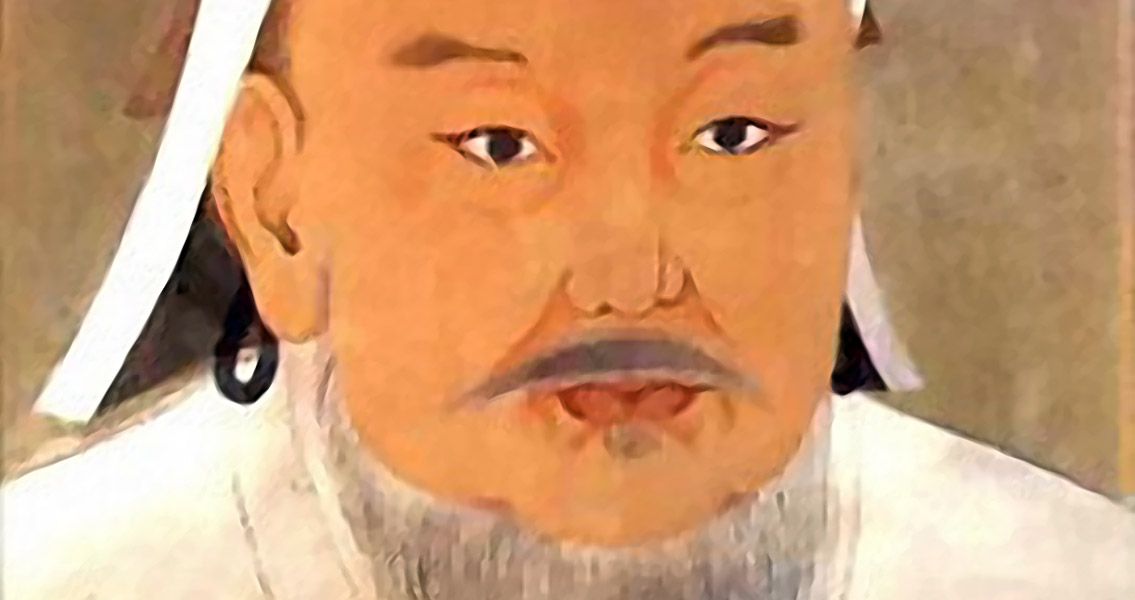
Game of Thrones, the Mongol forces of Genghis Khan lived a nomadic life with the majority traveling on horseback. They went on to conquer much of what is modern day Asia, and under Genghis Khan’s descendants launched a series of dramatic attacks into Russia and even Eastern Europe. Mongol armies traveled with no supply train other than a substantial reserve of horses, giving their forces a versatility and maneuverability few other armies could match. Even in situations where they seemed hopelessly outnumbered, as was often the case during the conquest of China, they deployed something close to modern day guerrilla tactics to cause chaos for their enemies. Attacking the countryside, they would force food shortages and push refugees fleeing into the cities. Born into a minor Mongol tribe in 1162, Genghis Khan used a cunning brutality and genius for strategy to unite the other tribes under his leadership. In 1210, a request from the Jin Dynasty for the Mongol tribes to accept the suzerainty of a new Gold Khan (the name given to the Jin Dynasty leader) was unsurprisingly met with contempt, and eventually pushed Genghis Khan into leading his people to war. By 1213, Genghis Khan’s armies had captured all Jin dynasty territories north of the Great Wall. They soon broke through the massive fortification, and after devastating the countryside descended on the capital, Zhongdu. A newly installed Golden Khan sensed the impending disaster, and secured a truce with Genghis Khan. Gold, silver and silk were given as payment to the Mongols, as well as the Golden Khan submitting to the Mongol Khan as his overlord. The Golden Khan’s decision to relocate his capital away from Zhongdu in 1215 was viewed as a betrayal of the deal, triggering the resumption of hostilities between the Mongols and the Chinese and culminating in the siege of Zhongdu. Not content with capturing huge swathes of what is modern day China, Genghis Khan soon turned his attentions, and his armies, westward. By the time of his death in 1227, the Great Khan’s empire stretched from the Caspian Sea to the Sea of Japan. ]]>
Categories
Breaking News

Mongols Retreated From Europe Due to Bad Weather

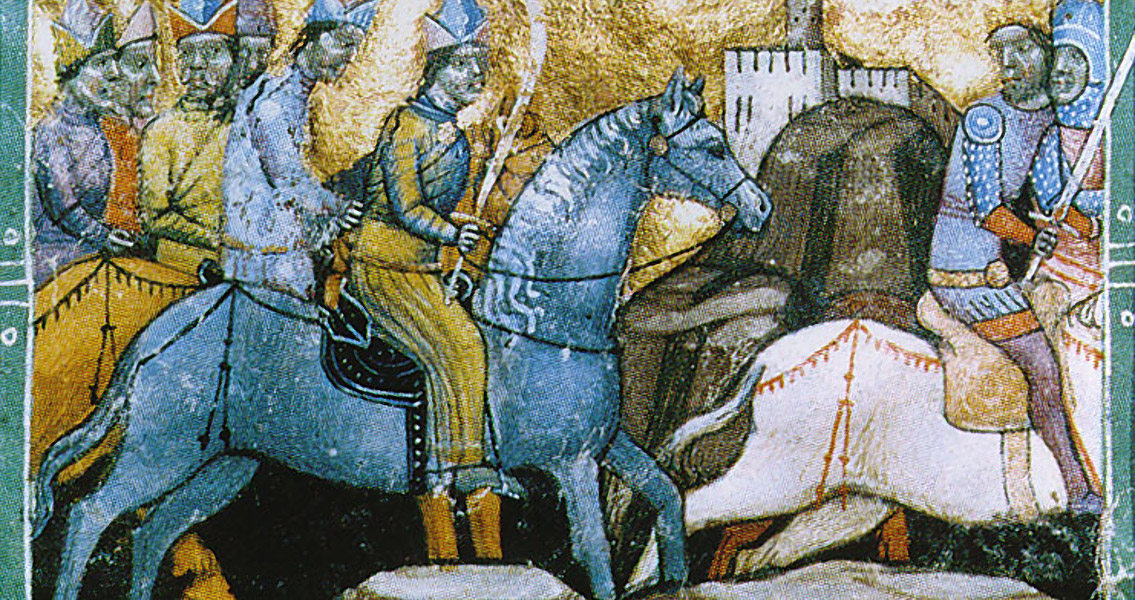
Scientific Reports, a group of scientists claim to have an explanation. The paper argues that the Mongol Conquest of Europe was halted in western Hungary by bad weather. The authors, Ulf Büntgen from the Swiss Federal Research Institute and Nicola Di Cosmo from Princeton University in the USA, believe that the Mongol army simply could not cope with the harsh Hungarian winter of 1242. Natural archives, analysis of environmental drivers and historical records were used to reach the surprising conclusion. In particular, tree ring data was utilised to gain insights into the weather in the region between 1230 and 1250 CE. “Documentary sources and tree-ring chronologies reveal warm and dry summers from 1238–1241, followed by cold and wet conditions in early-1242.” the authors write, in the abstract to their study. Put simply, in the late 1230s, when the Mongol invasion into Europe started in earnest, the warm and dry weather was ideal for the movement of the Mongol army, who were mostly traveling on horseback. The early 1240s were cold and wet, however. Initially this proved advantageous to the Mongols, freezing the Danube and allowing them to cross with ease. When Spring came on the other hand, and the ice started to thaw, the land turned to swamp and the Mongol horses simply could not move. “Small climatic fluctuations resulted in marshy terrain across the Hungarian plain, which led to reduced pastureland and decreased mobility, as well as hampering the military effectiveness of the Mongol cavalry,” the authors said in a press release. “These circumstances arguably contributed to the determination of the Mongols to abandon Hungary and return to Russia.” they explain in their study. Genghis Khan launched the Mongol Conquests in 1206, and within a few years had conquered huge swathes of land, creating the largest empire in history. Following Khan’s death in 1227, his descendants took up leadership of the Mongol armies and pushed into Europe, crossing the Danube in 1242 and killing half of Hungary’s population. Historians have offered a number of explanations as to why the invasion of Europe seemed to end so abruptly. Some have claimed the attacks on Eastern Europe were simply a warning, designed to discourage European incursions into Asia. This reasoning claims that the invasion stopped simply because it was never intended to go any further. Others claim the Mongols were ill prepared for combat in the more densely populated towns of Austria, the next country on their path, or were simply scared off by the defiant resilience of Polish and Hungarian soldiers. A particularly popular explanation is that the death of the then Mongol leader, Great Khan Ogedei, saw the European campaign brought to an end. Büntgen and Di Cosmo however, claim that the Mongol withdrawal shows the remarkable power of the environment to shape the course of history. “While overcoming deterministic and reductionist arguments, our ‘environmental hypothesis’ demonstrates the importance of minor climatic fluctuations on major historical events.” Their research study is currently available online]]>

Categories
Breaking News

Treasure Found Beneath Museum Director's Floor in Tver